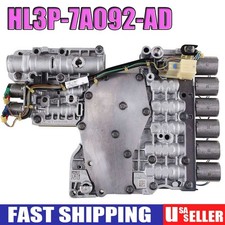
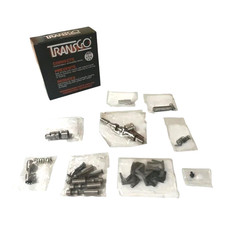
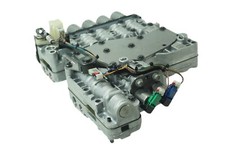
If your Ford Explorer, Lincoln Aviator or Bronco is shifting harsh or late, flaring between gears, slipping, or has thrown a converter-clutch or pressure-related code, the valve body is almost always doing the damage even though the part itself never wears mechanically in the way a clutch does. This is a remanufactured 10R60 valve body - sometimes called the main control on this transmission - built to go back in bench-ready so you are installing a known-good unit instead of chasing a bore-wear problem piece by piece.
What the valve body does in a 10R60
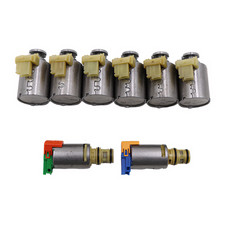
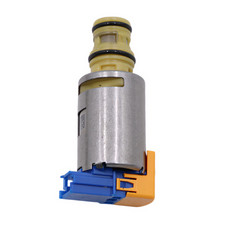
The 10R60 is Ford's light-duty member of the 10-speed family, rated around 443 lb-ft (600 Nm) against the 10R80's 590 lb-ft, but the two units share the same four-planetary, six-clutch architecture and the same Gen. 1 valve body layout. The valve body is the hydraulic brain: it routes line pressure through precision bores and spool valves to apply each clutch, and it carries the CIDAS pressure-control and TCC solenoids the computer fires to time every shift. Because this transmission has no mechanical fail-safe, a worn bore or a dragging spool shows up immediately as a shift-quality complaint rather than a slow fade.
Symptoms this replacement addresses
- Harsh, late or flared shifts across multiple gears
- Slipping between gears or a missing upshift
- Torque converter clutch slip or shudder tied to the TCC regulator valve
- Limp mode with stored solenoid or gear-ratio codes
How to confirm it before you order
Not every 10R60 shift complaint is a valve body problem. Ford's own bulletins split this transmission's failures into two different repairs: a sticking main control valve causes the symptoms above, but a harsh 7-6 downshift by itself is usually the A clutch return spring snap ring dislodging, which Ford corrects with a front support assembly rather than a new valve body. Run a scan for stored codes and note exactly which shifts are affected before you buy - our 10R80 vs 10R60 comparison guide covers the shared valve-to-symptom map (which clutch control valve ties to which complaint) along with the parts that do and do not cross over between the two units.
Fitment
The 10R60 did not exist until the 2020 model year: it went into the 2020-up Ford Explorer (2.3L and 3.0L EcoBoost) and Lincoln Aviator, and the 2021-up Ford Bronco with the 2.3L and 2.7L EcoBoost. If your vehicle is older than that, this listing's title is carrying a stale year tag rather than a real application, so do not install on that assumption - match the casting and connector count on your original valve body against the photos, or send us your year, model and VIN before ordering so we can confirm it is the right part for your truck. A narrower-year version of this same part is also listed as our 10R60 valve body, 2017-2019 listing if your casting matches that revision instead.
Install notes
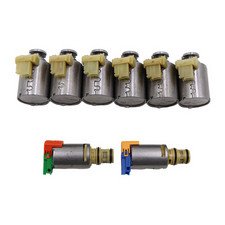
Drop the pan and filter at the same time you swap the valve body so debris from the old unit does not circulate through the new one, and torque the valve body bolts in Ford's sequence rather than cranking them down corner to corner - uneven clamping load on this casting can bind a bore that measured fine on the bench. Refill with Mercon ULV ATF only; the wrong fluid spec produces shift complaints on a 10R60 that look identical to a bad valve body. After the swap, clear codes and run the TCM's adaptive learning drive cycle instead of just driving it normally. If low line pressure or a weak TCC apply was part of the original complaint, check the 10R60 pump as well, since a worn pump and a worn main pressure regulator bore produce overlapping symptoms. A fresh 10R60 solenoid kit is worth installing alongside this if the original solenoids are showing current drift rather than bolting new valving behind tired solenoids.