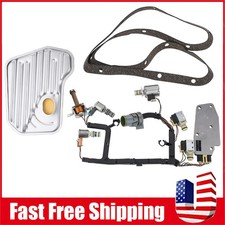
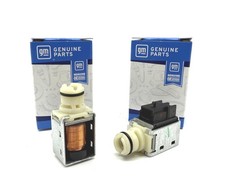
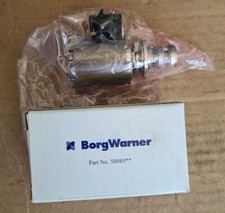
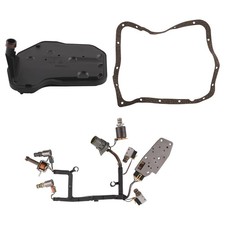
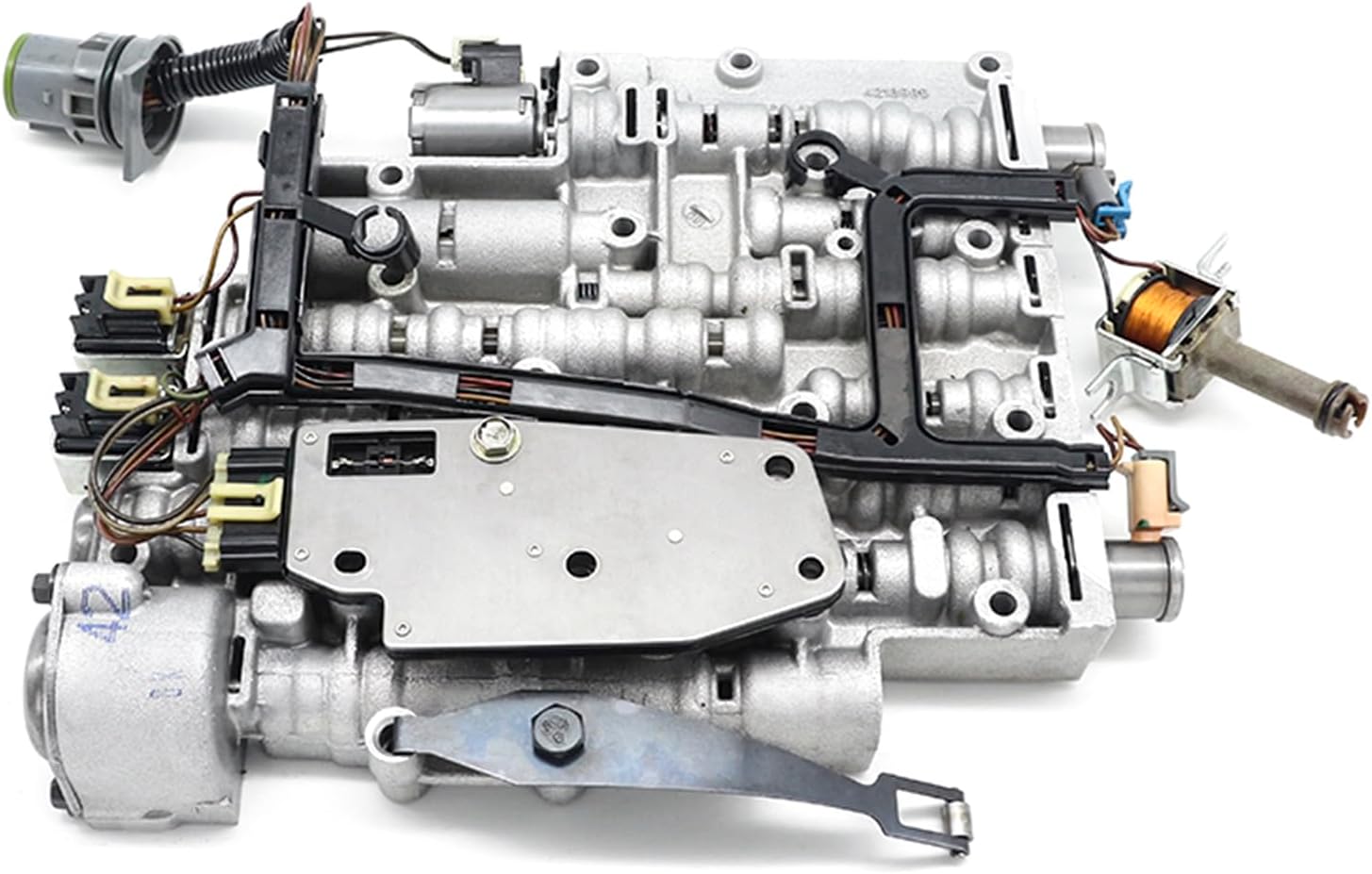
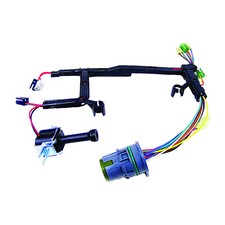
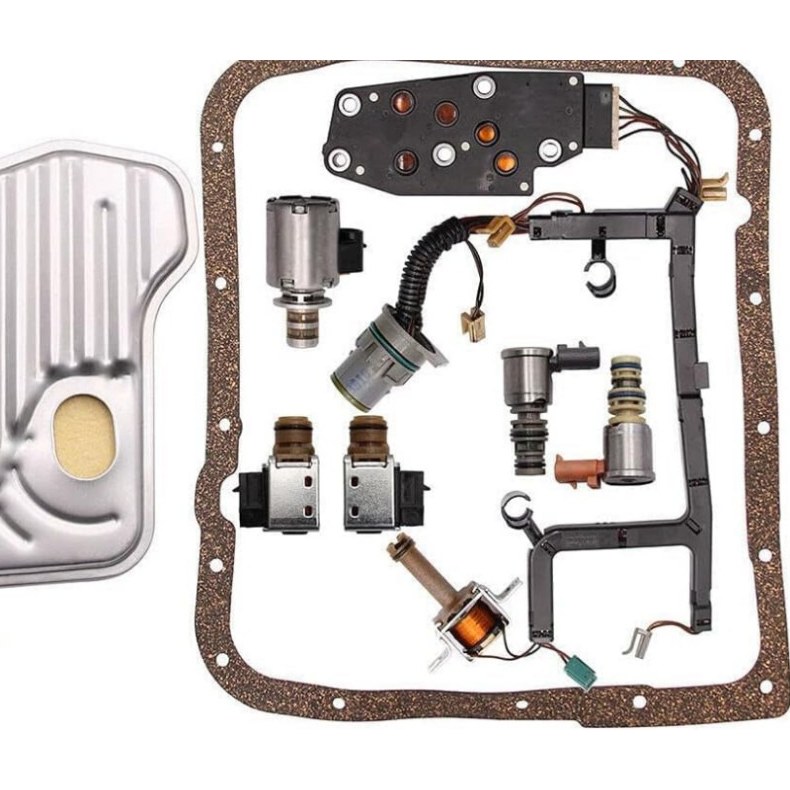
If your Silverado, Sierra, Tahoe, Yukon, Suburban or Avalanche with the heavy-duty 4L65E will not lock the converter on the highway, shudders between 40 and 60 mph, or keeps setting P0741 after the code is cleared, the TCC solenoid and the harness it plugs into are the first suspects. This listing is sold under the TCC solenoid name, but the photo shows a complete pan-drop electrical service: the internal wiring harness carrying the TCC solenoid, a set of shift and control solenoids, the pressure switch manifold, a new filter and a pan gasket. When one part of that circuit has failed after years in hot fluid, the rest has had the same life, and doing it all with one pan drop is cheaper than doing it twice.
What the TCC solenoid does in a 4L65E
The 4L65E is GM's heavy-duty version of the 4L60E, built for the 5.3L and 6.0L trucks, and it shares the 4L60E family valve body and solenoid layout. The TCC solenoid is the switch that lets the converter clutch apply. When the PCM sees steady cruise, warm fluid and light throttle, it energizes the solenoid, the converter clutch valve strokes, and the converter locks so the engine and transmission turn together. On units with the PWM (EC3) system, a second TCC solenoid ramps apply pressure so lockup comes in smoothly instead of all at once. Every one of these solenoids is fed by the AFL valve in the valve body, which Sonnax describes as regulating line pressure down to a steady solenoid feed, so a worn bore can mimic a bad solenoid.
Symptoms that point to this kit
- No lockup at steady cruise, with RPM higher than normal and fuel economy down
- Shudder or a rumble-strip feel at 40-60 mph as the converter clutch tries to apply
- P0741 (TCC performance or stuck off) or P0742 (TCC stuck on), or a P0740 circuit code
- Engine stumbling or stalling as you roll to a stop, a sign the clutch is not releasing
- Several solenoid codes at the same time, which usually means harness or connector damage rather than one bad coil
How to confirm before you buy
Electrical faults and hydraulic slip look alike from the driver seat, so separate them first. Unplug the case connector and measure each solenoid circuit, then flex the harness while watching the meter. GEARS Magazine lays out a current-based test that catches a solenoid that reads fine on an ohmmeter but will not pull in under load. If the circuit is good and the scan tool shows lockup commanded with slip still climbing, the problem is hydraulic: Sonnax names TCC regulator valve bore wear as a primary cause of P1870 and overheated converters on the 4L65E, and our 4L65E common problems guide walks through that path. For the companion shift solenoid codes, read the 4L65E shift solenoid guide.
Fitment
The listing covers 1993-2005, which is the full 4L60E-family span; the 4L65E itself appeared in the 2001 model year trucks. Be aware that GM changed the harness, connector and EPC solenoid style in 2003. A 2001-2002 unit and a 2003-2005 unit do not take the same electrical package, and Sonnax lists the 4L65E on the GM049 casting for 2000-2002 and the GM051 casting from 2003. Compare the harness routing, case connector and EPC solenoid in the photo to what is on your valve body, or send us your year and VIN and we will confirm before it ships. If your truck is a 2003 or newer, the 2003-2006 TCC solenoid kit is the late-style match. Everything else for this transmission is on the 4L65E parts page.
Install notes
- Drain the fluid and drop the pan. Read the magnet: fine gray paste is normal, but clutch lining or bronze flakes mean the unit needs more than solenoids.
- Pull the filter and make sure the old filter seal comes out of the pump bore. A doubled seal causes low pressure.
- Swap the harness and solenoids one at a time so each connector goes back to the right component. Shift solenoids A and B are identical parts, so mark them.
- Lube every new O-ring with ATF, seat each solenoid fully, and snug retainer bolts by hand with an inch-pound wrench. These thread into aluminum.
- Fit the new filter and gasket, refill with Dexron VI, check the level hot and road test through several lockup cycles.
- If shift feel is still harsh or soft afterward, look at the 1993-2005 pressure control solenoid or a complete 4L65E valve body with solenoids.