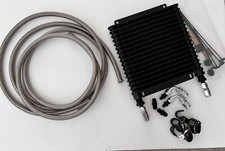
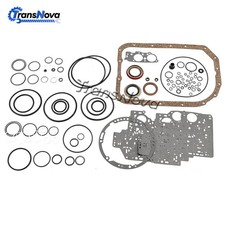
If you run a 4L85E behind an 8.1L or 6.0L in a Silverado, Sierra, Express or Savana 2500/3500 and you tow, plow or haul at the top of the rating, heat is the thing that kills this transmission. This listing is an auxiliary transmission cooler kit: a stacked-plate cooler core, a long run of braided stainless hose, and the fittings, clamps and mounting hardware shown in the photo. It is the part to add when your temperature gauge climbs on grades, when the fluid comes out dark and smelling burnt, or when you are putting a fresh rebuild back in a work truck and want it to survive.
What a transmission cooler does in a 4L85E
The 4L85E is GM's heavy-duty, five-pinion version of the 4L80E, introduced for 2002 under RPO MN8 and rated by GM for up to 650 lb-ft of engine torque. Under load the torque converter and the clutch packs turn a lot of energy into heat, and that heat leaves the case through the cooler lines. Fluid exits the transmission, passes through the cooler in the radiator tank, and returns to lubricate the geartrain. From 1997 on, the 4L80E family routes that return oil to the center support to feed center-gearbox lubrication, so cooler flow is not just about temperature on this unit; it is the lube supply for the planetaries and bushings. An auxiliary stacked-plate cooler added in series with the factory circuit gives that oil more surface area to shed heat before it goes back in.
Symptoms that point to a cooling problem
- Transmission temperature climbing well above normal when towing, plowing or climbing long grades
- Fluid that is dark brown, smells burnt, or has lost its red color soon after a service
- Slipping or flare on the 3-4 shift under load as the fluid thins out, the classic way a hot 4L85E burns its direct and 3-4 clutches
- Clutch material in the pan after a hard summer of work
- Worn pressure regulator valve symptoms that include low cooler flow, which can mimic a plugged cooler
How to confirm it before you buy
Check cooler flow first. With the engine at operating temperature, a healthy 4L80E-family unit with 5/16 inch lines should push at least one quart into a container in 20 seconds, and most do it in about 10. If flow is low after the factory cooler has been flushed in both directions, the restriction may be in the cooler, the lines, or the pump's pressure regulator valve. Our 4L85E filter and pan service guide walks through that flow test and what the pan debris is telling you, and 4L85E common problems and fixes covers why heat is behind most of the failures on this unit.
Fitment
This kit is listed for the 4L85E and is not tied to a single model year, because an auxiliary cooler mounts in front of the radiator and plumbs into the existing lines rather than bolting to the case. What you do need to confirm is space in front of your radiator or condenser, and how you will tap into your lines. GM notes that the return cooler line fitting on the 4L80 family is unique, and if you convert to standard inverted flare fittings it calls for adapter part number 8637742 for the transmission-to-cooler line and 24205178 for the cooler-to-transmission line. Installing the wrong fittings into the case can ruin the transmission. If you are unsure, send us your year and VIN before ordering, and browse every 4L85E part we carry.
Install notes
- Plumb the auxiliary cooler in series, after the radiator tank cooler, so the oil passes through both before it returns to the case.
- Flush the factory cooler and lines before connecting anything. GM's own instruction is to flush with at least brake cleaning agent and compressed air on any replacement or new install.
- Use a flare nut wrench on the line nuts. The cooler pipe connector nut at the case torques to 28 lb-ft (38 N-m).
- Route the braided hose away from exhaust and moving steering parts and secure it so it cannot chafe.
- Refill with DEXRON VI and check the level on the dipstick hot, running, in park. The added cooler and hose hold extra fluid, so recheck after the first drive.
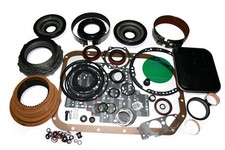
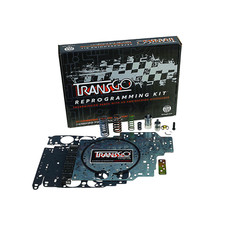
- If the cooler is going on during a rebuild, pair it with a 4L85E master rebuild kit and a 4L85E shift kit so the new clutches start life cool.