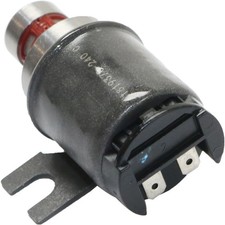
If your 4.0L Ford Explorer, Ranger or Mazda B4000 with the four-speed 4R55E will not hold lockup on the highway, flares RPM at cruise, or set a converter slip code, you probably searched for a TCC solenoid and landed here. Be clear on what this listing is before you order: the photo shows a new electronic pressure control (EPC) solenoid with a black coil body, a red-banded nose, a slotted mounting tab and a two-blade connector. It is not the small converter clutch solenoid. It is filed under TCC because on this transmission a tired EPC circuit is one of the most common reasons the converter clutch slips while the TCC solenoid itself is fine. The rest of this page helps you work out which of the two your truck actually needs.
How lockup works in a 4R55E
The PCM pulses the TCC solenoid, and its duty cycle ramps up as the converter clutch applies. That signal strokes the TCC modulator valve, which switches converter oil to the TCC regulator valve. The regulator sets clutch apply pressure, but it can only work with the oil it is given, and that oil is line pressure. Line pressure in turn is set by the EPC solenoid. So the converter clutch has two electrical inputs: the TCC solenoid decides when and how hard to apply, and the EPC solenoid decides how much pressure is available to do it. A perfect TCC solenoid cannot clamp the converter if line rise is weak.
Symptoms: TCC solenoid fault or EPC fault?
- Points to the EPC side: lockup slips more as the fluid gets hot, harsh engagement into Drive or Reverse, delayed Reverse, flares on the 1-2 or 2-3, or a harsh shift right after a kickdown.
- Points to the TCC solenoid or its valve: the engine stalls when you shift into gear, lockup applies early and makes shifts harsh, or the converter never applies at all at a steady cruise.
- Either one: converter slip codes (code 628 on earlier EEC-IV trucks, P0741 on OBD-II), higher cruise RPM and lower fuel mileage.
- Not a solenoid at all: a worn TCC regulator or modulator valve bore, a leaking stator shaft seal, or a converter with a worn clutch lining.
How to confirm before you buy
Start with the electrical check: ohm the solenoids at the case connector using our multimeter solenoid test, and look for fluid wicking into the connector. Then road test with a scan tool and watch two numbers together: commanded TCC duty cycle and converter slip (engine RPM minus turbine RPM). Sonnax uses 70 percent or more TCC duty with 140 RPM or more of slip as the sign that clamping force is short. If slip is high, put a gauge on the case and follow our line pressure guide. Weak pressure points at the EPC solenoid or a leaking EPC circuit. Normal pressure with high slip points back at the TCC regulator valve, the converter, or the TCC solenoid. Sonnax also notes that a stuck TCC modulator valve holds EPC to about 65 psi, so a low reading is not automatically the solenoid's fault. Our converter clutch shudder guide covers the drivability side of the same checks.
Fitment
This solenoid is listed for the 4R55E and the 1997-2011 production of this EPC design, cross-referenced in the listing to Ford numbers F77Z-7G383-AA, XL2Z-7G383-AA and 9L2Z-7G383-A. The 4R55E itself was built behind the 4.0L V6 in the Explorer, Ranger and Mazda B4000 until Ford replaced it with the five-speed 5R55E during the 1997 model year, and the same EPC solenoid carried on in the 5R55E and 5R44E. That is why a part with a 2011 end date fits a mid-1990s four-speed. Before ordering, compare the coil body, bracket and two-blade connector against the part on your valve body, or send us your year and VIN and we will check it. Our 5R55 and 4R55E parts page lists the rest of the family, and this is the same part sold as the 4R55E pressure control solenoid 1997-2011.
Install notes
- Drain the pan, drop the filter, and unbolt the solenoid retaining bracket. Note the orientation of the tab and connector before you pull the old solenoid out.
- Lube the new O-rings with clean ATF and push the solenoid straight into its bore. Do not use the bracket bolt to draw it in.
- Check the end plugs and retainers in the EPC and TCC circuits while the pan is off; a leaking plug defeats a new solenoid.
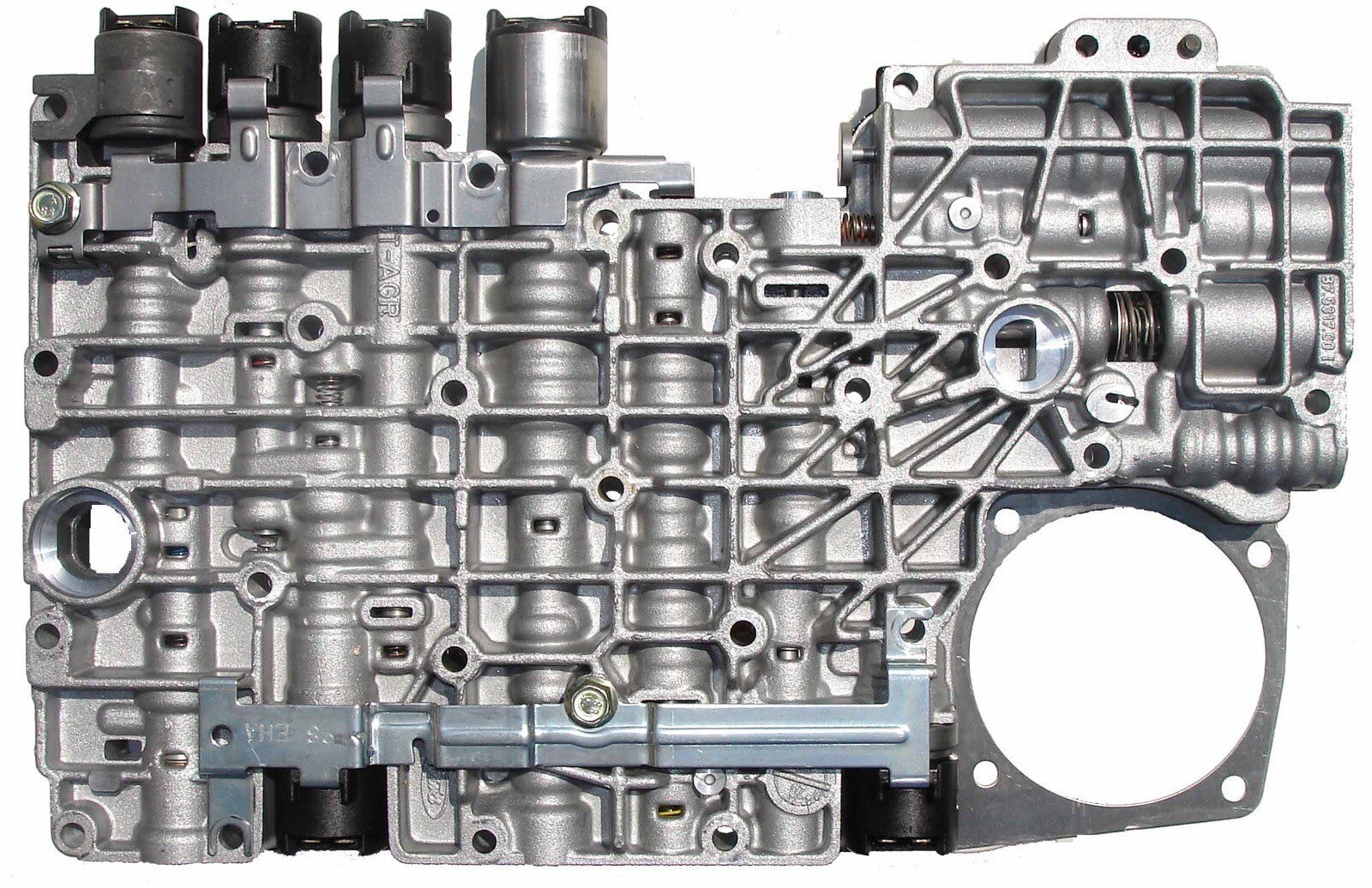
- If the truck has been slipping lockup for a long time, the TCC regulator bore is probably worn too. The Sonnax Zip Kit addresses those valves, and a remanufactured 4R55E valve body replaces them all at once.
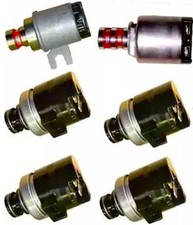
- If both the TCC and shift solenoids are suspect, the 4R55E solenoid kit replaces every solenoid in one job.
- Refill with the MERCON-family fluid shown on your dipstick or in your owner's manual, clear codes, and drive several cruise cycles while watching slip RPM.