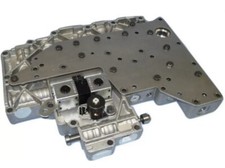
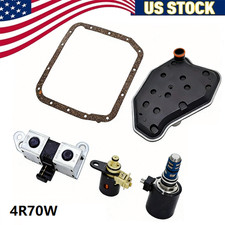
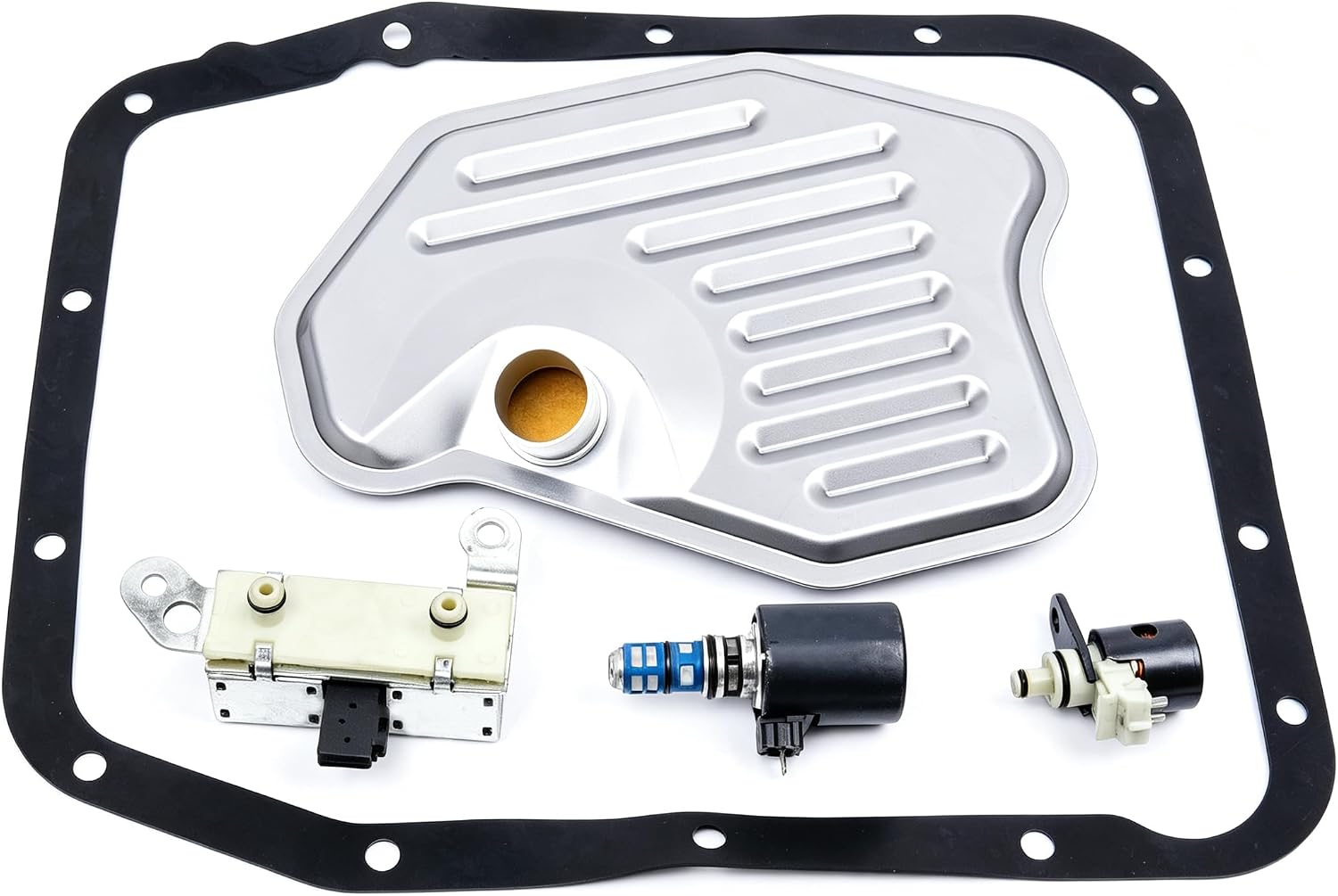
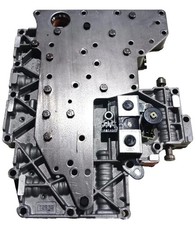
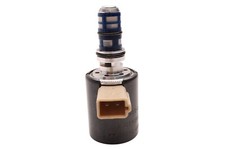
This one is for 2000 model year 4R70W transmissions only: the 2000 F-150 and Expedition equipped with the 4R70W, the Crown Victoria, Grand Marquis and Town Car, the automatic Mustang, and the Explorer or Mountaineer with the 5.0L V8. Owners usually land here because the converter will not lock at highway speed, the vehicle shudders like it is driving over rumble strips at 45 mph, or a scan shows P0741, P0743 or P1744. The unit is remanufactured, and the product photo shows a complete valve body with the solenoid body mounted on it, so the TCC solenoid comes installed along with the two shift solenoids rather than as a single loose part.
The TCC solenoid's role in a 2000 4R70W
Gear selection in this transmission is handled by SS1 and SS2 alone. The TCC solenoid shares their solenoid body but works independently: once the PCM sees a steady throttle and road speed in a higher gear, it energizes the TCC solenoid, which moves the bypass clutch control valve and applies the clutch inside the torque converter. That locks engine speed to transmission input speed, cuts heat and saves fuel. In a 2000 unit, the solenoid plugs into the 8-pin case connector Ford used from 1998 through 2008. By the time one of these trucks or cars has twenty-plus years of heat cycles on it, the solenoid seat, the O-rings and the aluminum bore around the bypass valve have all worn, which is why a complete remanufactured valve body is a practical fix for a lockup fault.
Signs the lockup circuit has failed
- Shudder or vibration at steady 40-60 mph, gone when you press harder on the throttle
- Engine RPM hunting up and down while cruising
- No RPM drop when lockup should occur, with warmer fluid and worse mileage
- Engine bogging or stalling as you stop if lockup does not release
- P0741, P0743 or P1744 stored; Sonnax links worn bypass clutch control valve bores to 741, 1741 and 1744
Narrow it down first
Start with the fluid, since tired Mercon V can cause shudder on its own. Unplug the 8-pin connector and measure the TCC solenoid: Sonnax gives 10-16 ohms. An open or shorted reading can also come from the internal harness or connector, so inspect the terminals for pushed-back pins. If the electrical side checks out but the converter still slips under commanded apply, a worn valve body or the converter clutch is responsible. Our Crown Victoria shift problems guide and the 4R70W solenoid testing guide lay out the checks in order.
Why the year matters: 2000 fitment
A 2000 4R70W is the last of the pre-2001 valve bodies. Sonnax notes that the 2-3 capacity modulator valve is not used in 2001-later bodies and sells several repair kits specific to 2001-later castings, so a 2001-2003 body is not a clean drop-in for a 2000 unit. That is the reason this listing is held to a single model year. Compare the forging number below the stiffener plate and the solenoid body on your old valve body with the product photo, or send us your year and VIN to confirm. If the 2000 version does not match, our 1999 4R70W valve body and the rest of the 4R70W lineup are worth a look.
Installation tips
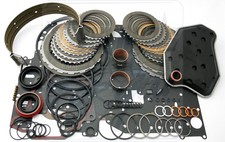
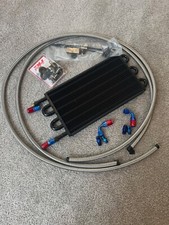
Drain the fluid, remove the pan and filter, unplug the case connector and release the valve body bolts gradually. Line the manual valve up with the detent lever as the replacement goes in and snug the bolts in sequence, finishing at the 106 in-lb Sonnax lists for plate bolts. Install a new filter and gasket and refill with Mercon V, checking the level hot. Clear codes and drive through several lockup cycles. If you find friction debris in the pan, plan on the 1998-2003 master rebuild kit, and on a towing vehicle the 4R70W transmission cooler helps keep fluid temperature down.