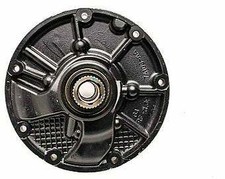
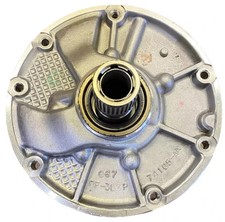
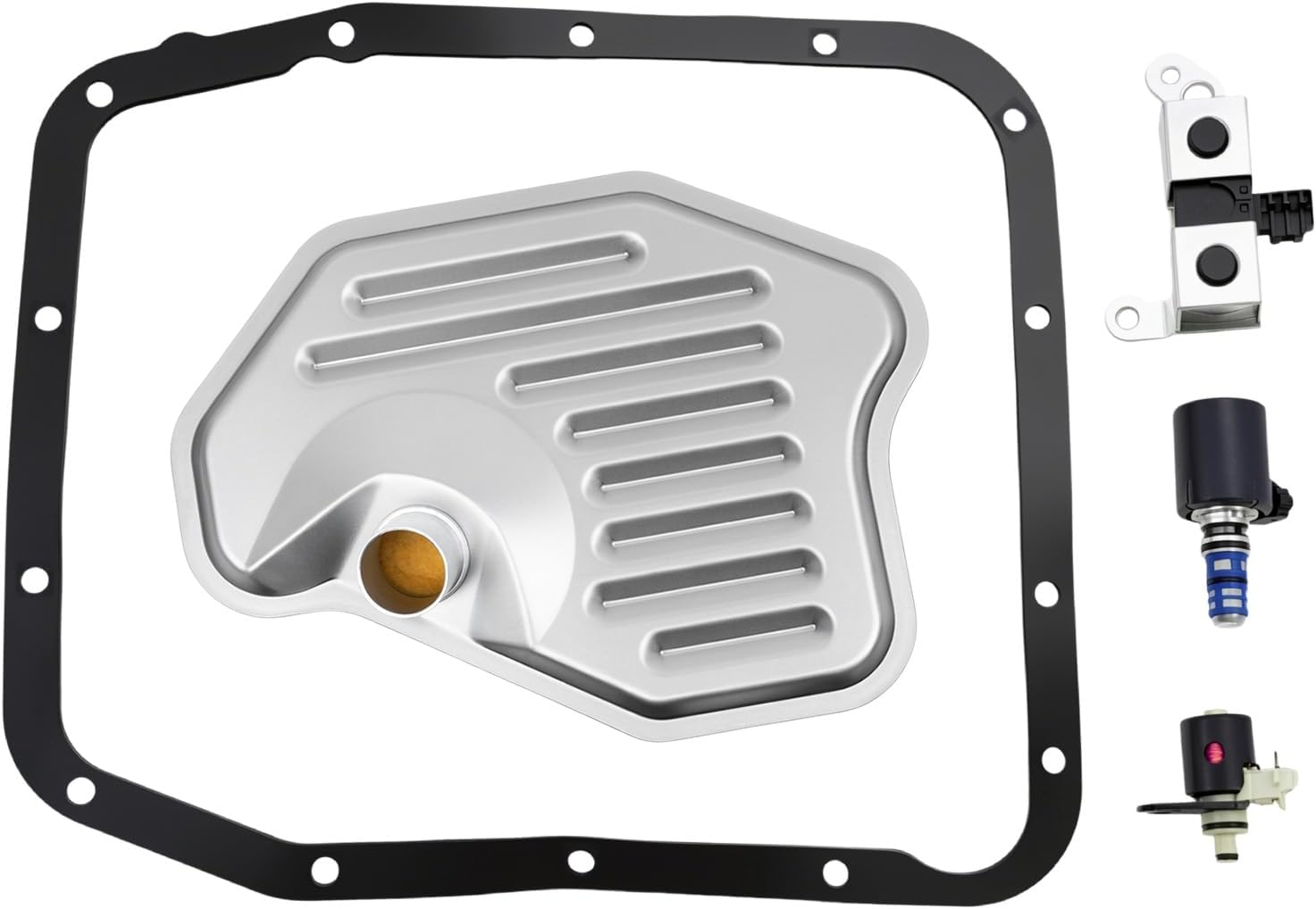
The 4R75W is the heavier-duty member of Ford's 4R70W family, and when its front pump wears out the whole transmission feels it: a long pause before Drive or Reverse engages, slipping that gets worse as the fluid heats up, and a whine that rises and falls with engine speed. This remanufactured 4R75W pump replaces the worn assembly with a bench-ready unit, so you are not trying to resurface gears and fit a bushing in your driveway.
What the pump does in a 4R75W
The 4R75W shares its case and basic hydraulic layout with the 4R70W, with stronger internals for heavier vehicles. The pump is a gear-type pump driven by the torque converter hub. Its inner and outer gears turn whenever the engine runs, drawing fluid through the filter and sending it to the pressure regulator valve in the valve body, which sets line pressure for every clutch, band and the converter. The pump assembly also carries the stator support, and in this design the forward clutch is fed from the front of the unit through the sealing rings on that support. A pump that has lost volume therefore shows up first as a lazy forward clutch, then as low pressure everywhere.
Gear clearance is what decides pump output. Sonnax's rebuild instructions for this family call for checking pump pocket and lobe-to-lobe clearance after a new bushing is fitted, and note that excessive lobe clearance means low pump volume and low cooler flow, which kills the converter and the gear train. That is the main reason to install a reconditioned pump rather than reuse a high-mileage one inside a fresh rebuild.
Symptoms of a worn 4R75W pump
- Delayed engagement into Drive and Reverse, usually worst after a hot run
- Slipping in every gear, not just one shift
- A whine or growl that follows engine RPM even in Park
- Low line pressure at idle and no recovery at stall
- Fluid leaking from the bell housing at the front seal or pump-to-case area
- Repeated converter failures or overheated fluid from weak cooler flow
How to confirm the pump is the problem
Put a gauge on the line pressure tap before you buy. If pressure is low in every range and does not climb with throttle, the pump is a suspect, but so is the pressure regulator circuit. This family is well known for PR valve and bore wear, which also drops line pressure and has nothing to do with the pump. Our 4R70W and 4R75W problems guide walks through separating a pump failure from PR valve wear and the forward/direct cross-leak. A whine that tracks engine speed, bronze bushing material on the pan magnet, or scoring on the converter hub all point toward the pump itself.
Fitment
This listing covers the 4R75W pump without a specific year range, so confirm it against your transmission before you order. The family changed over its run: ATRA's interchange notes show that the 4R70E/4R75E versions use thinner plastic forward sealing rings on the stator support than the cast iron rings on the W units, and the E center support is notched for a turbine speed sensor. Pull the identification tag or check the door sticker transmission code, compare the stator support and pump body to your old unit, or send us your year and VIN and we will match it. If your truck is a 2004-2008 unit, also compare against our 4R75W pump for 2004-2008. You can browse the full range on the 4R70W and 4R75W parts page.
Install notes
- Fit a new front seal and confirm the converter hub is smooth. A grooved hub will chew the new seal and bushing.
- Use new pump-to-case gasket and O-ring, align the pump to the case, and torque pump-to-case bolts evenly. Sonnax lists 16 to 20 ft-lb pump to case and 12 to 16 ft-lb pump to stator.
- Check total unit endplay after installation; this family uses a selective thrust washer on the stator support.
- Prime the pump with MERCON V before the first start and set the final level hot on the dipstick. Do not substitute MERCON LV or SP.
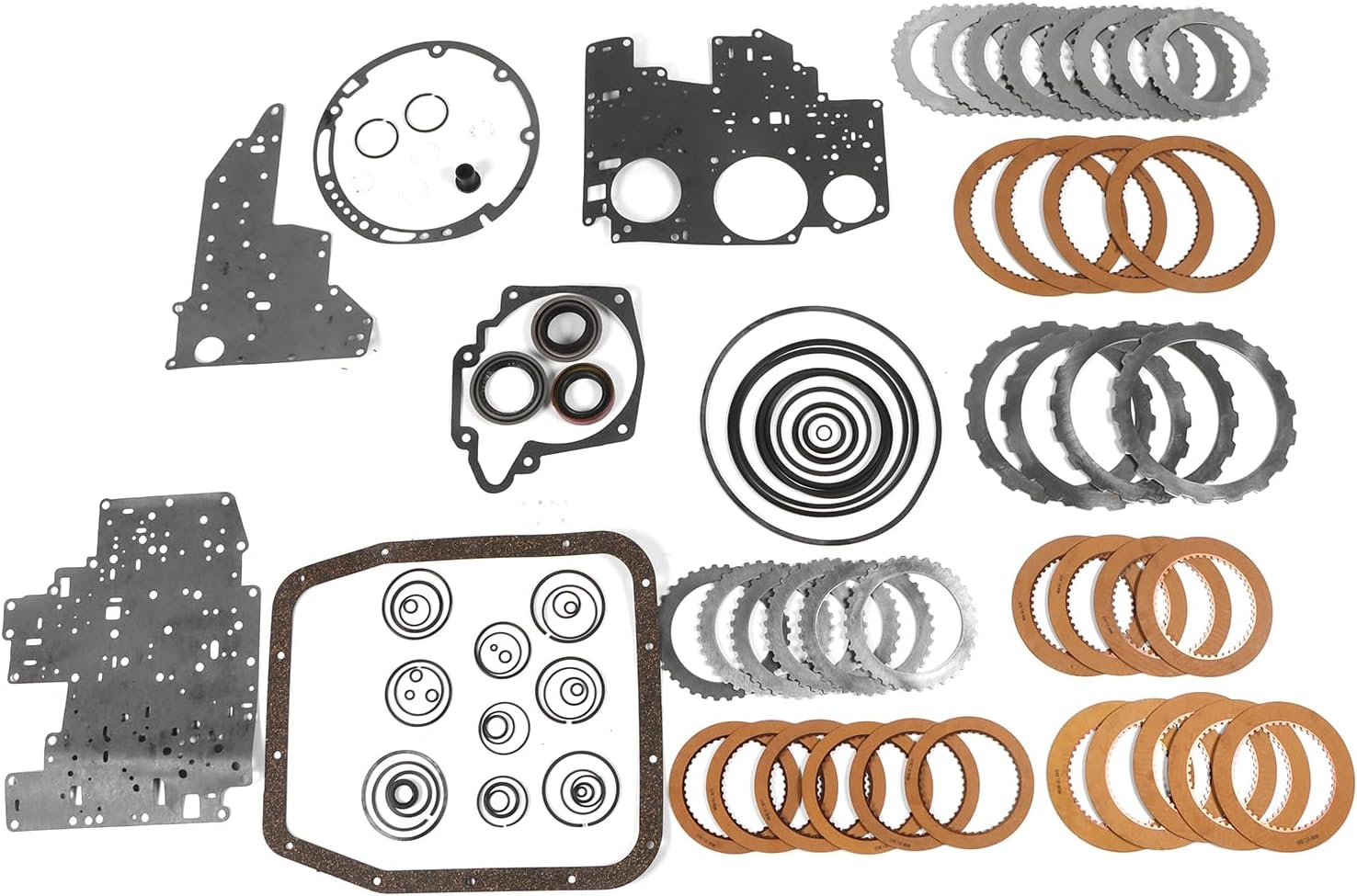
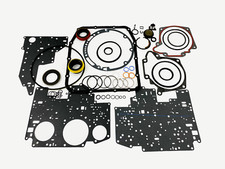
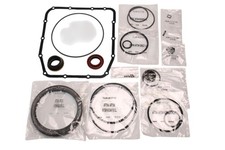
- If the old pump failed from debris, flush the cooler and lines, and consider a 4R70W overhaul kit since the same contamination has been through every clutch pack.
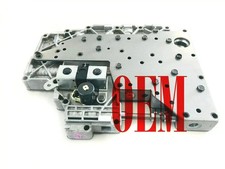
When low pressure turns out to be a worn regulator bore instead, the fix is in the valve body, such as our 4R75W valve body for 2005-2008, not another pump.