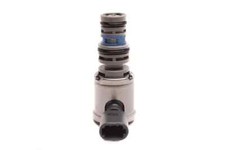
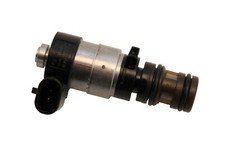
If your Cavalier, Sunfire, Malibu, Alero, Cobalt, HHR, Ion or G5 with the four-speed 4T40E or 4T45E shudders like it is driving over rumble strips between 40 and 60 mph, cruises at higher RPM than it used to, or has a check-engine light with a torque converter clutch code, the TCC solenoid is one of the first parts to look at. This listing is the pulse-width-modulated (PWM) TCC solenoid with the round black connector, the lockup solenoid style GM began using in 1993 and carried into the 4T40E and 4T45E from 1995 on. The 1993 in the title is that starting year for the solenoid design; no 1993 vehicle left the factory with a 4T40E, so read the fitment section before you order.
What the TCC solenoid does in a 4T40E
The 4T40E is a small front-wheel-drive transaxle, and like most GM electronic units of its era it does not slam the converter clutch on. The powertrain control module pulses this solenoid on and off many times a second and varies the on-time (duty cycle). The solenoid turns that duty cycle into a signal pressure that moves the TCC regulated apply valve, which controls how hard the converter clutch is applied. A low duty cycle lets the clutch slip gently as it engages; a high duty cycle clamps it fully at cruise. The result is a soft, nearly invisible lockup and lower converter heat on the highway. When the solenoid sticks, leaks internally or loses its coil, the module can no longer control that apply, and the converter either never locks or locks roughly and slips. Our guide on PWM versus on/off TCC control explains the strategy in more depth; it is written around the rear-wheel-drive 4L60E, but the PWM principle is the same.
Symptoms of a failing 4T40E TCC solenoid
- Shudder or a fast vibration at light throttle between about 40 and 60 mph, right when lockup should happen.
- Engine RPM that stays a few hundred higher than normal at steady highway speed, with fuel economy dropping off.
- Lockup that comes in with a bump instead of a smooth fade, or that cycles in and out.
- A stall or near-stall when coming to a stop, which points to a converter clutch that is staying applied.
- Trouble codes P0741 (TCC system performance or stuck off) or P0742 (TCC stuck on).
- Overheated, dark or burnt-smelling fluid from a converter that slips constantly.
How to confirm the TCC solenoid is the problem
A P0741 does not automatically mean a bad solenoid. On the 4T40E and 4T45E, wear in the pressure regulator valve bore is a well documented cause of low converter apply pressure, and it sets the same P0741 and P0742 codes while also burning frictions and planets. Before you buy, check the fluid level and condition, then unplug the solenoid connector and measure its coil with a meter, comparing the reading to the service manual value for your year. Our step-by-step solenoid multimeter test walks through it. If the coil is open or shorted, the solenoid is bad. If it reads correctly, use a scan tool to compare commanded TCC duty cycle with actual slip RPM; slip that stays high while the module is commanding full apply points toward hydraulic leakage rather than the solenoid. Our TCC shudder diagnosis guide also covers how to rule out a worn converter clutch, which no solenoid will fix.
Fitment
This solenoid is listed for the GM 4T40E and 4T45E four-speed front-wheel-drive automatics from 1995 forward, used in the Chevrolet Cavalier, Malibu, Cobalt and HHR, Pontiac Sunfire and G5, Saturn Ion and Oldsmobile Alero. It is not a fit for any 1993 or 1994 front-wheel-drive car, because those years predate the 4T40E. A mid-1990s Cavalier or Sunfire could also be ordered with the three-speed 3T40, so confirm you have the four-speed before buying. In GM's own parts catalog the TCC PWM solenoid for the 1995 Cavalier with the 2.2L and 2.4L is listed as 24227792, which replaced 24212690; compare that number, the round black connector and the body shape against the solenoid you remove. If you are unsure, send us your year and VIN and we will check it, or browse every 4T40E part we carry.
Install notes
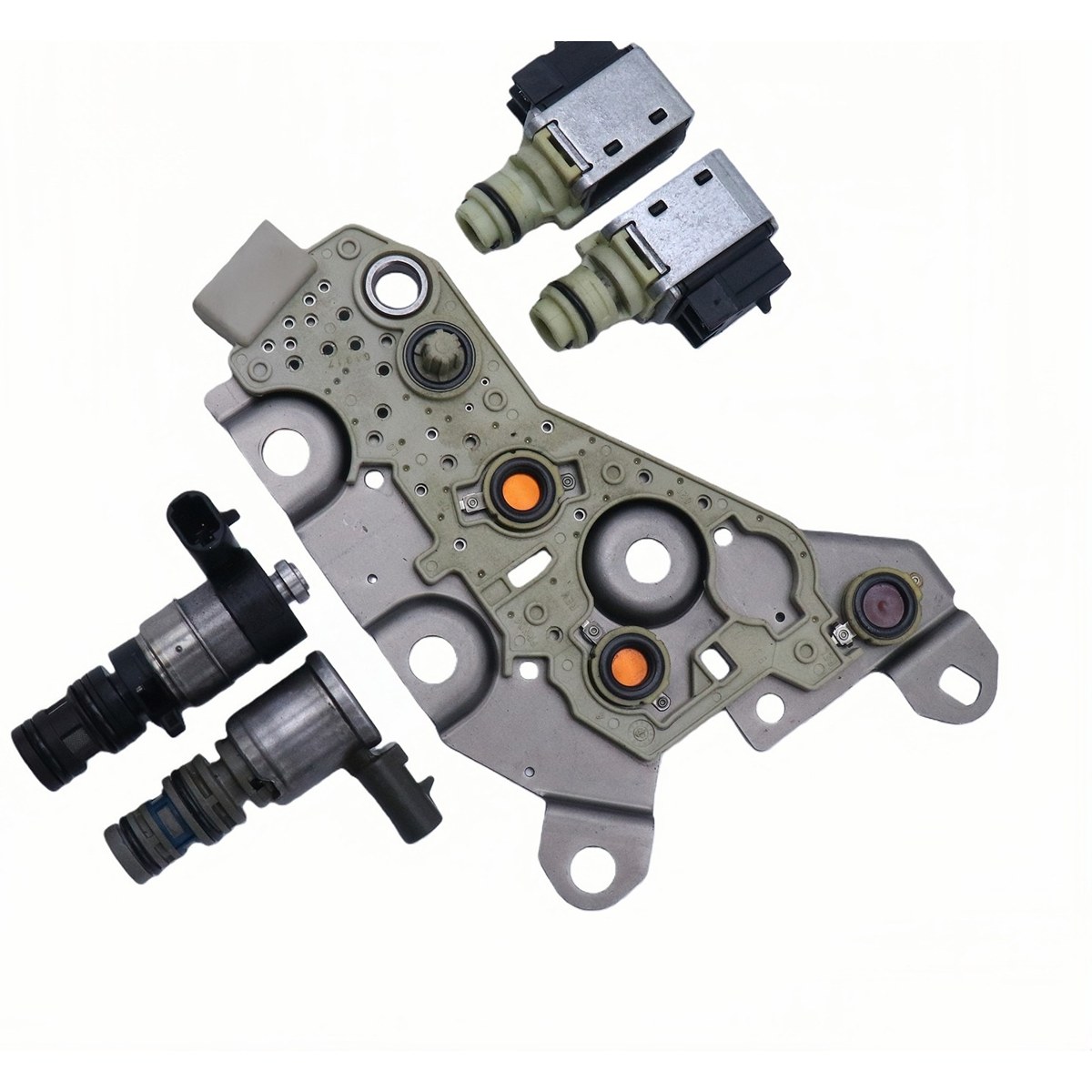
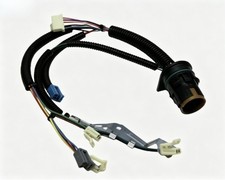
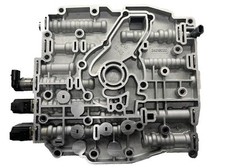
The solenoid sits on the valve body behind the transaxle side cover, so plan on draining the fluid and supporting the cover as it comes off. Note the solenoid's orientation and how it is retained before removing it, and keep the valve body bolts in order if anything else has to come out. Lubricate the new O-rings with clean fluid so they do not roll or cut going into the bore, and seat the connector until it locks. Inspect the internal harness while you are in there; a chafed or heat-hardened 4T40E internal wiring harness causes the same codes as a dead solenoid. Many shops replace the TCC, shift solenoids and EPC together on high-mileage units, and a 4T40E solenoid kit covers that job. Refill with Dexron VI, check the level hot on the dipstick, clear codes and road test through several lockup cycles at steady cruise. Converter heat is the enemy of this transaxle, so an auxiliary 4T40E transmission cooler is cheap insurance if the car tows or sits in traffic.