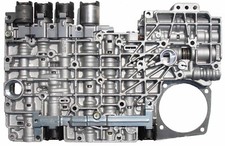
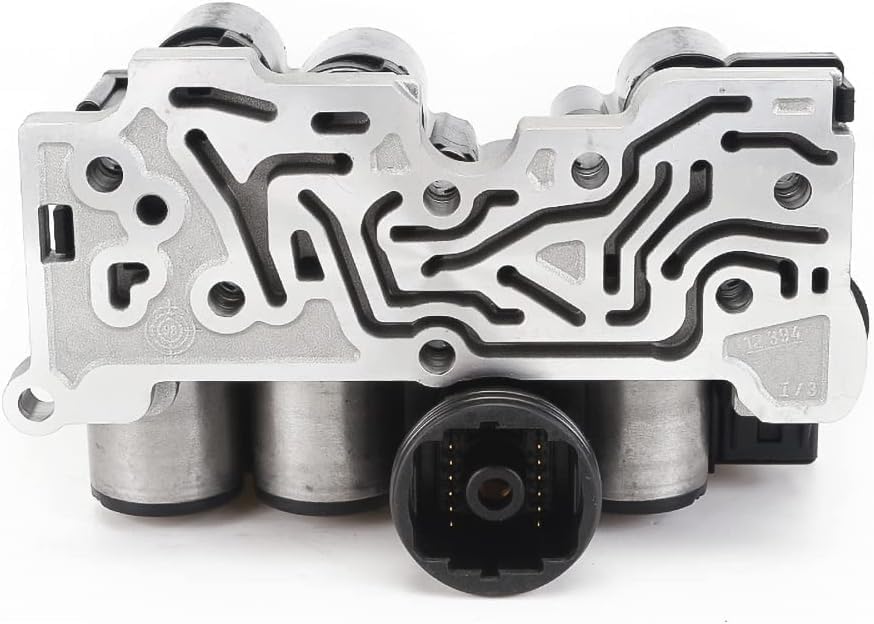
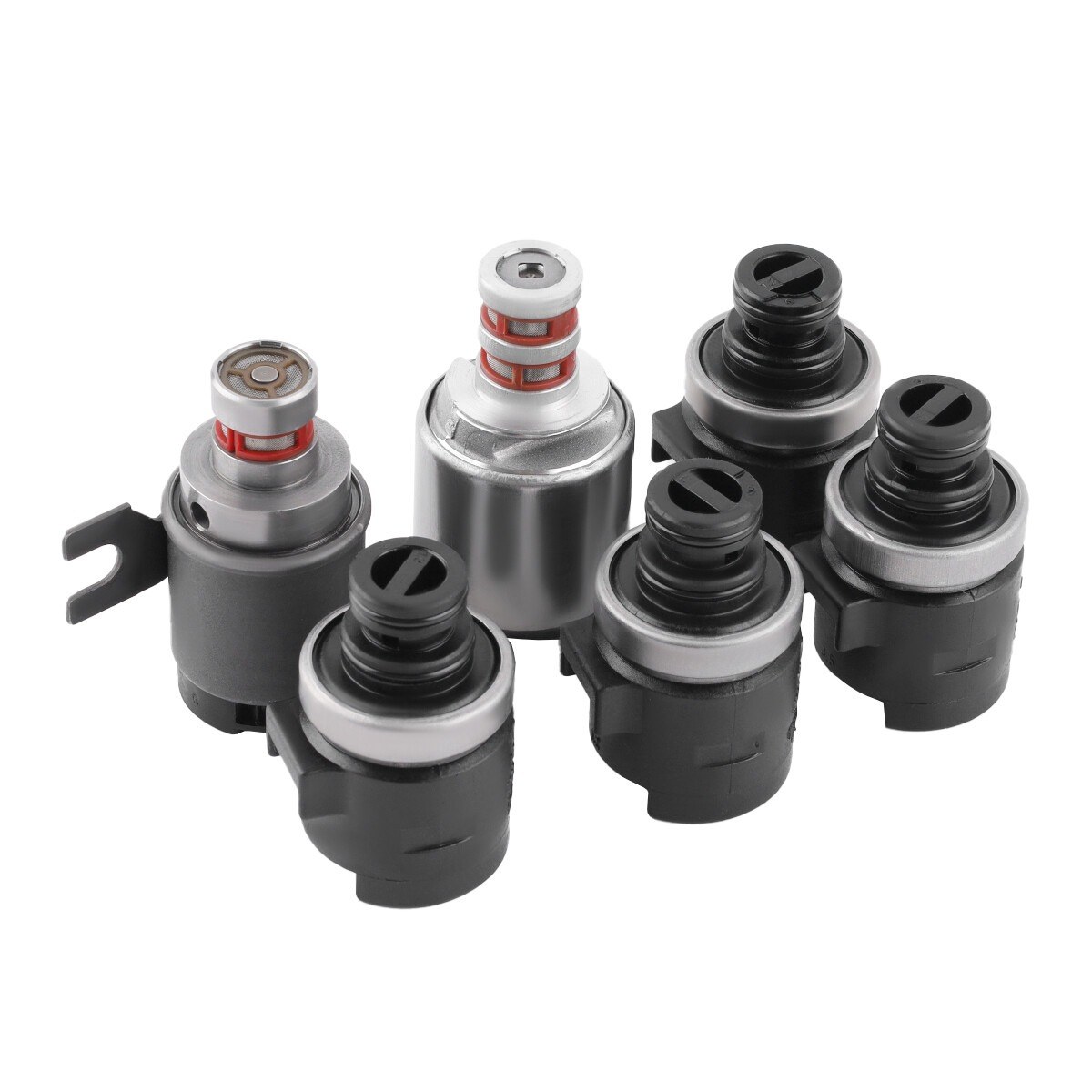
If a 1997 Ranger or Mazda B-Series with the 5R44E has started shuddering at 40 to 55 mph, won't hold converter lockup, or keeps setting a TCC code after you already changed the solenoid, the fault is often in the valve body circuit that feeds the solenoid rather than the coil itself. Read this carefully before ordering: this listing is a complete remanufactured 5R44E/5R55E valve body for 1997-up units with the solenoids already installed, including the TCC solenoid. It is not a loose solenoid. The rebuilder machines in an updated pressure regulator valve, updated boost valve and updated TCC regulator valve, ships it with a separator plate and new gaskets, and tests each unit on a valve body tester. If you only need the coils, see the 5R44E TCC and shift solenoid set.
What the TCC circuit does in a 5R44E
The 5R44E is the lighter-duty five-speed from Ford's 4R44E family, sharing its valve body design with the 5R55E. Converter lockup is controlled by the PCM through a duty-cycled TCC solenoid on the valve body. The solenoid output does not apply the converter clutch directly. It signals the TCC regulator and modulator valves, which meter apply oil to the converter. When those valves and their bores wear, apply pressure becomes unstable even with a perfect solenoid. Sonnax links TCC regulator wear in this family to TCC cycling, surge, high slip RPM, overheated fluid and code P0741, and a worn TCC modulator sleeve to no lockup, poor converter fill and low cooler flow. That is the reason a whole valve body with an updated TCC regulator fixes problems a solenoid swap cannot.
Symptoms this assembly addresses
- Shudder or surge at steady cruise as the converter tries to lock
- No lockup, high cruise RPM and lower fuel economy
- Code P0741 (TCC performance) that returns after replacing the solenoid
- Fluid running hot from converter slip
- Soft shifts or delayed reverse from worn boost and pressure regulator valves
- Shift solenoid or gear ratio codes caused by a worn solenoid regulator valve
How to confirm it before you order
Start with fluid level and condition; burnt, dark ATF with heavy friction material points to a converter or band problem that a valve body alone will not cure. Scan for codes and note whether they are electrical or performance codes. An electrical TCC code with a bad resistance reading at the solenoid is often just the coil. A performance code with a good coil, lockup cycling on a scan tool, or codes that came back after a previous solenoid replacement point at the valve body. Servo bore wear in the case can also cause slipping and P0735 on this family, so rule that out too. Our 5R55 diagnostic walkthrough covers the sequence, and the 5R55 identification guide confirms you have an E-family unit rather than a 5R55W or S.
Fitment
The rebuilder lists this valve body for both the 5R44E and the 5R55E from 1997 on; this page is the 1997 entry. Both units were used in Ford Ranger and Mazda B-Series trucks, and the 5R55E also went into 1997-2001 Explorer and Mountaineer models with the 4.0L. Ford made running changes to separator plates and solenoids over the years, so compare the casting and solenoid connectors with your original before installing, or send us your year and VIN. More 5R44E and 5R55E parts are on the 5R55 parts page.
Install notes
- Drain and drop the pan, unplug the harness and remove the old valve body, keeping track of any checkballs left in the case.
- Install with the supplied separator plate and gaskets and torque the bolts in sequence from the center out; uneven clamping can bind valves.
- Fit a new filter and refill with Mercon V, then check the level hot with the engine running.
- Clear codes and drive through several lockup cycles at steady cruise to confirm the converter applies smoothly.
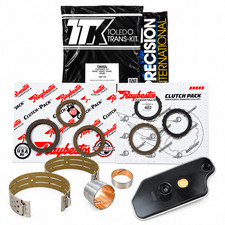
If the fluid is badly burnt, plan a full overhaul instead; the 5R55E banner rebuild kit covers the soft parts for this family.