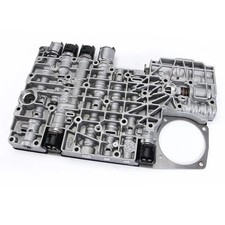
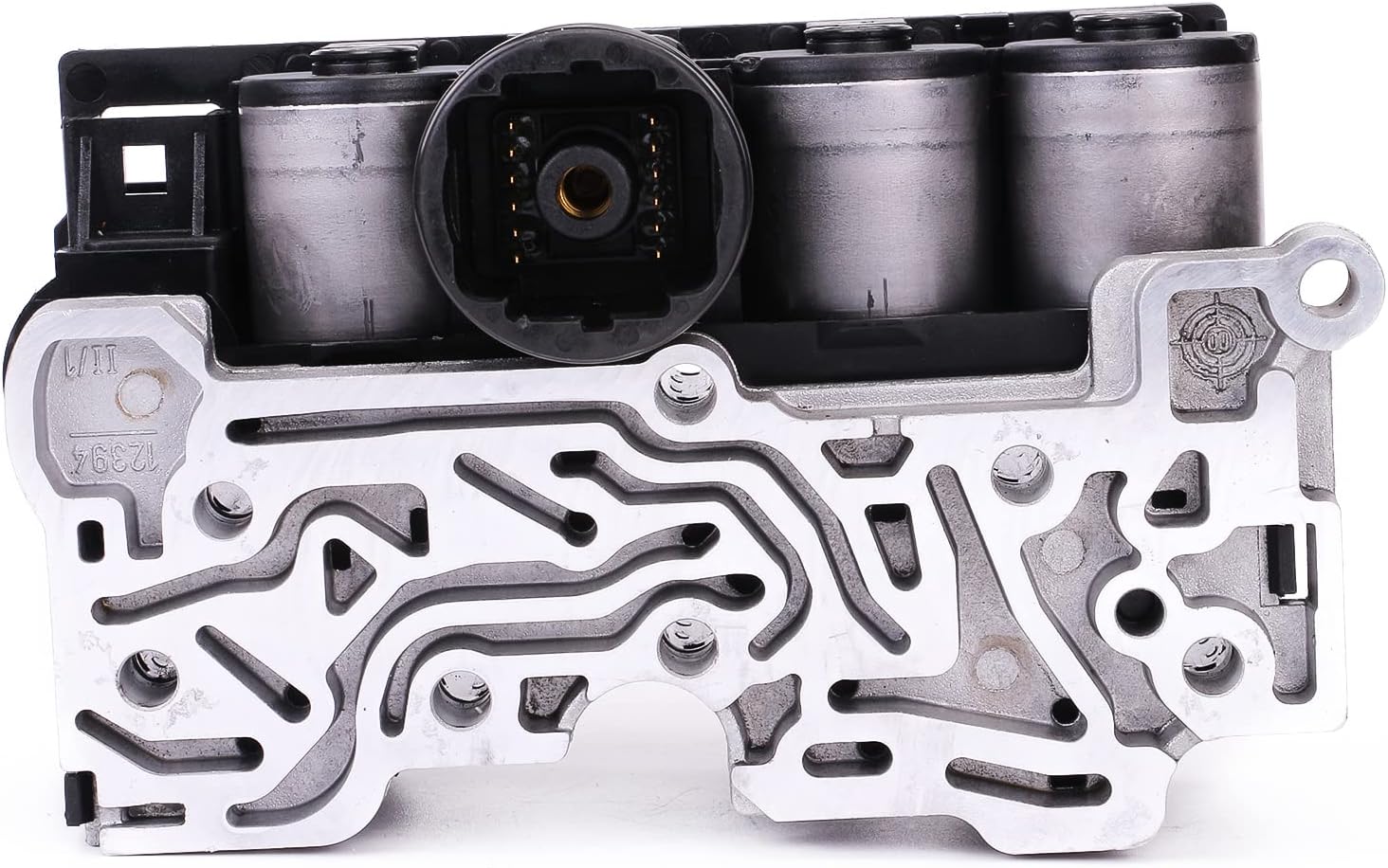
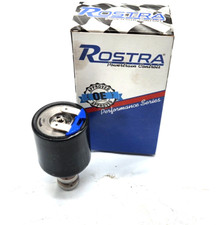
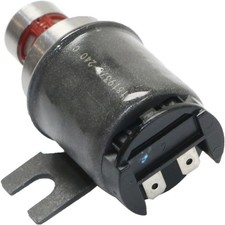
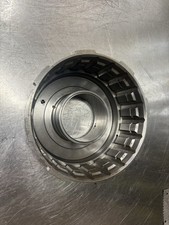
Shopping for a 5R55E valve body usually means a Ford Explorer, Explorer Sport Trac, Mercury Mountaineer, Ford Ranger or Mazda B4000 with the 4.0L V6 that has started shifting soft, slipping out of a gear, backing up late, or setting a pressure control code. This remanufactured valve body covers the full 1995-2011 run of the small-case Ford rear-drive automatics on the listing, and it goes in as a complete, bench-ready unit so you are not rebuilding a worn casting one valve at a time.
What the valve body does in a 5R55E
The 5R55E is the five-speed version of the old A4LD-based family, and it still applies its ratios with a mix of clutches and two bands, an intermediate band and an overdrive band, each worked by a servo. The valve body takes pump pressure, regulates it into line pressure, and sends it to whichever clutch or servo the computer calls for. Electronic pressure control (EPC) sets how hard line pressure rises, the shift solenoids pick the gear, and a TCC solenoid locks the converter at cruise. Because the bands share oil with the servos, a valve body that leaks pressure internally shows up as soft or flared shifts long before anything breaks.
Symptoms that point to this valve body
- Delayed engagement into Reverse, or a reverse that feels weak until the truck warms up
- Soft, slow or flared upshifts, especially 1-2 and 2-3
- Low line pressure that a gauge confirms but the EPC solenoid tests fine
- Converter lockup that slips, cycles or shudders at highway speed
- Stored codes such as P0745 (pressure control solenoid circuit) or a ratio code like P0735 when a gear is not holding
Sonnax ties the delayed Reverse, soft shift and low line pressure complaints on the 4R44E/4R55E/5R44E/5R55E family to a worn boost valve and sleeve, which lets Reverse and TV oil cross-leak or exhaust. That wear lives in the valve body casting, which is why a whole remanufactured unit is often the cleaner fix.
How to confirm it before you order
Start with fluid level and condition, then scan for codes and watch commanded versus actual gear. Put a pressure gauge on the line tap and compare idle and stall readings in Drive and Reverse; low Reverse pressure with good forward pressure leans toward the boost valve area. Rule out the electrical side by checking the EPC and shift solenoid resistance at the case connector. If fifth or second will not hold even with good pressure, the servo bores and bands are suspect instead, and our 5R55 harsh or delayed shift walkthrough covers how to separate a servo leak from a valve body problem.
Fitment
The listing covers 1995-2011, the span the Ford small-case electronic automatics were built. Be aware that the five-speed 5R55E itself is generally documented from the 1997 model year on 4.0L Explorers and Mountaineers, and it later carried on in the Explorer Sport, Sport Trac, Ranger and B4000 through 2011. Trucks from 1995-1996 used the four-speed 4R44E/4R55E, which share the case family but not every valve body detail. Do not confuse this with the 5R55N, S or W used in the 2002-up four-door Explorer, Mustang V6, Lincoln LS and Thunderbird; those use a different valve body and solenoid pack. Match the casting numbers, connector and solenoid layout on your old unit to the photos, or send us your year and VIN before it ships. Everything else we carry for this family is on the 5R55 parts page.
Install notes
- Drain and drop the pan, replace the filter and pan gasket, and clean the magnet so old debris does not go straight into the new valve body.
- Keep the separator plate, gaskets and check balls oriented exactly as removed, and run the valve body bolts down evenly in sequence to the factory torque. Overtightening distorts the casting and causes the very cross-leaks you are trying to fix.
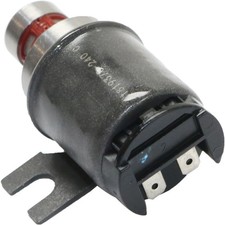
- Reuse your solenoids only if they test good. A tired pressure control solenoid or TCC solenoid will make a new valve body feel just like the old one.
- Refill with Mercon V, check the level hot, and clear the adaptive memory (KAM reset) so the computer relearns shift pressures on the new hardware.
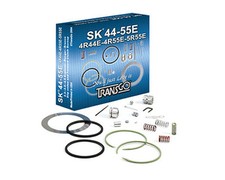
If you would rather rework your original casting, the Sonnax 4R44E-5R55E Zip Kit addresses the common line, EPC and converter circuit leaks.