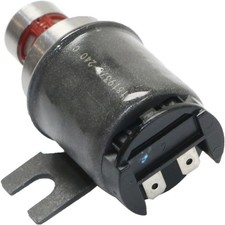
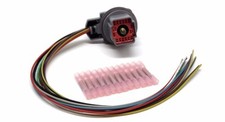
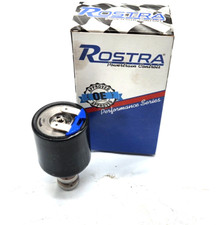
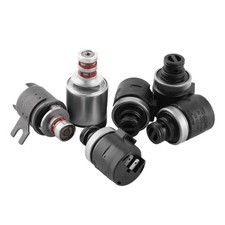
Many Ranger, Mazda B-Series and 1997-2001 Explorer owners land on this page searching for a 5R55E TCC solenoid because the truck shudders, will not hold lockup on the highway, or shifts hard. Read this first: the part sold here is the EPC (electronic pressure control) solenoid, not the converter clutch solenoid. It is a new, Bosch-made unit with a mounting bracket and a two-blade connector, cross-referenced to Ford numbers 9L2Z-7G383-A, XL2Z-7G383-AA and F77Z-7G383-AA. It is listed under TCC because a weak EPC solenoid is one of the most common reasons a 5R55E loses converter lockup, and that connection is explained below.
Why the EPC solenoid controls lockup in a 5R55E
In this transmission the PCM sets line pressure through the EPC solenoid, which feeds signal oil to the boost and EPC engagement valves in the valve body. Lockup depends on that pressure. Sonnax explains that when the converter clutch applies, the TCC modulator valve strokes and switches converter oil over to the TCC regulator valve, and the TCC regulator is supplied by line pressure that the EPC circuit controls. If the EPC solenoid is dirty or the circuit leaks, line rise is poor, the TCC regulator is starved, and the converter clutch slips even though the TCC solenoid itself is fine. That is why a scanner can show a healthy TCC duty cycle while slip RPM stays high.
Symptoms that point to the EPC solenoid
- Converter clutch slip at cruise, or codes P0741 or P1744 with a TCC solenoid that tests good
- Harsh engagement into drive or reverse, often worse cold
- Delayed reverse, or a 1-2 or 2-3 flare
- Harsh shifts right after a forced downshift
- Soft shifts and a slip in third as the fluid heats up
- A history of broken bands or servo piston seals blown out of their bores
How to confirm it before you order
Put a pressure gauge on the case and watch line rise. Sonnax gives a good maximum EPC of 125-130 psi in overdrive and up to 144 psi in reverse, and says EPC should not fall more than 15 psi when the converter applies. If pressure is low only when hot, suspect leakage in the EPC circuit as well as the solenoid; Sonnax air-tests that circuit with the valve body still bolted to the case. A sticking TCC modulator valve can hold EPC to about 65 psi, which no solenoid will cure. Our 5R55 harsh or delayed shifts walkthrough lays out the order of checks, and the lockup guide explains what TCC slip numbers mean on a scanner.
Fitment
This solenoid is listed for 1997-2011 Ford Ranger with the 2.3L, 3.0L or 4.0L, 1997-2001 Explorer and Mercury Mountaineer with the 4.0L, the 1997 Aerostar, and 1997-2010 Mazda B2300, B3000 and B4000, across the 4R44E, 4R55E, 5R44E and 5R55E. Sonnax notes that this family went through many valve body, plate and solenoid changes after 1995, so compare the bracket, connector and Ford number on your old solenoid before you buy, or send us your year and VIN. It does not fit the 2002-up Explorer or Mountaineer: those use the 5R55W with a one-piece solenoid pack. More parts for this family are on our 5R55 parts page. If your converter solenoid itself has failed, the 5R55E solenoid set includes a TCC solenoid along with the shift solenoids.
Install notes
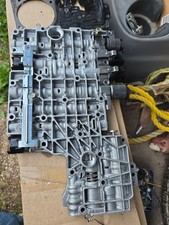
- Drain the fluid and drop the pan; the EPC solenoid is retained on the valve body by its slotted bracket.
- Clean the bore and look for debris on the old solenoid screen. Contamination is what sticks these, so find its source.
- Lubricate the new O-rings with Mercon V, seat the solenoid by hand and do not pull it into place with the bolt.
- Refill with Mercon V, check the level hot, clear codes and road test through several lockup cycles.
- Some applications may need the PCM adaptive values reset after the repair.
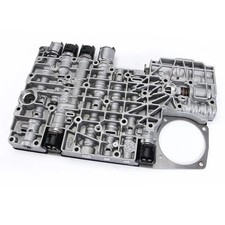
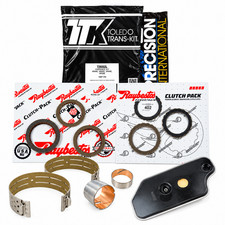
If line pressure stays low with a new solenoid, the valve body bores are worn; a 5R55E valve body addresses that. If the bands are already burnt, plan on the 5R55E master rebuild kit.