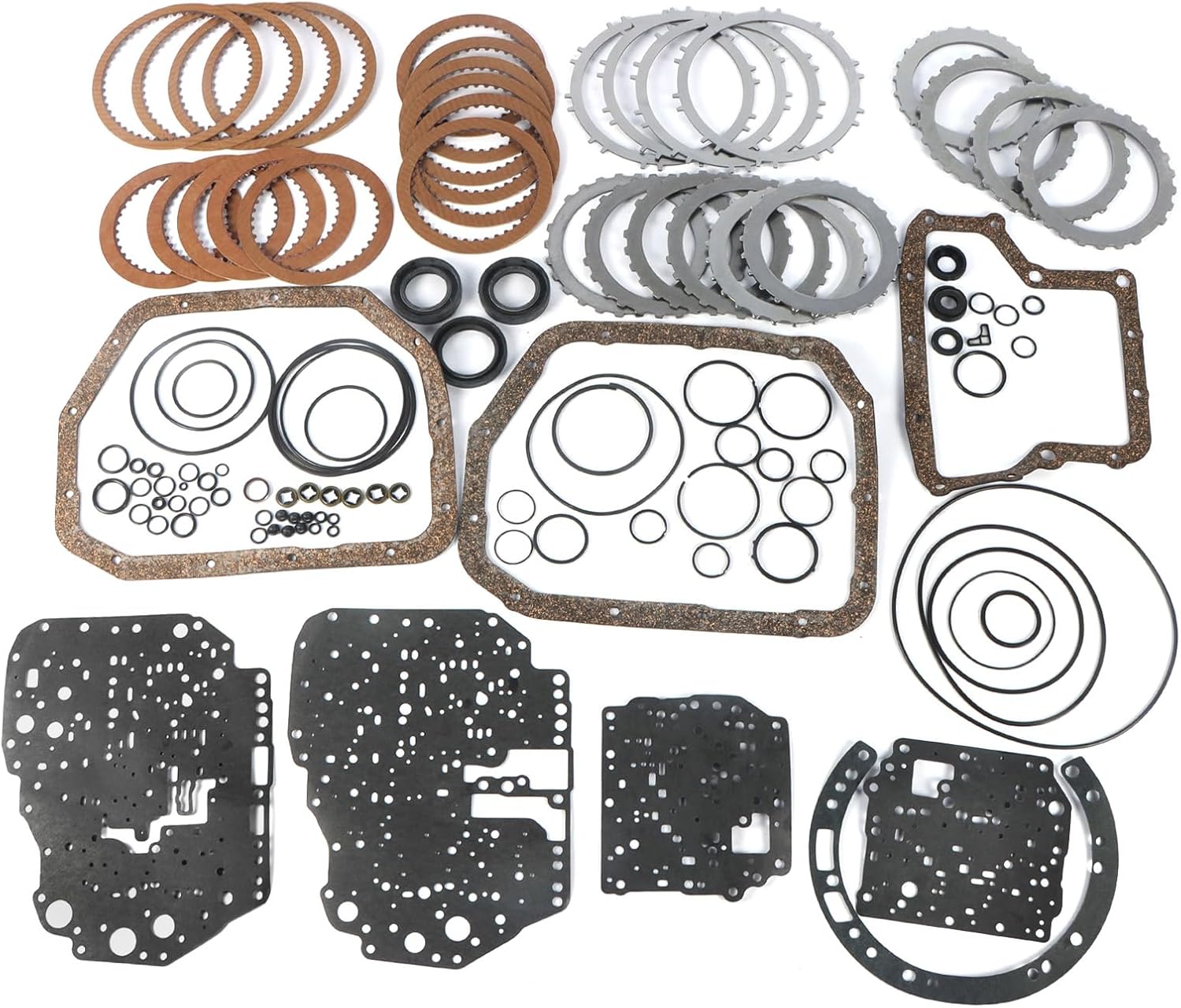
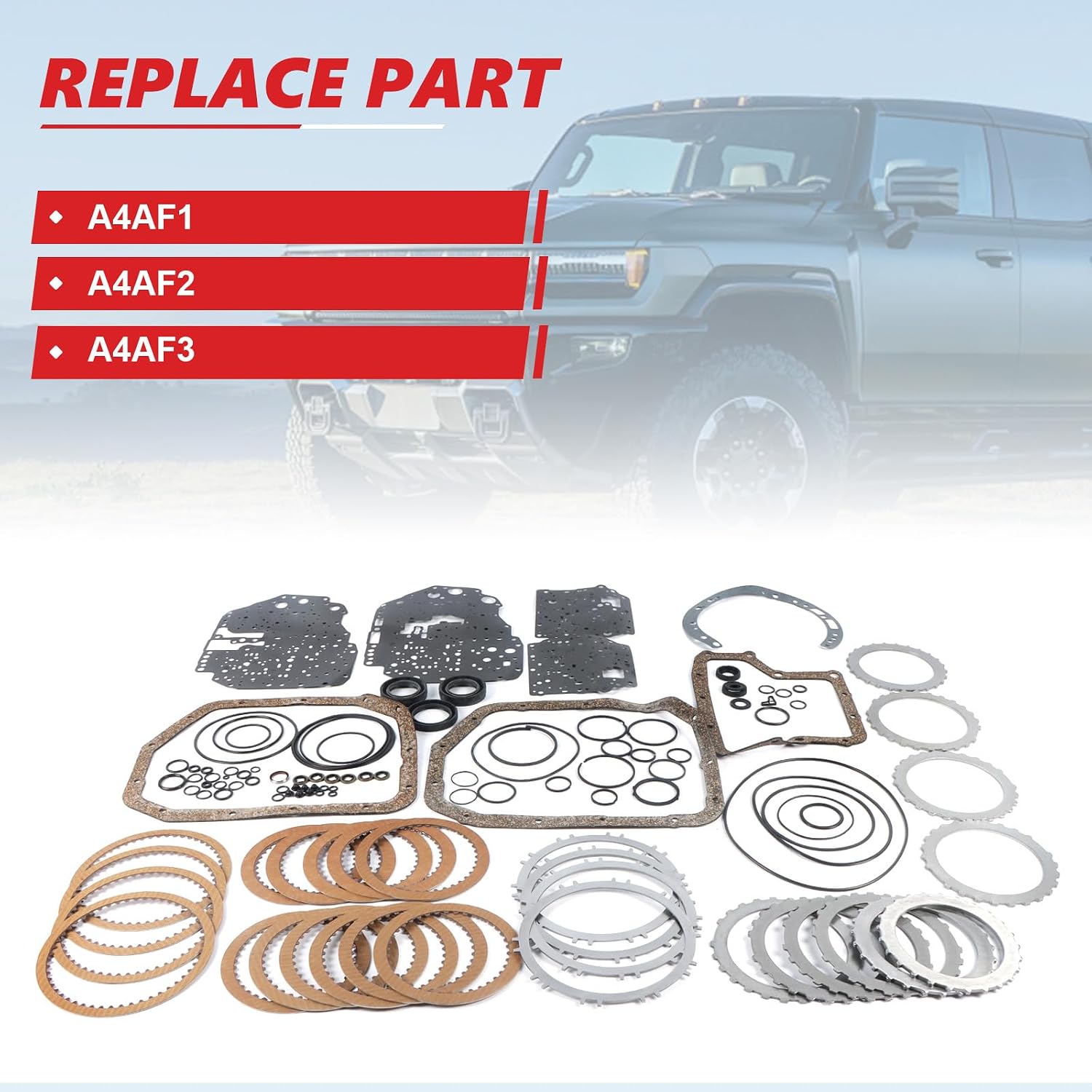
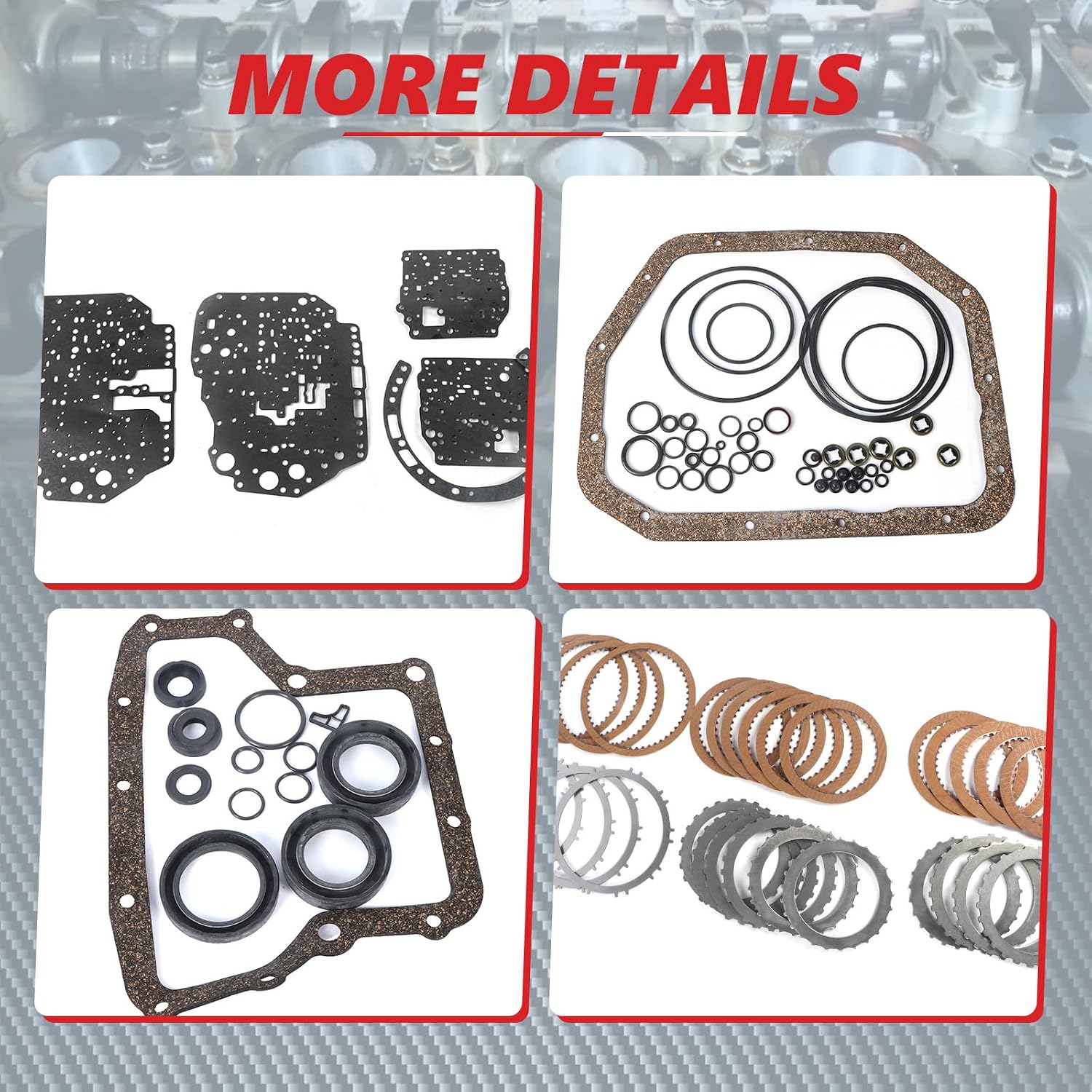
A Hyundai Accent, Kia Rio, Sephia or Tiburon automatic that slips on upshifts, flares on the 2-3, or sits for a second before it engages on a cold morning usually has worn clutch packs and hardened seals. This master overhaul kit (manufacturer part number ZDKk-QMP-GN02842) covers the Hyundai and Kia A4AF four-speed family and the Mitsubishi F4A32, with the friction pack, steels and the full seal, gasket, sealing ring, O-ring and washer set needed to close the case after a complete teardown.
What the master rebuild kit does in an A4AF1 family unit
The A4AF transaxles were developed with Mitsubishi and are based on the F4A21 four-speed, which is why a Mitsubishi F4A32 cross reference appears on the same kit. The A4AF1 was the first of the line, followed by the A4AF2 and the long-running A4AF3 used in the Accent, Rio, Getz and Elantra. All of them shift by applying clutch packs with line pressure fed through rotating sealing rings. When the bushings wear, that pressure leaks away, the packs slip and burn, and the debris clogs the valve body until the unit stops shifting properly. A master kit renews the clutch surfaces and every seal that holds pressure on the pistons.
Symptoms of a worn-out A4AF unit
- Slipping or flaring upshifts, most often on the 2-3
- Delayed engagement into drive or reverse when cold
- Harsh shifts after the fluid gets hot and thin
- Burnt fluid and friction material in the pan
- Leaks between the case and torque converter or at the case seams
How to confirm it before you order
Start with the fluid. Low fluid from a leak can cause every symptom above, so top up with the correct fluid and road test before anything else. If the fluid is dark and burnt and the slip stays after a correct fill, the clutches are done. Our transmission slipping diagnosis guide walks through the checks, and the rebuild vs replace vs reman guide helps decide whether a rebuild is worth it on a high-mileage economy car.
Fitment
The listing covers 2001-2011 Accent 1.6L, 1999-2003 Accent 1.5L, 2005-2010 Rio 1.6L, 2006-2011 Rio5 1.6L, 1999-2001 Tiburon 2.0L, 1999-2000 Elantra 2.0L, 1995-1999 Sephia 1.5L and 1.8L, 1995-1999 Sportage 2.0L, and 1992-1996 Mirage and Eclipse 1.5L and 2.0L, with cross references A4AF1, A4AF2, A4AF3 and F4A32. Be aware that the code changed across these years. The A4AF1 itself was an early unit, and most Accent and Rio cars carry the later A4AF3, built from 1999 into the 2010s. Some of these models also came with the A4CF1 or a manual gearbox. Read the tag on your transaxle and match it before ordering, or send us your year and VIN. If your tag reads A4AF2 or A4AF3, compare with our A4AF2 rebuild kit and A4AF3 master rebuild kit, and see the full rebuild kits collection.
Install notes
- Inspect every bushing during teardown. Worn bushings are the root cause on this family, and new seals will not hold pressure across a worn bushing.
- Air-check each clutch drum before final assembly.
- Replace all frictions and steels as a set and set clearance with the selective snap ring.
- Do not reuse old piston seals; reused rubber is the usual reason a fresh rebuild comes back slipping.
- Hold sealing rings and thrust washers in place with Lubegard Assemblee Goo during assembly.
- Flush the cooler and lines with Kooler Kleen so old debris stays out of the new packs.
- Refill with Hyundai ATF SP-III, the factory spec for these units. Total capacity is about 6.1 liters.
The kit does not include a torque converter, valve body or hard parts. Inspect the valve body for debris during teardown, since clutch material packed in its bores causes the same shift faults as a worn pack.