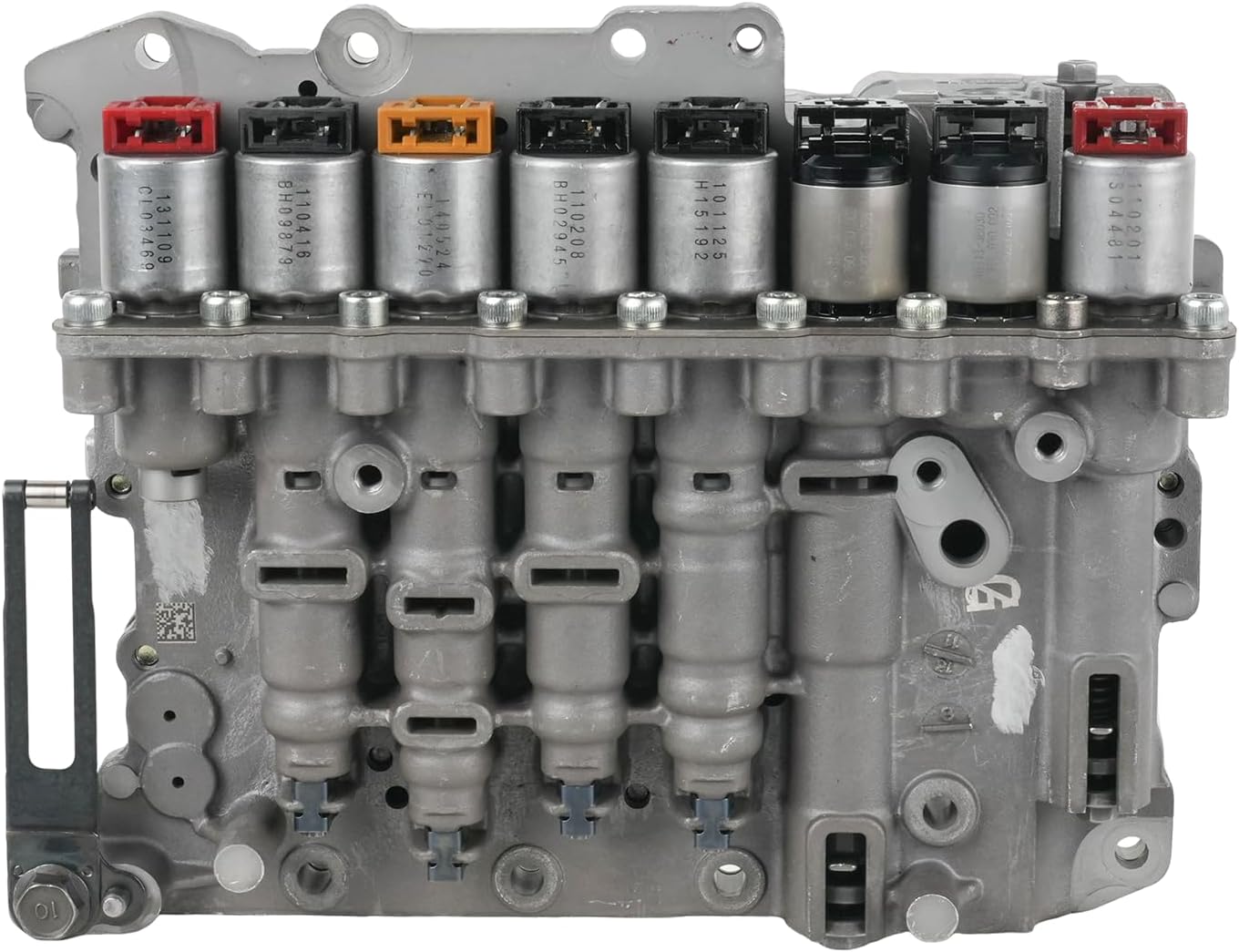
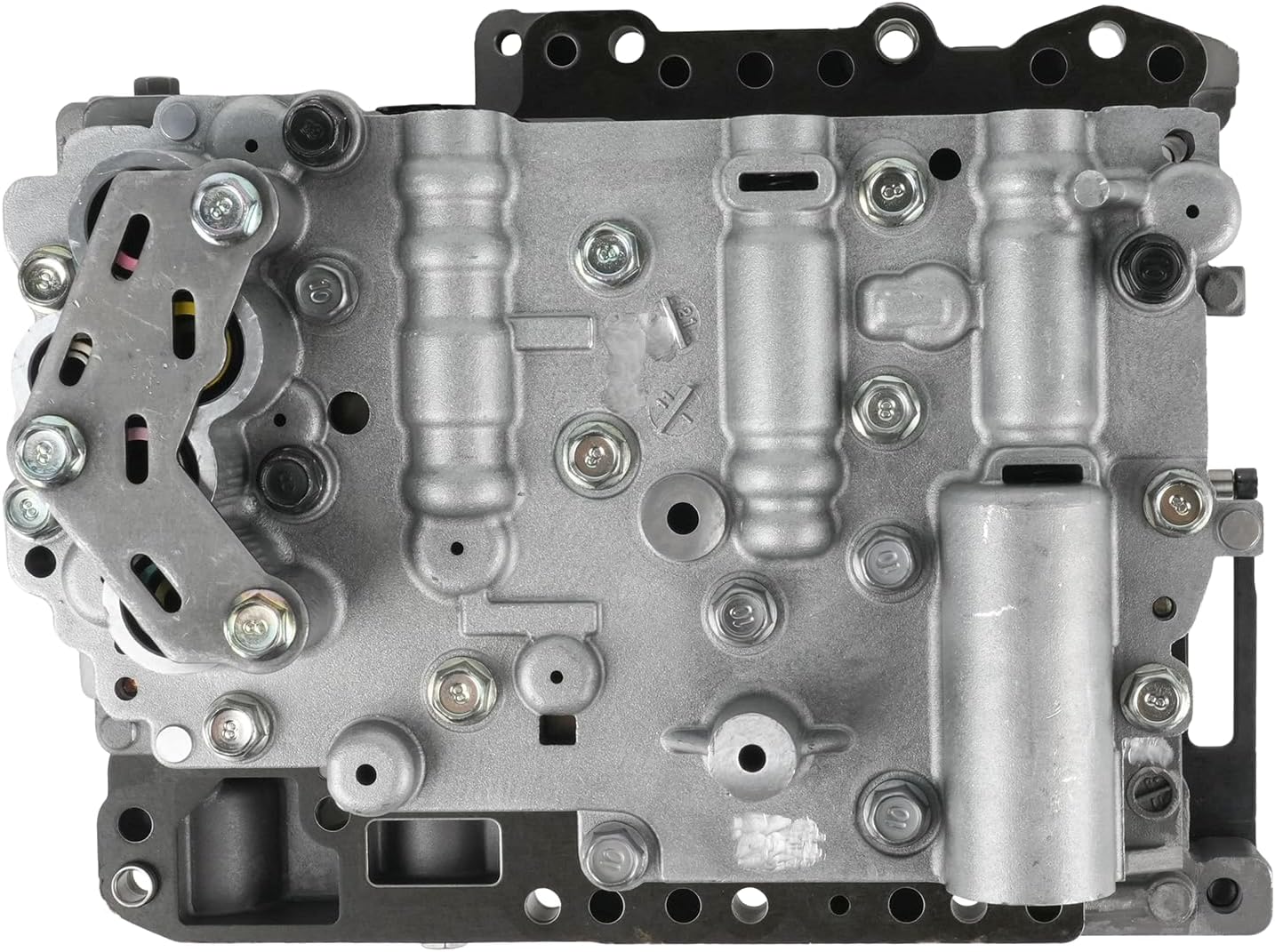
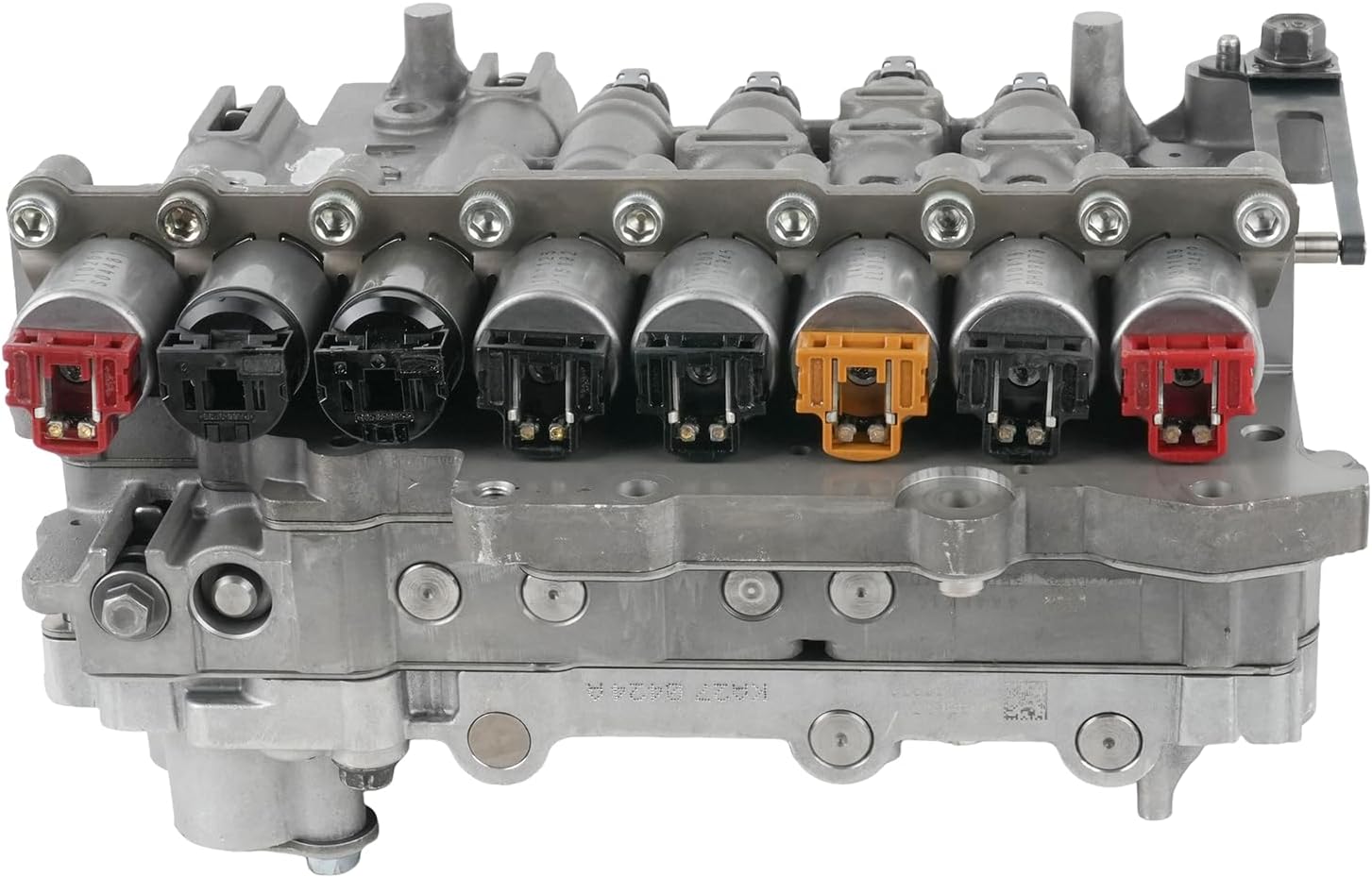
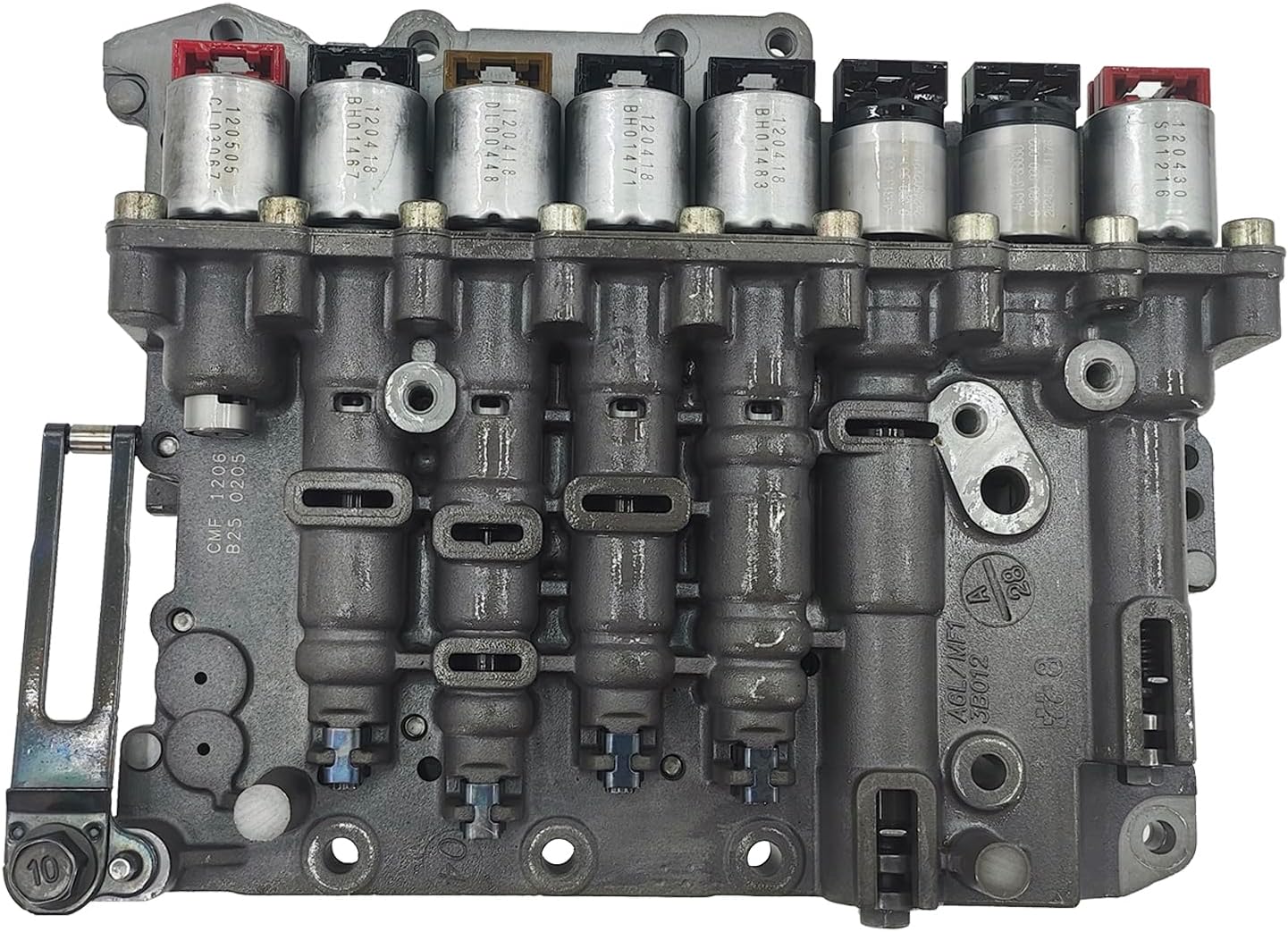
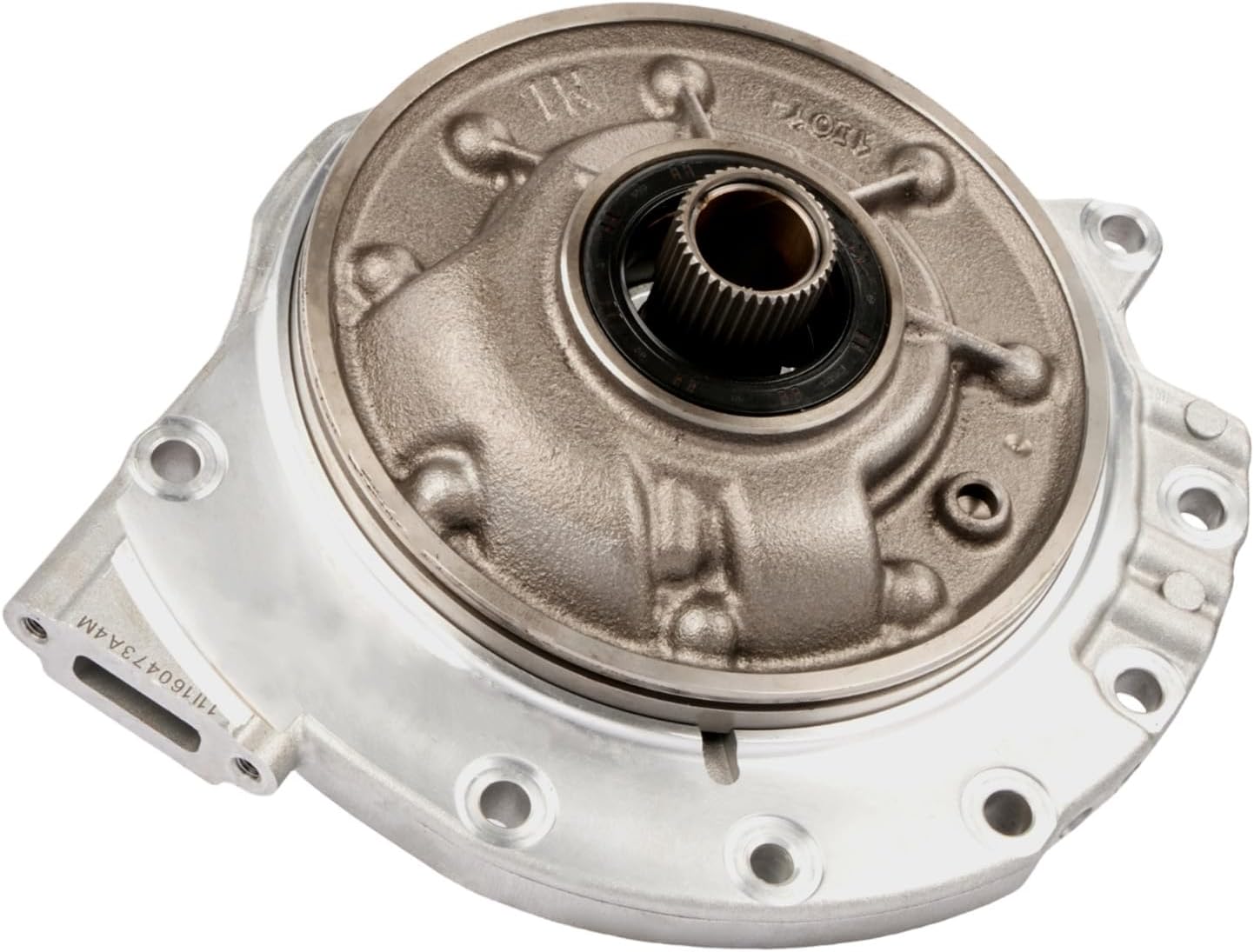
Hyundai and Kia owners shopping for this part usually describe the same thing: a bang on the 2-3 or 3-4 upshift, a hard kick on downshifts, a flare between gears, a long pause before Drive engages, or a check engine light with solenoid codes in the P0750-P0770 range or P0748. This is a remanufactured valve body for the A6MF1 and A6MF2 six-speed transaxles, supplied with all eight shift and pressure control solenoids installed and the manual valve detent lever in place.
What the valve body does in an A6MF1 or A6MF2
These six-speeds rely on solenoid-controlled clutch-to-clutch shifting. The transmission control module commands a mix of on/off shift solenoids and variable force solenoids, and the valve body uses switch valves to route their pressure to the right clutch at the right moment. That design makes the shifts very sensitive to valve and solenoid condition. A published shop case on a 2011 Kia Forte shows how little it takes: a broken tab on a solenoid retainer bracket let Shift Solenoid A move out of position, the low/reverse clutch applied on the 3-4 shift, and the car felt like it hit a wall. Worn bores and tired solenoids create the same kind of mistimed apply on a smaller scale, which is why new solenoids alone often do not cure a worn unit.
Symptoms
- Harsh or banging 2-3 and 3-4 upshifts
- A severe 6-4 kickdown bang
- Flare or a momentary neutral during upshifts and downshifts
- Delayed engagement into Drive, especially after a cold start
- Converter clutch shudder or slip at light, steady throttle
- Solenoid, pressure control and gear ratio codes, including P0750-P0770 and P0748
How to confirm it before you buy
Start with the fluid level and condition, since low or degraded SP-IV causes many of the same complaints. Pull codes, then watch commanded versus actual gear and solenoid duty in live data during a road test; our guide to reading transmission live data shows what to look for. Check solenoid resistance at the case connector following our solenoid multimeter test. If a solenoid fails electrically and the fluid is clean, a single eight-piece A6MF1 solenoid kit may be enough. If the solenoids test good and the shifts are still harsh or flaring, the bores are worn and the complete valve body is the fix.
Fitment
The listing covers 2009-on six-speed A6MF1 and A6MF2 applications, including the Hyundai Sonata, Santa Fe, Tucson, Elantra, Azera/Grandeur and Veracruz, and the Kia Optima/K5, Sorento, Forte, Carens, Sedona/Carnival and Cadenza/K7, in FWD, AWD and 4x4 versions. The A6LF longitudinal units are not covered by this part. Model years, engines and solenoid connectors vary across this long list, so compare the new body to your old one and confirm your transmission code before ordering, or send us your year and VIN. You can browse other transmission families from our shop by transmission page.
Install notes
Drain the fluid and drop the pan, unplug the solenoid connectors, remove the valve body bolts and lower the assembly. Before the new body goes up, confirm every solenoid retainer bracket is intact and each solenoid is fully seated. Torque the bolts in sequence to spec, install a new filter and pan gasket, and refill only with genuine-specification SP-IV. Run a TCM adaptive reset or relearn afterward so shift quality settles. If the old fluid was full of friction material, the clutches have been damaged and a A6MF1/A6MF2 master rebuild kit belongs on the same job. The listing states this unit carries a 6 month, unlimited mile warranty and manufacturer part number DMA6MF.