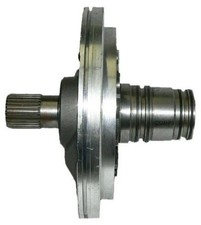
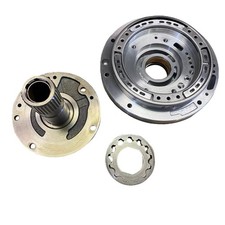
Ford parts catalogs and rebuilders often list the 1995-2003 front pump under the AODE name even when it is going into a 4R70W, because the two transmissions share the same pump body, gear size and stator support through those years. If you searched for an AODE pump because your Crown Victoria, Grand Marquis, Town Car, Thunderbird, Mustang or F-Series is slow to engage, slips once the fluid is hot, or whines at idle, this remanufactured assembly is built for that 1995 through 2003 window.
How the pump works in the AODE family
The AODE replaced the hydraulically controlled AOD with computer control of shifts, line pressure and converter lockup, and the 4R70W followed about a year later with wider ratios. In both, the front pump is a gear pump turned directly by the torque converter hub. It draws fluid through the filter, and its output becomes line pressure after the pressure regulator and EPC solenoid set the level. The pump assembly also carries the stator support shaft and the converter hub bushing, so it is both the hydraulic heart of the transmission and the front bearing for the converter. Wear here starves every circuit at once, which is why pump trouble feels like the whole transmission is getting weak rather than one gear failing.
Symptoms that point to the pump
- Engagement into Drive or Reverse takes a second or more, especially warm
- Every upshift feels soft or slips, and the problem worsens under load
- A whine whose pitch tracks engine RPM, audible in Park
- The front seal keeps leaking because the bushing lets the converter hub move
- Fluid turns dark and smells burnt from clutches that slip on low pressure
Diagnose before you replace
A line pressure gauge settles most of the question. Pump wear shows low pressure in every range that rises with engine speed, while a single weak circuit points elsewhere. Rule out the valve body as well: a worn pressure regulator bore can bleed EPC oil to the pump suction and look exactly like a bad pump. Our AODE and 4R70W problems guide covers that test, and the Crown Victoria shift problems guide helps separate pump symptoms from solenoid and clutch faults on the Panther-platform cars.
Fitment across 1995-2003
This pump is listed for AODE applications from 1995 through 2003, and the same design served the 4R70W in those years. Inside this range the pump gears are about 0.608 inch thick. It is not correct for the earliest 1992-93 AODE, which used thinner gears, or for 2004-up 4R70W and 4R75W transmissions, which use a different stator support. Pull the old pump and compare gear thickness, stator splines and the bolt pattern, or send us your year and VIN. The AODE and 4R70W collection lists every pump range we stock, and owners who prefer the listing under the 4R70W name can use the 4R70W pump for 1995-2003.
Install notes
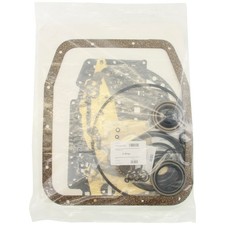
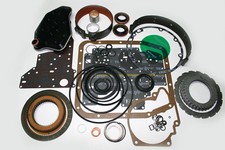
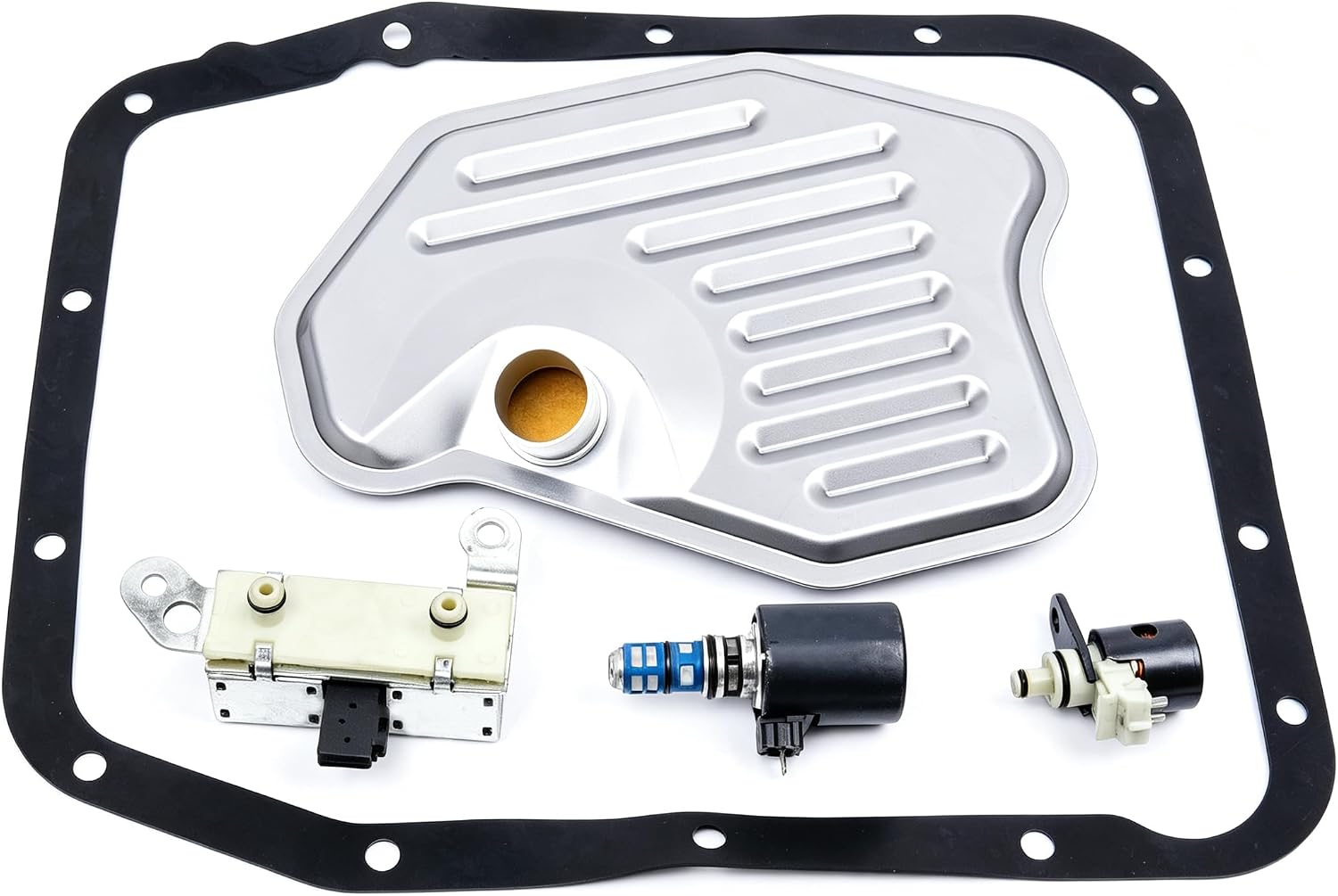
Plan the pump swap as part of a transmission removal or bench rebuild. Install a new front seal and check bushing-to-hub clearance, since the factory bushing is finish-machined in place and thin drop-in replacements can leave the hub loose. Inspect the converter hub drive and seal surface, and replace the converter if the hub is grooved. Use a new pump gasket, outer O-ring and stator support sealing rings if they are not supplied, center the pump with an alignment band and torque the bolts evenly. Fill with Mercon V and set the level hot. If pump wear has already damaged clutches, the AODE master rebuild kit covers the soft parts, and the solenoid and filter kit suits 1995-97 units that are also throwing solenoid codes. Clear adaptive memory after the repair.