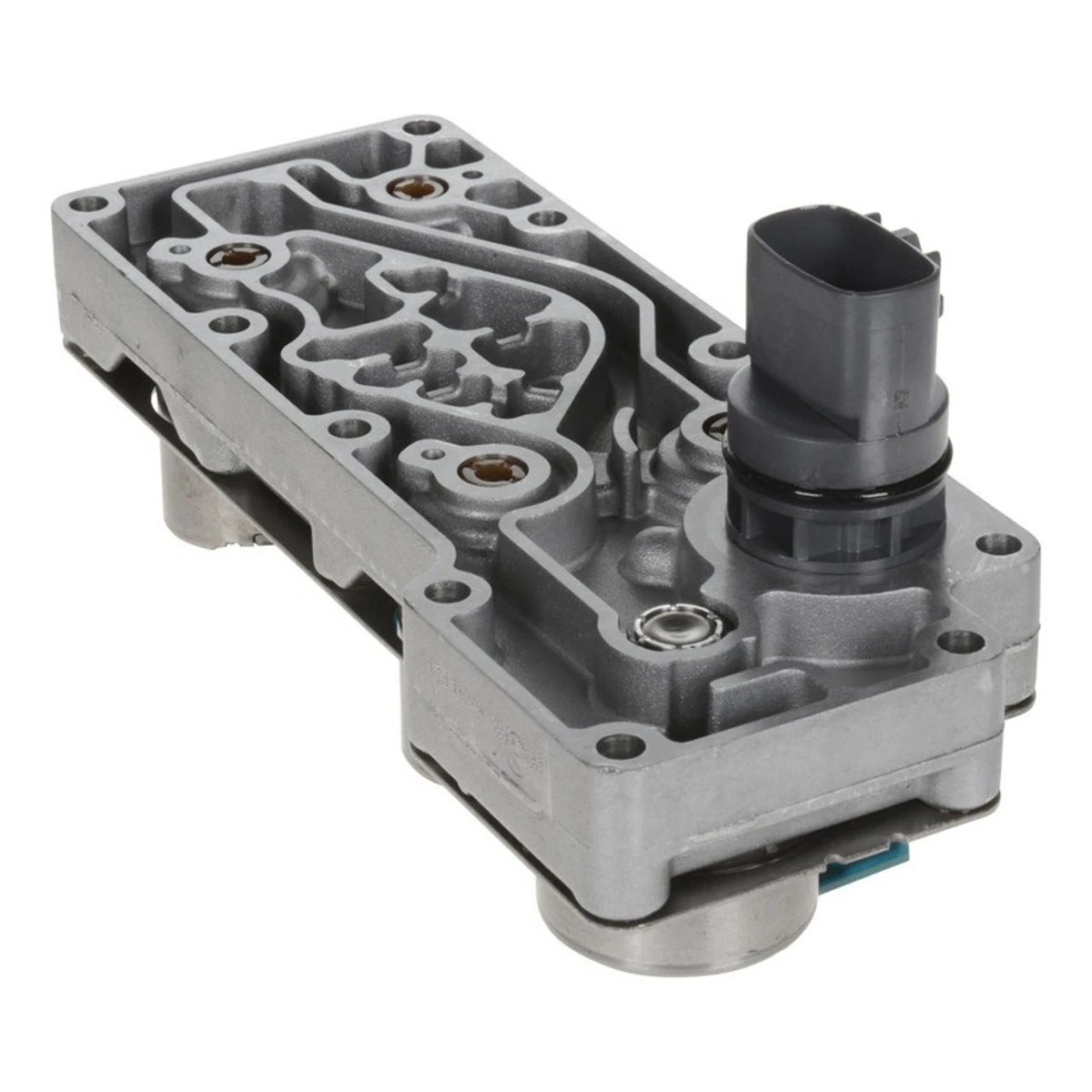
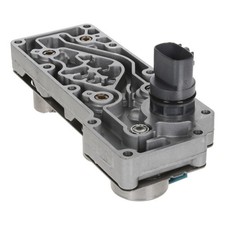
Searching for an E4OD pressure control solenoid for a 1995, 1996 or 1997 Ford usually starts with one of two complaints: the truck thumps hard into Drive and Reverse and bangs through every upshift, or it does the opposite, shifting lazy and soft while the engine feels like it lost a cylinder. Both trace back to electronic pressure control. On the E4OD there is no separate EPC solenoid to buy. It is built into the solenoid body that bolts under the valve body, so this listing is the complete remanufactured late-design block, as pictured, with the gray connector on top. It is a lower-cost alternative to our other 1995-1997 E4OD EPC block; both cover the same model years.
What the pressure control solenoid does in a 1995-97 E4OD
Ford built the E4OD without a throttle cable or a vacuum modulator, so the computer is the only thing setting line pressure. It sends a varying current to the EPC solenoid, a variable force solenoid. The solenoid converts that current into a signal pressure that acts on the line pressure modulator plunger, and the plunger tells the main regulator how much pressure to hold. Ford's own patent on this design explains the inverted logic: with no solenoid force, pressure goes to maximum. That is the failsafe. Lose the circuit and the truck still drives, just with very firm shifts, rather than burning clutches. When you hook a trailer to a 7.3L Power Stroke or a 460 truck, the computer drops EPC current and raises pressure to clamp the clutches harder under load.
Symptoms of a failing EPC solenoid
- Harsh garage shifts and hard upshifts while shift timing stays normal, typical of an open EPC circuit
- Soft, slipping shifts combined with stumbling or reduced power, which is the computer limiting torque when it sees a shorted circuit
- A flashing overdrive light under acceleration
- Codes P1746 (open) or P1747 (short) on 1996-97 OBD-II trucks, and EEC-IV codes 624 or 625 on a 1995
- Shift feel that only goes bad hot or over rough roads, a sign of a tired internal connection in the old block
How to confirm it before you buy
Fix engine sensor codes first, because a bad MAF or throttle position sensor can raise EPC pressure by itself. Then check the coil at the solenoid body connector. ATSG lists 3.0 to 5.0 ohms across pins 11 and 12, much lower than the 20 to 30 ohm shift, coast and converter solenoids in the same block. A good reading still needs a line pressure gauge at the case tap. Sonnax documents a worn modulator sleeve that leaks EPC oil and lets the plunger hang, causing intermittent harsh shifts or soft 1-2 and 2-3 shifts with a perfectly good solenoid. Our EPC solenoid symptoms guide covers the full test, and the valve body testing guide shows how to separate a bore problem from a solenoid problem.
Fitment
This block is listed for 1995 through 1997 E4OD units. The listing also references the F-150; Ford installed the E4OD in some F-150s as well as F-250, F-350, Bronco, E-Series and motorhome chassis, so the body style alone does not settle it. Sonnax separates replacement blocks into a 1989-94 version and a late version for 1995-98 E4OD, and the two are not interchangeable. Lay your old block next to the photo and compare the bolt pattern and connector, or send us the year and VIN. A 1989-1994 truck needs the early 1989-1994 block. Everything else for this unit is on the E4OD/4R100 parts page.
Install notes
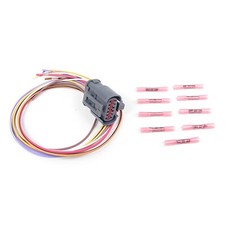
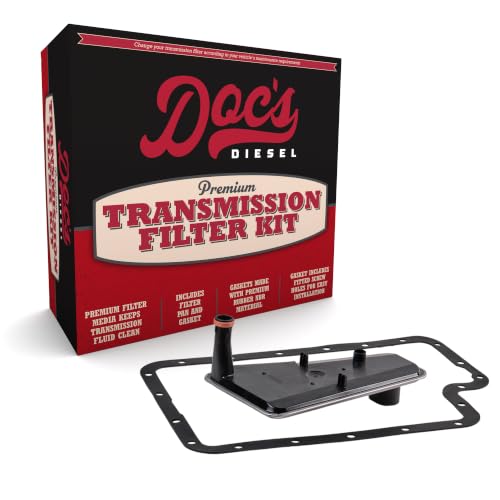
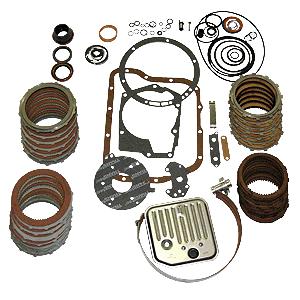
Drain and drop the pan, remove the filter, and unbolt the block from the bottom of the valve body. Inspect the case connector before anything else; Transmission Digest reports repeat codes after a pack swap caused by corroded pins and broken lock tabs. Fit new O-rings, snug the bolts in steps, and refill with MERCON V. Verify line pressure with a gauge on the road test. If a previous owner raised pressure with a larger modulator plunger, expect firmer shifts than stock. A worn unit with dark fluid may need more than pressure correction, so look at the E4OD shift kit or a full E4OD master overhaul kit if it is coming apart anyway.