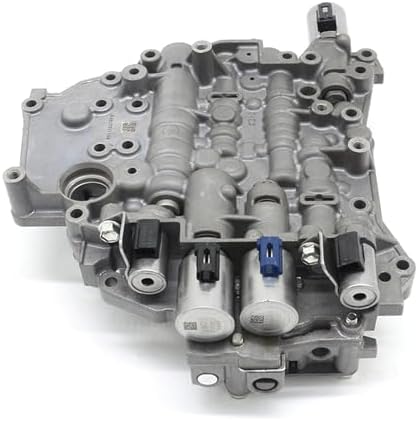
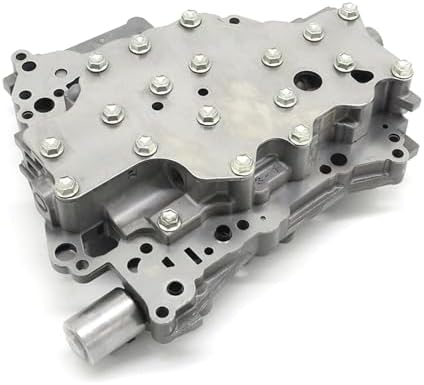
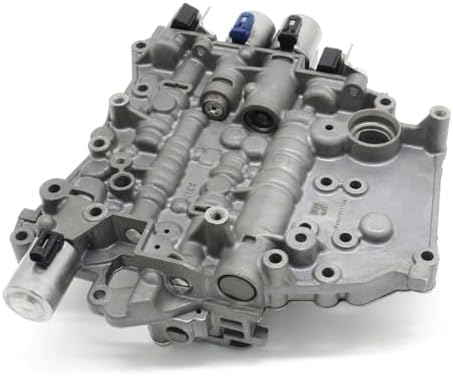
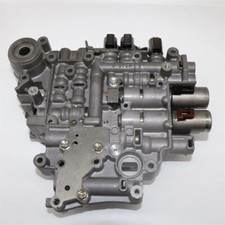
A 2014-and-later Toyota Corolla with hard or delayed engagement into Drive or Reverse, an RPM flare under light acceleration, a belt-slip feeling, or a high-pitched hiss once the transmission warms up is describing a known weak point in the Toyota K313 continuously variable transmission: its valve body. This listing is a replacement valve body for the K313, the belt-and-pulley CVT used in the Corolla 1.8L and 2.0L, Allion and Auris 1.2L applications from 2014 on.
What the Valve Body Does in the K313 CVT
Unlike a stepped automatic, the K313 does not shift between fixed gears - it varies the ratio by changing the effective diameter of the drive and driven pulleys that the steel belt rides on. The valve body is what makes that possible: it takes line pressure from the pump and routes it to the primary and secondary pulley pistons, so the pulleys can clamp and change diameter smoothly, and it also controls the forward/reverse clutch pack and the torque converter lock-up clutch. Any wear in its bores, or a sticking pressure-control solenoid mounted on it, throws off the clamping force and engagement pressure the rest of the transmission depends on.
Symptoms of a Failing K313 Valve Body
- Harsh or delayed engagement into Drive or Reverse, especially from a stop
- RPM flare or surge under light to moderate acceleration
- A belt-slip feeling under load, as if the engine revs without the car responding
- A high-pitched hiss or whine once the transmission reaches normal operating temperature
- Pressure-related trouble codes that return after a CVT fluid service
Toyota issued a technical service bulletin on exactly this unit for a hiss or whine noise in certain 2014-2018 Corolla and 2017-2018 Corolla iM vehicles with the K313, attributing the condition to the valve body plate inside the CVT assembly (see Sources). Harsh or hesitant engagement with a stored torque-converter-clutch pressure code is a separate, commonly reported complaint on the same CK313 unit, and is generally traced to the same valve body rather than the belt or pulleys.
How to Confirm It Is the Valve Body
Start with a code scan - pressure-control or torque-converter-clutch solenoid performance codes point at the valve body, while codes tied to pulley ratio or belt slip point further into the CVT itself. Confirm the transmission tag reads K313, since the closely related K310/K311 units used in earlier Corolla and Auris model years are not the same part despite sharing a family resemblance. If the hiss or whine only appears once the transmission is fully warm, and engagement is otherwise harsh rather than slipping under load, that combination matches the documented valve body failure pattern rather than belt or pulley wear.
Fitment
Listed fitment is the Toyota K313 CVT as installed in the 2014-up Corolla 1.6L, 1.8L and 2.0L, plus the Allion and Auris 1.2L sold outside the US. Confirm the transmission tag shows K313 before ordering, since Toyota also used the related K310 and K311 CVTs on earlier Corolla and Auris applications with different valve body part numbers. Our full CVT parts lineup covers both families if you need to check which one your vehicle actually has.
Install Notes
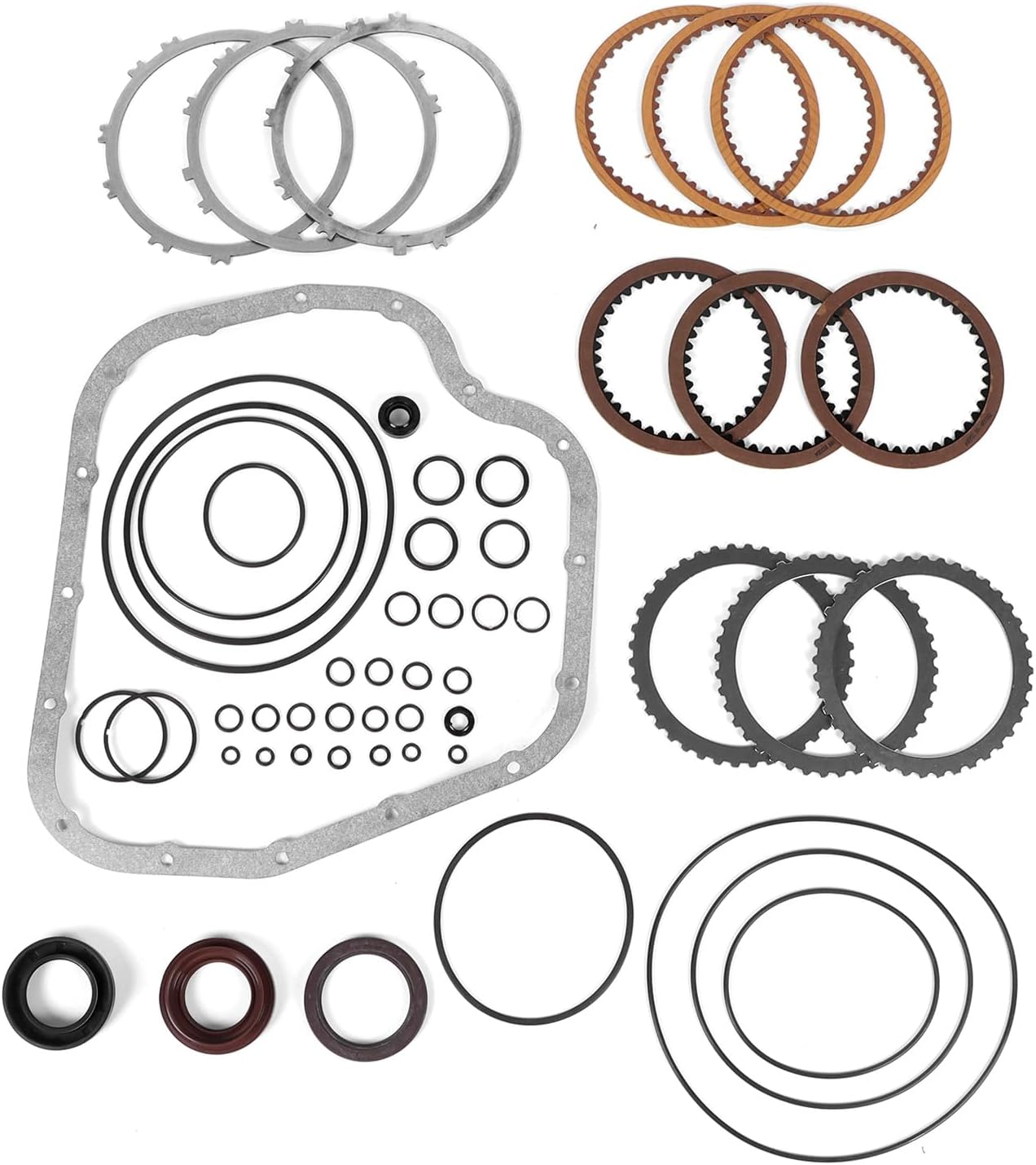
Confirm K313 on the transmission tag, then drain the fluid and remove the pan and strainer to access the valve body. If the replacement valve body ships without solenoids, transfer them from the old unit rather than reusing worn wiring connectors on new hardware. Torque the valve body bolts in the factory sequence, install a new pan gasket and strainer, and refill with Toyota CVT Fluid FE - this is a low-viscosity fluid engineered specifically for newer CVT designs, and the valve body and solenoids are calibrated around its exact flow and pressure characteristics, so substituting a thicker or older-spec CVT fluid can reproduce the same hesitation and shudder symptoms you just repaired. Check the fluid level at the overflow plug at the manufacturer's specified temperature rather than by dipstick. If you are already in the pan, consider pairing this job with a shift solenoid kit or a bearing kit if wear was found during inspection, and run the manufacturer's CVT learning procedure with a scan tool after the fill. For a belt or pulley that is already worn beyond what a valve body swap will fix, our K313 master rebuild kit covers the rest of the unit.