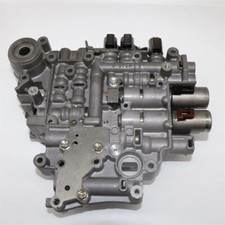
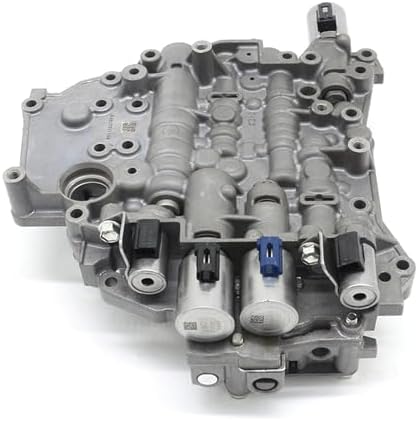
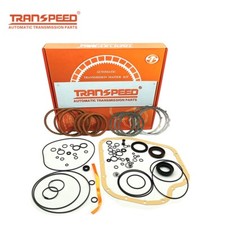
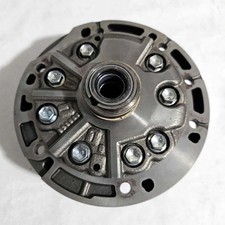
If a Toyota or Scion running the K310 continuously variable transmission is shuddering under light throttle, slipping or hesitating when it should accelerate smoothly, or has dropped into limp mode with a pressure or ratio-related code, the valve body is the usual starting point before chasing the belt or pulleys. This is a new K310 valve body, built to replace a worn or failed unit so you are installing a known-good part instead of reusing a casting that already has wear in it.
What the valve body does in a K310 CVT
Unlike a stepped automatic, the K310 has no fixed gears to apply - it relies entirely on hydraulic pressure to clamp two pulleys against a steel belt and vary their effective diameter smoothly across the ratio range. The valve body is what generates and directs that clamping and shift pressure, and it carries the solenoids the transmission computer uses to command ratio changes and lockup. Because there is no mechanical fallback gear doing the work, a worn valve body bore or a weak solenoid in a CVT shows up immediately as a ratio, shudder, or clamping-pressure complaint rather than a single bad shift.
Symptoms of a failing K310 valve body
- Shudder or vibration under light-to-moderate throttle, especially at steady cruising speed
- Slipping, bogging or a delayed response when you ask for power
- Harsh or delayed engagement into Drive or Reverse
- Limp mode (the transmission stuck in one ratio) paired with a stored pressure, solenoid or ratio-control code
Confirm it's the valve body before you order
CVT shudder and slipping can come from degraded fluid, a weak belt, or pulley wear just as often as from the valve body itself, so it is worth ruling the easy causes out first. Our CVT slipping under load guide walks through separating fluid-condition slip from a hydraulic or mechanical failure, our CVT harsh or delayed shifts guide covers the engagement-delay symptom specifically, and our CVT limp mode guide explains what the computer is protecting against when it locks the unit into one ratio.
Fitment - read this before you buy
The K310 is part of Toyota's Aisin-built K-series CVT family used across multiple Corolla-platform vehicles, and Toyota revised the design more than once over the production run - the related K313, for example, moved to a different fluid specification and solenoid layout than the earlier K310. Interchange listings for this part number do not agree on an exact year range, so do not buy on model year alone: pull the valve body you're replacing and match the stamped casting or part number, or send us your VIN and we will confirm the correct unit before it ships. See our CVT failure patterns guide for how the K-series compares to other CVT designs on the road.
Install notes
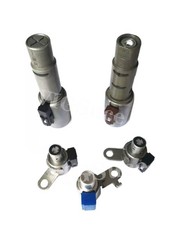
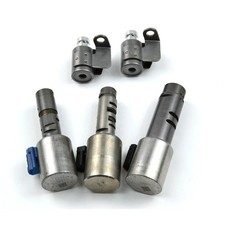
Change the fluid and filter in the same job so wear debris from the old valve body does not recirculate through the new one - the K310 uses Toyota's TC-specification CVT fluid, which is not interchangeable with the newer FE-spec fluid used on later Toyota CVTs, so confirm the fluid code on your own fill plug or dipstick before refilling. Torque the valve body and pan bolts to spec, and run the manufacturer's relearn procedure with a scan tool after the swap so the computer is adapting to the new unit instead of the old one's wear pattern. Pairing the job with a K310 solenoid kit is worth it if any of the individual solenoids are original, since they wear on the same timeline as the valve body bores.