A CVT that slips under load fails differently than a planetary automatic, and the diagnostic habits you built on a 4L60E will send you the wrong direction. There is no clutch pack to burn on the way up a hill. What you have is a steel push belt or chain squeezed between two cone halves, and the only thing keeping it from sliding across those cones is hydraulic clamping pressure on the secondary pulley. Slip happens the instant input torque exceeds what that clamp load can hold.
That is why load matters. Around town, torque is low and even a badly compromised clamping circuit holds fine. Merge onto the highway or load a hill and the transmission has to raise secondary pressure in step with torque. If the pressure does not arrive, the belt slides, the tach flares, and every pass across those cones scuffs metal off the pulley faces. Unlike a slipping clutch, a slipping belt destroys parts that are supposed to be permanent.
Most of the causes are hydraulic, and most can be isolated with the unit still in the car. Here is the order I work them.
How a CVT actually holds torque
Two pressure circuits do the work. Primary pulley pressure moves the drive sheave to set ratio. Secondary pulley pressure clamps the belt on the driven side, and it is the highest pressure in the transmission — it has to be, because it does the job a clutch pack does in a conventional automatic. Sonnax puts the maximum circuit pressures in JATCO CVTs at 870 psi for the pulleys, against 218 psi for the forward and reverse clutches, 138 psi for TCC apply and 60 psi for lube and cooler flow.
| Circuit (JATCO CVT) | Maximum pressure |
|---|---|
| Primary & secondary pulley | 870 psi (5,998 kPa) |
| Forward & reverse clutch | 218 psi (1,503 kPa) |
| TCC apply | 138 psi (951 kPa) |
| Lube & cooler | 60 psi (413 kPa) |
Two consequences for the bench. Your 300 psi transmission gauge is useless here; Sonnax specifies a gauge rated for at least 1,000 psi (7,000 kPa), hung outside the vehicle rather than in the cabin. And a small percentage loss in a circuit running to 870 psi is a large absolute loss, so bore wear that would be a minor annoyance in a conventional unit is a belt-killer here.
Step 1: fluid level, before anything else
Low fluid causes belt and chain slip and noise on acceleration, and it is the most common self-inflicted cause of this complaint. These units generally have no dipstick, and guessing from what drained out of the pan is not a level check.
There is a trap specific to CVTs. JATCO units use a thermal element in the water-to-oil cooler, and fluid has to reach roughly 150 degrees F before that element opens and lets oil into the cooler. Once it opens, air purges out and the sump level drops. Refill, drive it around the block, and it feels fine — then it comes back two days later slipping and noisy, because the level fell after the cooler filled.
Sonnax's method for a unit with no dipstick is to make one. The fill tube has an internal stop at the bottom; build a rod, mark it in 10 mm increments from that stop, and read against these targets:
| Fluid temperature | Minimum to maximum level from fill tube stop |
|---|---|
| 75 degrees F | 26 mm to 38 mm |
| 180 degrees F | 38 mm to 46 mm |
Confirm the procedure against service information for the unit, but the principle holds: hot, level, running, and measured.
Step 2: confirm it is the correct fluid
CVT fluids are friction-specific. The coefficient between the belt elements and the pulley faces is engineered into the fluid, so a wrong-spec fill lowers what the same hydraulic pressure can hold — a mechanical failure, not a shift quality complaint. The specs are not interchangeable across brands or even within a brand:
- Nissan/JATCO: NS-3 CVT fluid, Nissan part 999MP-NS300P. Bulletin NTB17-039P states outright that nothing other than NS-3 is to be allowed into these units, and requires it for warranty repairs.
- Honda: HCF-2, part 08200-HCF2 in quarts or 08200-9020 in a 55-gallon drum. Per Honda service bulletin 21-047, the HR-V CVT takes 7 quarts front-wheel drive and 8 quarts all-wheel drive.
- Subaru: four CVT fluids by unit and model year, per bulletin 01-167-08R. CVTFII (green, SOA427V1610) for naturally aspirated TR580 except H6; High Torque CVTF (orange, SOA748V0200) for TR690 applications including 2014-up Forester Turbo and 2015-up Legacy/Outback H6 and WRX; CVTF III (SOA427V2600) for 2020 Legacy/Outback TR580 2.5L and 2021-up Crosstrek and Forester Wilderness; CVTF LV (SOA748V0300) for Ascent and 2020 Legacy/Outback TR690 2.4L turbo.
On a car with unknown fluid history, color and paperwork are not proof. A double drain-and-fill with the correct spec is cheap next to a pulley set.
Idemitsu Type N3 CVT Fluid for Nissan NS-3, Case of 6 Quarts
Idemitsu builds the fluid Nissan sells in the bottle, so this is the correct friction spec for RE0F10 family units calling for NS-3. A case covers a proper drain, refill, drive cycle and second drain rather than a partial exchange that leaves half the old fluid in the converter and cooler.
See the NS-3 fluid →Step 3: prove slip on the scan tool
A CVT gives you two speed sensors that make the math easy: primary (input) pulley speed and secondary (output) pulley speed. Divide primary by secondary and you have actual ratio. Log it against vehicle speed and throttle under real load, not on a lift. Three patterns to separate:
- Ratio changes smoothly, engine speed tracks it. Normal CVT behavior, even when it feels like slip to a customer used to stepped gears.
- Engine speed climbs while calculated ratio holds. Look at the converter, the forward clutch, or the engine before condemning the belt.
- Engine speed climbs and calculated ratio moves away from commanded, only under load. That is belt or chain slip against inadequate clamping pressure.
Codes narrow it further. On Nissan V6 CVT applications, DTC P17F0 (CVT_JUDDER, transmission inspection) and P17F1 (CVT_JUDDER, control unit inspection) are the judder codes covered by NTB17-039P, applying to 2013-2018 Altima, 2016-2022 Maxima, 2015-2022 Murano, 2013-2020 Pathfinder and 2015-2017 Quest. That bulletin only applies when a judder complaint and one of those two codes are present, and explicitly does not apply if any other DTC is stored — useful discipline, because a stored pressure or ratio code routes you to the valve body instead.
On the Honda side, service bulletin 21-047 notes that after the software update in bulletin 21-046, the CVT primary drive belt became an OBD-monitored part with the addition of DTC P271E.
Step 4: gauge the pulley circuits
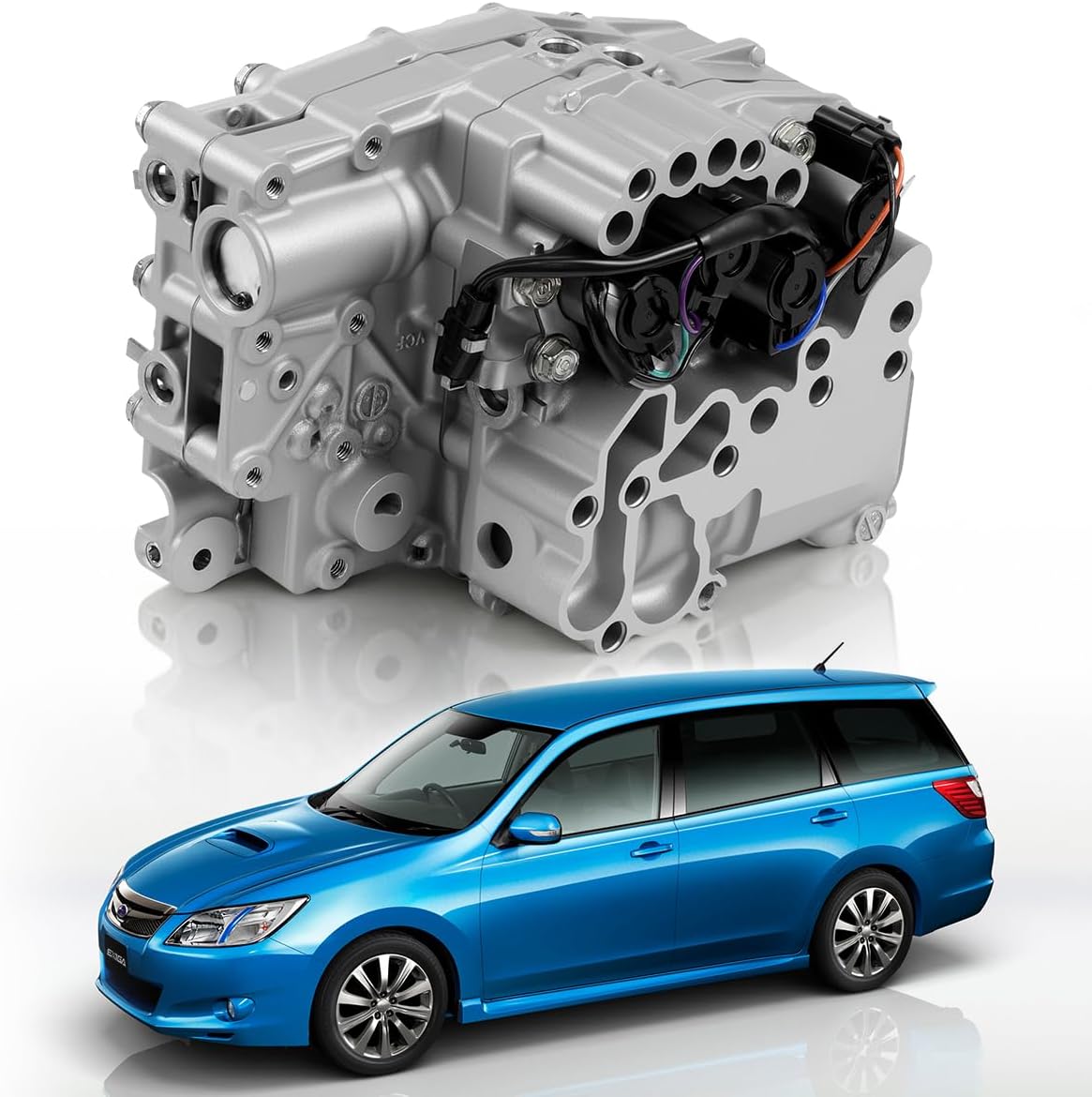
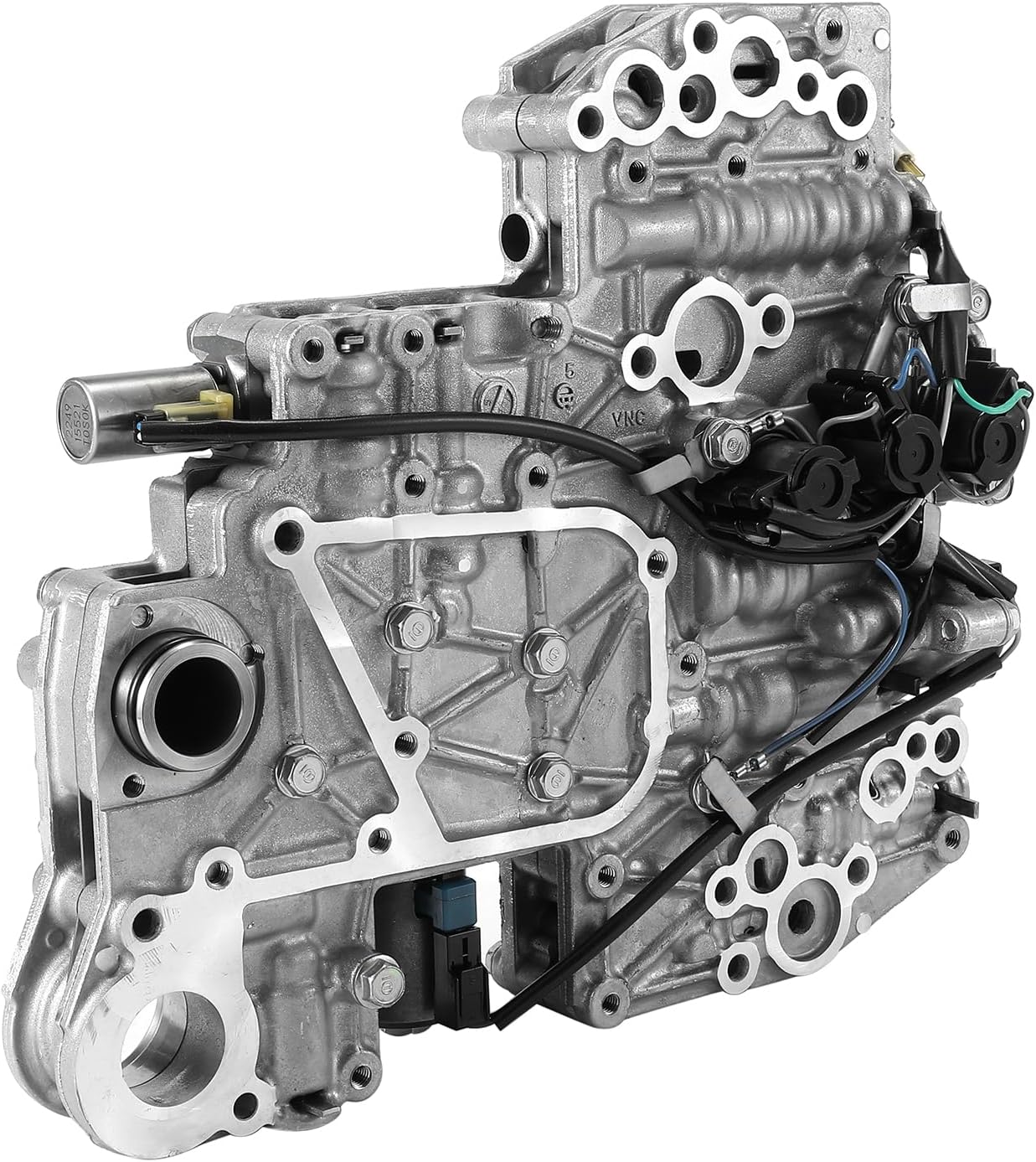
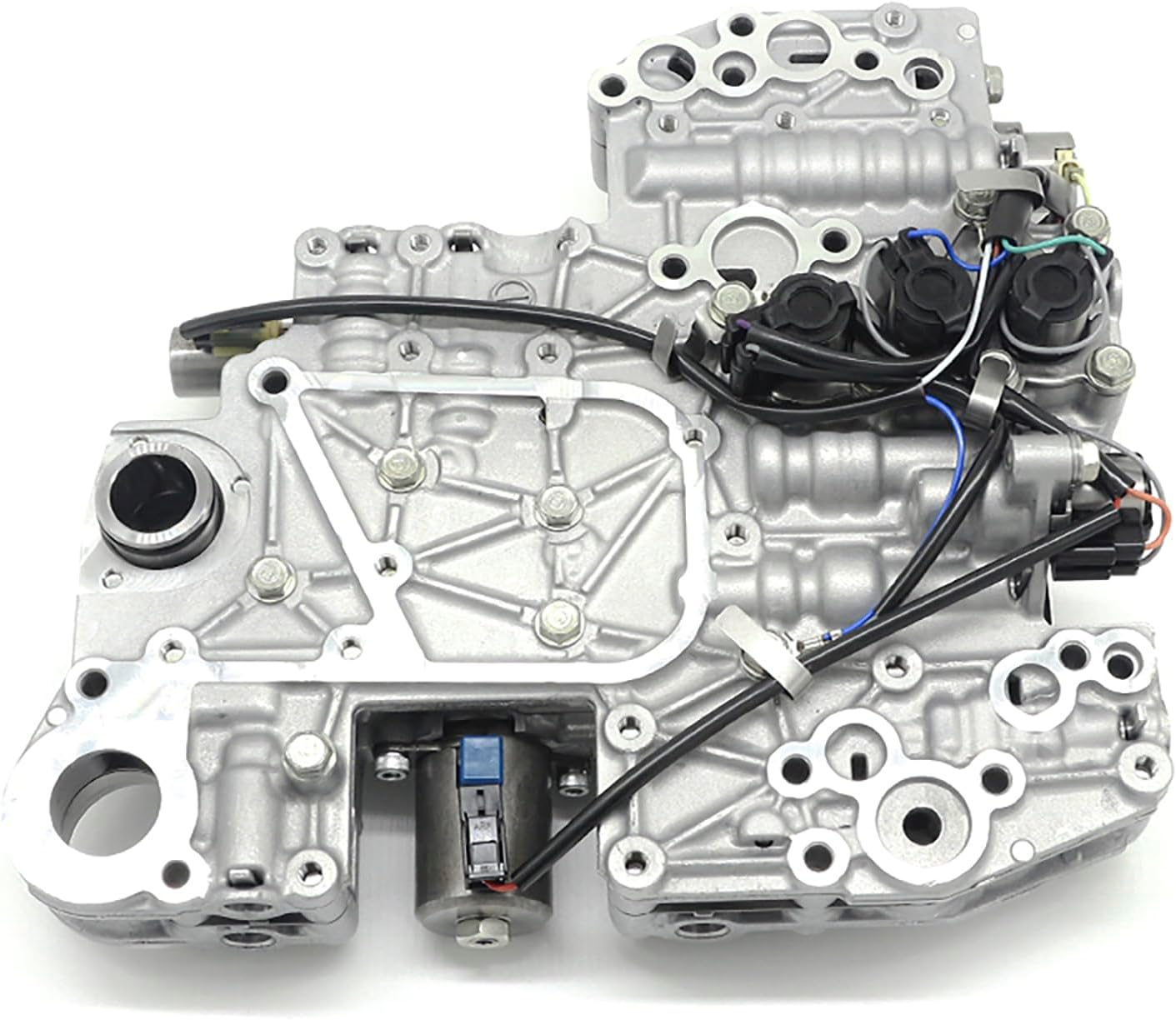
Scan data tells you the transmission is slipping. A gauge tells you why. On the JF011E the taps and fill plug face forward toward the radiator just below the input speed sensor, in a four-point circle with the primary pulley tap in the middle; the reverse brake tap is near the shift shaft on top and the secondary pulley tap is on the firewall side. Tap layout differs across CVT families, so pull service information for the unit in front of you.
Reference points for a JATCO unit: line pressure at stall runs around 850 psi, pulley pressure at drive stall around 425 psi, and primary pressure should follow secondary. When it does not, or the numbers sit low across the board, you have moved from a mechanical question to a valve body question.
Step 5: the valve body, circuit by circuit
The rule Sonnax gives is clean and it works: for each pressure circuit out of specification, vacuum test the bore associated with that circuit. Low line pressure sends you to the primary pressure regulator valve and bore; low primary pulley pressure to the primary pulley control valve and bore. Low pressure across every circuit points at the pump flow control valve, which wears out on most of these units and which Sonnax recommends replacing with an oversized version on every repair. A failing flow control valve also sets ratio, pressure sensor and solenoid A or B codes — the scattered code set that gets a good valve body condemned.
For slip specifically, the valve to know is the secondary pressure regulator valve. It supplies and maintains pressure in the secondary pulley circuit as commanded by the secondary pressure control valve, and Sonnax lists the symptoms of a worn bore or spool as push-belt slippage and pulley fracture, chatter, and RPM surge on acceleration — this exact complaint, from a valve you can reach with the pan down. The repair is to recondition the bore and install oversized kit 113741-21K (tooling F-113741-TL21 plus VB-FIX). One detail that trips people up: the OE valve has four spools, the smallest serving no function, so the Sonnax replacement has three.
Related bores on the same unit: the secondary pulley control valve (113741-17K or 113741-19K by unit) for RPM surge, chatter, push belt slippage and pulley fracture; the primary pressure regulator valve (113741-09K) for chatter, slips in forward and reverse, and high or low line pressure; and the solenoid regulator valve (113741-01K) for low solenoid feed pressure, low line rise and push belt slippage.
Why low-mileage bore wear is normal here
A certain amount of magnetic fuzz on the pan magnets at 40,000 to 50,000 miles is normal in a CVT — the push belt elements create fretting where they contact the sheave surfaces, most of it during break-in. But that ferrous material circulates through the valve body, embeds into the solenoids and speed sensors, which are electromagnets, and scrubs the aluminum bores the whole time. So the fuzz is normal, and so is the bore wear it produces at mileages where you would not expect any. Do not clean the magnets, call it good, and skip the vacuum test.
Step 6: the belt or chain itself
If the pressures check out, the friction surfaces are the answer. Nissan's procedure in NTB17-039P is a good template for inspecting one without splitting the case: borescope J-51951 with a mirror attachment, lens inserted roughly 8 to 9 inches behind the pulley between the guide rail and the pulley and held about 10 mm from the chain, right front tire strapped and left front marked so you can turn it one full revolution forward and see all 360 degrees. Driver side first, all the way around, then the passenger side. Turn the tire forward only — rearward rotation can catch the lens between chain and pulley.
You are looking for scuff marks on the chain surfaces that contact the pulleys. Those scuffs are slippage damage, and per the bulletin's flow chart a failed inspection means the pulley and chain sub-assembly gets replaced, not just the valve body; a chain that passes gets a new valve body only. Nissan also dropped the older scan-tool CVT inspection test from the accepted warranty path in favor of this physical inspection — which tells you what they think of judging belt condition from data alone.
Honda went further on the 2016-2020 HR-V. Bulletin 21-047 extends CVT warranty coverage to 7 years from original purchase or 150,000 miles, whichever comes first, for possible early deterioration of the CVT drive belt, with the corrective action being CVT replacement. If an HR-V comes in slipping, check eligibility before quoting a rebuild.
Reassembly numbers and the step people skip
Torque specs from NTB17-039P, for the RE0F10-family repair:
| Fastener | Torque | Notes |
|---|---|---|
| Control valve (valve body) mounting bolts | 7.9 N·m (70 in-lb) | Eleven bolts first stage, four holes blank: seven 54 mm, two 44 mm, two 25 mm; the 25 mm pair goes in without the strainer bracket |
| Oil strainer bolts | 7.9 N·m (70 in-lb) | New strainer, new O-ring |
| Oil pan bolts | 7.9 N·m (70 in-lb) | Clean pan and magnets first |
| Manual plate nut | 22.1 N·m (16 ft-lb) | Confirm the plate seats in the manual valve slot first |
| Primary speed sensor | 5.9 N·m (52 in-lb) | New O-ring, never reuse the old one |
| Side cover bolts | 45 N·m (33 ft-lb) | 19 pieces |
The step that gets skipped and causes the comeback: flush the cooler. Nissan requires a cooler flush after valve body or CVT assembly replacement to avoid damaging the transaxle. If the belt was slipping, the debris it made is in the cooler and lines, and it will be back in your new valve body within a few hundred miles.
A working diagnostic order
- Verify fluid level hot, by measurement, after the cooler thermal element has opened and purged air, and verify the fluid is the correct spec for that exact unit and model year.
- Pull codes. Whether only judder codes are present, or pressure, ratio and solenoid codes too, routes you to mechanical versus hydraulic.
- Road test logging primary pulley speed, secondary pulley speed and commanded ratio. Calculate actual ratio and watch it under load.
- Gauge line, primary pulley and secondary pulley pressure with a 1,000 psi gauge at the correct taps.
- Vacuum test the bore behind every circuit that is out of spec. If everything is low, start at the pump flow control valve.
- Only after the hydraulics check out, borescope the belt or chain contact surfaces for scuffing.
- Fix the cause of the low clamping pressure, flush the cooler, and write the correct calibration.
Preventing the repeat
Comebacks cluster around three shortcuts. Setting fluid level cold or by volume, which leaves the unit low once the cooler fills. Reusing a worn valve body under a fresh belt and pulley set, which puts new hardware right back into the low-clamp condition that killed the old one. And skipping the cooler flush. None of the three show up on a drive around the block; all three show up the first time the customer merges onto the highway with a full car.
The habit worth building: on a CVT, treat every slip complaint as a clamping pressure question until the gauge says otherwise. The belt is almost never the first thing to fail. It is what fails after something else stopped holding it against the cones. And keep the Nissan calibration rule in mind on those units — control valve, QR label and calibration part numbers have to match, and the data has to be written to the TCM, because a CVT running someone else's calibration will not clamp correctly for its own hardware.
Related reading: CVT limp mode causes, Jatco CVT problems and fixes, CVT failure patterns, and checking transmission line pressure.
CVT filters and pan gasket kits, NS-3 and HCF-2 spec fluids, cooler flush chemicals, coolers and pressure test tooling — shipped fast from the USA.
Shop CVT parts →Sources
- Sonnax — Bob Warnke, "CVT Success: In-Vehicle Isolation of Common Problems," March 28, 2017. Backs the JATCO maximum circuit pressures (870 psi pulley, 218 psi forward/reverse clutch, 138 psi TCC, 60 psi lube), the 1,000 psi minimum gauge requirement, the water-to-oil cooler thermal element opening near 150 degrees F and the resulting low sump level causing chain slip and noise, the homemade dipstick levels of 26-38 mm at 75 F and 38-46 mm at 180 F, JF011E pressure tap locations, stall pressure references, the circuit-to-bore vacuum test logic, the pump flow control valve wear and its scattered code set, and the normal-but-damaging magnetic fuzz at 40,000-50,000 miles that wears bores early. sonnax.com
- Nissan North America — Technical Bulletin NTB17-039P (classification AT16-020P), "CVT Judder and DTC P17F0 or P17F1 Stored," May 9, 2023, via NHTSA. Backs the P17F0 and P17F1 definitions and applied vehicle list, the bulletin's apply/does-not-apply logic, the borescope J-51951 chain inspection procedure (8-9 in insertion, 10 mm from chain, 360 degrees both sides, forward rotation only), scuff marks as slippage damage and the OK/NG repair paths, the requirement for NS-3 fluid (999MP-NS300P), the mandatory cooler flush after valve body or CVT replacement, the QR label and calibration matching requirement, and the reassembly torque specs. static.nhtsa.gov
- American Honda Motor Co. — Service Bulletin 21-047 Version 5, "Warranty Extension: 2016-20 HR-V CVT Premature Belt Deterioration," May 3, 2023, via NHTSA. Backs the CVT drive belt deterioration condition, the extension to 7 years or 150,000 miles, DTC P271E added as an OBD monitor for the primary drive belt after the 21-046 software update, and HCF-2 fluid part numbers 08200-HCF2 and 08200-9020 with 7 quarts FWD / 8 quarts AWD fill. static.nhtsa.gov
- Subaru of America — Service Bulletin 01-167-08R, "Recommended Materials," revised May 23, 2022, via NHTSA. Backs the four Subaru CVT fluid specifications and their applications and part numbers: CVTFII (SOA427V1610), High Torque CVTF (SOA748V0200), CVTF III (SOA427V2600) and CVTF LV (SOA748V0300). static.nhtsa.gov
- Sonnax — Oversized Secondary Pressure Regulator Valve Kit 113741-21K, JF011E (RE0F10A) product and application data. Backs the secondary pressure regulator valve's role supplying and maintaining secondary pulley circuit pressure as commanded by the secondary pressure control valve, worn bore or spool causing push-belt slippage, pulley fracture, chatter and RPM surge on acceleration, the bore reconditioning repair with tooling F-113741-TL21 and VB-FIX, and the four-spool OE valve versus three-spool replacement. sonnax.com
- Sonnax — "Jatco/Nissan JF011E (RE0F10A) Vacuum Test Guide," November 11, 2020. Backs the critical wear areas and vacuum test locations in the JF011E valve body and the symptom-to-part mapping for the secondary pressure regulator, primary pressure regulator (113741-09K), secondary pulley control (113741-17K / 113741-19K), solenoid regulator (113741-01K) and torque converter regulator valves. sonnax.com
- Transmission Digest — Wayne Colonna, "Stepless Ratios in CVTs," July 1, 2003. Backs the pulley construction and hydraulic ratio control mechanism (pressure in one chamber increasing belt riding radius while the opposite chamber decreases), canceler chambers offsetting centrifugal pressure, the belt construction of roughly 280 elements on two 12-layer steel loops, and published Honda CVT pulley and clutch pressure ranges measured at the case taps. transmissiondigest.com