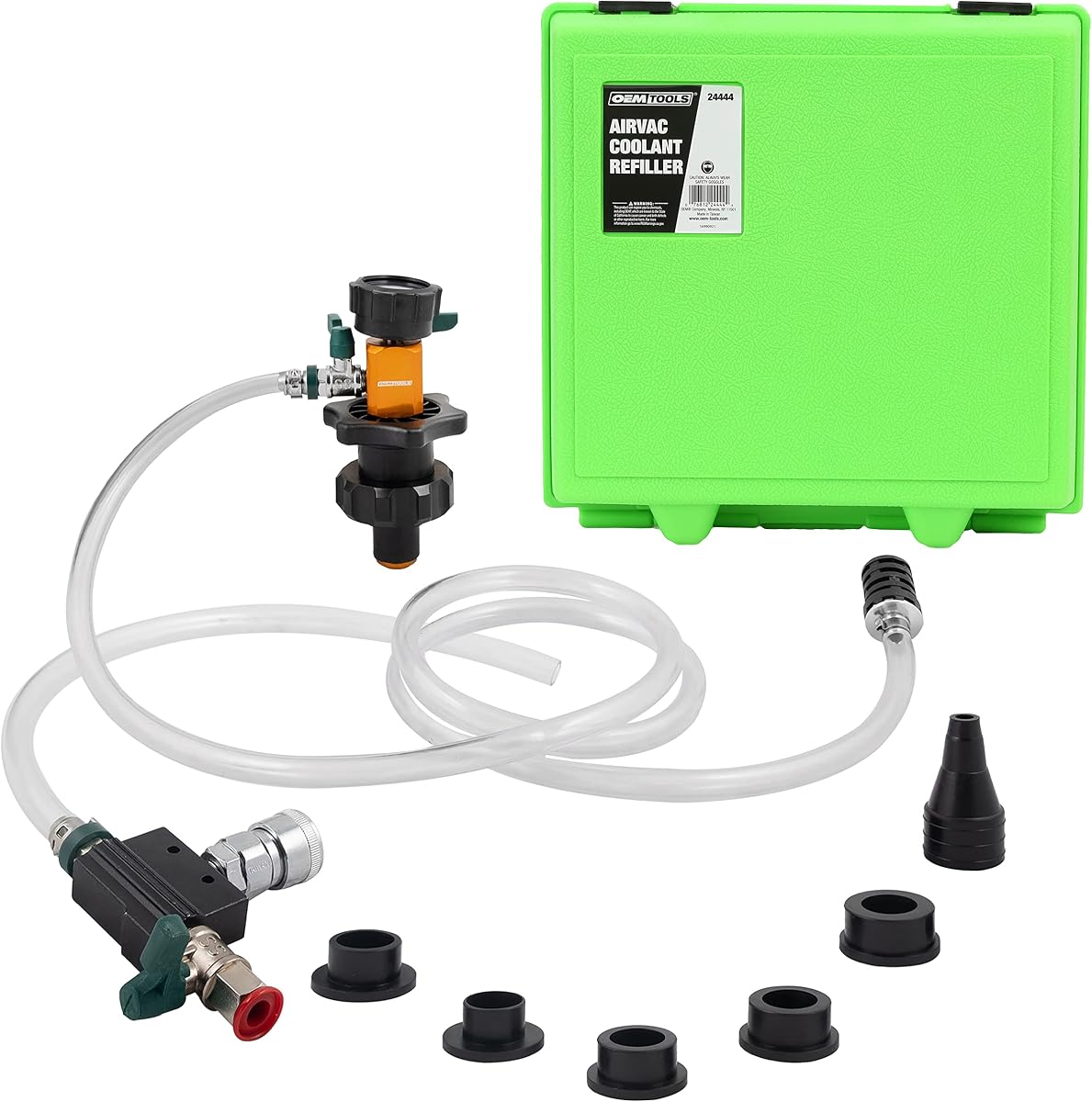
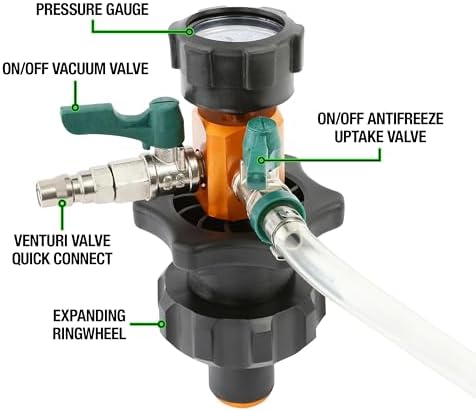
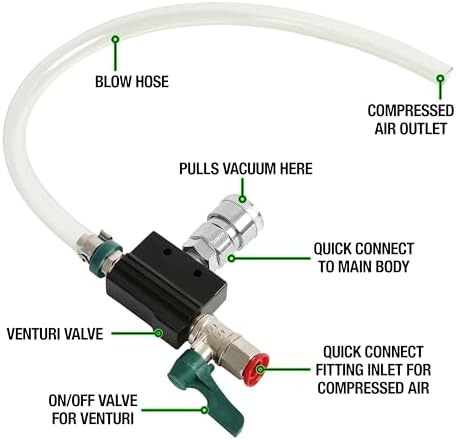
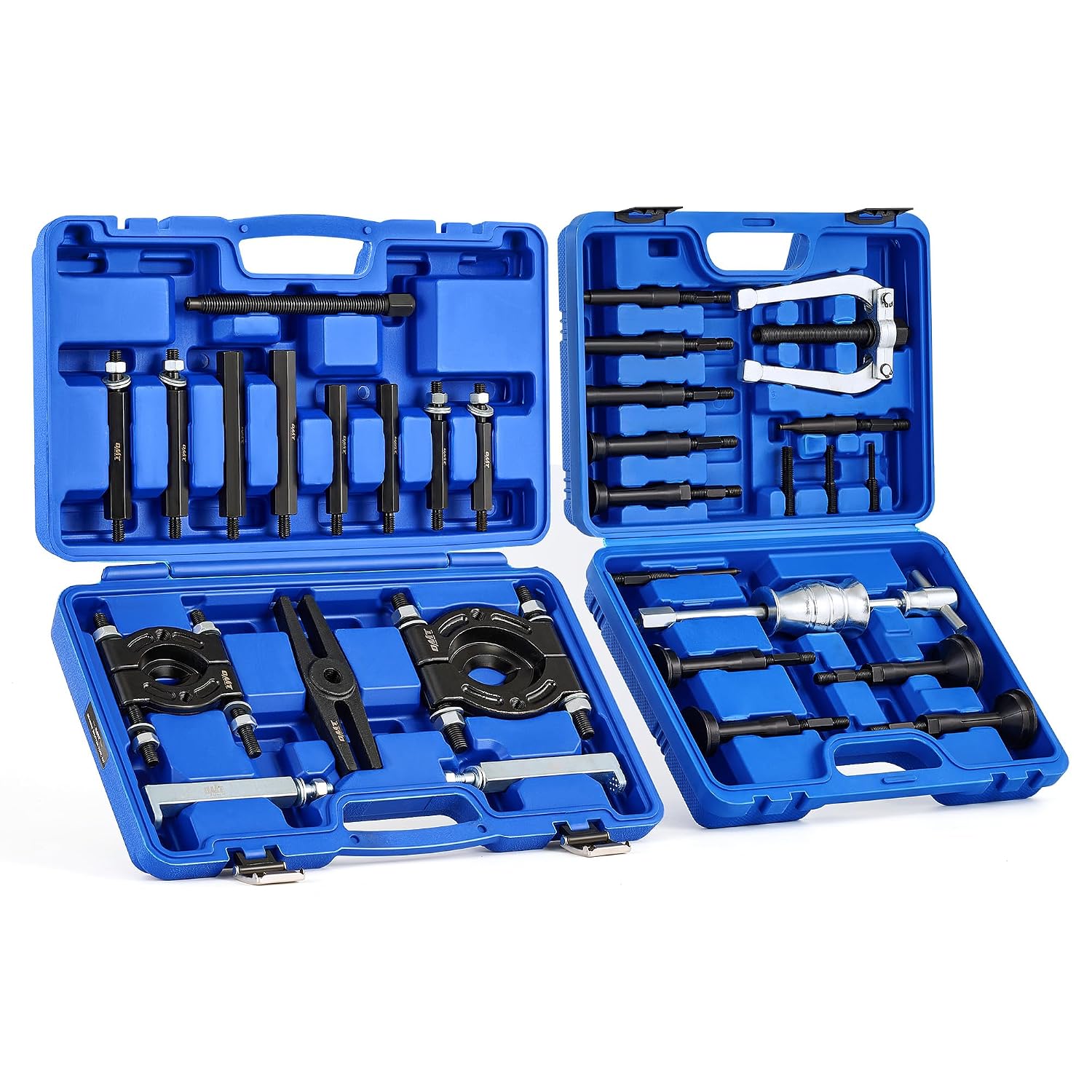
Air-powered vacuum filler and leak tester for automotive cooling systems, OEMTOOLS part number 24444. Shop air runs through a venturi in the head of the tool and pulls the cooling system down into vacuum. You watch the gauge, confirm the system holds, then use that vacuum to draw coolant in from a jug through the fill hose. The whole system fills in one pull instead of the pour, run, burp, top-off routine.
The reason this belongs in a transmission shop: when the factory radiator's internal transmission cooler splits, coolant and ATF cross over and you get the pink milkshake in the pan and in the cooler lines. That repair is not just a rebuild. It is a new radiator, a flushed cooler circuit, and a complete cooling system refill. On modern engines the heater core often sits above the fill point and there is no high-point bleed screw, so a hand fill leaves air trapped in the block and in the radiator end tank. An air pocket sitting around the cooler in that end tank means the transmission never sheds heat the way it should, and the customer comes back with an overheat and a hot converter after you already did the work.
How it is used: drain and cap the system, connect shop air to the venturi head, then seal the gauge assembly to the radiator neck or degas bottle with the tapered cone adapter or one of the five bushings. Open the air valve until the needle pulls down, then shut the valve and watch the gauge for thirty to sixty seconds. If it holds, the system is tight and you can fill. If it bleeds off, you have a leak to find before a drop of coolant goes in, which is the part that saves the comeback. Then drop the fill hose into the coolant jug and crack the valve. Atmospheric pressure does the work and pushes coolant into every passage the vacuum reached.
Recommended working air pressure is 70 to 110 psi, so any normal shop compressor runs it. The tapered cone adapter seals on most radiator and coolant bottle necks without a vehicle-specific fitting, and five additional bushings cover the odd necks. It is universal, not application specific, and everything stores in the blow-molded case.