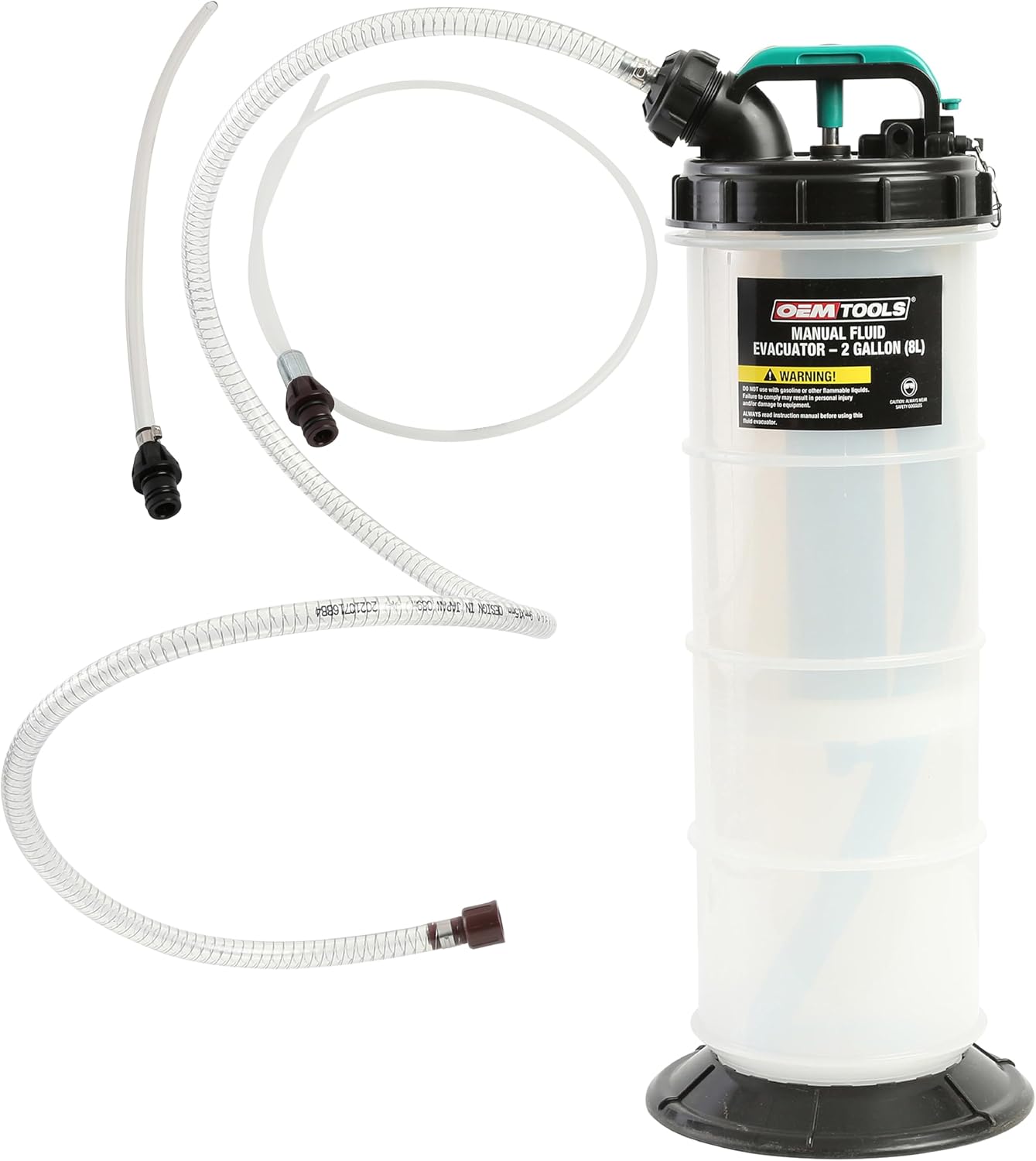
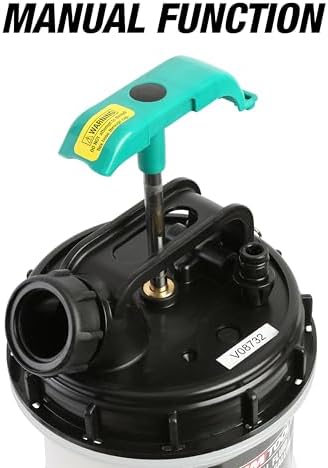
Plenty of late-model automatics have no drain plug in the pan, and some trucks and SUVs make the pan a messy, hour-long job just to swap a few quarts of fluid. The OEMTOOLS 24936 is a hand-pumped vacuum extractor with an 8 liter (about 2.1 gallon) tank that pulls ATF up through the dipstick tube instead, so a fluid service turns into a measured, clean exchange you can do in a driveway. It needs no compressor and no battery leads: you work the handle, and the vacuum in the tank does the pulling.
What the extractor does in a transmission service
A pan drain or a dipstick extraction only removes the fluid sitting in the pan. The oil in the torque converter, the cooler and the valve body stays put, which is why a single service usually replaces only a portion of the total fill. The point of an extractor is to make that partial exchange easy to repeat. Feed the long dipstick hose down the fill tube until it touches the bottom of the pan, pump the handle to build vacuum, and let the fluid flow into the tank. The clear tank lets you see how much came out, so you can put the same amount of new fluid back. Repeat the exchange a few hundred miles later and the percentage of fresh fluid climbs each time. Our drain-and-fill walkthrough explains why many shops prefer this gentle approach on a high-mileage unit over a machine flush.
The 8 liter size suits GM's newer rear-drive units. GM TechLink lists the fluid change capacity of the 8L80 at 7.0 liters and the 10L80 at 7.7 liters, so one tank covers a complete pan-level service on either without stopping to empty it.
Signs your fluid is due for an exchange
- Fluid on the dipstick has turned dark brown or smells burnt instead of looking red and clear
- Shifts have become soft, late or slightly harsh after a long towing season
- Mileage is past the severe-service interval in your owner manual, and the unit has never been serviced
- You just replaced a solenoid, valve body or filter and want clean fluid in the system
- You need a sample to check for metal, clutch material or a milky coolant leak
How to confirm what you need before you buy
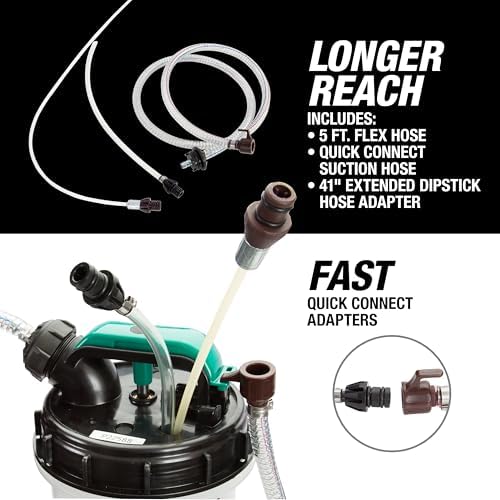
An extractor only works if the hose can reach the pan. Most units with a dipstick tube will take the 41 inch dipstick hose, but some sealed transmissions have no dipstick at all and are serviced from a fill plug in the case; those need a pressurized fill pump with an adapter rather than a vacuum unit. Check your fluid condition first with our ATF color and smell chart. Fluid that is merely dark calls for a service; fluid full of metal or with a strong burnt smell means a fluid change will not fix the problem and the transmission needs a diagnosis first. For fluid type and procedure, see our guide to changing automatic transmission fluid along with your owner manual.
Fitment and what it will handle
This is a universal tool, not a vehicle-specific part. The AutoZone Pro tool catalog lists the 24936 with a 2.1 gallon (8.4 quart) reservoir, an overflow shutoff valve and the updated 41 inch extended dipstick hose, rated for engine oil, transmission fluid, gear oil, coolant and power steering fluid. It also comes with a 5 foot suction hose for reservoirs and fill holes the tank cannot sit beside, such as a differential or a power steering reservoir. It is built for thin fluids, so warm the transmission before you pull; cold ATF moves slowly through a small hose. It is not for gasoline or anything flammable, as the warning label on the tank states.
Use notes
- Run the engine to warm the fluid, shut it off, then insert the dipstick hose until it bottoms out and pull it back slightly.
- Pump to build vacuum and let it work; the overflow shutoff stops the pull once the tank is full so fluid does not reach the pump.
- Note the amount removed and refill with the same quantity of the correct fluid, such as ACDelco DEXRON VI or Motorcraft MERCON V where your vehicle calls for it.
- Check the level with the fluid hot, using your manufacturer's procedure.
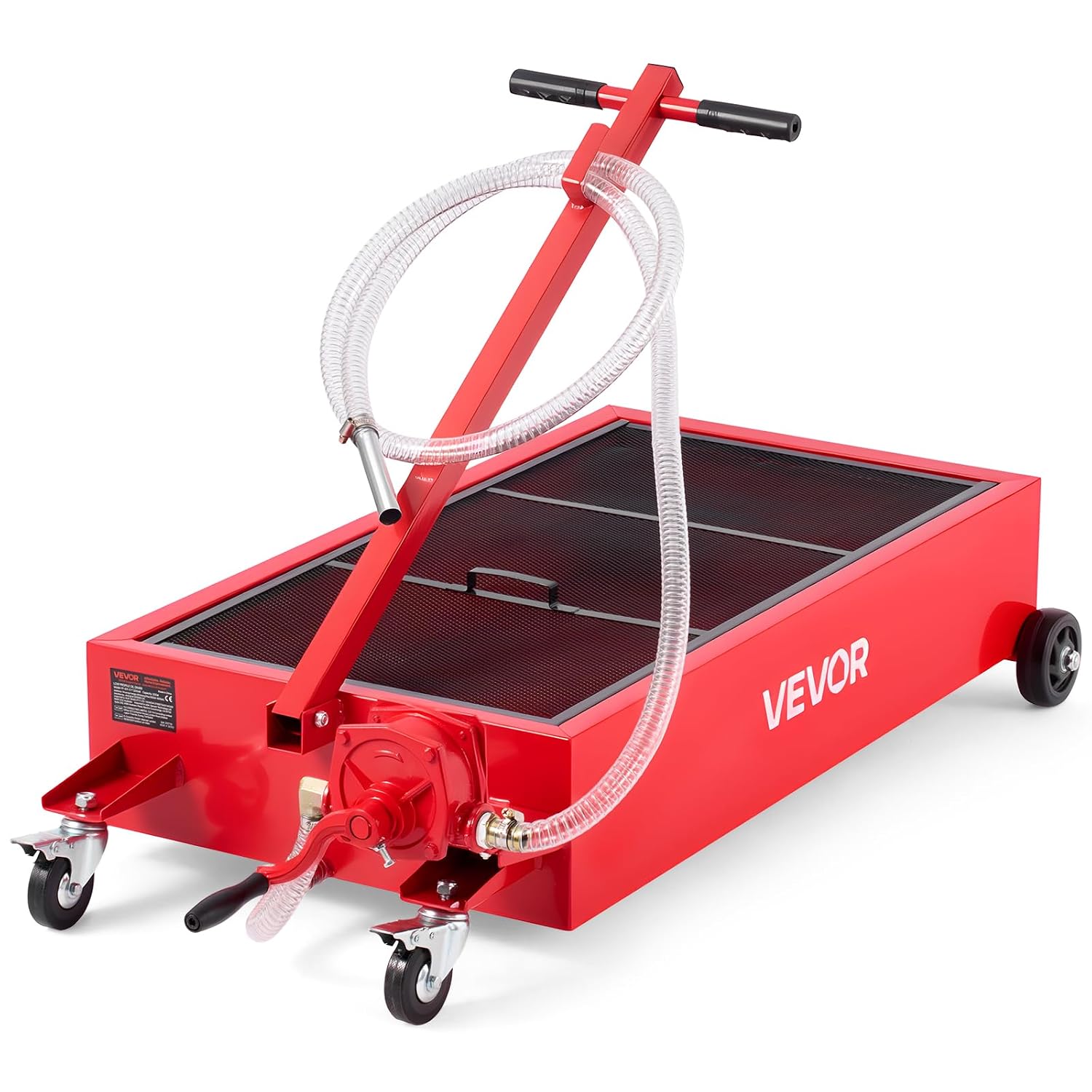
- Pour the used fluid into a rolling drain pan or sealed container and take it to a used oil collection site.