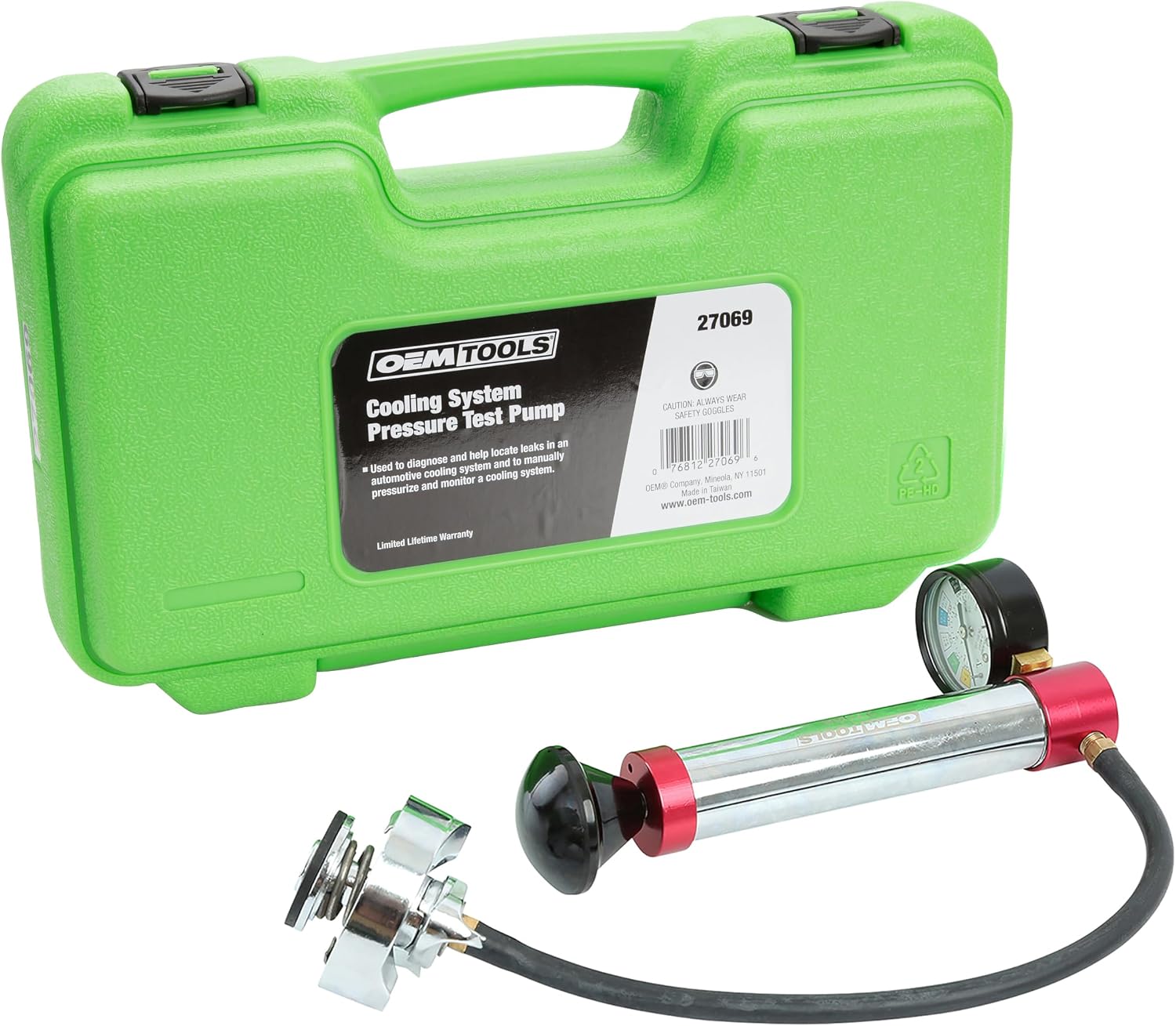
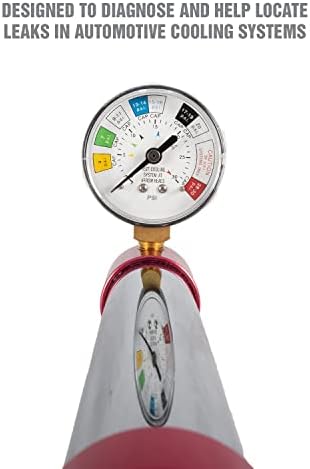
Pink, frothy transmission fluid or a coolant bottle that looks like strawberry milk usually means one thing on a car or truck with the ATF cooler built into the radiator: the cooler inside the tank has cracked and coolant and ATF are mixing. The OEMTOOLS 27069 is a hand-operated cooling system pressure tester with a 4 to 30 PSI gauge that lets you prove the leak, find it, and confirm the repair before you fill a rebuilt or replacement transmission and send it back down the road.
What the pressure tester does on a transmission job
On many GM and Ford vehicles the transmission cooler is a tube bundle sitting in one of the radiator tanks. When it leaks, coolant ends up in the transmission and ATF ends up in the coolant. Pressurizing the cooling system to cap rating and watching the needle tells you whether the system holds. A needle that drops with no drip under the car means the coolant is going somewhere internal: the heater core, a head gasket, or the trans cooler.
Coolant in ATF is not a small problem. As GEARS Magazine explains, water and glycol break down the fluid, attack the friction additives, and can flash to steam at the clutch surfaces and separate friction lining from its steel backing. A rebuilt unit installed behind a leaking radiator cooler can fail the same way the old one did.
Signs you should pressure test the cooling system
- Milky, pink or strawberry-colored ATF, or paste on the dipstick or pan.
- Coolant level dropping with no visible external leak.
- ATF film or a red tint in the coolant reservoir.
- Shudder during torque converter lockup or harsh, slipping engagements after a coolant loss.
- Any transmission replacement or rebuild on a vehicle with an in-radiator cooler.
How to confirm the leak
With the engine cold, take off the radiator cap, clamp the included coupler onto the filler neck and pump to the pressure stamped on the cap; most factory caps fall in the 15 to 18 PSI range, inside this gauge's 4 to 30 PSI scale. Do not go past the cap rating. Hold it 10 to 15 minutes and watch the needle. Then pull a fluid sample and compare it with our ATF color and smell chart; coolant in the fluid separates a trans cooler leak from a heater core or head gasket. Our cooler flush after failure guide covers what to do with the cooler circuit once you know.
Fitment and what is in the case
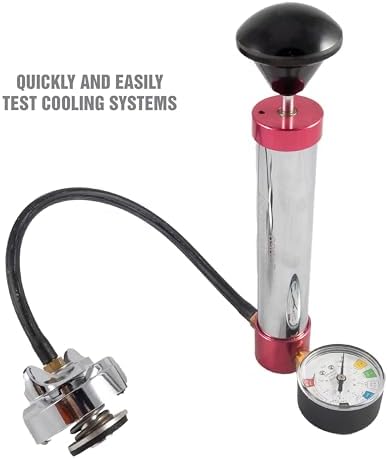
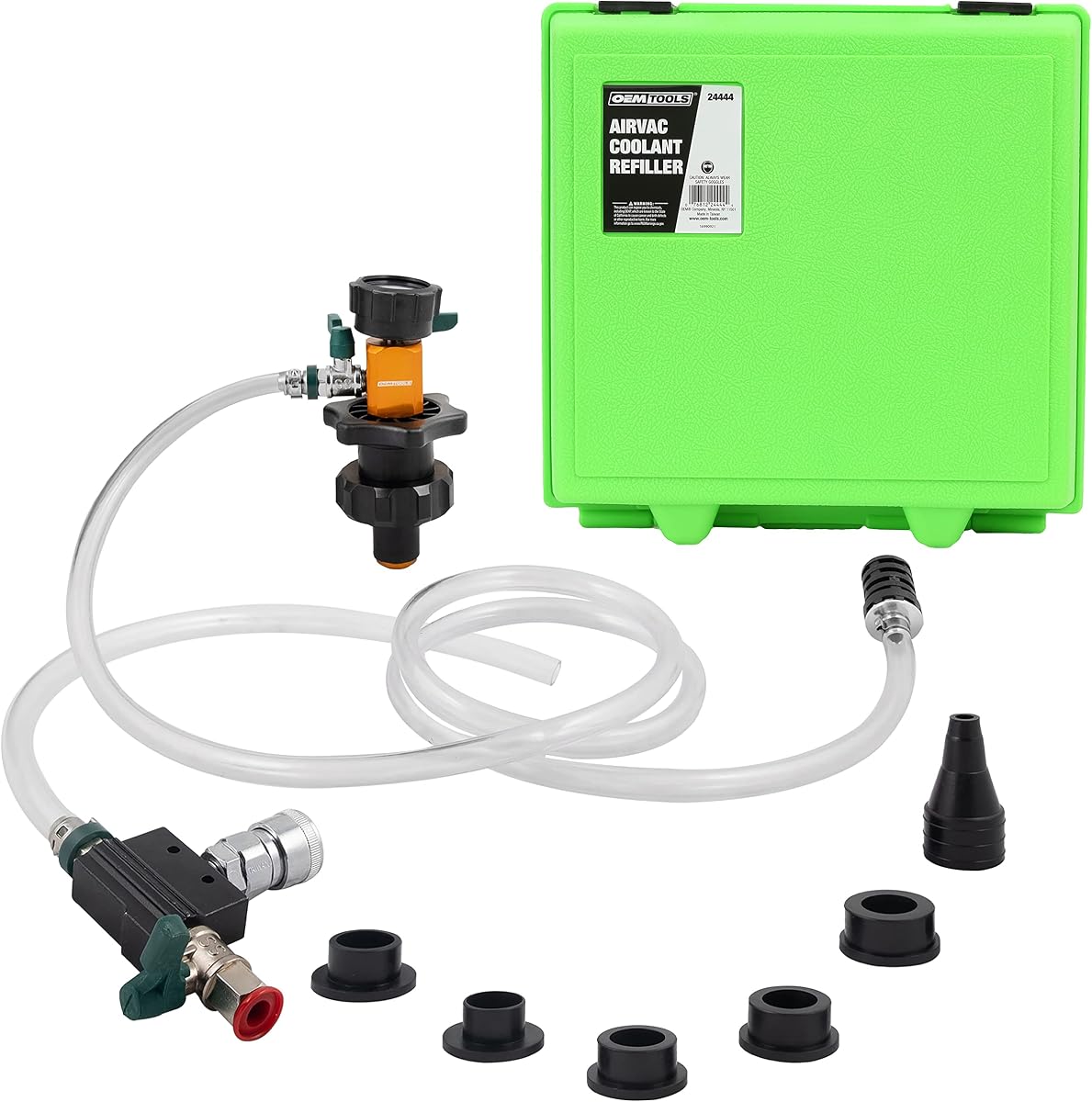
The 27069 includes the steel pump body, the 4 to 30 PSI gauge, the hose, and the standard radiator filler-neck coupler, packed in a blow mold case about 14 x 9 x 3.5 inches. It is the pump only: vehicle-specific neck and coolant bottle adapters for many imports are separate, and the pump accepts the regular OEMTOOLS cooling system adapters. If you want adapters and vacuum refill in one kit, see the OEMTOOLS 24444 coolant vacuum refill and pressure tester kit. More testers are in our diagnostics category.
Using it on a transmission repair
- Test before the new transmission goes in, not after. A bad in-radiator cooler means a new radiator, and GM's cooler bulletin covers flushing and flow testing the cooler circuit with dedicated equipment.
- If you replace the radiator or cooler lines, pressure test again before the first fill and road test.
- Flush the cooler lines with a dedicated cleaner such as Lubegard Kooler Kleen so contaminated fluid is not pushed into the new unit.
- Release pressure with the relief valve before removing the coupler so hot coolant does not spray.
- Check line routing and fittings using our cooler line replacement guide, and disconnect quick-connect lines with the OEMTOOLS 24688 cooler line tool.
The tester weighs about 3 pounds, has a steel body, and carries a limited lifetime warranty from the manufacturer.