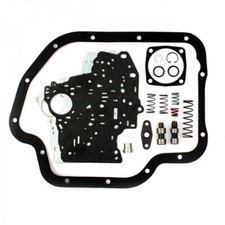
If your Turbo 400 shifts lazy under load, flares into second when you tow, or keeps upshifting out of low when you want it held there on the drag strip or a trail, the TransGo 400-1&2 is the kit built for that job. It is TransGo's heavy duty and high performance calibration for every GM TH400 (3L80) from 1965 on, as used in Chevrolet, GMC, Buick, Oldsmobile, Pontiac and Cadillac cars, trucks, vans and motorhomes. Part number TGO400-1-2.
What the 400-1&2 kit does in a TH400
The TH400 has no shift solenoids. Governor pressure tells the shift valves when to move, the vacuum modulator sets line pressure, and accumulators decide how long each clutch takes to apply. A stock unit is tuned for a quiet, long shift, and that overlap is heat that wears the second and direct clutches. This kit recalibrates the valve body and separator plate so each shift is shorter, and it lets you pick how short. TransGo publishes four ranges: passenger cars and light trucks, motorhomes and heavy trucks on big tires, hot rods, and race only. Each range is set by the size of the 2nd and 3rd feed holes plus the 1-2 accumulator spring combination, so a tow rig and a 10-second car get very different shift feel from the same box.
The other half of the kit is manual hold. A new 1-2 shift valve and plug stop the transmission from upshifting in manual 1, and it holds 2nd in manual 2 to any RPM, with back-shifts to 2nd and 1st at any RPM. In Drive it still shifts automatically.
Symptoms this kit addresses
- Soft, slow 1-2 or 2-3 shifts that get worse with a trailer or a heavy load
- Flare (RPM jump) between gears on a transmission that otherwise drives
- Direct clutch burnout after a rebuild, the TH400's known weak spot under power
- Intermediate clutch snap ring popping out and breaking case lugs on high-torque engines
- No way to hold 1st or 2nd to the rev limiter for racing or off-road use
The TH400 is non-electronic, so none of this sets a trouble code. Diagnosis is by road test and pressure gauge.
How to confirm a shift kit is the right fix
A shift kit firms a healthy transmission; it does not repair one that slips from burnt clutches or a worn pump. Before you order, check the fluid: dark, burnt-smelling ATF with friction material in the pan means a rebuild comes first. Pull the vacuum line at the modulator, and if it is wet with ATF, the diaphragm is leaking. Then put a gauge on the line pressure port; GM's spec is about 60 to 90 psi in Drive at 1000 rpm. Our TH400 harsh shift guide and valve body testing guide walk through both ends of the shift-quality problem.
Fitment
TransGo lists the 400-1&2 for all TH400 / 3L80 units 1965 and later. It does not fit the 1964-only first-design TH400 (TransGo uses a different kit there) and it is not a 4L80E kit, even though that unit grew from the 400. If you are unsure which transmission you have, the TH400 has a 13-bolt pan and a vacuum modulator on the right rear of the case. Send us your year and VIN if you want a second check, and see every part we carry for this unit on our TH400 parts page.
Install notes
- The kit can go in with the transmission in the vehicle: drop the pan and filter, remove the valve body and separator plate, and follow the step sheet.
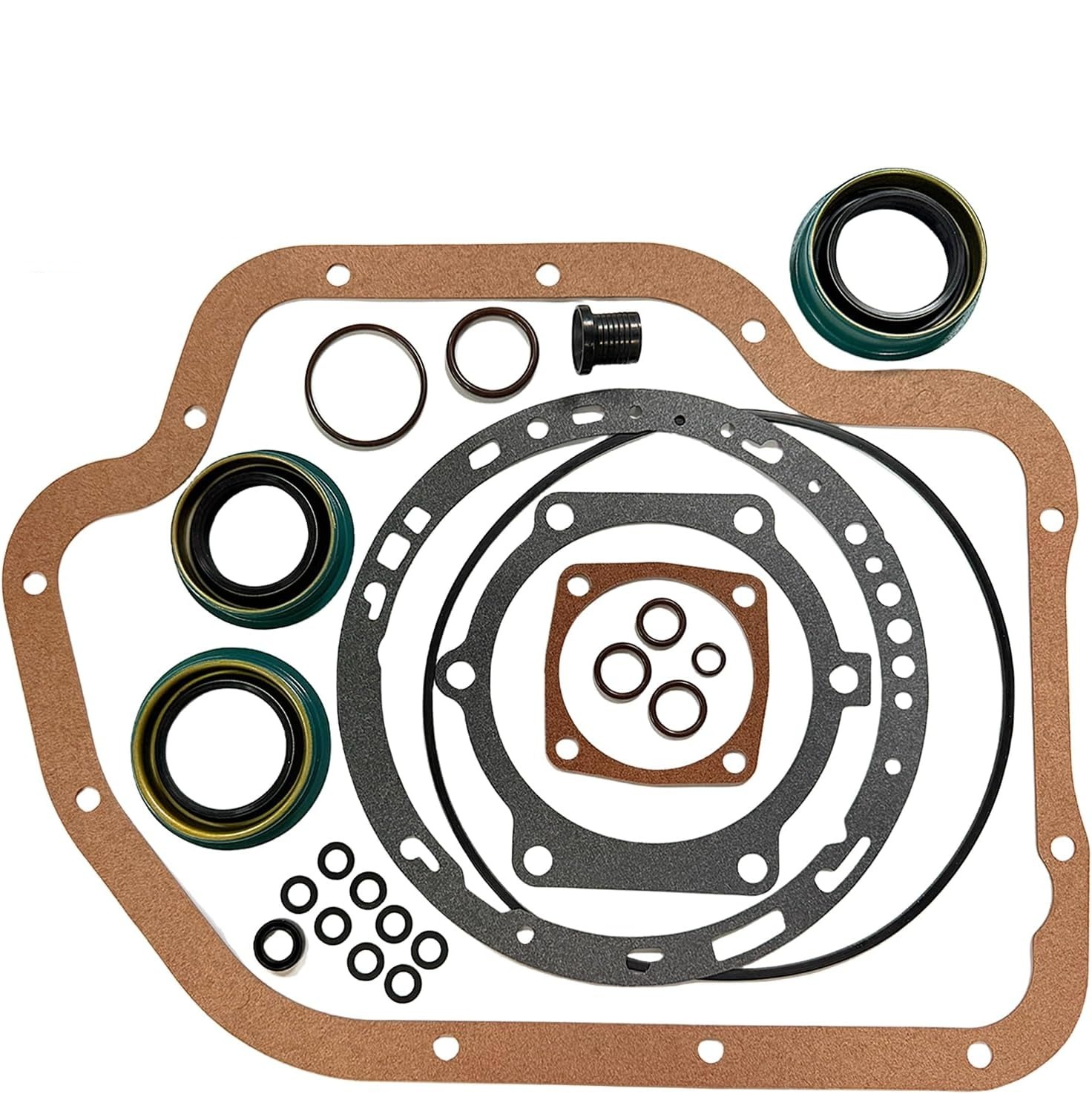
- Use the supplied case gasket with the TransGo plate, and confirm it has the four holes the instructions call out. Two gasket sets are included so you can change feed hole size after a road test.
- Install five 1/4 in. check balls in the case, including on 7-ball late cases; one pocket on those cases is left empty.
- Start the alignment bolts first so the valve body, plate and gaskets line up with the case.
- Always run a working vacuum modulator on manifold vacuum. With no vacuum the unit over-pressurizes and wears rings and the pump.
- The orange pressure regulator spring is for full race over 450 hp only; street units leave the regulator alone.
- Refill with Dexron ATF and torque the pan bolts to factory spec, about 12 lb ft.
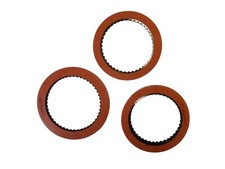
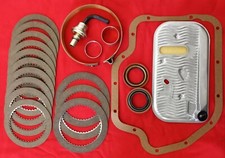
If the transmission is apart, the kit's 16 direct clutch return springs and heavy duty 2nd snap ring go in during assembly. Pair it with fresh frictions such as the TH400 friction module or the Coan 22107 master overhaul kit.