If your Toyota or Lexus with the four-speed U140E, U140F, U240E or U241E automatic shuttles back and forth between gears, drops into neutral for a moment on the 2-3 shift, or keeps setting converter clutch slip and solenoid performance codes, the cause is very often hydraulic wear inside the valve body rather than a failed clutch pack. This is the TransGo SK U140, a valve body repair kit for 1998 and newer units in this family. It replaces the two valve circuits that wear out first, so you can restore shift control without paying for a complete valve body.
What the shift kit does in a U140E
The U140 series is an electronically shifted transaxle. The computer drives linear solenoids SL1 and SL2 for the 1-2 and 2-3 shifts and an SLT pressure solenoid for line pressure, while S4 and DSL handle the overdrive and lockup functions. Those solenoids are fed by a solenoid modulator valve that caps their supply pressure no matter what main line pressure does. When that valve wears its bore, the solenoids get too much or too little feed, their output drifts, and shift timing and line pressure drift with it. The second wear point is the TCC boost valve and bushing; once they leak, the computer can no longer control how fast the lockup clutch applies, which is what sets slip codes. The SK U140 supplies a hardened steel TCC boost valve and bushing, a hardened steel solenoid modulator valve with its own spring and bushing that runs in the original worn bore with no reaming tool, and a 0.055 in drill for the lube upgrade on the main separator plate.
Symptoms this kit is built to correct
- Shuttle shifts, where the transmission hunts between two gears at steady throttle
- A neutral or flare on the 2-3 upshift before third grabs
- Converter clutch slip codes or a shudder once lockup engages
- Solenoid performance codes with solenoids that test good on the bench
- High or low line pressure complaints, such as harsh engagements or soft, slipping shifts
How to confirm before you buy
Start with resistance. TransGo lists SL1, SL2 and the pressure solenoid at about 5 to 5.5 ohms across the pins and S4 and DSL at 11 to 15 ohms, with no continuity from either pin to the solenoid body; our guide on testing a transmission solenoid with a multimeter walks through it. TransGo also warns that some U140 computers fail and get worse as they heat up, causing high-gear starts, bind-up in manual low or a harsh 2-3. Their check: with two meters on SL1 and SL2, both should read about 6.5 to 8 volts at a stop in Drive and drop smoothly to zero on their shifts. If the voltage is erratic, the computer is the problem and a kit will not fix it. For lockup complaints, our stall test and lockup diagnosis guide helps separate a converter fault from a valve body fault.
Fitment
This listing covers the U140E starting with the 1998 units, and TransGo builds the SK U140 for 1998-on U140E, U140F, U240E and U241E transmissions in Toyota and Lexus vehicles. Valve bodies changed over the years, so before ordering confirm your transmission code on the vehicle's identification label or send us your year and VIN and we will check it. Planetary or clutch failure is a different job: TransGo states that any planetary failure requires a complete strip and cleaning of the valve body. See every part we stock for this family on the Aisin transmission page.
Install notes
- The valve body comes out from under the pan. Remove the alignment bolts last and install them first on reassembly, since they locate the body to the case.
- Mark every check ball, retainer and small part before you split the valve body halves, and put them back where you found them even if your layout differs from the instructions.
- Clean any ridge from the solenoid modulator bore by stroking the old valve backwards in it before the new bushing goes in. If the bushing binds, stop and clean again.
- Enlarge the specified separator plate lube holes with the supplied drill; TransGo calls this the step that helps the transmission stay cool.
- Refill with the fluid your owner's manual specifies and check the level hot, then let the computer relearn shifts on a gentle drive.
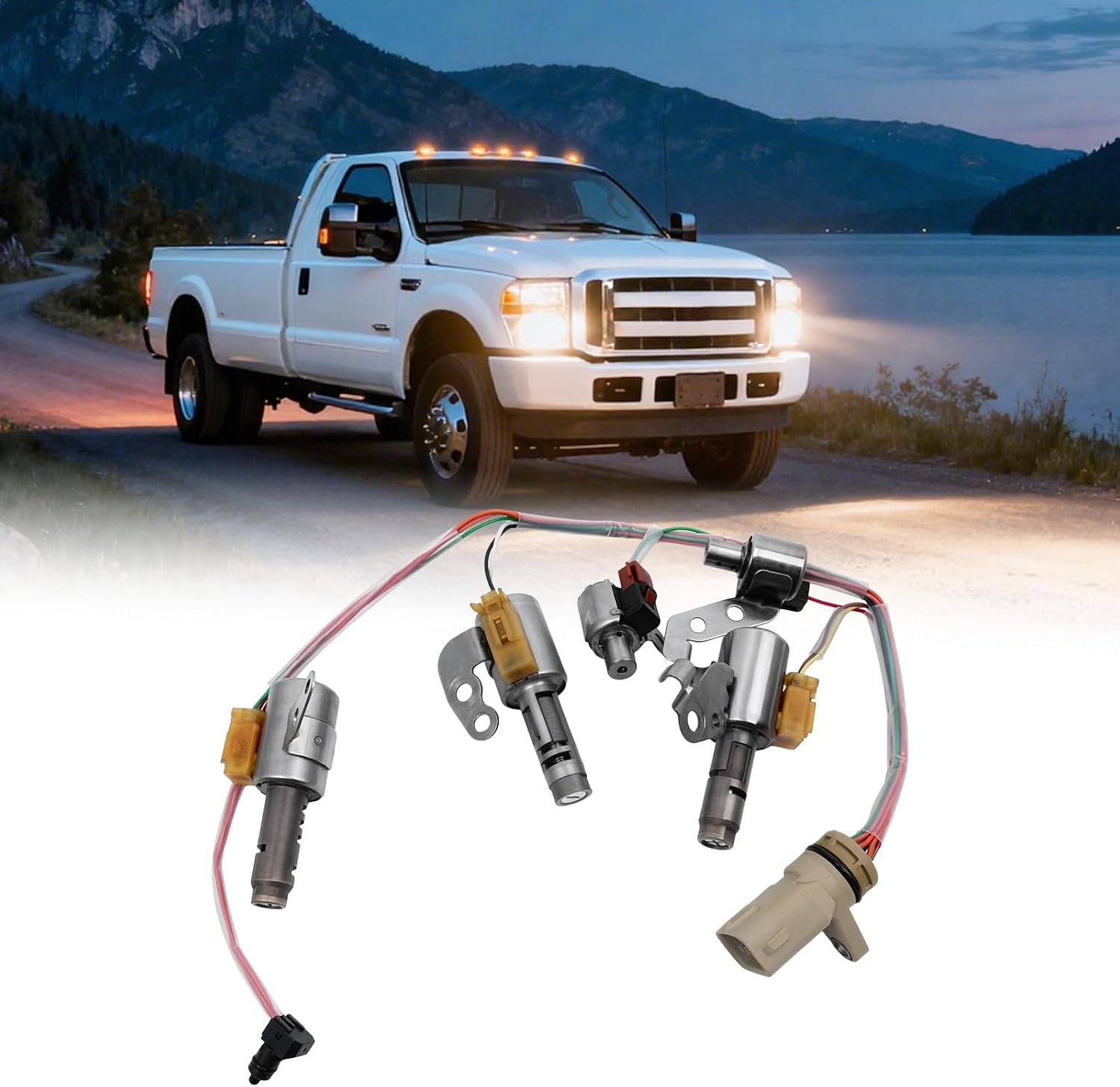
If the solenoids failed your resistance test, replace them at the same time with our U140E solenoid kit with wiring harness, and always fit a fresh U140E/U240E filter and pan gasket kit. A unit with burnt clutches needs the U140E overhaul kit along with this kit.