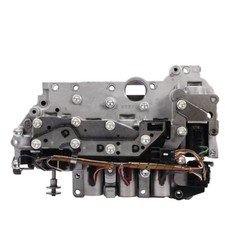
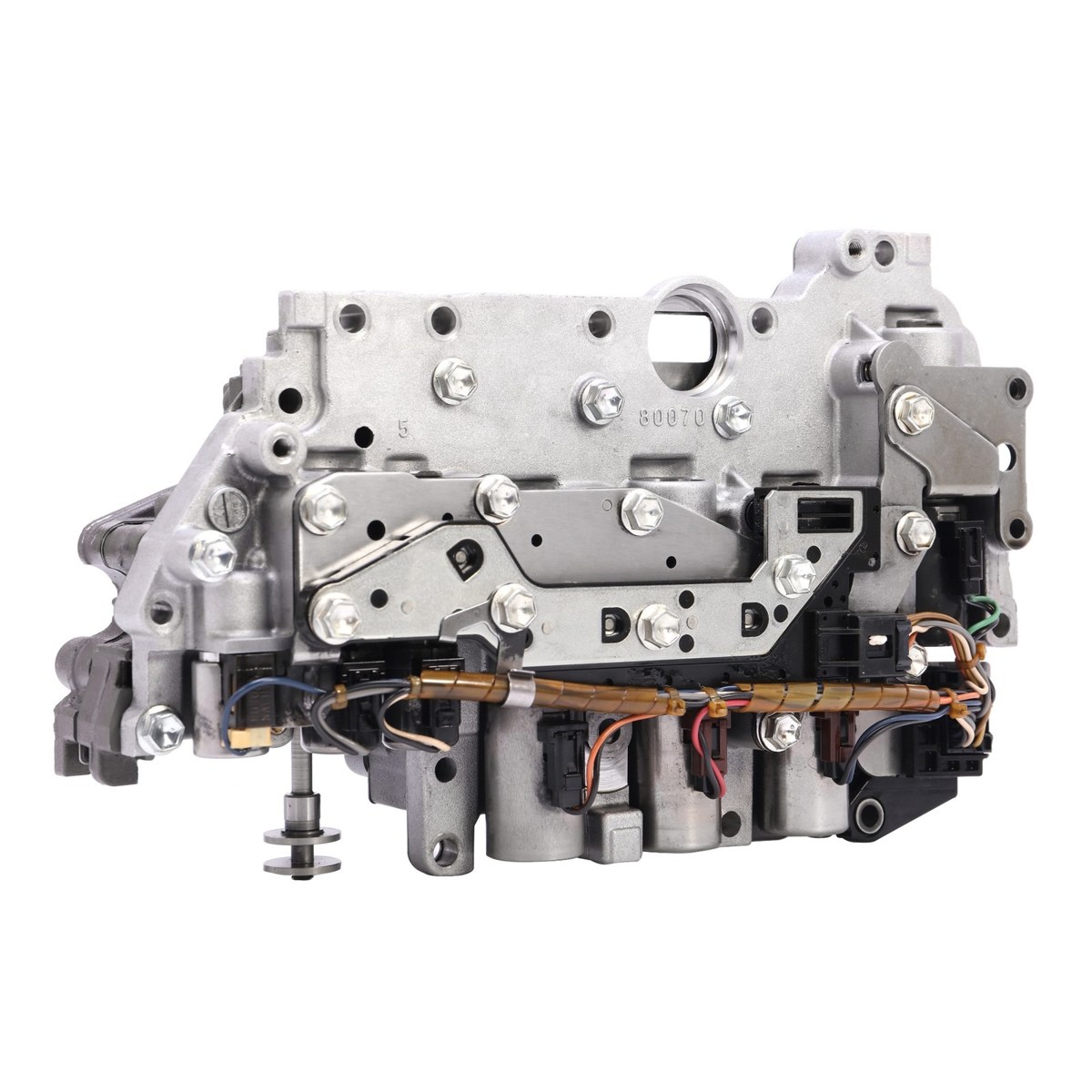
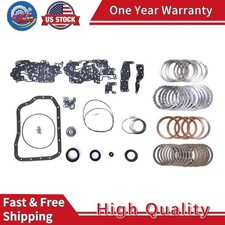
If you landed here looking for a U660E TCC solenoid, read this first: this listing is the complete remanufactured valve body, Toyota casting 277740A, with all seven solenoids and three pressure switches already installed. That matters, because on the U660E the lockup solenoid is only one part of the torque converter clutch circuit. The lockup control and lockup control boost valves live in the same aluminum casting, and when those bores wear, a new solenoid alone will not cure a 25-50 mph shudder or a P0741. This unit replaces the solenoids, the valves and the bores in one piece. It is for the 2007-2011 V6 six-speed behind the 3.5L in the Toyota Camry, Lexus ES350, Avalon and Venza.
What the valve body does in a U660E
The U660E is an electronically controlled six-speed transaxle, and Toyota manages almost everything with pulse-width-modulated linear solenoids: main line pressure, clutch apply and torque converter lockup. Toyota also runs a strategy it calls flex lockup, a partial converter apply that can be commanded in any gear from first through sixth under light to moderate throttle and while coasting. That keeps the lockup circuit cycling constantly, and the steady modulation slowly wears the valve bores. Gears Magazine (ATRA) names three valves to check on every U660E: the primary pressure regulator, the lockup control and lockup control boost valves, and the solenoid modulator valve.
Symptoms that point to the valve body
- Shudder under light throttle between roughly 25 and 50 mph as the converter applies
- TCC slip or performance codes such as P0741, or rpm that hunts at steady cruise
- Shift or pressure solenoid performance codes even though the solenoids test fine electrically
- Flare or harsh shifts, often worse once the fluid is hot
- Burnt converter or overheated fluid, which Sonnax ties to lockup control boost wear
How to confirm before you buy
Start with fluid. These units are calibrated for Toyota WS, and wrong or worn fluid alone can cause lockup shudder, flare and solenoid codes. Check the level using the temperature-window overflow procedure in our U660E fluid type and capacity guide. Next, scan every module and repair engine faults first; a dirty throttle body or lazy MAF sensor causes harsh coasting downshifts with no transmission code at all. To isolate a shudder, drive it in Manual 3rd, which disables flex lockup. Our U660E and U760E problems and service guide walks through the full sequence. Toyota solenoids rarely fail electrically but often fail mechanically from contaminated fluid, so on a high-mileage unit with a solenoid code, a complete valve body is usually the better repair than chasing one part.
Fitment
This is the early flat-casting 277740A: cast U660, seven solenoids, three pressure switches, the large canister solenoids with brown and black connectors, an extended exhaust groove, a larger solenoid casting boss and a pressure switch plate. It covers 2007-2011 U660E and U660F (AWD) units. The 2012-up valve body, 277740AA, carries one pressure switch instead of three and is not the same part. The U660E first appeared in the 2007 ES350 and Camry, then the 2008 Avalon and 2009 Venza, behind V6 engines. Before ordering, pull the pan and compare your casting mark, switch count and connector colors to the photos, or send us your year, model and engine size. Four-cylinder Camry, RAV4 and Highlander models use the U760E and need a different part. Browse every matching part on the U660E collection page.
Install notes
- Drain and drop the pan, unplug the harness, and note the bolt lengths as you remove the old valve body.
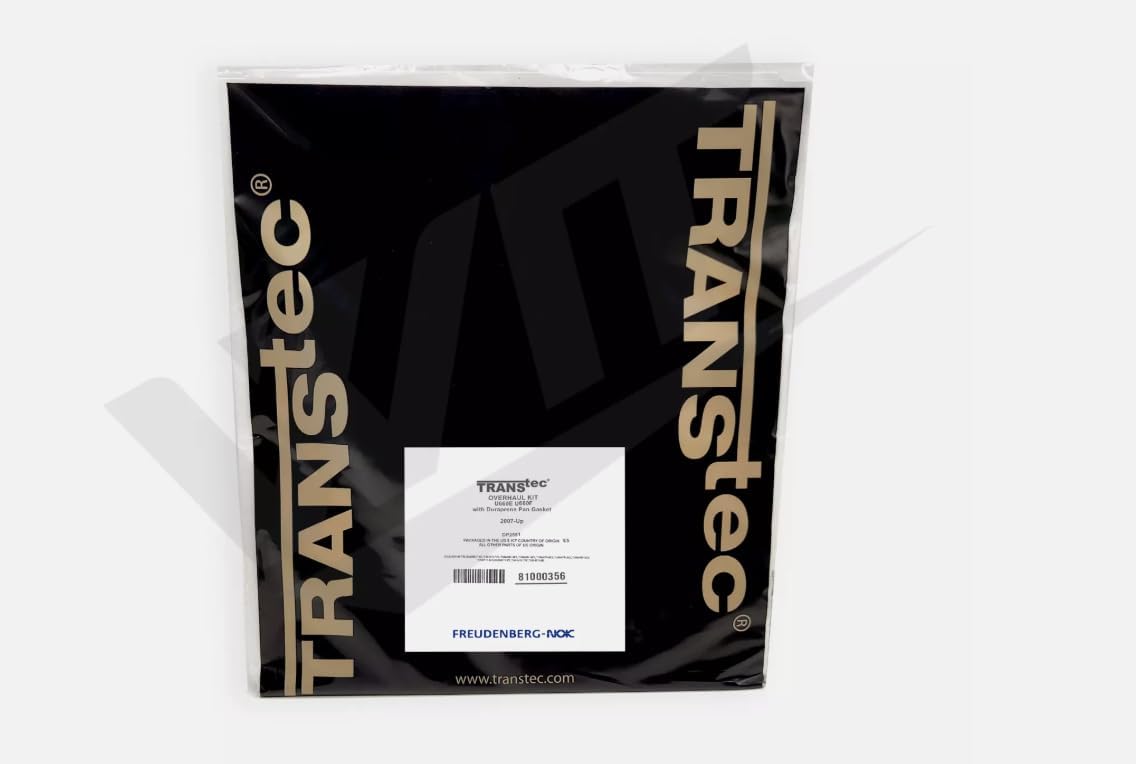
- Clean the pan and magnets, and replace the filter and pan gasket. If the unit is also slipping, an overhaul kit with a Duraprene gasket or full rebuild is the right job instead.
- Torque the valve body bolts evenly in sequence to the factory spec; do not overtighten into the aluminum.
- Refill with Toyota WS only and set the level at 185-194 F through the overflow plug, per Toyota bulletin T-SB-0036-13.
- Clear adaptive memory with a scan tool that performs the ECT reset; disconnecting the battery does not clear it. Then drive cold to hot so the TCM relearns.
If you want firmer shifts afterward, a U660E shift kit can be installed while the valve body is out of the box.