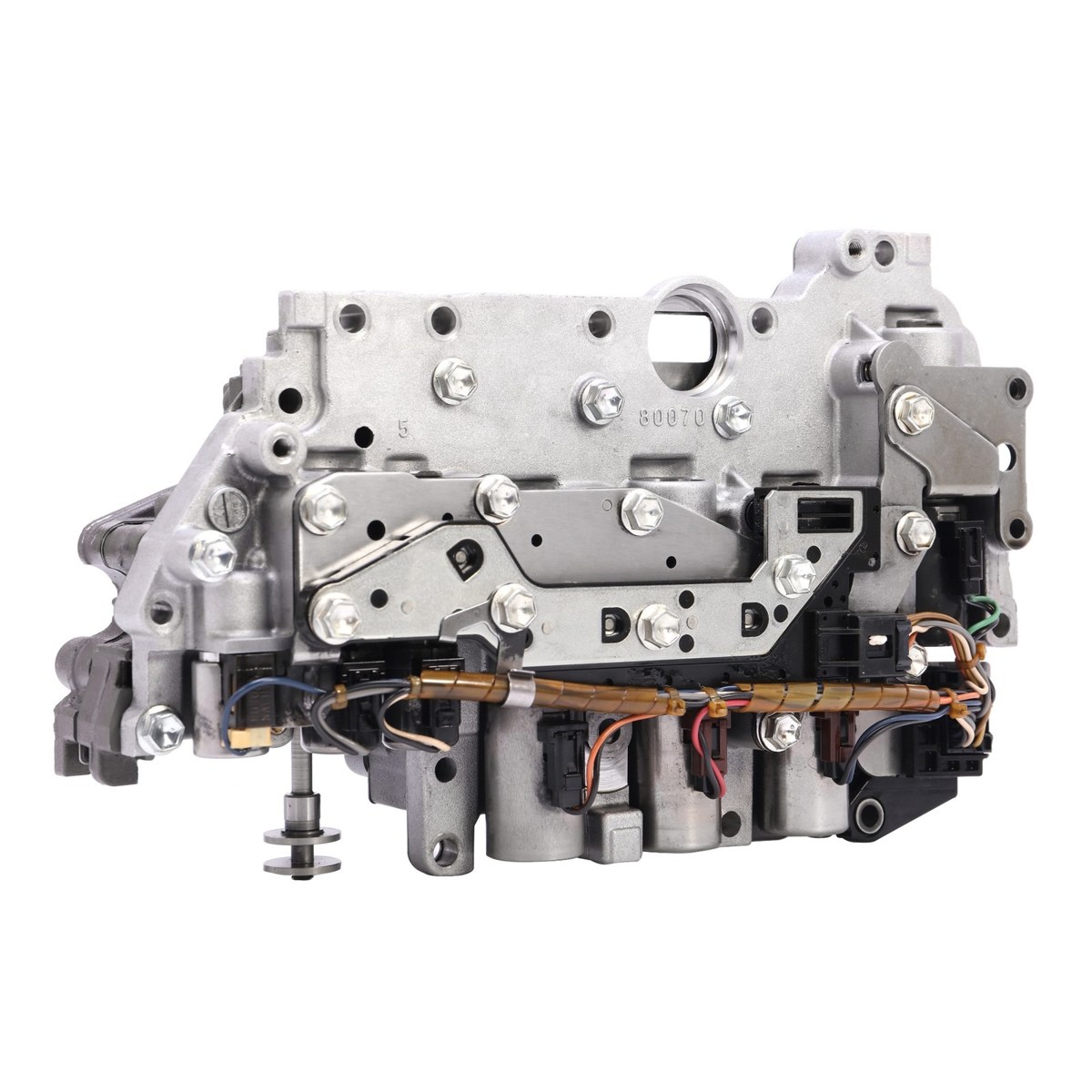
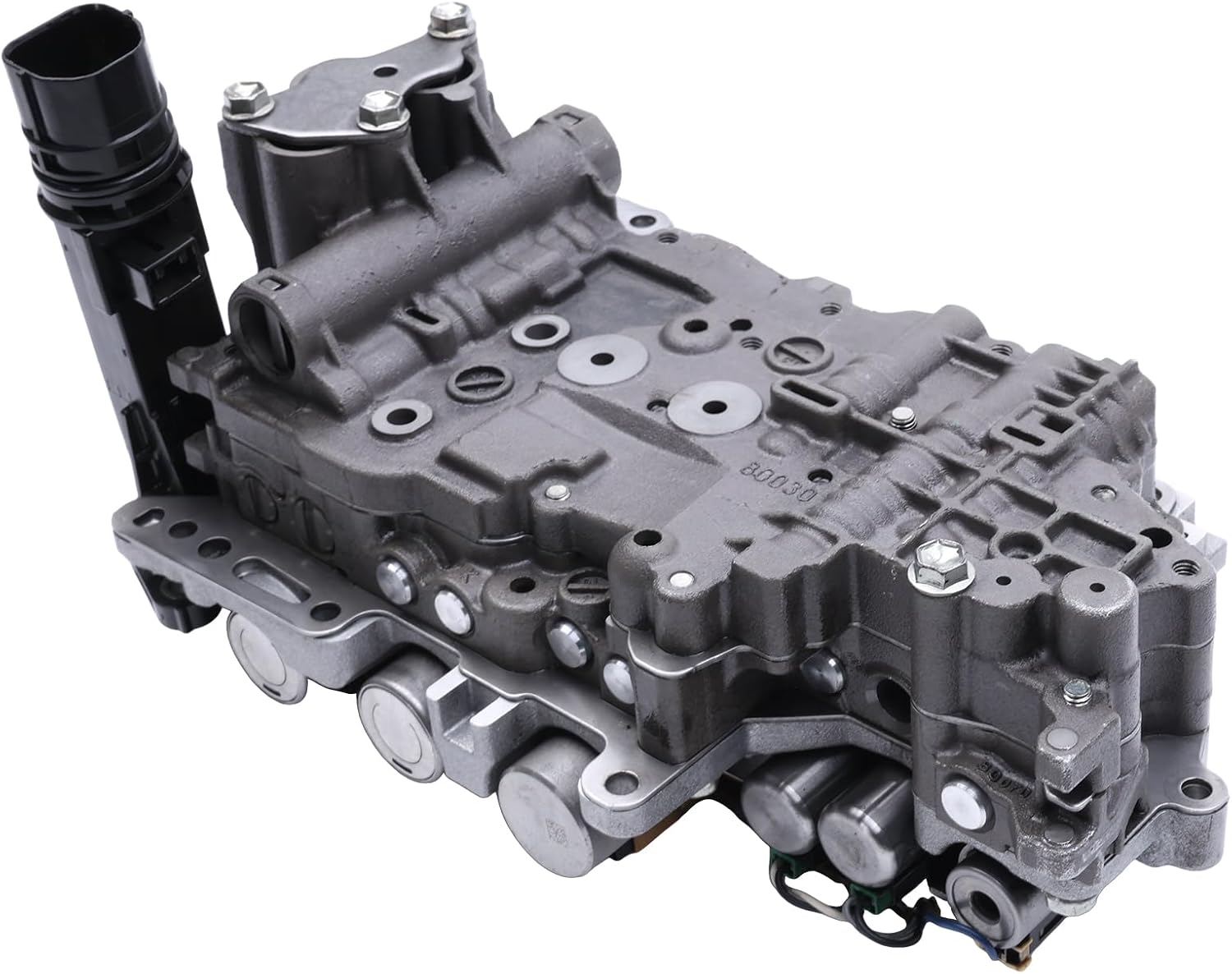
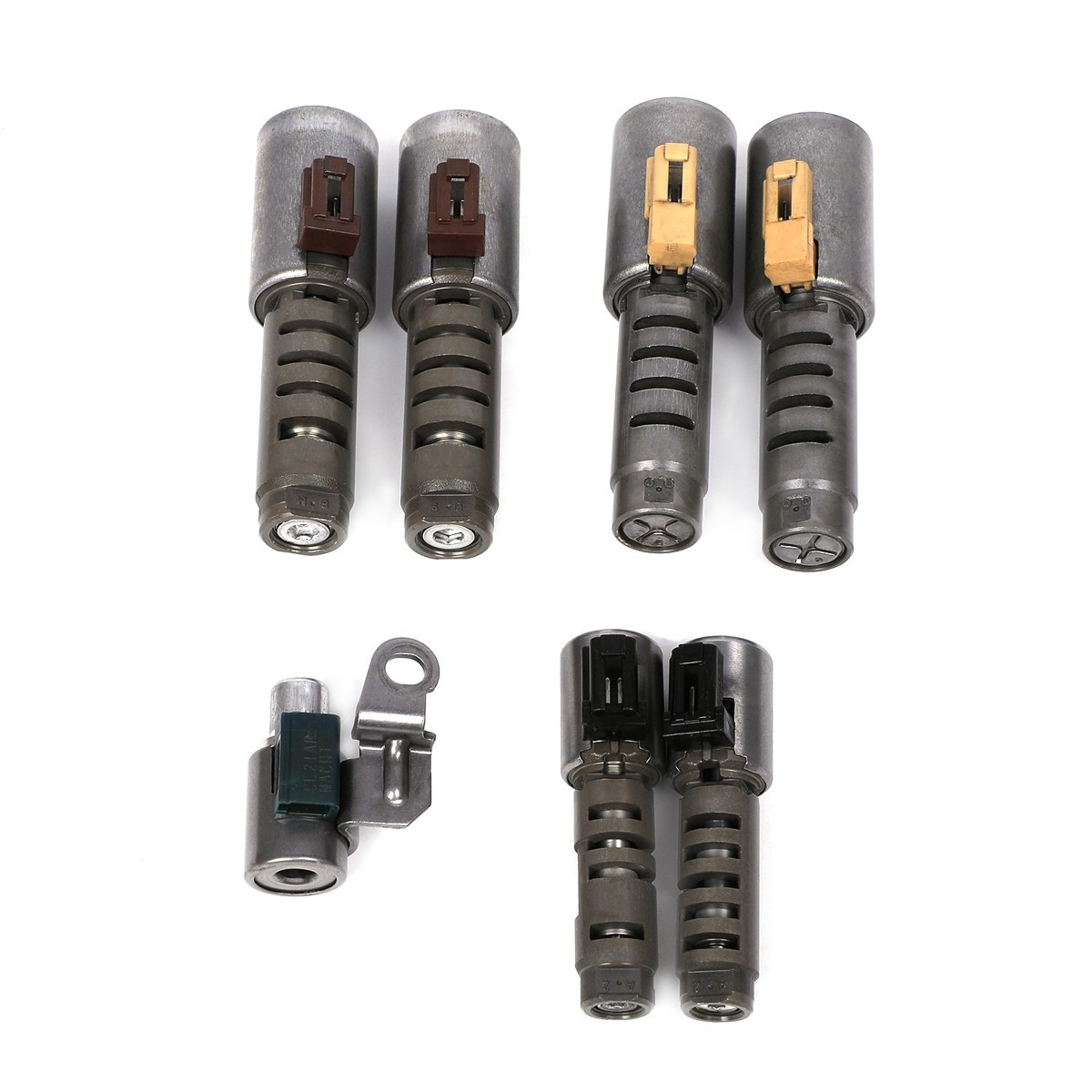
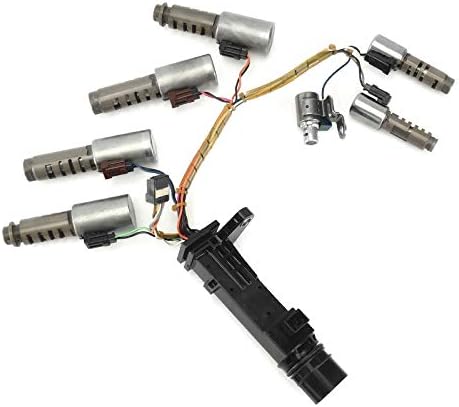
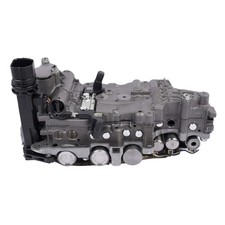
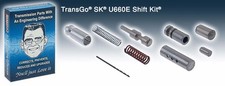
This remanufactured solenoid kit is for the U660E six-speed in 2011-2016 V6 Toyota and Lexus models, the front-drive transaxle that GEARS Magazine traces to the V6 Camry and Lexus ES350, the Avalon and the Venza, and that Toyota also used in other V6 models of these years. Owners land here after a shift solenoid code, a transmission that suddenly holds one gear, or shifts that bang on one day and flare the next. Because it is remanufactured and tested before it ships, you replace the electrical side of the valve body at once instead of buying and installing one solenoid at a time.
What the solenoid kit does in a U660E
The U660E has no throttle cable or governor; every shift is commanded electrically. The ECM reads vehicle speed, throttle and fluid temperature, then fires the solenoids bolted to the valve body. On/off shift solenoids move the shift valves, while linear solenoids meter the pressure that applies each clutch, the line pressure, and the torque converter lockup clutch. Toyota runs the lockup clutch in a partial-apply strategy it calls flex lockup, so the lockup solenoid is working constantly at light throttle, not just switching on at cruise.
That design leaves very little margin. A linear solenoid that sticks slightly or a coil whose resistance has drifted changes the clutch pressure the ECM thinks it is delivering, and the adaptive learning tries to compensate until it runs out of room.
Symptoms of worn U660E solenoids
- Erratic or missing upshifts, or a transmission stuck in a single gear (fail-safe)
- Shift solenoid circuit or performance codes stored in the transmission or engine computer
- Harsh engagement into Drive or Reverse, or a firm coast downshift
- Flaring between gears, especially the harsh 2-3 shift this family is known for
- Shudder from 25 to 50 mph at light throttle, which can come from the lockup solenoid as well as fluid or the converter
How to confirm the solenoids are the problem
Scan every module, not just the transmission, and record freeze frame data. Toyota's Check Mode on a capable scan tool makes the computer set codes on the first detection, which speeds up intermittent diagnosis. Then rule out the two common impostors on these units. First, fluid: GEARS Magazine notes that the wrong or worn-out fluid in a U660E causes shudder, flares and solenoid performance codes on its own, so the fluid must be genuine WS at the right level. Second, the valve body: Sonnax documents wear of the solenoid modulator valve bore that floods the SL, SLT and SLU solenoids with excess pressure and sets solenoid codes even when the solenoids are fine. Our U660E and U760E problems guide walks through that sequence. An electrical code that follows the harness rather than the solenoid points to the connector or wiring.
Fitment
This kit is listed for the U660E in 2011-2016 model years. Toyota made running changes to this transaxle, so the safest match is the solenoid connectors and bolt pattern on your valve body or the part numbers stamped on your existing solenoids; if in doubt, send us your year and VIN before ordering. It is not the kit for the four-cylinder U760E, and all-wheel-drive versions are designated U660F. For earlier and later years, see the 2007-2018 U660E solenoid kit and the 2018-2020 kit, or browse everything for this transmission on the U660E collection page.
Install notes
- The solenoids are serviced from the pan side: drain, drop the pan, remove the filter, and unplug the solenoid connectors before unbolting.
- Inspect every connector pin and the internal harness. A heat-hardened or cracked harness will bring the same codes back; the solenoid kit with wire harness covers that case.
- Lube the new O-rings with WS fluid and seat each solenoid straight so the O-ring does not roll or cut.
- Install a new filter and pan gasket, then refill with Toyota WS (00289-ATFWS) or a fluid that meets the WS specification.
- Set the level by Toyota's procedure: engine running, vehicle level, fluid at 185-194 F read from the A/T Oil Temperature 1 data. A cold check is not accurate on this unit.
- Clear codes, reset the transmission adaptive values, and drive through all six gears so the ECM relearns shift pressures.
For fill amounts and the service schedule, see our U660E fluid type and capacity guide. If the valve body bores are worn, solenoids alone will not cure it; a replacement U660-series valve body is the fix in that case.