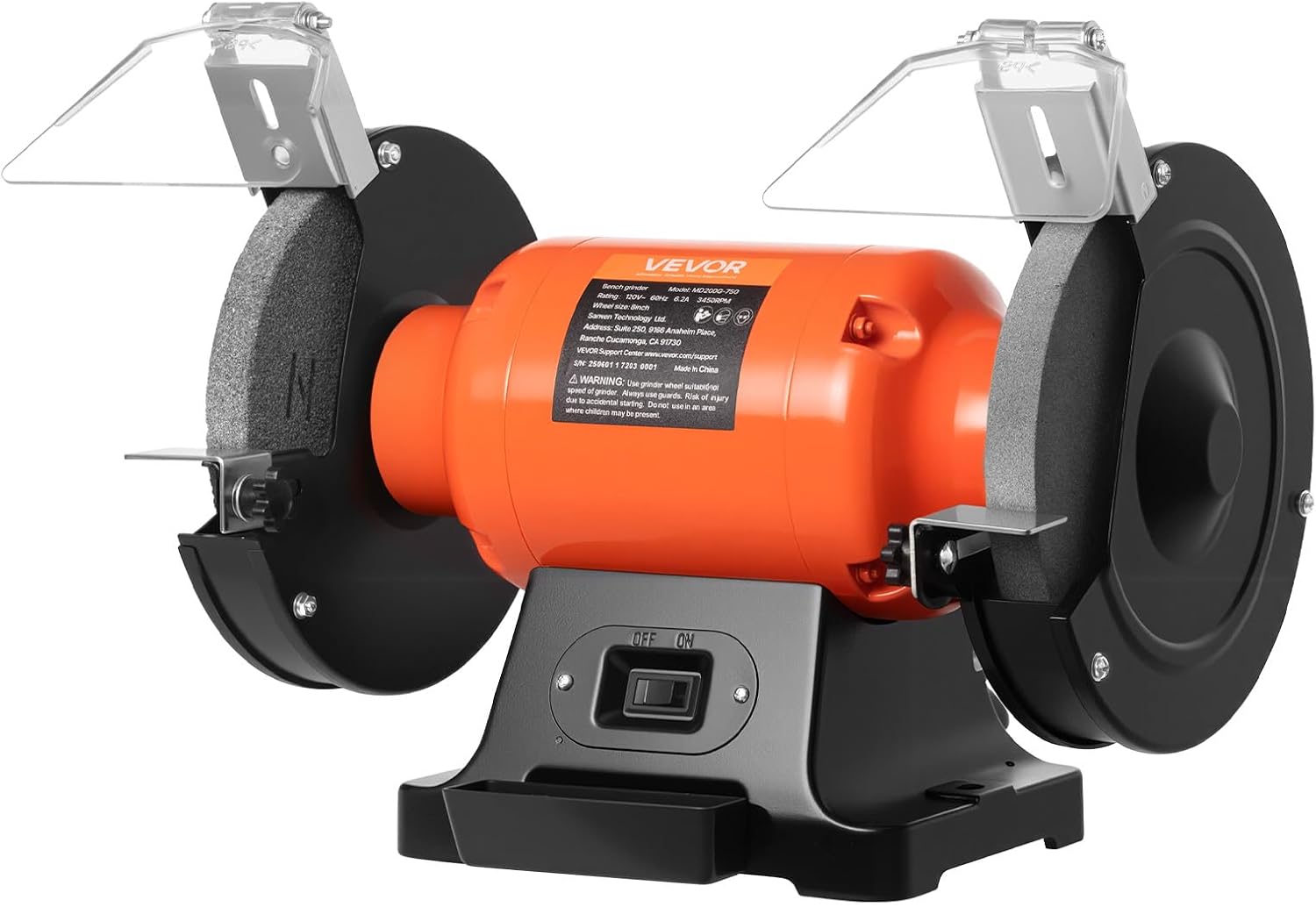
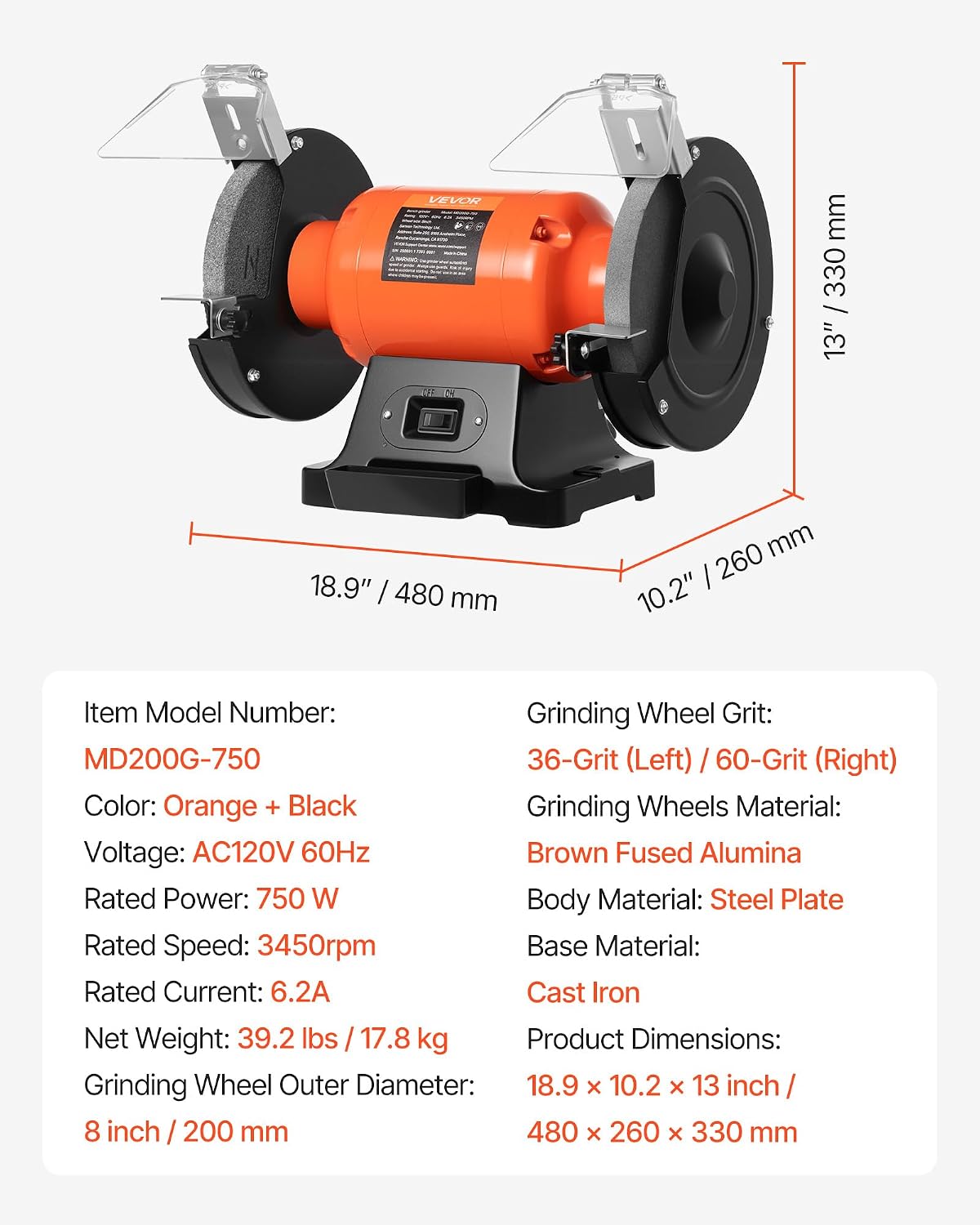
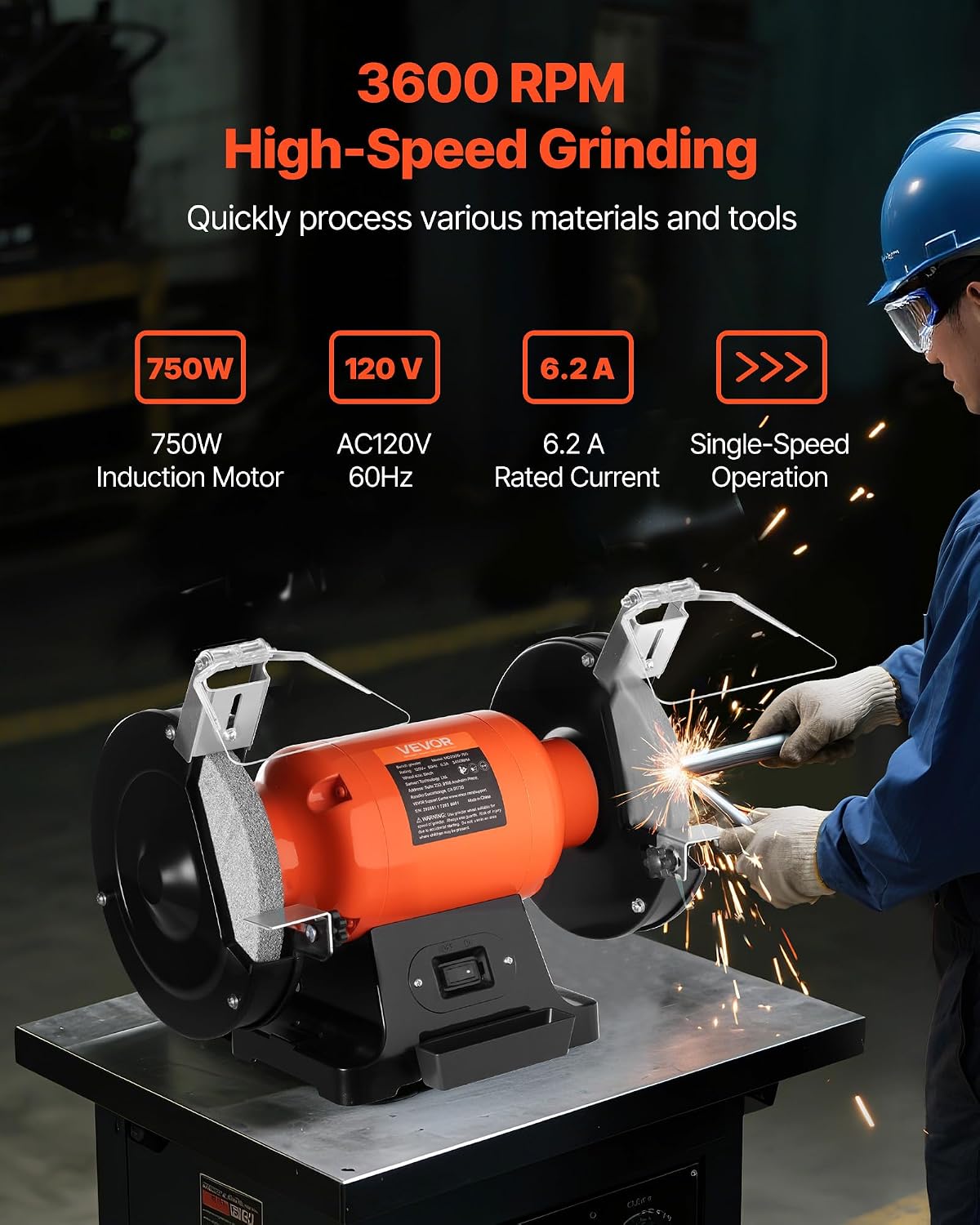
Every transmission bench needs a grinder within arm's reach, and it does not spend most of its life grinding. It spends it with a wire wheel on one arbor knocking gasket material off a case flange, cleaning rust off pump bolts and valve body bolts so they torque to a real number, and dressing the burr off a case bore or a snap ring groove after a hard failure. This is an 8 inch unit with a 750W (1.0 HP nameplate, 6.2A) induction motor turning 3450 RPM, which is enough arbor torque that a wire wheel or a scuffed converter hub does not bog it down.
It ships with two brown fused alumina wheels, 36 grit for fast removal and 60 grit for finish work. In a transmission shop the usual setup is to leave the 60 grit on one side and swap the other arbor to a wire cup or a coarse crimped wire wheel for parts cleanup, because that is the job you do twenty times a rebuild. Both wheels are guarded, each side has an adjustable clear eye shield you can angle without tools, and the tool rests adjust by hand so you can set a rake angle for deburring a plate edge or touching up a screwdriver you flattened prying a pan.
The base and wheel guards are cast iron and alloy steel, and it is meant to be bolted down. Bolt it to the bench or a stand. A grinder that walks under load is how you end up with a wheel chip in your forearm. Standard 120V corded shop power, single speed, no electronics to fail.
Two things worth saying plainly: never wire-wheel or grind a sealing surface or a machined thrust face, only the flange edges and hardware, and never use a bench grinder on aluminum with a stone wheel. Aluminum loads the wheel and can burst it. Aluminum cases and valve bodies go in a wire wheel or a parts washer, not against the stone.