A 10L90 that sits overnight and then takes two, three, four seconds to pick up Reverse or Drive is not slipping. Nothing is applied yet, so there is nothing to slip. The clutches that make that range are still filling, and something between the pump and the apply pistons is stealing the oil they need. On the GM 10-speed family that list is short, but it is not the same list on every 10L90, because GM changed the valve body in the middle of the run and the fix that works on a Gen. 1 body does not exist in drop-in form for a Gen. 2.
This is how I work a 10L90 delayed engagement: confirm what the complaint really is, rule out the free stuff, figure out which valve body is in it, and only then spend the customer's money. Specs and part numbers come from GM, NHTSA, ATRA's GEARS magazine and Sonnax, listed at the bottom.
First, is it a delay or a clunk?
Three different complaints get written up as "delayed engagement" on a 10L90, and only one of them is a repair:
- A clunk after a short pause on a garage shift. ATRA's GEARS coverage of normal GM 10-speed concerns says the customer may hear a clunk on a garage shift that is delayed a few milliseconds while the clutches engage, and that later applications got a calibration update that varies the clamp load of the C2 clutch to take it out. A pause measured in milliseconds is a calibration behavior, not a hydraulic failure.
- A multi-second delay on the first shift of the day only. Fine after that. This is drainback plus a leak, and it is what this article is about.
- A delay at every engagement, hot or cold. Worse. The leak no longer depends on drainback, which usually means clutch or seal damage, not just a worn bore.
Put a number on it before you touch anything. With a scan tool on engine speed and input speed, let the car sit overnight, start it, hold the brake and go Park to Drive, then Park to Reverse. Time how long input speed takes to pull down to zero. That is the figure you will judge the repair against, and it is far more honest than the customer's count.
Why a leak shows up as a delay
After the engine shuts off, oil drains out of the converter and the upper circuits. The first start has to refill all of it before any clutch sees apply pressure. GEARS makes the point directly: on these units the initial clutch fill, getting the air out, has to be addressed to prevent delayed engagement.
Now add a worn valve bore. Once the circuits are primed, a bore that bleeds a small percentage of its oil to exhaust is mostly invisible; the pump keeps up. On a cold start with empty circuits and the engine at idle, pump output is at its lowest and the leak takes its biggest bite of it. The fill runs long and the TCM's expected fill time is blown. That is why the complaint lives at idle, in the morning, on the garage shift.
Step 1: the free checks
Fluid level and type
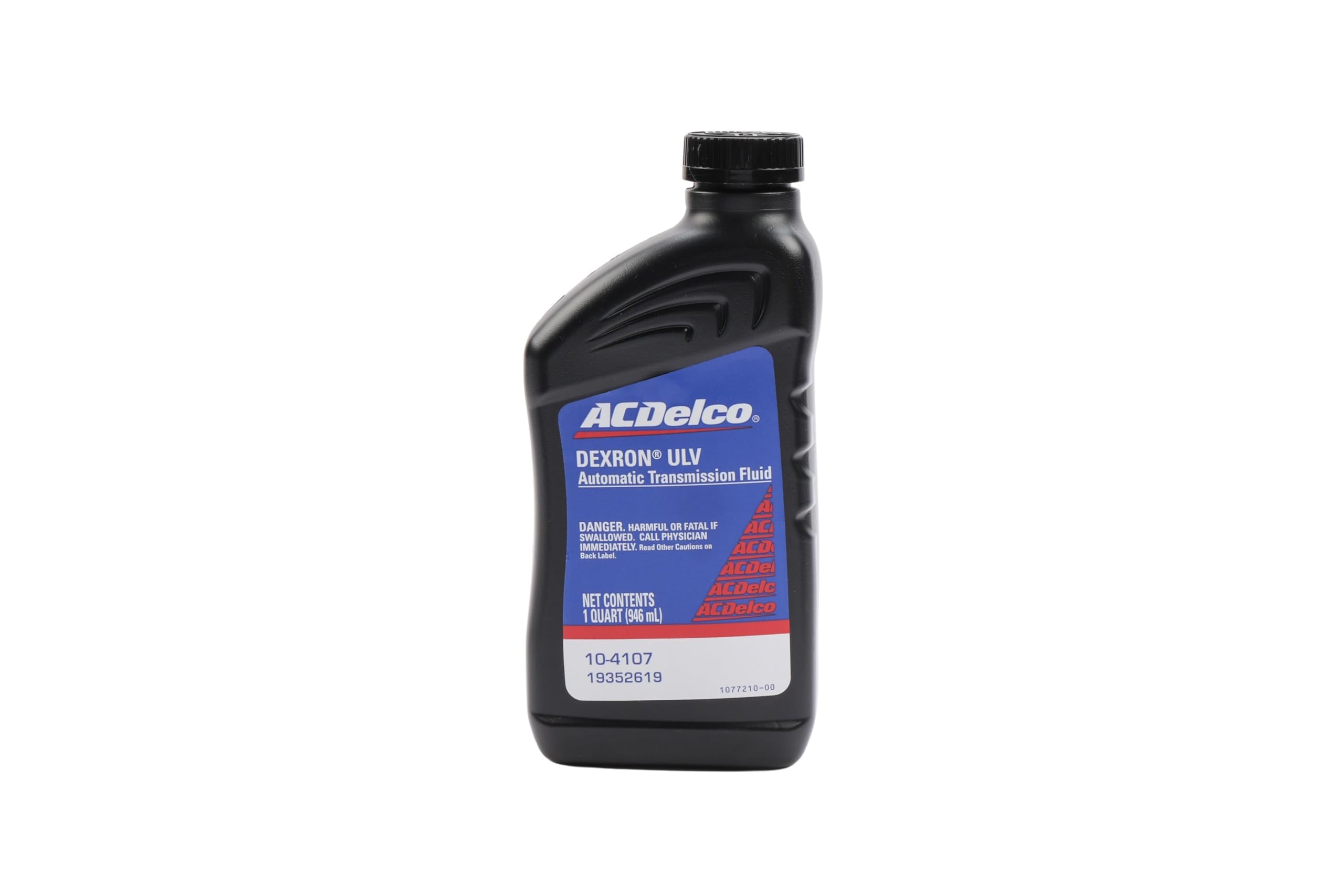
There is no dipstick on a 10L90. Level is set at the case plug at temperature, and it is easy to leave one low after a filter job. Low fluid means the pump is pulling air on the first start, which lengthens exactly the fill we are chasing. GM's 2025 capacities chart lists the 10L90 (RPO MHX in the CT5, MHO in the Escalade) at 7.7 liters (8.1 quarts) of DEXRON ULV for a fluid change. Sonnax's clutch-pack pressure-loss article is blunt about the fluid: use DEXRON ULV, because universal or older fluids cause shift complaints and early failure in a unit designed around thin oil and a low-drag pump.
Battery and charging
This is not a throwaway line. The 10-speed solenoids only make clutch pressure with current, and Sonnax lists system voltage problems (failing battery, weak alternator output, power and ground faults) among the things that keep a GM 8-, 9- or 10-speed from completing its fast learn. A car that sat in your lot on a tired battery can come back out with a delay it did not have when it came in.
Calibration
Before any hydraulic work on a vehicle still in coverage, check the TCM calibration against what is current for the VIN. GM already fixed one delayed engagement population with software alone: Service Update 18169 (May 2018) covers 2018 Escalade, Tahoe and Yukon models with the 10-speed (RPO MF6) and the 6.2L L86, describing a 2 to 3 second delayed engagement between Park, Reverse and Drive with a possible bang or clunk and a short roll-back on an incline. The correction is a TCM reprogram; no parts. That is a narrow group, but it proves the pattern: a delay that showed up with no mechanical event is worth a calibration check first.
Step 2: which valve body is in it?
This is where 10L90 work splits. Sonnax catalogs the 10L90 as two units, Gen. 1 and Gen. 2, because the valve bodies take different parts. Gen. 1 uses latch valves in the clutch circuits. Gen. 2, which arrived in late 2019, replaced them with a feed limit low valve and a feed limit high valve. Our 10L90 identification guide walks through the RPO and physical checks. The short version: read the RPO off the QR label on the driver's B-pillar, and when the pan is down, look for latch valve trains versus the feed limit valves.
Why it matters here: Sonnax tags delayed engagement as a symptom on specific 10L90 parts, and they are not the same across generations.
| Valve body | Sonnax part tagged for delayed engagement | Install |
|---|---|---|
| Gen. 1 | Main Pressure Regulator Valve Kit 105740-12K | Drop-in Zip Valve |
| Gen. 1 | O-Ringed End Plug Kit 105740-13K | Drop-in |
| Gen. 1 | Oversized Main Pressure Regulator Valve Kit 105740-20K | Ream, tool kit F-105740-TL20 |
| Gen. 2 | Oversized Main Pressure Regulator Valve Kit 105740-21K | Ream, tool kit F-105740-TL20 |
Read that table carefully. On a Gen. 1 10L90 you have a drop-in answer to a worn main pressure regulator bore. On a Gen. 2 the only Sonnax part tagged for delayed engagement is an oversized valve, which means the bore gets reamed. That changes the quote. Price a Gen. 2 delayed engagement as a machining job or a valve body, not as a clip-and-go kit.
Cause 1: main pressure regulator bore wear
The main pressure regulator decides how much of the pump's output becomes line pressure. When its bore wears, signal oil bleeds past the spool, the valve cannot hold its commanded position, and line pressure sags. Sonnax lists the complaints its repair addresses as low line pressure, various shift concerns, delayed engagement, poor shift quality and burnt clutches. The burnt clutches at the end of that list are the reason not to leave this alone: a pressure problem that is only a delay today is a clutch problem later.
The companion leak is the end plug. Sonnax's O-ringed end plug kit (105740-13K) for Gen. 1 lists delayed engagement and low line pressure alongside TCC slip codes and overheated fluid, because a weeping plug bleeds the same signal oil the regulator depends on.
Test it before you buy it. Vacuum test the main pressure regulator bore with the valve in place. A bore that will not hold vacuum is leaking, full stop. On the car, a line pressure reading that is low at idle and comes up with throttle points at the regulator circuit or the pump, not at a single clutch.
Cause 2: on a Gen. 2, the feed limit low valve
The Gen. 2 feed limit low valve is better known for the safety recall than for delayed engagement, but it belongs on this list because it controls clutch feed. Sonnax's Gen. 2 listing ties its feed limit low kit (105740-54K) to harsh shifts, code P0747, a downshift to 2nd from high gear, 5th gear only, a reduced propulsion message, burnt clutches, clutch failure, and GM safety recalls N242480630 and N242454440. Sonnax's recall write-up explains that the same valve limits feed to the default disable solenoid, and that when control pressure is lost the unit defaults to 2nd.
If a Gen. 2 10L90 has a delay plus any of those symptoms or a stored P0747, stop and run the VIN for open recalls before doing paid work. A recall valve body fixes it at no cost to the owner. Our 10L90 limp mode guide covers the default-to-2nd logic in more detail.
Cause 3: clutch circuit leaks past the valve body
When the valve body passes, the leak is downstream. Sonnax's article on pressure loss in 10-speed clutch packs names wear on the sealing rings and hub bushings as some of the biggest causes of lost charge pressure on the GM and Ford 10-speeds, and points out that the shafts carry plugs to keep oil in its circuit. A leaking plug causes shift concerns too.
The test is the same one you would do on any unit, done more carefully: air check each drum using the input and its mating part, and air check the complete assembly through the pump before it goes in the case. A hiss at a sealing ring on the bench is a delayed engagement you did not have to discover on the road test. If the unit is coming apart anyway, replace the rotating sealing rings and any bushing that shows wear; do not reuse marginal rings on a unit this sensitive to fill time.
Cause 4: it was just repaired and never learned
A 10L90 that engages late right after a valve body job, a rebuild or a replacement unit may not be broken at all. It may not have learned its clutch fills. Sonnax's fast learn article says fast learn should be run after any transmission repair, and spells out what it needs:
- Fluid temperature between 167F and 185F (75C to 85C), unless the current TCM program specifies otherwise.
- Normal line pressure, 55 to 60 psi minimum in Drive with a pressure rise on throttle.
- Fluid level correct and verified.
- Between a quarter and three-quarters of a tank of fuel.
- No stored powertrain, ABS or engine codes, and a healthy battery and charging system.
- The TCM on its latest program.
Sonnax also lists what keeps fast learn from finishing, and it reads like this article's cause list: clutch circuit leaks (sealing rings, piston wear or cracks, piston seals, clutch clearance), pressure regulator wear, worn end plugs, cut solenoid O-rings, check balls left out. A fast learn that will not complete is a diagnosis in itself. Some adapts, TCC included, can still take 200 to 300 miles of driving after fast learn, so set the customer's expectations before the keys go back.
One more GM-specific rule: the 10L90 TCM is matched to its transmission's solenoid characterization. If the valve body was replaced with a GM service body, its data has to be programmed. A used TCM or body installed without programming produces fill problems that look exactly like a leak.
The order that works
- Confirm it is a multi-second delay, not a millisecond clunk. Measure input speed pull-down on a cold first shift and record it.
- Check level at temperature with DEXRON ULV. Load test the battery and check charging.
- Check TCM calibration and open recalls by VIN.
- Line pressure at idle and on throttle. Low at idle with a normal rise points at the pump or regulator circuit.
- Identify Gen. 1 or Gen. 2 before ordering a single valve.
- Pull the valve body. Vacuum test the main pressure regulator and its end plug; on Gen. 2, test the feed limit low valve too.
- If the body passes, go inside: air check drums and the assembly through the pump, sealing rings, hub bushings and shaft plugs.
- After any repair, run fast learn under the conditions above and road test against your recorded pull-down time.
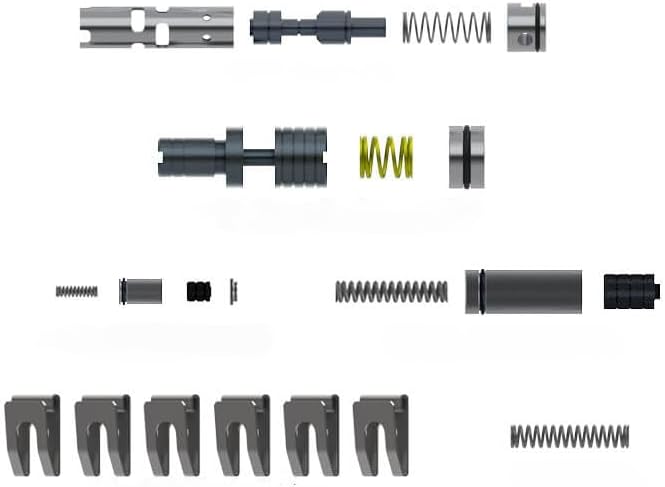
10L90 Sonnax Main Pressure Regulator Valve Kit 105740-12K (Gen. 1)
The honest pitch: if a Gen. 1 10L90 has low line pressure at idle and the regulator bore fails a vacuum test, this drop-in kit fixes the cause instead of the symptom, and Sonnax tags it for delayed engagement. It does not fit a Gen. 2 body, so confirm generation first. On a Gen. 2 with recall-type symptoms, the matching part is the feed limit low valve kit 105740-54K.
Shop the part for this fix →Doing the whole body while it is out? The full 10L90 parts collection carries the O-ringed end plug kit, solenoid stabilization retainers, bonded pistons, filters and clutch kits.
Need parts for this job?
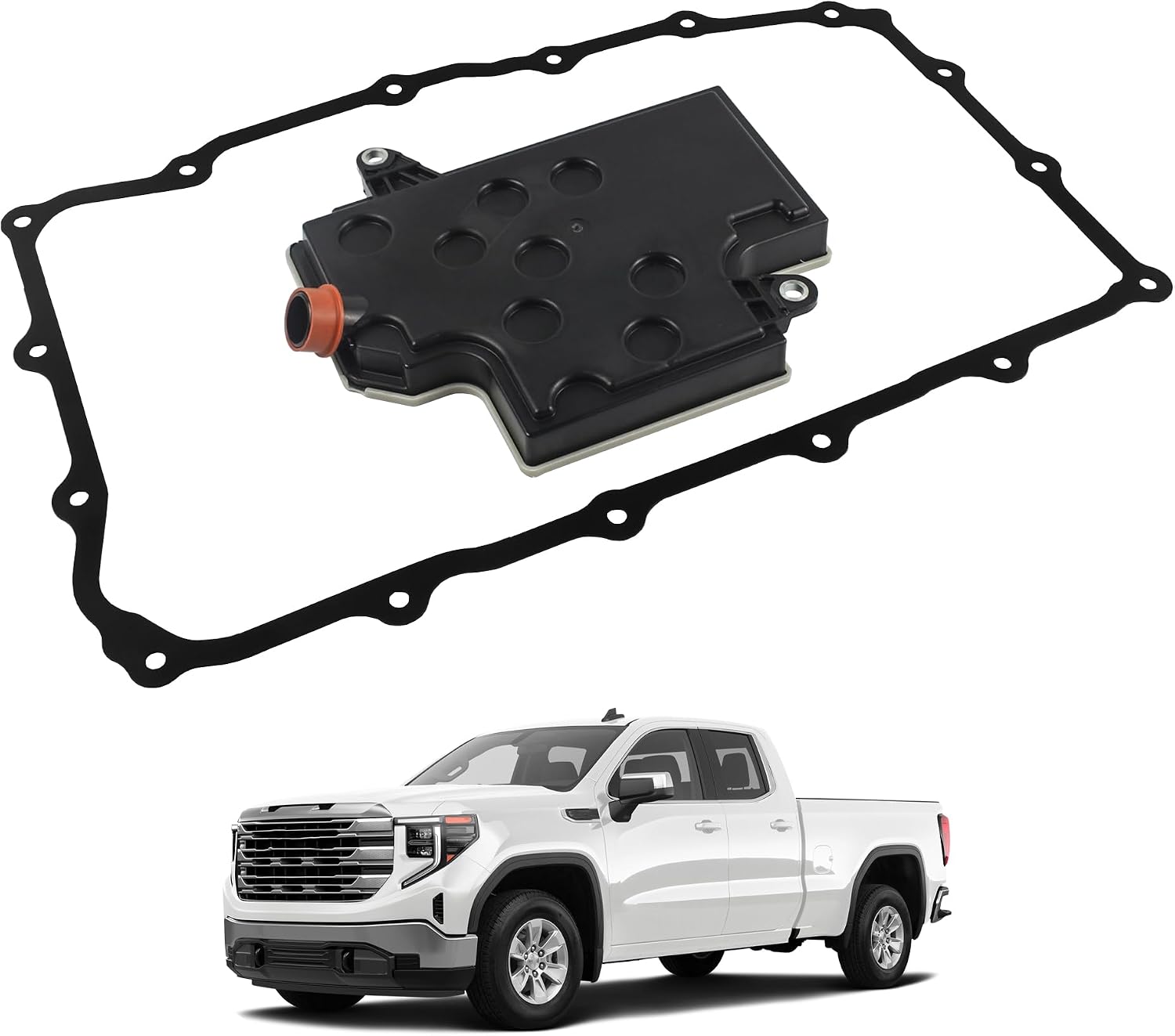
The Sonnax 10-speed Zip Kit, the 10L60/10L80/10L90 filter and pan gasket kit and DEXRON ULV are on our GM 10-speed parts page, with checkout on site. If the pan is coming down to vacuum test the valve body, put the filter, gasket and fluid on the same order so it only comes down once.
FAQ
Why does my 10L90 take a few seconds to go into gear after sitting overnight?
While the vehicle sits, oil drains out of the converter and upper circuits, and the first start has to refill them before any clutch can apply. If a valve bore such as the main pressure regulator is leaking, that refill takes longer than the TCM expects and you feel it as a delay. Once the circuits are primed the pump keeps up with the leak, which is why the complaint usually goes away for the rest of the day.
Is a clunk on a 10L90 garage shift the same as delayed engagement?
No. ATRA's GEARS magazine describes a garage-shift clunk delayed a few milliseconds as a normal GM 10-speed condition, and later calibrations vary C2 clutch clamp load to reduce it. A true delayed engagement is measured in seconds, and you can confirm it by timing how long input speed takes to pull down to zero on a scan tool.
What Sonnax part fixes 10L90 delayed engagement?
It depends on the valve body. On a Gen. 1 10L90, Sonnax tags the drop-in Main Pressure Regulator Valve Kit 105740-12K, the O-Ringed End Plug Kit 105740-13K and the oversized 105740-20K for delayed engagement. On a Gen. 2, the part tagged for delayed engagement is the Oversized Main Pressure Regulator Valve Kit 105740-21K, which requires reaming the bore. Vacuum test the bore before ordering anything.
Why does my 10L90 have delayed engagement after a rebuild or valve body replacement?
Often because fast learn was not run or did not complete. Sonnax says fast learn should follow any transmission repair and needs fluid at 167F to 185F, at least 55 to 60 psi line pressure in Drive, correct fluid level, a quarter to three-quarters tank of fuel and no stored codes. A fast learn that will not finish usually points to a clutch circuit leak, regulator wear or an assembly mistake.
Can a software update fix 10L90 delayed engagement?
On some vehicles. GM Service Update 18169 covered 2018 Escalade, Tahoe and Yukon 10-speed models with the 6.2L L86 that had a 2 to 3 second delayed engagement, and the fix was a TCM reprogram with no parts. On any delay that appeared without a mechanical event, check the calibration and open recalls by VIN before hydraulic work.
Related guides
- 10L90 Valve Body Symptoms
- 10L90 Slipping Causes and Fix
- 10L90 Limp Mode Causes
- 10L90 Pressure Control (EPC) Solenoid Symptoms
- 10L90 Harsh Shift Causes
- 10L80 Delayed Engagement: Causes and Fix
Sources
- Sonnax — GM 10L90 (Gen. 1) transmission parts listing. Backs the Gen. 1 parts tagged for delayed engagement: Main Pressure Regulator Valve Kit 105740-12K, O-Ringed End Plug Kit 105740-13K and Oversized Main Pressure Regulator Valve Kit 105740-20K (tool kit F-105740-TL20), and the regulator kit's symptom list of low line pressure, various shift concerns, delayed engagement, poor shift quality and burnt clutches. sonnax.com
- Sonnax — GM 10L90 (Gen. 2) transmission parts listing. Backs the Oversized Main Pressure Regulator Valve Kit 105740-21K as the Gen. 2 part tagged for delayed engagement, and the Feed Limit Low Valve Kit 105740-54K symptom list including P0747, downshift to 2nd, 5th gear only, reduced propulsion and safety recalls N242480630 and N242454440. sonnax.com
- Sonnax — Jim Mobley, "Tips for Success with the GM Transmission Fast Learn Process" (Aug. 10, 2023). Backs running fast learn after any repair, the 167F to 185F (75C to 85C) temperature window, 55 to 60 psi minimum line pressure in Drive, the quarter-to-three-quarter tank fuel requirement, system voltage as a blocker, the list of conditions that prevent fast learn from completing, and TCC adapts taking 200 to 300 miles. sonnax.com
- Sonnax — Caleb Perham, "Troubleshooting Pressure Loss in 10-Speed Clutch Packs" (Apr. 7, 2025). Backs sealing ring and hub bushing wear as leading causes of lost charge pressure in the GM 10L60/80/90 and Ford 10-speeds, leaking shaft plugs, air checking each drum and the assembly through the pump, and the DEXRON ULV requirement. sonnax.com
- Sonnax — Jim Dial, "Understanding the '19-Later GM 10-Speed Safety Recall" (May 16, 2025). Backs the Gen. 2 feed limit low valve's role in limiting feed to the default disable solenoid and the default-to-2nd behavior when control pressure is lost. sonnax.com
- GEARS Magazine (ATRA) — "Is That Normal? Some GM 10-Speed Normal Customer Concerns." Backs the normal garage-shift clunk delayed a few milliseconds, the later calibration that varies C2 clutch clamp load, and the point that initial clutch fill to eliminate air must be addressed to prevent delayed engagement. gearsmagazine.com
- General Motors — Service Update 18169, "10 Speed Transmission Delayed Shifting" (May 2018), via NHTSA. Backs the 2018 Escalade, Tahoe and Yukon 10-speed (RPO MF6) with 6.2L L86 population, the 2 to 3 second delayed engagement with possible clunk and roll-back, and the TCM reprogram correction with no parts. static.nhtsa.gov (PDF)
- General Motors — GM TechLink, "2025 Transmission Capacities & Fluids" chart. Backs the 10L90 (RPO MHX, MHO) fluid change capacity of 7.7 L / 8.1 qt of DEXRON ULV. gm-techlink.com (PDF)