Walk into most quick-lube counters asking about a 10L90 service and you will get a pitch for a "full transmission flush" before anyone mentions a pan drop. The flush sounds like the better deal: more fluid out, more fluid in, done in one visit. GM disagrees, in writing, and has disagreed in writing since at least 2016. If you want to know which service actually matches what GM validated this transmission against, the answer is not a matter of opinion. It is printed in a current GM bulletin, and it is worth understanding why before you pay for either job.
What a drain-and-fill actually does to a 10L90
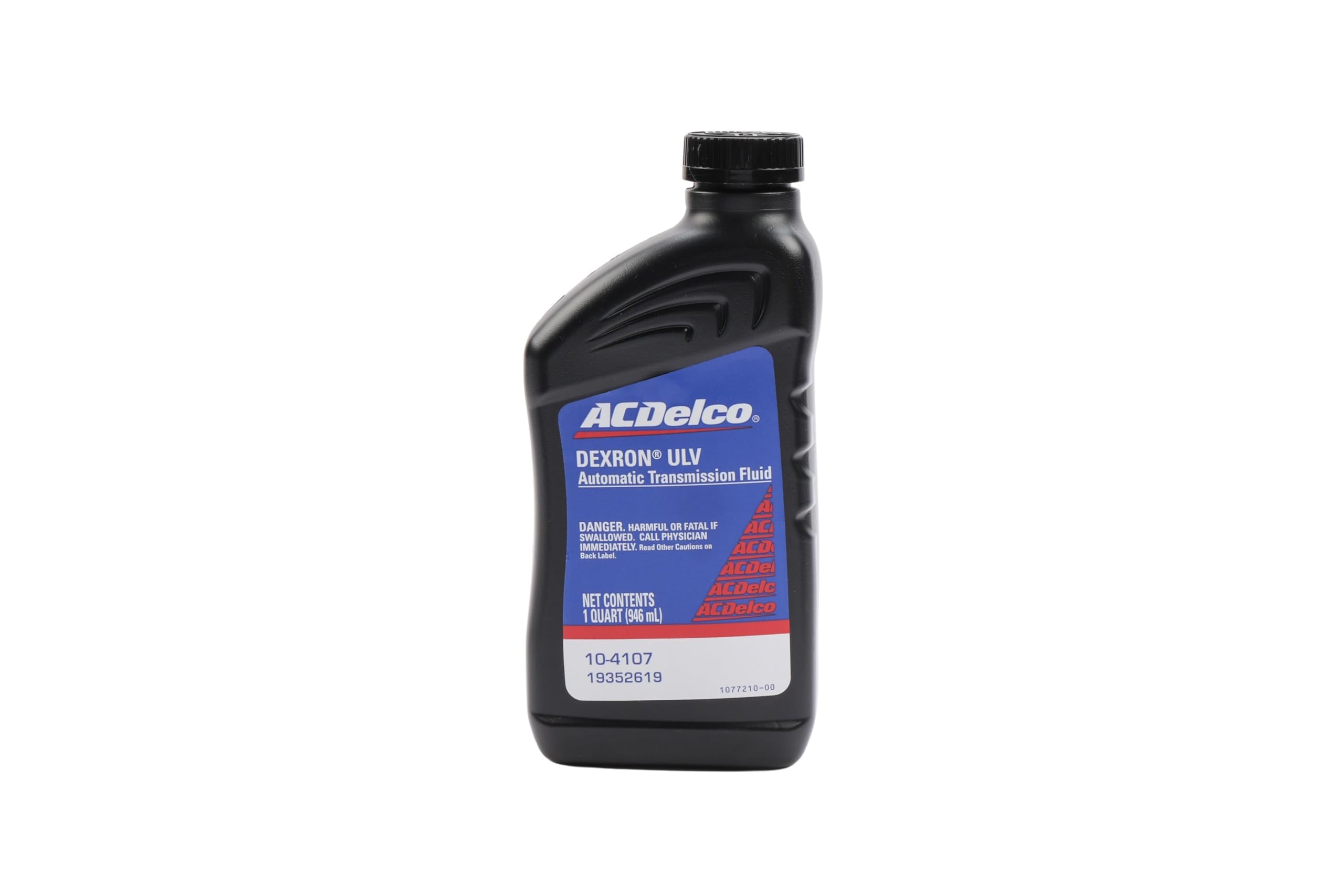
A drain-and-fill drops the pan, pulls the old filter, and replaces the fluid that comes out through the pan opening. GM's fluid-change capacity for the 10L90 is 7.7 liters, 8.1 quarts, of DEXRON ULV. That is the number that comes out of a single pan drop, and it is not the transmission's total capacity. The torque converter and the cooler circuit hold their own charge of fluid that a pan drop never touches, so one service exchanges roughly 40 to 50 percent of what is actually inside the unit. The other half is still the old fluid, diluted by whatever fresh ULV you just added.
That is not a flaw in the method, it is just arithmetic, and it is the reason shops that do nothing but drain-and-fills on this platform recommend repeating the service rather than treating one pan drop as a full fluid change. Two services roughly 20,000 to 30,000 miles apart will put most of the unit on fresh fluid without ever touching a flush machine.
What a flush machine does differently
A flush, or fluid-exchange service, hooks into the transmission's cooler lines instead of the pan. The transmission's own pump pushes old fluid out one line while the machine pushes new fluid in through the other, tracked on scales inside the unit so the technician can see volume in versus volume out. Done correctly, this exchanges 90 to 100 percent of the fluid in a single visit, including what sits in the converter and the cooler circuit, which is the entire selling point. It does not touch the filter unless the technician also drops the pan, so most flush-only packages leave the old filter in place.
On paper that sounds like the better job: more fluid replaced, one visit instead of two. The problem is that GM does not treat the method as equivalent to a drain-and-fill, and says so directly.
GM's bulletin: not a one-off opinion
GM Bulletin 04-06-01-029K, reissued in October 2026 and covering 2025-and-prior GM gasoline vehicles, states it plainly: the use of external transmission fluid exchange or flush machines is not recommended for the automatic or manual transmission. Use of external machines to replace the fluid may affect the operation or durability of the transmission. The bulletin goes further, noting that GM's own analysis of returned parts exposed to aftermarket flushes showed indications of potential damage and shortened durability. GM's instruction is direct: transmission fluid should only be replaced by draining and refilling, following the procedure in Service Information.
This is not new guidance written in response to the 10L90 specifically. The same sentence, nearly word for word, appears in GM Bulletin 04-06-01-029H from February 2016, which covered GM vehicles a decade older. GM has held this position across at least three transmission generations, which argues against it being a passing caution tied to one bad batch of aftermarket fluid.
Worth noting what the bulletin does not ban: flushing the external transmission cooler itself, using GM's approved Cooler Flow Check and Flush procedure, is a separate and sanctioned task, and it is aimed at catastrophic-failure cleanup rather than routine service. GM's objection is specifically to running the live fluid charge through an external exchange machine as a maintenance procedure.
Why this matters more on a 10L90 than on an older unit
The 10L90 has no dipstick. Level is set through a check plug in the pan with the fluid between 75 and 80°C and the engine running, cycling the shifter through every range first so the converter and cooler circuit are actually full before the check means anything. That procedure is part of a correctly done drain-and-fill, because the technician is already under the vehicle with the pan off.
A flush machine does not naturally fold that step in. The machine tracks volume in and volume out through the cooler lines, which is a different measurement than the temperature-gated level check GM specifies for this pan. A shop that runs a flush and skips the pan-side level set has completed a fluid exchange without completing GM's fill procedure, and a unit can read full on the machine's gauge while sitting outside the window GM engineered the shift calibration around.
When more fluid exchanged does not mean a better outcome
The appeal of a flush is the exchange percentage, but percentage exchanged only matters if the fluid coming out was the problem in the first place. Sonnax's application data for its 10L80/10L90 valve body kit lists TCC apply and release concerns, delayed engagement, burnt clutches, and loss of shift solenoid control pressure as symptoms tied to worn valve body bores losing pressure, not to tired fluid. A 10L90 already shedding material from a worn bore will still have a worn bore after a 100 percent fluid exchange. New fluid resets the wear clock on the fluid, not on the hardware.
There is a related recall worth knowing about. NHTSA recall 25V-148 covers roughly 90,000 GM ten-speed vehicles, including the 2020-2022 Camaro and 2020-2021 CT4 and CT5, where the transmission control module itself was programmed to detect valve body wear and limit the unit to 5th gear with a reduced-propulsion message rather than risk a lock-up. If a 10L90 is already throwing that kind of symptom, the conversation needs to start with the valve body, not with which fluid service to buy. Dark, metal-flecked fluid on a pan drop is a useful diagnostic precisely because you see it; a flush machine routes that same fluid through a closed loop and a filter in the machine, where nobody looks at it.
What the two services actually cost
| Service | Fluid exchanged | Typical cost | Matches GM's SI procedure? |
|---|---|---|---|
| DIY drain-and-fill | ~40-50% per service | $175 to $215 (first time, includes fill adapter) | Yes |
| Independent shop drain-and-fill | ~40-50% per service | $355 to $625 | Yes |
| Repeated drain-and-fill (2 services) | ~70-85% combined | Roughly double a single service, spread over two visits | Yes |
| Commercial flush machine service | ~90-100% in one visit | $300 to $500 (12-16 qt typical fluid use) | No, per GM bulletin 04-06-01-029K |
The flush is not the budget option; it is usually priced close to or above a shop drain-and-fill because the fluid bill alone runs 50 to 100 percent higher. What it buys instead is a single-visit exchange percentage GM's own bulletin says it cannot vouch for on this transmission.
The bottom line from the bench
I do not run 10L90s, or any GM unit, through a flush machine, and I do not recommend one to a customer who asks. GM published a specific, current bulletin telling dealers and independent shops the same thing, and it is backed by their own returned-parts data, not just caution language. A drain-and-fill with a new filter, done twice at a reasonable interval, replaces most of the fluid using the exact method GM's Service Information describes, and it puts you under the vehicle long enough to actually see what comes out of the pan. On a transmission with a documented valve-body wear pattern serious enough to get its own NHTSA recall, that visual check is worth more than an extra 40 percent of fluid exchange from a machine GM says not to use.
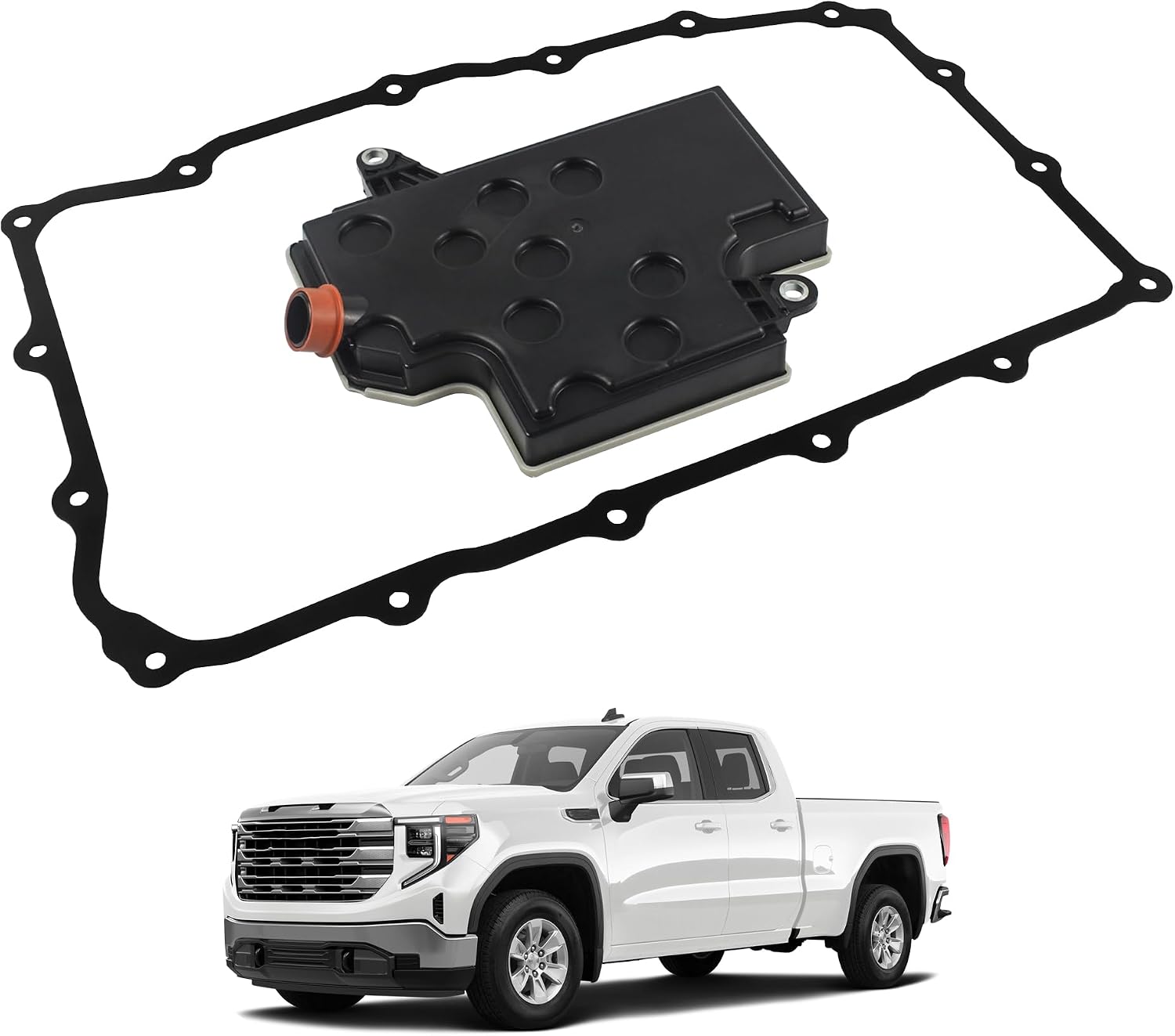
10L90 Transmission Filter with Gaskets
The one part the GM-approved drain-and-fill actually requires: the sump filter plus the gaskets, so the pan goes back up sealed the first time.
See the 10L90 filter and gasket set →FAQ
Does GM recommend flush machines for the 10L90?
No. GM bulletin 04-06-01-029K, reissued in October 2026, states that the use of external transmission fluid exchange or flush machines is not recommended for the automatic or manual transmission, and that using them to replace fluid may affect the operation or durability of the transmission. GM says transmission fluid should only be replaced by draining and refilling, following the procedure in Service Information. The same language has appeared in GM's bulletins since at least 2016, so this is not a new or one-off position.
How much old fluid does a drain-and-fill actually replace on a 10L90?
A single pan-down drain and fill on a 10L90 exchanges roughly 40 to 50 percent of the total fluid in the unit. The pan holds the fluid-change capacity GM publishes, 7.7 liters or 8.1 quarts of DEXRON ULV, but the torque converter and the cooler circuit stay full through the service, so a meaningful share of the old charge never leaves the transmission on a single pan drop. Repeating the service at the next interval replaces another share of what is left.
Will a flush fix a 10L90 that is slipping, shuddering, or losing pressure?
No. Sonnax's own application notes for its 10L80/10L90 valve body kit list TCC apply and release concerns, shift concerns, delayed engagement, burnt clutches, and loss of shift solenoid control pressure as symptoms tied to worn valve body bores losing pressure, not to fluid condition. New fluid, whether it arrives through a pan drop or a flush machine, does not resize a worn bore. If the fluid comes out dark with friction material in it, that is a diagnosis pointing at the valve body or clutches, not a reason to run more volume through the unit.
What is the real cost difference between a drain-and-fill and a flush service?
A DIY drain and fill runs about $175 to $215 in parts: 8 quarts of DEXRON ULV, a filter and pan gasket kit, and a fill adapter the first time. An independent shop doing the same job with GM's level-set procedure typically lands between $355 and $625 in labor and parts. A commercial flush machine service moves more fluid in one visit, often 12 to 16 quarts against the 8.1 quart pan capacity, which raises the fluid bill even before labor, and dealer or quick-lube flush packages commonly price between $300 and $500. The flush is not cheaper; it buys a higher fluid-exchange percentage in exchange for using a method GM's own bulletin advises against on this transmission.
Related 10L90 guides
- 10L90 Fluid Type and Capacity: DEXRON ULV, 8.1 Quarts and the Three Numbers GM Publishes
- 10L90 Filter and Pan Service: Street, Severe and 15-Hour Track Intervals
- 10L90 Fluid Change Cost: Real Parts Prices, Real Labor, and Where the Quote Gets Padded
- 10L90 Common Problems and Fixes: What Actually Breaks and How to Prove It
- 10L80 vs 10L90: Differences, Interchange, and Which Is Stronger
- 10L90 Rebuild Cost and What Drives It
Sources
- General Motors — Corporate Bulletin No. 04-06-01-029K, “Unscheduled Supplemental Services (Including Flushing Services and Additives) and Proper use of GM Simplified Maintenance Schedules,” October 2026, covering 2025-and-prior GM passenger cars and trucks with gasoline engines. Backs the current GM position that external transmission fluid exchange or flush machines are not recommended for the automatic or manual transmission, that using them may affect the operation or durability of the transmission, that fluid should only be replaced by draining and refilling per Service Information, and GM's own finding that returned parts exposed to aftermarket flushes showed potential damage and shortened durability. View source
- General Motors — Corporate Bulletin No. 04-06-01-029H, “Unscheduled Supplemental Services (Including Flushing Services and Additives) and Proper use of GM Simplified Maintenance Schedules,” February 2016, covering 2016-and-prior GM passenger cars and trucks. Backs that GM's no-flush-machine position predates the 10L90 by years and used nearly identical wording in 2016, and confirms the Automatic Transmission Oil Cooler Flow Check and Flush Tool (J-45096) as the separate, approved procedure for cleaning the external transmission cooler only, not the transmission's live fluid charge. View source
- General Motors — GM TechLink, “2025 Transmission Capacities & Fluids (U.S. and Canada only),” revision 05-2025 A. Backs the 10L90 fluid-change capacity of 7.7 liters / 8.1 quarts and the DEXRON ULV specification, the figure a drain-and-fill actually exchanges versus the transmission's full internal volume. View source
- Sonnax — Zip Kit 10L80-G1-10R80-ZIP product and application data. Backs the connection between TCC apply/release concerns, shift concerns, delayed engagement, burnt clutches, and loss of shift solenoid control pressure on the 10L80/10L90/10R60/10R80 family, and worn valve body bores losing pressure, as distinct from fluid condition. View source
- General Motors — Part 573 Safety Recall Report 25V-148 (GM recall N242480630), March 6, 2025 (NHTSA). Backs the roughly 90,081-vehicle population of GM ten-speed cars affected by valve body wear, and the TCM software remedy that limits the transmission to 5th gear with a reduced propulsion message when wear is detected, used here to show why a worn 10L90's symptoms are a hardware issue a fluid service of either kind will not resolve. View source