An F-150 with a 10R80 that shifts badly can land in front of you in a handful of ways. Some flare 2-3 under light throttle. Some bang into gear in the morning and smooth out by lunch. Some hold second gear and set a light. Ten forward gears and six clutches give this transmission plenty of ways to feel wrong, and Ford has written a bulletin for most of them. The trick is that the bulletins are split by build date, and two of the newest ones (TSB 25-2475 and TSB 26-2263) change the playbook from a couple of years ago.
This guide is about shift complaints only: harsh, late, flaring, or missing shifts. Our F-150 10R80 common problems guide covers the wider picture. What follows is the order I work in, with the PIDs, test conditions and part numbers from Ford's own bulletins. Sources are listed at the bottom.
How the 10R80 makes a shift, in one paragraph
The 10R80 uses six clutches, A through F, and each one has its own shift solenoid, SSA through SSF. GEARS Magazine's breakdown of the 10R family explains that Ford calls these CIDAS solenoids. They are linear force units, and no fluid passes through them. The solenoid pin pushes a valve in the main control, and that valve feeds its clutch. Zero current means zero clutch pressure, and more current means more pressure. The line pressure control (LPC) solenoid works the other way round: low or no current (about 50 mA) gives full line pressure, and high current (about 850 mA) gives very low pressure. If shift solenoid power drops out, no clutch can apply.
That design has two practical consequences. First, solenoids rarely fail electrically. Sonnax notes that they are casting-integrated, direct-acting units held in by retainer clips. Second, every shift depends on the TCM's adaptive tables. Those tables tell the module how much current, and for how long, each clutch needs to fill. Corrupt the tables, starve a circuit of pressure, or wear a clutch, and the shift goes wrong even though the electrical side checks good.
Step 1: Door tag, codes, and the battery
Before you plug in, read the door tag. The build date decides which bulletin you are working, and on these trucks a few weeks can change everything. Then scan every module, not just the PCM. On the 2017-2020 trucks the bulletin DTC list is long: P0751 through P0772 (shift solenoids A-F), P2700 through P2708 (friction element apply time), P0729 and P0731 through P0736 (gear ratio), and P076F, P07D9, P07F6 and P07F7. These codes only tell you a clutch did not apply on time. They do not tell you why.
Next, test the batteries. Sonnax flags this as one of the most common 10-speed traps. A truck that sat in the shop a few days with a weak battery may not adapt properly, then shows harsh engagements and erratic upshifts and downshifts that point you toward the valve body. A tell-tale sign is drivability that is bad at first and fades once the transmission reaches operating temperature. Sonnax puts typical battery life on these trucks at about three years, so a 2021 truck can already be due.
Step 2: Fluid level, hot, and only ULV
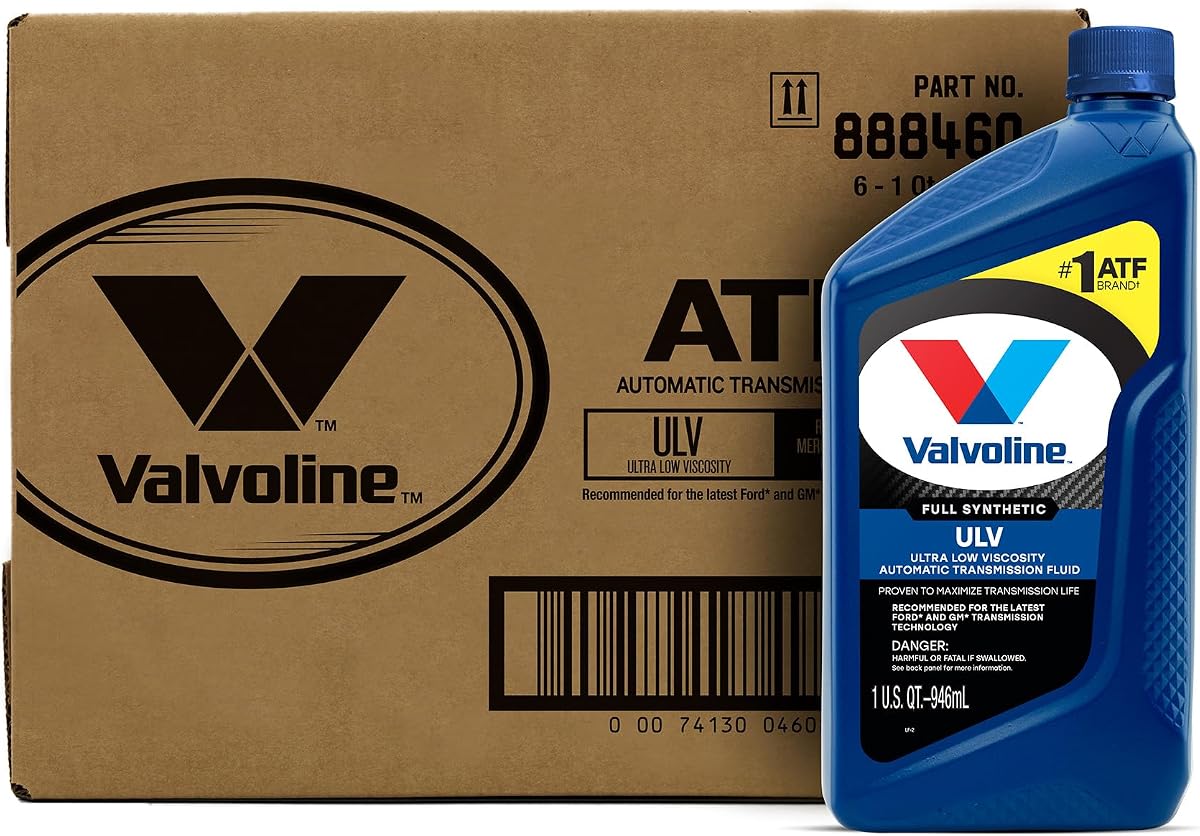
Every 10R80 F-150 takes MERCON ULV. Ford's special service message 47093 calls for Motorcraft XT-12-QULV (WSS-M2C949-A) and warns that the wrong fluid may cause internal damage. Check the level on level ground at 96-101 C (206-215 F). Sonnax notes that some units have a thermal valve, which is why the final check must be done hot.
Overfill matters more than people expect. Sonnax found that as little as 1 qt over full causes overheating and venting. The usual way it happens is a unit filled cold to the top of the stick on a lift, which ends up about a quart high once it is hot. A truck that pushes fluid out the vent and shifts soft when it is hot needs a level check before it needs a teardown. For reference, Sonnax lists 13.0 qt (12.3 L) for a dry 2020 F-150 4x4 unit. A pan drop takes far less, so set the level by temperature, not by quart count.
Step 3: Software and a real adaptive relearn
On 2017-2020 trucks, Ford's TSB 23-2152 is explicit about the order. If none of the listed DTCs is stored, reprogram the transmission strategy and run the adaptive learning drive cycle first. Only if the complaint is still there afterwards do you overhaul the main control valve body. The bulletin names two causes, corrupted data in the PCM/TCM keep alive memory or the valve body itself. It also notes that a few metal flakes on the pan magnet are normal on these units, so a little glitter is not a condemnation.
Early trucks have their own software fixes. TSB 18-2079 covers 2017 F-150 and Raptor trucks built on or before 1-Aug-2017 with harsh or delayed shifts and DTC P0711, and the fix is a 0.3-hour PCM reprogram. TSB 18-2274 does the same for 2018 F-150s with the 2.7L, 3.5L or 5.0L built on or before 15-May-2018 with harsh or bumpy upshifts, downshifts or engagements.
The relearn is where most shops cut corners. GEARS lays out the procedure:
- Clear DTCs and the transmission adaptive tables.
- Drive until the engine and transmission are at normal operating temperature.
- From a stop, accelerate at a steady 15% throttle. Upshifts through 8th should happen at 1300-1600 rpm.
- Keep accelerating to 55 mph so the 8-9 and 9-10 shifts complete.
- Brake to a stop and hold the brake for 5 seconds.
- Neutral 1 second, Reverse 2 seconds, Neutral 1 second, Drive 2 seconds.
- Repeat steps 3-6 six more times.
That takes 30-45 minutes, and GEARS warns that an incomplete cycle can itself cause erratic shifts. Every Ford bulletin also tells the dealer to warn the customer that shifts may be firmer than normal for several days while the module relearns. Put that on the repair order, or you will see the truck again tomorrow.
If the valve body has been replaced, the module also needs the right solenoid strategy. Per GEARS, enter the 13-digit solenoid body strategy from the service kit tag, not the 12-digit ID. You can confirm the loaded software ID with a generic OBD-II Mode $09 request. A mismatch between that ID and the valve body can cause drivability problems and transmission damage.
Step 4: Match the symptom to the build date
| F-150 build | Shift complaint | Ford's stated cause | Bulletin |
|---|---|---|---|
| 2017, built on or before 1-Aug-2017 | Harsh or delayed shifts, P0711 | PCM calibration | 18-2079 |
| 2018 2.7L/3.5L/5.0L, built on or before 15-May-2018 | Harsh or bumpy upshifts, downshifts, engagement | PCM calibration | 18-2274 |
| 2017-2020 | Harsh or delayed engagement or shift, shift DTCs | Keep alive memory or main control valve body | 23-2152 |
| 2017-2020 | Same complaints and DTCs | CDF clutch cylinder sleeve moving axially, leaking the hydraulic circuit | 25-2475 |
| 2022-2024, built 16-Aug-2022 through 23-Sep-2024 | Harsh 3-4 and 4-5 upshifts, harsh 5-3 and 4-3 downshifts, harsh reverse, worse cold | F clutch frictions brinelling into the 7B177 container | 26-2408 |
| 2024-2026 | No upshift past 2nd, no 3rd gear ratio, P0757 and P2701 | Damaged one-way clutch | 26-2263 |
Trucks from 2021 to mid-August 2022 have their own CDF and PowerBoost bulletins, covered in our F-150 common problems guide.
2017-2020: the CDF sleeve is now on the list
For years the advice on early F-150s was simple: software, relearn, then valve body. TSB 25-2475 (October 2025, superseding 25-2301) adds a third possibility for 2017-2020 F-150s with the exact same complaints and DTC list. The CDF clutch cylinder sleeve can move axially and leak the hydraulic circuit. A leaking feed means a clutch fills slowly or loses pressure on apply. That shows up as a flare, a slide shift or a late engagement, and a fresh valve body will not fix it.
The bulletin's test is worth learning, because it does not need the transmission out:
- Put a pressure transducer on the line pressure port. It is an M10x1.0 thread. Ford warns that an NPT fitting will damage the case, so use an M10x1.0 male to 1/8 in. FNPT adapter.
- Log LINE DSD, the pressure reading, SSA_AMP through SSF_AMP and TFT.
- Pick the test temperature to match the complaint. If the truck only acts up at 49 C (121 F) or below, test it that cold. Otherwise test at 50 C (122 F) or above.
- Command all six shift solenoids to 0 mA. With the engine at idle, back-probe and ground the LPC solenoid circuit (CET50, WH-OG) to raise line pressure. Back-probing will set a code and turn on the wrench light, so clear it afterwards.
- Command SSA to 1.0 A for two seconds, then back to 0 mA. Repeat with SSC. Compare the pressure peaks and valleys before and during each apply.
Ford runs those numbers through its CDF calculator. In plain terms, if line pressure sags when a clutch is commanded on, that circuit is leaking. If it holds, the CDF cylinder is not your problem and the valve body path in 23-2152 stands.
Late-2022 through 2024: harsh shifts that are worse cold
Trucks built 16-Aug-2022 through 23-Sep-2024 got an upgraded CDF cylinder, but TSB 26-2408 (September 2026, superseding 26-2309 and the earlier 26-2241) describes a different failure. You get harsh 3-4 and 4-5 upshifts, harsh 5-3 and 4-3 downshifts and harsh reverse engagement, usually worse when cold. The F clutch friction plates brinell into the clutch and planetary container cylinder (7B177). The F clutch then hangs up instead of applying and releasing cleanly, and you feel it on the shifts where F changes state. The repair replaces the F clutch steels, frictions and the 7B177 container. No relearn cures it. If you have a cold-morning 4-3 bump on a 2023 truck, this is where to look first.
2024-2026: stuck in second with P0757 and P2701
This is the newest pattern. TSB 26-2263 (May 2026, superseding 26-2112) covers 2024-2026 F-150s, both the 10R80 and the PowerBoost 10R80 MHT. The complaint is no upshift past second, an inability to reach the third gear ratio, and a MIL with P0757 and P2701. P0757 points at shift solenoid B and P2701 at the B friction element apply time, so the obvious move is to change the solenoid or the valve body. Ford says the cause is a damaged one-way clutch.
The check is mechanical. Remove the fluid pump to reach the rotating assembly through the bottom of the case. Hold the clutch and planetary container cylinder still and turn the No. 1 ring gear. It should turn freely and smoothly one way and lock the other way. If it turns both ways, the fix is a new front support assembly (JL3Z-7A130-B for the 10R80, L1MZ-7A130-B for the MHT). That means the transmission comes out, the T3 selective shim gets measured, and the 7H351 and 7B177 are inspected while it is apart. If the clutch holds, the bulletin does not apply and you go back to normal diagnosis.
Step 5: When the valve body really is the problem
When software, relearn, fluid level and the CDF test all check out on a 2017-2020 truck, the main control is next. Sonnax lists the wear points: the main pressure regulator valve, TCC priority valve, TCC regulator valve and boost valve. It also notes that impregnated separator plate filters can come loose and stick valves, and that latch valves can be damaged by the solenoid retainer clip. Low line pressure from a worn main regulator bore gives you delayed engagement, poor shift quality and burnt clutches. A sticking LPC signal damper gives harsh shifts and high line pressure.
TSB 23-2152 calls for six new solenoid retaining clips (HL3Z-7G007-A) when the valve body comes off. Do not reuse the old ones. Then strategy-load the unit and run the full drive cycle again.
Sonnax Zip Kit for the 10R80 valve body overhaul
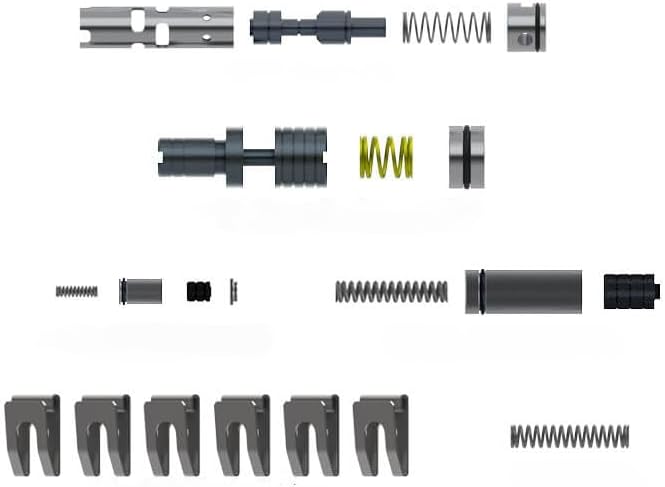
The Zip Kit (10L80-G1-10R80-ZIP) bundles the Sonnax regulator, TCC and end-plug fixes for the first-generation Ford/GM 10-speed main control. It is the overhaul TSB 23-2152 sends you to once software and the relearn have failed.
Shop the part for this fix →Need more 10-speed parts? The 10-speed parts collection covers the parts the Ford and GM units share.
Need parts for this job?
Valve body kits, solenoid kits, master rebuild kits, filter kits and MERCON ULV-spec fluid for the F-150 10R80 are all on our 10R80 parts page, with checkout on site.
FAQ
Why does my F-150 10-speed shift hard?
The most common causes are corrupted adaptive data, a weak battery, an overfilled or wrong fluid, a worn valve body, or a clutch circuit leak. Which one applies depends on build date. On 2017-2020 trucks Ford starts with a software update and adaptive relearn (TSB 23-2152), and it now also lists CDF sleeve leaks (TSB 25-2475). Trucks built 16-Aug-2022 through 23-Sep-2024 have the F clutch problem in TSB 26-2408.
How do I reset the 10R80 adaptive learning on an F-150?
Clear the adaptive tables with a scan tool, then drive the full adaptive learning cycle. Warm the truck up, accelerate at 15% throttle to 55 mph so all ten gears are used, stop and hold the brake 5 seconds, then shift Neutral, Reverse, Neutral, Drive. Repeat seven times in total. Shifts may feel firmer than normal for several days afterwards.
Why is my 2024 F-150 stuck in second gear?
Ford TSB 26-2263 covers 2024-2026 F-150s that will not upshift past second or reach third gear, with codes P0757 and P2701. The bulletin blames a damaged one-way clutch, confirmed by a directional test with the fluid pump removed. The fix is a new front support assembly, not a shift solenoid.
Is there a recall for F-150 10R80 shifting problems?
These are technical service bulletins, not safety recalls. Coverage depends on your warranty. The bulletins that apply depend on build date: 18-2079 and 18-2274 for early 2017-2018 trucks, 23-2152 and 25-2475 for 2017-2020, 26-2408 for late-2022 to 2024 builds, and 26-2263 for 2024-2026.
Can low transmission fluid cause shift problems on an F-150 10R80?
Yes, and so can too much fluid. Sonnax found that as little as one quart over full causes overheating and venting, usually from filling it cold. Check the level hot at 206-215 F with MERCON ULV only.
Related guides
- 10R80 F150 Shift Problems: Diagnosis and Fix
- 10R80 Harsh and Delayed Shifts
- 10R80 Shift Solenoid Symptoms
- 10R80 Valve Body Problems and Testing
- 6R80 vs 10R80 for the F-150
Sources
- Ford Motor Company — Technical Service Bulletin 23-2152, "10R80 — Harsh Engagement And/Or Harsh/Delayed Shift" (May 2023). 2017-2020 F-150 DTC list, the strategy download and relearn order before the valve body overhaul, normal pan magnet flakes, solenoid retaining clips HL3Z-7G007-A. Also Ford TSBs 18-2079 (2017 F-150 built on or before 1-Aug-2017, P0711, PCM reprogram) and 18-2274 (2018 F-150 built on or before 15-May-2018), and Special Service Message 47093 (MERCON ULV XT-12-QULV). TSB 23-2152 (PDF) · TSB 18-2079 (PDF) · TSB 18-2274 (PDF) · SSM 47093 (PDF)
- Ford Motor Company — Technical Service Bulletin 25-2475 (supersedes 25-2301), "Harsh/Delayed Engagement And/Or Harsh/Delayed Shift" (October 2025). CDF clutch cylinder sleeve leak on 2017-2020 F-150, M10x1.0 line pressure port, PIDs, 49/50 C test temperature split, LPC circuit CET50 back-probe and the SSA/SSC apply test. static.nhtsa.gov (PDF)
- Ford Motor Company — Technical Service Bulletin 26-2408 (supersedes 26-2309), "Harsh Shifts Between 3rd And 5th Gears And/Or Harsh Reverse Engagement, Symptoms Worse When Cold" (September 2026). 16-Aug-2022 through 23-Sep-2024 build window, F clutch brinelling into the 7B177 container. static.nhtsa.gov (PDF)
- Ford Motor Company — Technical Service Bulletin 26-2263 (supersedes 26-2112), "No Upshift Past Second Gear, Unable To Achieve Third Gear Ratio, And/Or Illuminated MIL With DTCs P0757 And P2701" (May 2026). 2024-2026 F-150 10R80/10R80 MHT, one-way clutch directional test, front support assemblies JL3Z-7A130-B and L1MZ-7A130-B. static.nhtsa.gov (PDF)
- GEARS Magazine (ATRA) — "Direct Connection: 10R60, 10R80 and 10R140 Solenoids Make Shifts Happen." CIDAS shift solenoid operation, LPC and TCC current behavior, 13-digit strategy entry, Mode $09 software ID check, adaptive learning drive cycle steps. gearsmagazine.com
- Sonnax — "Tackling Ford/GM 10-Speed Valve Body Problems, Failing Batteries & More" and "Tips for Troubleshooting Ford 10-Speed ATF Venting & Overheating." Battery-related adapt problems, valve body wear points, 96-101 C (206-215 F) level check, one-quart overfill, 13.0 qt dry fill. Valve body and batteries · Venting and overheating