A Mustang owner says "it slips," but on a 10R80 that word covers four or five different failures. Some are engine RPM flaring on a shift. Some are a slide into neutral before the next gear bites, or a car stuck in 2nd. Some are a converter that will not hold lockup on the highway. Each one has a different cause and a different parts bill. On a car where pulling the transmission is 8 to 12 hours of labor, guessing gets expensive fast.
This guide covers 2018-2026 Mustangs, 2.3L EcoBoost and 5.0L, and sorts slipping complaints by what the car is actually doing. The causes and part numbers come from Ford's technical service bulletins as published by NHTSA, plus Sonnax's 10-speed tech notes. Links are at the bottom. For the full list of Mustang bulletins, including the non-slip ones, see our 10R80 Mustang common problems guide.
Pin down what "slipping" means on this car
Before you scan anything, drive the car with a scan tool logging engine RPM, turbine speed, output speed, commanded gear and TFT. The 10R80's ratios are known: 4.696 in 1st, 2.985 in 2nd, 2.146 in 3rd, 1.769 in 4th, 1.520 in 5th, 1.275 in 6th, 1.000 in 7th, 0.854 in 8th, 0.689 in 9th and 0.636 in 10th, with 4.866 in reverse. Divide turbine speed by output speed and compare it with the commanded gear. A healthy unit holds that number steady once a shift finishes. A slipping clutch shows up as a ratio that wanders or overshoots during the shift.
Sort the complaint into one of these buckets:
- Flare or slide on certain shifts. RPM jumps between gears, sometimes ending in a bump as the TCM adds pressure to finish the shift. Ratio codes P0729 and P0731-P0736 and apply-time codes P2700-P2708 often follow.
- No upshift past 2nd, or no 3rd gear ratio. The car pulls in 1st and 2nd, then flares or stays in 2nd. P0757 and P2701 are the signature codes.
- RPM creeps up at steady cruise with no shift happening. That is usually the torque converter clutch slipping, not a gear clutch. P0741 and P1744 are the codes.
- Slips only when hot, or only under hard throttle and cornering. Check the fluid level before anything else.
Flares and slide shifts: the CDF cylinder sleeve
On 2018-2022 Mustangs this is the most common slip-type complaint, and Ford has written it up twice. TSB 25-2475 covers 2018-2020 Mustangs (and 2017-2020 F-150s). TSB 25-2131 covers 2021-2022 Mustangs built on or before 15-Aug-2022. Both list harsh or delayed engagement and harsh or delayed shifts, with a long DTC list: the shift solenoid codes P0751 through P0772, apply-time codes P2700 through P2708, and the gear ratio codes P0729 and P0731 through P0736. Ford's stated cause, word for word in TSB 25-2475, is "axial movement of the CDF clutch cylinder sleeve causing hydraulic circuit leaks."
The mechanism is simple. The CDF cylinder feeds the C, D and F clutches through a pressed-in sleeve. When that sleeve walks rearward, it uncovers fluid ports behind it. Apply oil for whichever clutch the TCM is filling leaks off, the clutch fills slowly or loses pressure partway through, and the shift slides. The TCM sees the ratio miss its target, pushes more pressure, and the shift finishes with a bump. Sonnax describes the same failure and lists the symptoms as bump shifts, no 2nd, neutral shifts and slide shifts. That is what most owners mean by "slipping."
Parts are engine specific on the Mustang. Ford lists CDF cylinder JL3Z-7H351-B for the 5.0L and JR3Z-7H351-B for the 2.3L, plus clutch and planetary container cylinder PC3Z-7B177-A. On a bench rebuild, the aftermarket option is the Sonnax CDF Drum Saver Kit, 129910-01K. Its sleeve has a step that stops it from moving rearward, a set screw that keeps it from turning, and a tighter press fit than the factory sleeve. It comes with new front and rear bushings and needs Sonnax tool kit 129910-TK to install. It works as a repair on a sleeve that has already moved or as a preventive fix on any 10R80 you have apart.
Prove the leak, and do not trust an air check
Ford's CDF bulletins require a line pressure test before the transmission comes out. Condensed: install a transducer on the M10x1.0 line pressure port (Ford warns an NPT fitting will damage the case). Back-probe the LPC solenoid circuit and ground it at idle to raise line pressure. Command all shift solenoids to 0 mA, then command SSA and SSC to 1.0 A one at a time. Record the pressure before and during each apply. A circuit that sags when its clutch is commanded is leaking. Run the test cold if the complaint only happens with TFT at 49 C (121 F) or below, and hot otherwise.
For 2021-2026 cars, Ford has also issued SSM 54674. It adds a new "Transmission Clutch Circuit Leak Test" in FDRS that uses the pressure and vacuum transducer, and says the old air check method produced "a high rate of false positives." Ford now says the air check is not to be used to diagnose internal hydraulic leaks or to justify replacing a transmission. Air checks on the bench, with the drum and its mating shaft assembled, are still how rebuilders find leaking seals and shaft plugs. The point is that blowing air into the case passages of an assembled unit in the car does not prove a CDF leak.
The labor numbers explain why the test matters. On 2018-2020 Mustangs Ford pays 0.8 hours for a CDF test that passes, against 10.8 to 12.1 hours to pull the transmission and replace the cylinder. A 30-minute pressure test is cheap insurance against pulling a good unit.
No 2nd-to-3rd shift: the one-way clutch
If the Mustang pulls fine in 1st and 2nd and then flares or will not take 3rd, look at the one-way clutch before the CDF circuit. Ford has two bulletins for it. SSM 47361 (June 2018) covers 2018 Mustangs with no upshift past second gear or no third gear ratio with DTCs P0757 and P2701, caused by a damaged one-way clutch. TSB 26-2263 (May 2026, superseding 26-2112) covers the same symptoms and codes on 2024-2026 Mustangs, along with the F-150, Expedition, Explorer, Transit and Navigator.
The one-way clutch lives in the front support, so the repair is a new front support assembly, JL3Z-7A130-B for the 10R80, with five new input shaft Teflon seals (HL3Z-7G091-F) and twelve front support bolt washer seals (LC3Z-7H223-AA). The bulletin also has you re-measure and pick the T-3 selective shim, which comes in nine sizes from 3.05 to 4.35 mm, and an A clutch apply plate if needed.
The diagnosis is mechanical, not electronic. With the fluid pump removed, you reach the rotating assembly through the bottom of the case. Hold the clutch and planetary container cylinder still and turn the No. 1 ring gear. It must turn freely and smoothly in one direction and hold in the other. If it holds both ways or freewheels both ways, the one-way clutch is bad. If it passes, the bulletin does not apply and you go back to normal diagnostics.
On 2024-2026 Mustangs Ford pays 2.7 hours (2.3L) or 2.9 hours (5.0L) for a test that passes. A failed test pays 7.7 to 8.3 hours on the 2.3L and 10.0 to 10.6 hours on the 5.0L, coupe versus convertible, because the transmission has to come out. Do not condemn a valve body or a shift solenoid on a P0757/P2701 car until the one-way clutch has been checked. The codes point at the shift solenoid B circuit and the B clutch apply time, but the failure is mechanical.
RPM creep at cruise: TCC slip, not gear slip
A Mustang that slowly gains 100 to 300 RPM at steady highway speed, with no shift and no ratio change in the gearbox, is slipping the converter clutch. Compare engine RPM with turbine speed. When the converter is commanded locked, the two should match within a few RPM. A growing gap means the TCC is slipping.
On early 2018 Mustangs built on or before 20-Nov-2017, Ford TSB 20-2117 ties P0741 and P1744 to a sticking TCC valve in the main control valve body, fixed with valve body JL3Z-7A100-B. On later cars, work through fluid condition, the TCC solenoid and its circuit, and charge pressure before blaming the converter. Sonnax notes that sealing ring and hub bushing wear are among the biggest causes of lost charge pressure in these 10-speeds, and lost charge pressure shows up as lockup and overheating complaints. Our 10R80 TCC lockup guide and P0741 guide go further.
Fluid level: the free check everyone skips
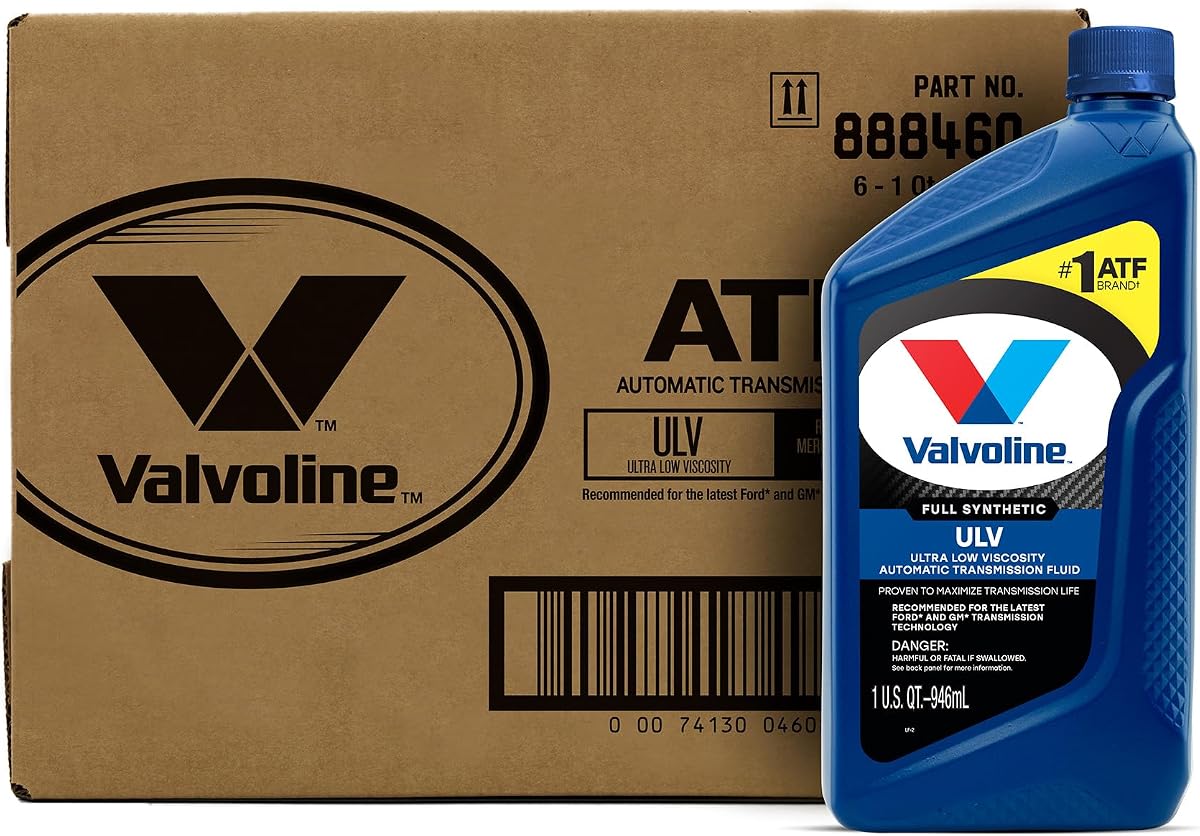
The 10R80 uses MERCON ULV (Motorcraft XT-12-QULV), and every Ford bulletin above lists it. Sonnax's 10-speed notes say universal or older fluids cause shift complaints and early failure, because ULV is thinner and the calibration and pump were designed around it.
Level matters in both directions. Low fluid lets the pump suck air under hard acceleration or a long sweeper, line pressure drops, and the car flares. That is why some Mustangs only "slip" on a track or an on-ramp. High fluid is a problem too. Sonnax found that as little as one quart over full causes overheating and venting out the breather, and an overheated unit slips. Set the level hot, at 96 to 101 C (206 to 215 F), not by counting quarts into a drained pan. Any Mustang that has had a fluid service or a repair before the slip started gets its level checked hot first. Our 10R80 fluid type and capacity guide covers the procedure.
Adaptives, tunes and burnt clutches
The 10R80 learns clutch fill times and pressures as it wears. Disconnect the battery, flash a tune and flash it back, or swap a valve body without a relearn, and shifts can come out soft or slurred with nothing broken. Ford's own repair procedures end with an adaptive learning drive cycle and warn that shifts may be firmer than normal for several days afterward. Clear adaptives and run the full drive cycle before you condemn hard parts on a car with no codes.
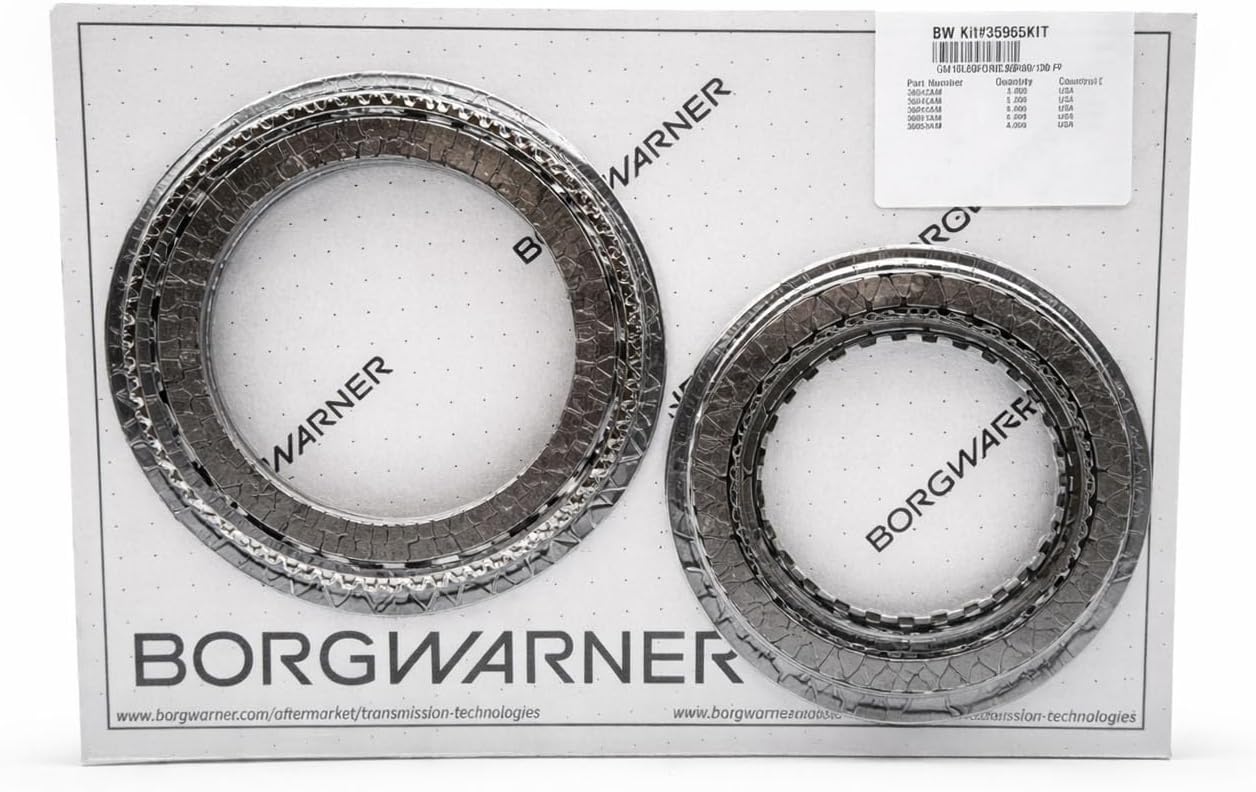
Tuned 5.0L cars are a separate case. A tune that raises torque without raising line pressure in the calibration asks the clutches to hold more than they were set up for. That leaves glazed or burnt frictions and a slip that a relearn will not fix. If the fluid is dark and smells burnt and the pan has friction material in it, the clutch packs are done. Plan a rebuild with new frictions and steels. Set clearances with selectives, not by assuming plate counts. The 2.3L runs fewer C, D and F frictions than the 5.0L on 2018-2020 cars, per TSB 25-2475. Fix the CDF sleeve while you are in there, or the new clutches will slip for the same reason.
How I work a slipping Mustang 10R80
- VIN, build date, engine. That decides which bulletin applies: SSM 47361 or TSB 20-2117 on early 2018s, 25-2475 on 2018-2020, 25-2131 on 2021-2022 built on or before 15-Aug-2022, 26-2263 on 2024-2026.
- Battery, codes, software. Load test the battery, scan every module, update the PCM and TCM.
- Hot fluid level and condition. MERCON ULV only, set at 206-215 F. Burnt fluid with debris changes the whole plan.
- Log the slip. Turbine speed divided by output speed against commanded gear, engine RPM against turbine speed for TCC.
- Relearn. Clear adaptives and run the full drive cycle if there are no hard faults.
- Prove it in the car. The line pressure leak test for CDF complaints, or the one-way clutch directional test for no-3rd complaints. No air check as a pull decision.
- Repair what you proved. CDF cylinder or Drum Saver kit, front support, or a full rebuild. Then relearn again.
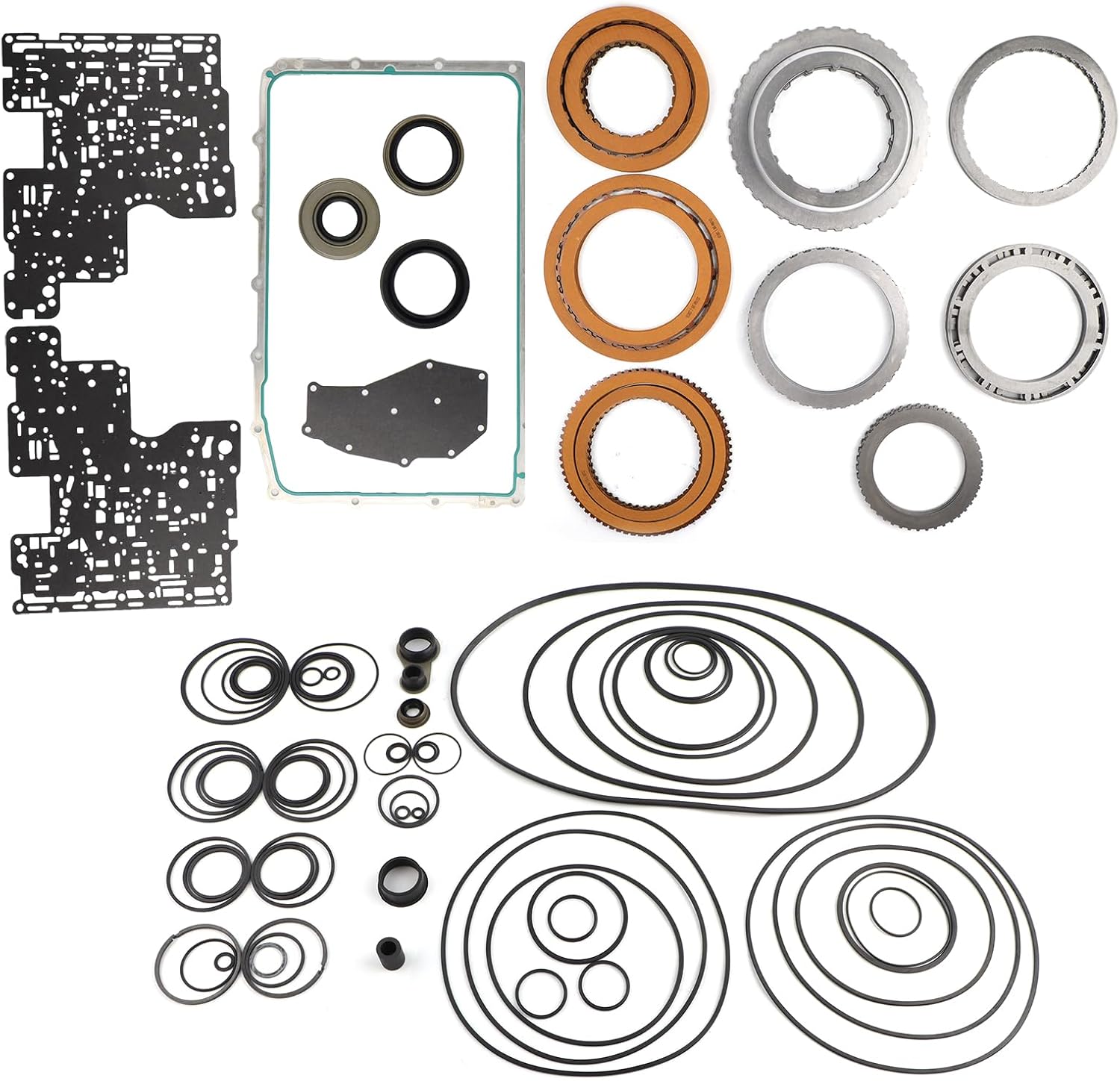
10R80 deluxe rebuild kit for a CDF or front support teardown
Both bulletin repairs open the unit up and replace input shaft and front support seals. This deluxe kit covers 2017-up 10R80s, so every seal and gasket is on the bench before you start.
Shop the part for this fix →Need valve body parts too? The 10-speed parts collection carries Sonnax valve body kits and other parts for the Ford and GM 10-speeds.
Need parts for this job?
The 10R80 master rebuild kit, friction clutch modules, filter and pan kits, solenoids and MERCON ULV-spec fluid are on our 10R80 parts page, with checkout on site.
FAQ
Why is my Mustang 10R80 slipping between gears?
On 2018-2022 Mustangs the most common cause Ford documents is the CDF clutch cylinder sleeve moving and leaking, covered by TSB 25-2475 (2018-2020) and TSB 25-2131 (2021-2022 built on or before 15-Aug-2022). The leak starves the C, D and F clutch circuits, so a shift flares or slides before it bites. Low or overfilled fluid and stale adaptives can feel the same, so rule those out first.
Why won't my Mustang shift past second gear?
No upshift past 2nd, no 3rd gear ratio, and codes P0757 with P2701 point at a damaged one-way clutch in the front support. Ford covers 2018 cars in SSM 47361 and 2024-2026 cars in TSB 26-2263. The fix is a new front support assembly, JL3Z-7A130-B, after a directional test confirms the one-way clutch has failed.
Can low fluid make a 10R80 slip?
Yes. Low fluid lets the pump draw air under hard acceleration and cornering, which drops line pressure and causes flares. Overfilling is also a problem: Sonnax found one quart over full causes overheating and venting. Check the level hot at 206-215 F with MERCON ULV only.
Is an air check good enough to prove a 10R80 clutch leak?
Not for warranty or replacement decisions. Ford SSM 54674 says the old air check gives a high rate of false positives on 2021-2026 10R80s and should not be used to justify a transmission replacement. Use the FDRS Transmission Clutch Circuit Leak Test, or the line pressure test in the CDF bulletins, with a transducer on the line pressure port.
What fixes a slipping 10R80 for good?
Fix the cause you proved. A leaking CDF sleeve gets the updated cylinder or a Sonnax CDF Drum Saver Kit (129910-01K) and new seals. A failed one-way clutch gets a front support. Burnt clutches get a rebuild with new frictions and correct clearances. After any repair, clear adaptives and run the full adaptive drive cycle.
Related guides
- 10R80 Mustang Common Problems and Fixes
- 10R80 Slipping Under Load: Root Causes and Fixes
- 10R80 Harsh and Delayed Shifts
- 10R80 TCC Lockup Explained and Diagnosis
- 10R80 P0741 Fix
Sources
- Ford Motor Company — Technical Service Bulletin 25-2475 (supersedes 25-2301), "Harsh/Delayed Engagement And/Or Harsh/Delayed Shift" (29 October 2025). 2018-2020 Mustang applicability, full DTC list including P0729 and P0731-P0736, CDF clutch cylinder sleeve cause, Mustang CDF cylinder part numbers, 2.3L plate counts, line pressure leak test procedure and labor times. static.nhtsa.gov (PDF)
- Ford Motor Company — Technical Service Bulletin 25-2131 (supersedes 24-2436), "Harsh/Delayed Engagement And/Or Harsh/Delayed Shift" (16 April 2025). 2021-2022 Mustang built on or before 15-Aug-2022, same CDF sleeve cause. static.nhtsa.gov (PDF)
- Ford Motor Company — Technical Service Bulletin 26-2263 (supersedes 26-2112), "No Upshift Past Second Gear, Unable To Achieve Third Gear Ratio, And/Or Illuminated MIL With DTCs P0757 And P2701" (28 May 2026), and SSM 47361 (2018 Mustang). One-way clutch cause, directional test, front support JL3Z-7A130-B and seal part numbers, T-3 shim range, 2024-2026 Mustang labor times. TSB 26-2263 (PDF) · SSM 47361 (PDF)
- Ford Motor Company — SSM 54674, "Various 2021-2026 Vehicles — 10R80 — New Transmission Clutch Circuit Leak Test In FDRS." New FDRS leak test replaces the air check, which Ford says produces a high rate of false positives. static.nhtsa.gov (PDF)
- Ford Motor Company — Technical Service Bulletin 20-2117, "10R80 — Illuminated MIL — DTCs P0741 And P1744 — Built On Or Before 20-Nov-2017" (14 April 2020). Sticking TCC valve and 2018 Mustang valve body JL3Z-7A100-B. static.nhtsa.gov (PDF)
- Sonnax — CDF Drum Saver Kit 129910-01K product and technical description (sleeve walking rearward, symptoms, design, tool kit 129910-TK); Caleb Perham, "Troubleshooting Pressure Loss in 10-Speed Clutch Packs" (April 2025), on sealing ring and bushing wear and ULV fluid; Jim Mobley, "Tips for Troubleshooting Ford 10-Speed ATF Venting & Overheating," on overfill and the 206-215 F check temperature. CDF Drum Saver Kit · Pressure loss article · Venting article