When a 10R80 comes in banging into gear or sliding into it, the parts counter answer is usually "replace the EPC solenoid." On this unit that is sometimes right, but less often than people think. The 10R80's line pressure control solenoid is a durable part with a very specific job, and the valve it feeds wears out faster than it does. Throw a solenoid at a worn regulator bore and you get the same complaint back in a week.
This is how the 10R80 pressure control solenoid actually works, what a failing one does, how I test it with the scan tool and a gauge, and how to tell a solenoid problem from a hydraulic one. The sources are listed at the bottom, including the Ford bulletin that lays out the line pressure test.
EPC, LPC, same job
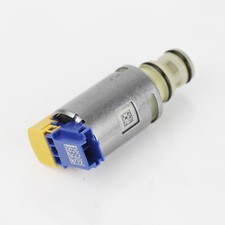
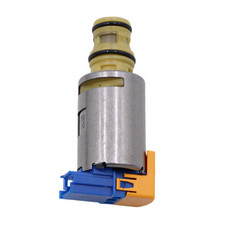
Older Ford units called it the EPC (electronic pressure control) solenoid. On the 10R80 it is the LPC, or line pressure control, solenoid, and most scan tools and service info use that name. The 10R80 has eight solenoids on the main control: six shift solenoids (SSA through SSF), the LPC solenoid and the TCC solenoid. In Transmission Digest, Seal Aftermarket Products' Mike Souza describes the line pressure solenoid as a normally high variable force solenoid and the TCC solenoid as normally low.
That "normally high" part is the key to everything that follows. GEARS Magazine gives the operating numbers: the LPC solenoid is inversely proportional, giving full pressure output at low or no current (about 50 mA) and very low pressure at high current (about 850 mA). The TCC solenoid is the opposite, low pressure at 50 mA and high pressure at 850 mA. GEARS also notes that the LPC control current never drops to zero, even when commanded off. An idle current stays in the circuit so the module can monitor feedback and to prevent back-EMF.
The six shift solenoids are different animals. They are CIDAS (casting integrated direct acting solenoids): no fluid flows through them, the pintle acts directly on a valve, and zero current equals zero pressure. So the LPC solenoid is the one solenoid on this main control that fails toward more pressure, not less.
What the LPC solenoid controls
The LPC solenoid does not apply anything by itself. It sends a regulated signal to the main pressure regulator valve, and the regulator sets line pressure for the whole unit. Line pressure then feeds the shift solenoids' clutch control valves, which meter it into each clutch. Between the solenoid and the regulator sits an LPC signal damper, a small piston that smooths the signal. Sonnax says that damper "prevents pressure spikes from reaching the main pressure regulator valve."
So any line pressure complaint has three suspects in series: the solenoid and its circuit, the damper, and the regulator valve. Each one fails with its own pattern.
Symptoms, split by direction
Line pressure too high
- Harsh garage shifts into Drive and Reverse
- Firm or banging upshifts, especially light-throttle shifts that should be soft
- A wrench light with a solenoid circuit code
Because the solenoid is normally high, an open circuit, a solenoid that stops responding or a module that loses control of it all push pressure up. Worn damper bores do the same thing mechanically. Sonnax lists harsh shifts and high line pressure as the symptoms of LPC signal damper bore and piston wear, and says that wear "can prevent proper main line pressure control and cause excessively high line pressure."
Line pressure too low
- Delayed engagement into Drive or Reverse
- Slipping or flaring on acceleration
- Soft, long shifts, then burnt clutches and ratio codes if it keeps going
- TCC apply and release complaints
Low pressure is where the regulator valve comes in. Sonnax reports that wear in the main pressure regulator bore at the outboard spool lets line pressure signal oil cross-leak to exhaust, which "prevents proper hydraulic control of the pressure regulator and reduces line pressure." The listed results are delayed engagement, poor shift quality and burnt clutches, with converter apply issues from wear at the inboard spool.
The codes
The solenoid's circuit is monitored, so an electrical fault usually leaves a code. These are the generic OBD-II definitions; check the vehicle's own code list, because Ford also uses manufacturer-specific codes on the 10-speed.
| Code | Generic definition | What I check first |
|---|---|---|
| P0960 | Pressure control solenoid A control circuit / open | Connector, harness, solenoid coil |
| P0961 | Pressure control solenoid A control circuit range / performance | Commanded vs actual current, then hydraulic side |
| P0962 | Pressure control solenoid A control circuit low | Short to ground, chafed harness |
| P0963 | Pressure control solenoid A control circuit high | Short to power, module output |
| P0868 / P0869 | Transmission fluid pressure low / high | Gauge test, regulator valve, damper |
One more thing from GEARS worth knowing: if the power circuit that feeds the transmission solenoids fails open, all solenoids are failed electrically off, none of the clutches can engage, and there is no fail-safe operation. A truck with no movement at all is a power-feed and pump question before it is an LPC question. Sonnax's Jim Mobley adds a hydraulic version of the same thing: leave out or misposition the steel-rubber pump seal between the valve body and the case and you get no movement and no line pressure.
Before you test the solenoid
- Scan all modules and fix those codes first. GEARS makes the point that failure management on this unit masks problems, and Type A and B codes freeze adaptive pressure control and adaptive shift values. A frozen adaptive table can make a good solenoid look bad.
- Check the battery. Mobley writes that batteries on both Ford and GM 10-speed trucks "only last about three years," and a weak one causes harsh engagements and erratic shifts that look exactly like a valve body failure.
- Set the fluid level correctly. The 10R80 takes MERCON ULV and the level is set hot. Our 10R80 fluid type and capacity guide covers the procedure.
- Confirm the solenoid body strategy. Souza explains that the 13-digit strategy number on the scan tool must match the tag on the left side of the case and the number etched on the main control. If they do not match, a strategy download is required, and Ford says damage or driveability concerns can occur. A replacement main control that arrives without its tag should not be installed.
Testing the LPC solenoid on the truck
Scan tool PIDs
In GEARS, Pete Huscher's case study monitored four pressure PIDs: LINEDSD (desired line pressure), LPC (actual line pressure), LPC_AMP (solenoid current) and LPC-F (line pressure control fault), plus engine LOAD. Watch LINEDSD and LPC_AMP together. On a normally-high solenoid, current goes down as desired pressure goes up. If the module is commanding a pressure change and LPC_AMP does not move, the problem is electrical. If LPC_AMP tracks the command and pressure does not follow, the problem is hydraulic.
Put a gauge on it
Ford's bulletin 25-2126 (2017-2020 F-150 and 2018-2020 Mustang) gives the hardware details. The line pressure port is an M10x1.0 thread; do not use an NPT fitting, or you will damage the case. Ford calls for a gauge that reads at least 300 psi (2000 kPa) with vibration dampening, and lists tested gauges including an Ashcroft 0-300 psi, a Snap-On 0-500 psi and Waekon digital gauges. In Ford's test sequence, LINEDSD is commanded to 1900-2000 kPa (275-290 psi), and the bulletin notes that actual line pressure is expected to read less than commanded.
The same bulletin identifies the LPC solenoid circuit as CET50, a white-orange wire, reachable at the TCM/PCM connector or the transmission connector. Ford's own procedure grounds that circuit to raise line pressure and warns that back-probing it will set a DTC and turn on the wrench light. Clear codes when you are done.
What real numbers look like
Certified Transmission's Chris Adams put a pressure transducer and a scope on a 2019 F-150 5.0L and published what he saw in Transmission Digest. Some charts list 90 psi at idle in all ranges; he measured 72-75 psi at idle, on both a used and a brand-new valve body. The reverse WOT stall spec is 240 psi, and at full stall in reverse he saw pressure oscillate between 239 and 305 psi. He treated that as normal. He also saw line pressure go to its 240 psi forward maximum during every upshift except 3-4. So a jumpy gauge on this unit is not a failure by itself.
Low is a different story. In Huscher's case, a 2020 F-150 5.0L with delayed engagement and slip on acceleration, desired pressure was 110 psi and the gauge showed about 12 psi with throttle. The solenoid was not the problem. The pressure regulator valve and end plug were worn; the circuit sealed at less than 14 in. of vacuum, and after a regulator repair kit it held over 18 in.
Use a scope, not a meter
Adams found the 10R80's solenoid control unlike anything he had scoped before: neither duty cycle nor frequency stays constant, with shift solenoid frequency moving from about 625 Hz to 7,150 Hz. His conclusion: on these units you must use a scope, because a DVOM will show voltage on a solenoid the chart says is off and send you down the wrong path. That goes double for the LPC circuit, which always carries idle current.
Solenoid or valve body?
This is how I sort it out:
- Circuit code present, pressure high, harsh everywhere: harness, connector or solenoid. Check the circuit, then replace the LPC solenoid.
- No code, LPC_AMP tracks LINEDSD, pressure high: suspect the LPC signal damper bore and piston.
- No code, LPC_AMP tracks LINEDSD, pressure low or slow to build: suspect the main pressure regulator valve and bore, then the pump and pump seal.
- Erratic pressure and shift quality with no clear pattern: vacuum test the regulator, damper and solenoid bores. GEARS' Keith Clark lists the LPC accumulator bore and the LPC, TCC, TCC priority and CIDAS solenoid bores as wear areas to inspect.
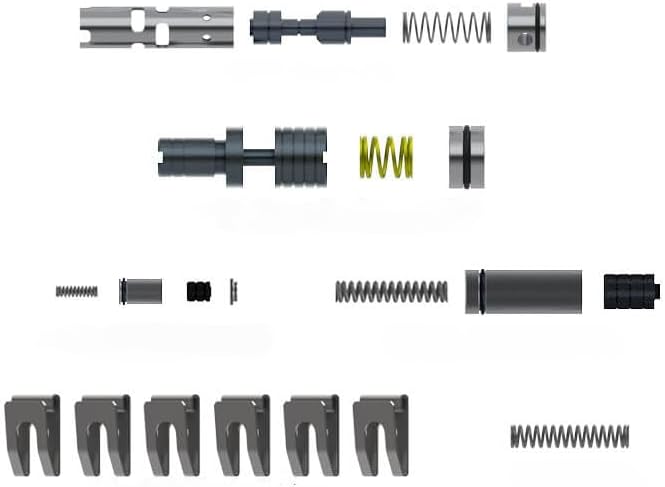
If the valve body is apart anyway, fix the bores while you are there. The Sonnax main pressure regulator valve kit 105740-12K uses a spool that is 270% longer than OE so it rides in unworn bore, with an O-ringed end plug. The LPC signal damper piston kit 105740-04K drops in without reaming. Both fit the 10R60, 10R80 and Gen. 1 10L60/80/90, and the regulator kit does not fit '23-later 10R140 units with PC3P casting numbers.
Sonnax main pressure regulator valve kit 105740-12K
If the gauge says low and LPC_AMP says the solenoid is doing its job, this is the fix: Sonnax's extended-spool regulator kit for the Ford 10R60/10R80 and GM Gen. 1 10L80, for the worn bore that causes low line pressure and delayed engagement. Sold by our sister store, CoreTransmissionParts.
Shop the part for this fix →Need the damper kit or the full Zip Kit instead? The 10-speed parts collection carries Sonnax LPC and TCC signal damper kits, solenoid kits and pressure control solenoids.
Replacing the LPC solenoid
The solenoid lives on the main control, so the pan and filter come off. Keep a few things straight:
- Order by the truck's year and check the connector against the old part; replacement LPC solenoids are listed by year range.
- Do not swap solenoid positions. Souza notes that each solenoid has a different part number and flow rate and must go back where it came from.
- Check the strategy number against the tag afterward and run the download if it does not match.
- Replace the filter and set the fluid level hot, then let the unit relearn. Mobley points out that a weak battery slows adaptation after a repair.
Need parts for this job?
Our 10R80 parts page carries LPC and TCC solenoids, complete solenoid kits, valve bodies by year, Sonnax Zip Kits and filter kits, with checkout on site.
FAQ
What are the symptoms of a bad 10R80 pressure control solenoid?
Because the 10R80 line pressure control solenoid is normally high, an electrical fault usually drives line pressure up, so the common signs are harsh engagements and firm, banging shifts with a code such as P0960, P0962 or P0963. A solenoid or circuit that regulates too low shows up as delayed engagement, slipping on acceleration and flared shifts, which are the same symptoms a worn pressure regulator valve produces.
Is the 10R80 EPC solenoid the same as the LPC solenoid?
Yes. EPC (electronic pressure control) is the name Ford used on earlier units, and on the 10R80 the same job is done by the line pressure control, or LPC, solenoid. It is a variable force solenoid that gives full pressure at about 50 mA and very low pressure at about 850 mA.
How do you test 10R80 line pressure?
Install a gauge rated for at least 300 psi with vibration dampening at the line pressure port, which is an M10x1.0 thread, never an NPT fitting. Then compare actual pressure to the LINEDSD desired-pressure PID on the scan tool while watching LPC_AMP. Ford notes actual pressure is expected to read somewhat below commanded, and field testing has shown 72 to 75 psi at idle rather than the 90 psi some charts list.
Can a bad pressure regulator valve cause the same symptoms as a bad LPC solenoid?
Yes, and on higher-mileage units it is often the real cause. Sonnax reports that wear in the main pressure regulator bore lets line pressure signal oil cross-leak to exhaust, causing low line pressure, delayed engagement, poor shift quality and burnt clutches. If LPC_AMP follows the command but the gauge does not, look at the regulator valve and the LPC signal damper before replacing the solenoid.
Related guides
- 10R80 Shift Solenoid Symptoms
- 10R80 Valve Body Problems and Testing
- 10R80 Harsh or Delayed Shifts
- 10R80 Limp Mode Causes
- 10R80 Slipping Under Load
Sources
- GEARS Magazine (ATRA), "Direct Connection: 10R60, 10R80, and 10R140 Solenoids Make Shifts Happen!" 11 January 2024. Backs the LPC solenoid as a normally-high, inversely proportional variable force solenoid (full pressure at 50 mA, very low at 850 mA), the idle current that stays in the LPC and TCC circuits, the normally-low TCC solenoid, and zero-current-zero-pressure CIDAS shift solenoids. gearsmagazine.com
- Transmission Digest, Mike Souza, "10R80/10L90 10-Speed Solenoid Function," 1 October 2018. Backs the line pressure solenoid as a normally high variable force solenoid, the 13-digit solenoid body strategy check against the case tag and main control, not installing a main control without its tag, and solenoids having different part numbers and flow rates by position. transmissiondigest.com
- Transmission Digest, Chris Adams (Certified Transmission), "Scope testing the Ford 10R80," 20 February 2023. Backs the six CIDAS shift solenoids plus normally-high LPC and normally-low TCC, 72-75 psi measured idle pressure vs 90 psi charts, 240 psi reverse WOT stall spec with 239-305 psi oscillation, 240 psi on upshifts, variable PWM frequency, and the need for a scope over a DVOM. transmissiondigest.com
- Ford Motor Company, Technical Service Bulletin 25-2126, "Harsh/Delayed Engagement And/Or Harsh/Delayed Shift," 31 March 2025 (NHTSA copy). Backs the M10x1.0 line pressure port and no-NPT warning, the 300 psi vibration-dampened gauge requirement and tested gauges, LINEDSD commanded to 1900-2000 kPa (275-290 psi), actual pressure reading below commanded, and LPC circuit CET50 (WH-OG) back-probing setting a DTC. static.nhtsa.gov (PDF)
- GEARS Magazine (ATRA), Pete Huscher, "10R80 Slips Into The Drink," 8 July 2023. Backs the LINEDSD, LPC, LPC_AMP and LPC-F PIDs, the 110 psi desired vs about 12 psi actual reading, and the worn pressure regulator valve and end plug (under 14 in. vacuum before, over 18 in. after repair). gearsmagazine.com
- GEARS Magazine (ATRA), "The More You Know About The 10R80... The Better Off You Are!" 1 September 2020. Backs no fail-safe operation when the solenoid power circuit fails open, Type A and B codes freezing adaptive pressure control, and scanning all modules first. gearsmagazine.com
- Sonnax, Main Pressure Regulator Valve Kit 105740-12K. Backs outboard spool bore wear causing cross-leak to exhaust and low line pressure, the delayed engagement, poor shift quality and burnt clutch symptoms, the 270% longer spool, O-ringed end plug, applications and the PC3P 10R140 exclusion. sonnax.com
- Sonnax, LPC Signal Damper Piston Kit 105740-04K. Backs damper bore and piston wear causing excessively high line pressure and harsh shifts, the damper preventing spikes from reaching the main regulator, and drop-in installation without reaming. sonnax.com
- Sonnax, Jim Mobley, "Tackling Ford & GM 10-Speed Valve Body Problems, Failing Batteries & More," 4 March 2025. Backs the roughly three-year battery life and its effect on shift quality and adaptation, and the steel-rubber pump seal causing no movement and no line pressure if left out or mispositioned. sonnax.com
- GEARS Magazine (ATRA), Keith Clark, "Ford's 10R Series Transmission: More Need-to-know Information Inside the Unit!" 4 September 2024. Backs the LPC accumulator bore and the LPC, TCC, TCC priority and CIDAS solenoid bores as valve body wear areas, and erratic shift quality and TCC complaints from LPC accumulator bore wear. gearsmagazine.com