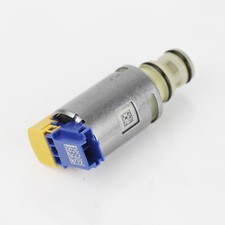
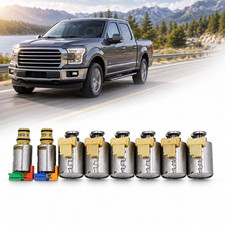
A 10R80 that slams into Drive or Reverse, bangs through light-throttle upshifts, or has set P0960, P0962 or P0963 is often pointing at the line pressure control solenoid. This is a new replacement for that solenoid, the cylindrical variable force solenoid with the blue connector body shown in the photo. It is used across the 10R80 family: F-150 and Transit from 2017, Expedition, Navigator and Mustang from 2018, and Ranger from 2019. Older Fords called this part the EPC solenoid; on the 10-speed, scan tools and service information call it the LPC solenoid.
What the pressure control solenoid does in a 10R80
The LPC solenoid does not apply a clutch itself. It sends a regulated signal to the main pressure regulator valve, and that valve sets line pressure for the whole transmission. A small signal damper piston between the two smooths out spikes. The 10R80 version is normally high and inversely proportional: at about 50 mA it gives full pressure, and at about 850 mA it gives very low pressure. The module never drops it to zero, either - a small idle current always stays on the circuit so the computer can monitor it. That design matters for diagnosis, because an open circuit or a solenoid that stops responding drives pressure up, not down.
Symptoms of a failing LPC solenoid
- Harsh garage shifts into Drive and Reverse
- Firm or banging upshifts, especially ones that should be soft at light throttle
- Wrench light with P0960 (circuit open), P0962 (circuit low) or P0963 (circuit high)
- P0961 (range/performance) when commanded and actual pressure disagree
- Less often, soft or delayed engagement and flare if the solenoid regulates too low
How to confirm it before you order
Three parts sit in series on this circuit - the solenoid, the signal damper and the regulator valve - and worn regulator or damper bores produce the same complaints with a perfectly good solenoid. Scan all modules first, load-test the battery, and set the fluid level hot. Then watch LINEDSD (desired line pressure) against LPC_AMP (solenoid current). If the current does not move when the module commands a change, the fault is electrical and this solenoid or its wiring is the fix. If current tracks the command but the gauge does not follow, look at the valve body instead. Ford specifies a gauge rated for at least 300 psi with vibration dampening on the M10x1.0 line pressure port - never an NPT fitting. Our 10R80 pressure control solenoid symptoms guide lays out the full test and the numbers to expect, and the 10R80 F-150 shift problems guide covers the other causes of harsh shifts on the truck most of these units live in.
Fitment
This listing does not name a year range, so treat it as a replacement LPC solenoid for the 10R80 and confirm it against your unit before installing. Replacement LPC solenoids are catalogued by year range, so compare the connector shape and color and the part number on your old solenoid with the one in the photo, or send us your year and VIN and we will check it. It is not for the 10R60 in the Bronco or the 10R140 in Super Duty trucks. If you need a part tied to a specific year range, the 2019-2026 10R80 pressure control solenoid is listed separately, and everything for the 10-speed is on our 10R80 parts page.
Install notes
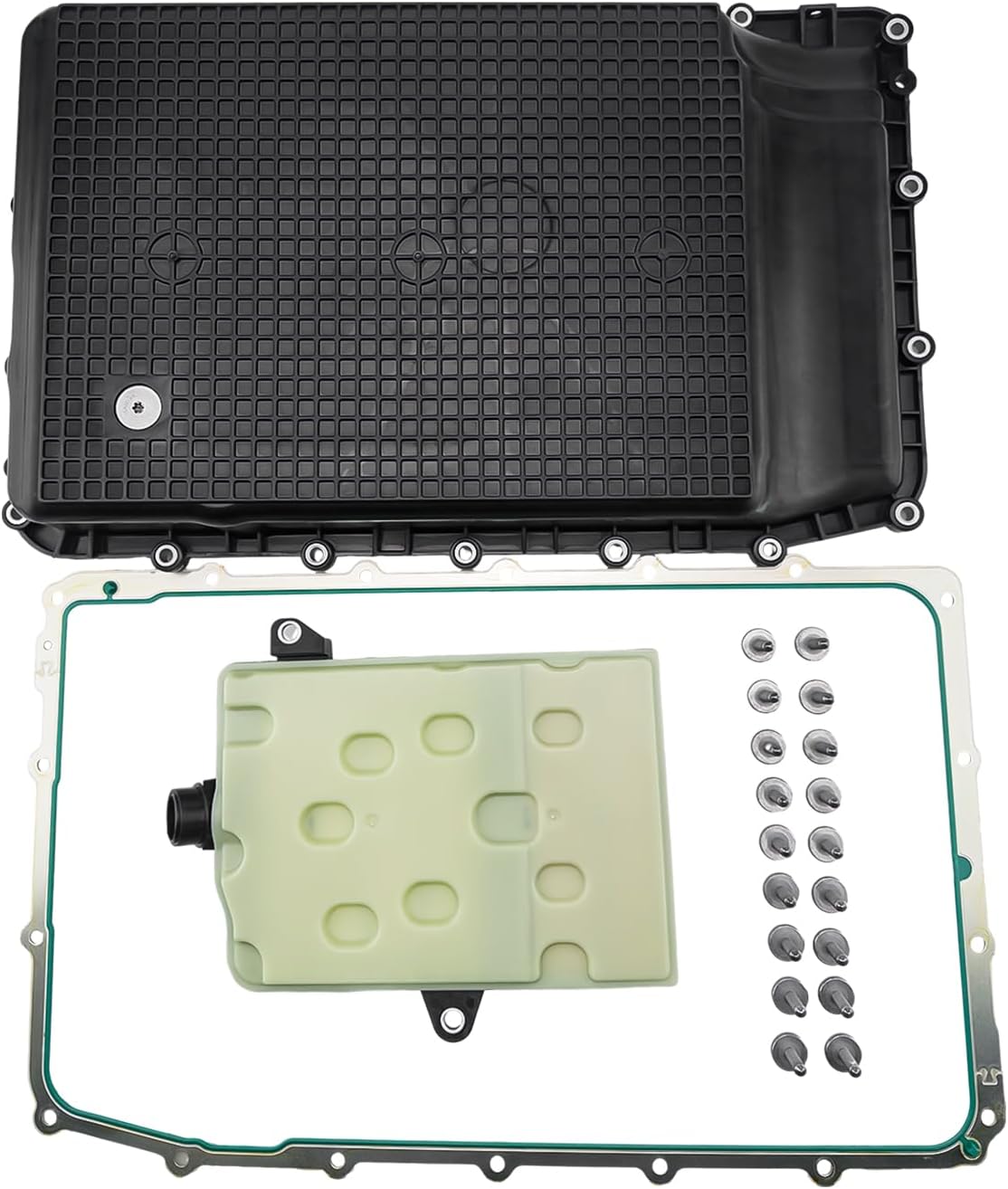
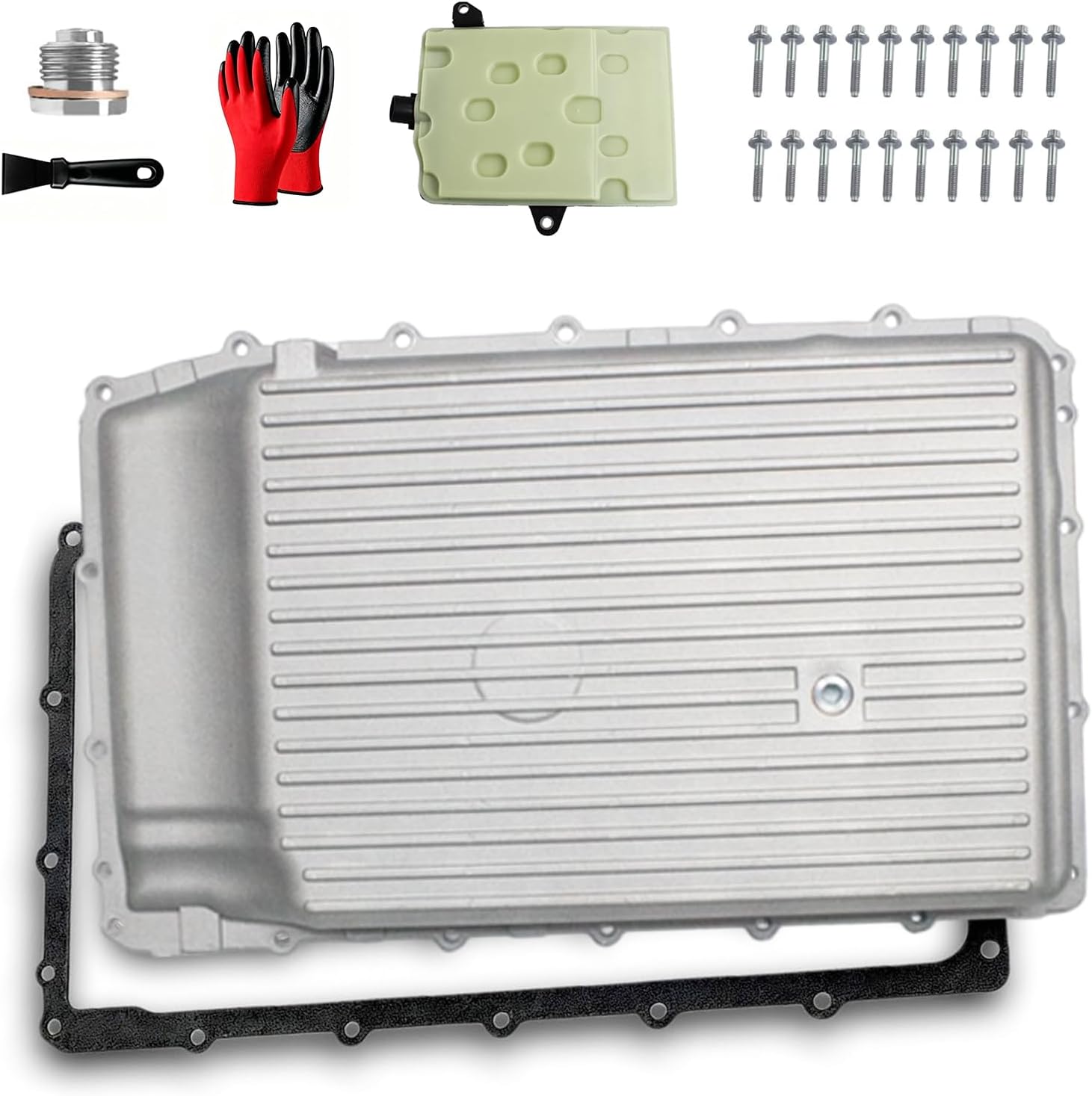
- The solenoid sits on the main control, so the pan and filter come off. Plan to replace the filter and pan gasket - our 10R80 aluminum pan with drain plug and gasket covers that side of the job.
- Inspect the solenoid bore and fit new O-rings; do not swap its position with the TCC solenoid.
- Check that the 13-digit solenoid body strategy matches the case tag and run the download if it does not.
- Refill with Mercon ULV, set the level hot, clear codes and let the module relearn. A weak battery slows that relearn.
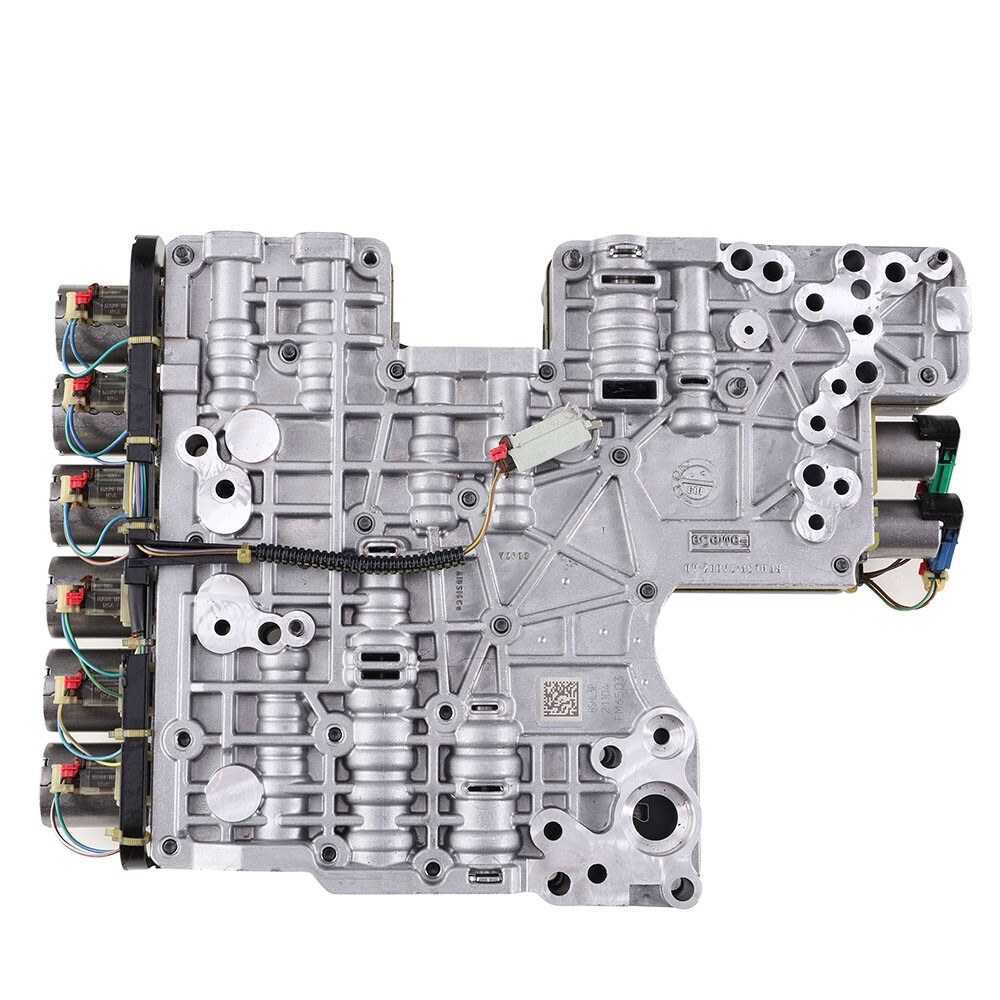
- If the valve body is apart and the bores test worn, a complete 10R80 solenoid kit or main control may be the better repair.