A noisy 46RE gets blamed on the converter more than anything else, and the converter is wrong more often than it is right. The 46RE sits behind the 5.2L and 5.9L Magnum V8s in Ram pickups and vans and in other Dodge and Jeep V8 applications, and most of those trucks have pulled a trailer, run low on fluid, or both. By the time one rolls in with a whine, a buzz or a clunk, the owner has usually already been told it needs a rebuild. Sometimes it does. Sometimes it needs a cooler, a U-joint, or a throttle cable adjusted.
This guide is the order we work a 46RE noise complaint in the bay: classify the noise by what it follows, match it to the part of the unit that is turning under load in that condition, and prove it before anything comes out of the truck.
How the 46RE Is Laid Out, and Why It Matters for Noise
Noise diagnosis on any automatic is about knowing what is turning, and what is loaded, in each range. ATSG's 46RE/47RE/48RE technical booklet describes the family as a four-speed with a lockup converter where first through third come from the clutches, bands, low roller clutch and planetary gearsets in the main case, and fourth comes from the overdrive unit at the rear, which contains its own overdrive clutch, OD/direct clutch, overrun roller clutch and planetary gearset (ATSG, 46RE/47RE/48RE Technical Service Information).
That split gives you three zones to chase:
- Front zone, engine speed: flexplate, converter, and the front pump, which is driven by the converter hub. Anything here makes noise in Park and Neutral with the truck sitting still.
- Main gear train, road speed: the front and rear planetaries, the low roller clutch, the bands and drums. These only make noise when the output is turning and the gear train is loaded.
- Overdrive unit, fourth gear and road speed: the overdrive planetary, its overrunning clutch, the overdrive clutch pack and the output shaft bearings. In first through third the overdrive unit runs locked up in direct, so a fault here often shows up only in fourth.
Step 1: Classify the Noise Before You Touch Anything
Ten minutes of structured testing saves a teardown. Warm the truck up, check the fluid level hot in Neutral, and run through these conditions with a helper or a chassis ear:
- Park and Neutral, rev the engine. If the noise is there and rises with RPM, it follows engine speed: pump, converter, flexplate, or something outside the transmission. If it is gone, the front zone is probably clean.
- In Drive and Reverse, foot on the brake. The converter is now loaded and the pump is building apply pressure, but the output is not turning. A noise that appears only here points at hydraulic noise or the converter, not the gear train.
- Road test at steady speed in each gear. A noise that changes with road speed, not engine speed, is in the gear train, the output bearings or the driveline.
- Note which gear. Noise that appears on the 3-4 shift and disappears on the 4-3 belongs to the overdrive unit. Noise in first through third that is gone in fourth points at the main planetaries.
- Drive versus coast. Gear noise that changes from load to coast is usually gear contact or bearing preload. A noise that is only there on throttle and quiet on a coast is a classic bearing pattern.
- Find it with a stethoscope. Front of the case at the bell housing, the middle of the case, and the rear of the overdrive housing just ahead of the extension or adapter. Loudest point is usually closest to the problem.
Whine That Follows Engine RPM
A steady whine in Park and Neutral that climbs with RPM is almost always fluid-related or pump-related. Start with the cheap causes:
Low or aerated fluid
The 46RE takes Mopar ATF+4. Chrysler's Ram fluid capacity chart lists the 46RE service fill at 3.79 liters (8 pints) and an overhaul fill of 8.99 to 9.46 liters (19 to 20 pints), with dry fill varying by cooler and line length (2004 Ram DR fluid capacities). A unit that is a quart low will draw air through the filter on hard turns or hot idle, and air in the oil makes the pump moan. A cracked filter or a filter not seated in its pickup seal does the same thing at any level. If the fluid on the stick is foamy, fix that first and re-test.
Restricted cooler circuit
This one gets missed constantly. Bob Warnke's Sonnax article on 46-47RH/RE cooler and converter flow lists hydraulic noise alongside 740/1740 codes, converter clutch slip, delayed engagement and slow converter fill as symptoms of the same flow problem, and names cooler restriction (drainback fitting, auxiliary cooler, radiator cooler or lines) as the most common cause (Sonnax, 46-47RH/RE Cooler and Converter Flow). He notes that the restriction can become a problem as head pressure approaches 80 psi, and that high converter release pressure in Reverse produces hydraulic noise in Drive or Reverse while cutting converter fill.
The test is simple: temporarily bypass the cooler circuit and re-test. Sonnax calls that the most effective verification technique. If the noise and the flow problem go away with the cooler bypassed, the restriction is in the cooler or lines, and no amount of transmission work will fix it.
Pump wear
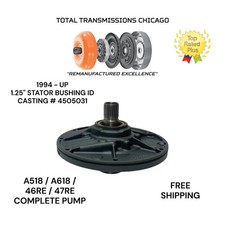
If the level is right and cooler flow is good, the pump is next. A worn pump whines because pressure-side oil is leaking back across worn gear faces and a scored pocket, and it usually brings other symptoms with it: slow engagement when hot, a converter that will not stay locked, and fluid that runs hot. Our 46RE pump failure guide covers the gauge and flow tests that separate a weak pump from a converter problem.
Converter
A converter with a failed thrust bearing or stator usually growls rather than whines, and the noise often changes when the converter clutch applies. Before you condemn it, look at the converter-to-flexplate bolts and the dust shield. A bent shield that the bolts tick against, or a cracked flexplate, sounds like an internal failure and costs a fraction of one.
Buzz: Usually Not a Hard Part
A buzz on the 46RE is often a vibration being transmitted rather than a failure. Chrysler's own 46RE/47RE diagnosis chart in the 1998 Ram Truck service manual (p. 21-226) lists the buzz causes in this order: low fluid, a shift cable routed against the engine or bell housing, a misassembled valve body (including loose bolts or screws), leaking pump passages from a porous casting, scored mating surfaces, excess rotor clearance or loose pump bolts, a plugged cooler, and a damaged overrunning clutch. The shift cable check takes thirty seconds. A buzz that showed up right after a valve body or pan job deserves a look at the bolts and the parts that were just touched before anything else.
Growl or Grind That Follows Road Speed
When the noise follows road speed and changes with load, you are in the gear train, the bearings, or the bushings. On this family, lube is the root cause more often than gear quality.
Sonnax notes that it is common for the overdrive section of the 42RE-48RE family to suffer from poor lube oil control, leading to burnt planetaries and failed bushings. Part of the reason is the intermediate shaft: its oil galley is not properly cleaned unless the end plugs are removed, and plugs that are left out or replaced with larger orifices decrease lube to the planetaries. Their intermediate plug and pilot kit uses a reduced orifice to put more oil back on the bushings and planetaries (Sonnax 22171A-02K).
The second lube leak is at the overdrive piston retainer. Sonnax says excess clearance between the retainer and the intermediate shaft reduces lube flow to the gear train, and many OE supports do not seal well against the case, which wastes pump volume. The symptoms they tie to it are loss of lube to the planetaries and reverse drum, retainer and planet failure (Sonnax 22754N-01K).
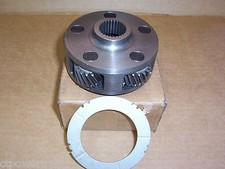
That is why a growling 46RE often has a planetary that has been running hot and dry for a long time before it gets loud. Pinion pins and needles can feel tight with your fingers and still be worn badly, so a growl that follows road speed means the carriers come apart and get inspected, not wiggled.
Bearings are the other half of road-speed noise. Sonnax's SBK-C16 bearing kit for the 42RE-48RE family lists bearing noise and bearing failure as its symptoms and covers the carrier backup, the overdrive rear clutch and the overdrive front piston backing plate positions (Sonnax SBK-C16). A thrust bearing that has lost its rollers usually leaves a trail of hardened steel in the pan, so read the magnet before you guess.
Noise in Fourth Gear Only
This is the easiest 46RE noise to localize because only one section of the unit changes state. In first through third, the overdrive unit runs locked in direct. On the 3-4 shift, the overdrive clutch applies, the overdrive planetary starts working, and the overdrive overrunning clutch freewheels. A noise that starts on the 3-4 and stops on the 4-3 is in the rear housing.
Chrysler's chart (1998 Ram service manual, p. 21-233) lists the fourth-gear-only causes as damaged overdrive clutch discs, plates or snap rings; a damaged overdrive piston or planetary thrust bearing; scored output shaft bearings; worn or chipped overdrive planetary gears; and worn or scored overdrive overrunning clutch rollers. All of them are fixed by pulling and overhauling the overdrive unit. Given the Sonnax lube notes above, check the intermediate shaft plugs and the piston retainer seal any time the overdrive section is apart, or the new parts will cook the same way.
If the truck also flares or slips on the 3-4, the overdrive clutch is involved. See our guide on a 46RE that will not shift into overdrive for the electrical checks that come first.
Clunk: Check the Driveline First
A clunk on a 46RE truck is a driveline complaint until proven otherwise. Before blaming the transmission, put the truck on a lift and check:
- U-joints and the slip yoke for play or dry splines.
- Driveshaft flange bolts and the output flange or yoke nut on the transmission. A loose nut lets the output shaft move and clunk on every throttle change.
- Transmission mount and crossmember bolts.
- Differential backlash and pinion yoke nut.
On the transmission itself, the clunk patterns are specific:
- Clunk on a closed-throttle 4-3 downshift. Chrysler's chart (1998 Ram service manual, p. 21-228) lists low fluid first, then throttle cable adjustment, and then a wrong overdrive piston thrust plate selective spacer, which sets overdrive clutch clearance and is chosen during assembly from output shaft end play and hub depth measurements. A truck that clunks on the 4-3 right after a rebuild deserves a look at that spacer.
- Clunk on engagement into Drive or Reverse. Usually a harsh engagement rather than a broken part: high line pressure, band adjustment, or accumulator problems. Our 46RE harsh shift guide walks through those.
- Knock that follows engine speed at idle. Cracked flexplate or converter bolts contacting the dust shield, both listed in Chrysler's chart under growling, grating or scraping noises (1998 Ram service manual, p. 21-227), along with a broken planetary set, a worn overrunning clutch, scored pump parts and a damaged output shaft bearing or bushing.
What to Look for When It Comes Apart
- The pan and magnet. Friction dust alone is normal wear. Bright aluminum points at the pump or a bushing bore. Fine steel and needle rollers point at a planetary or thrust bearing.
- Every planetary carrier. Disassemble, inspect pins, needles and washers, and check the gears for blueing and pitting. Discoloration is the sign of a lube problem, not just a gear problem.
- Intermediate shaft plugs and pilot. If they are missing or oversized, that is part of why the gear train failed.
- Overdrive piston retainer to case seal and retainer-to-shaft clearance.
- All bushings and thrust bearings, with the bearing positions covered by the SBK-C16 kit checked closely.
- The cooler and lines. Anything that shed metal went through the cooler. Flush it or replace it, then flow-test before the truck leaves.
Keeping a 46RE Quiet
- Keep it full of ATF+4 and check the level hot in Neutral, not cold.
- Flow-test the cooler after any internal failure and every time the unit is rebuilt.
- Restore lube on the rebuild: correct intermediate shaft plugs, a sealed overdrive support, new bushings and bearings.
- Keep the throttle valve cable adjusted correctly. On this family it sets line pressure and shift quality, and a misadjusted cable causes both clunks and burned parts.
Sonnax Bearing Kit SBK-C16 (46RE / 47RE / 48RE)
Covers the carrier backup and overdrive bearing positions Sonnax lists for bearing noise on the RE family. Worth having on the bench before you open a growling unit.
View the Sonnax SBK-C16 bearing kit →Shop the part for this fix
Sonnax bearing and lube kits, pump parts, thrust washers and rebuild kits for the Dodge RE family, shipped fast from the USA.
Shop Dodge RE transmission parts →Frequently Asked Questions
Why does my 46RE whine in Park and Neutral?
A whine that rises with engine RPM in Park and Neutral comes from something turning at engine speed: the front pump, the converter, or aerated fluid. Check the level hot first, then check cooler flow. Sonnax lists hydraulic noise among the symptoms of a restricted cooler circuit on 46/47RE units, and a temporary cooler bypass is the quickest way to prove it.
What causes a 46RE noise only in overdrive?
Fourth gear is the only range that loads the overdrive planetary and overdrive clutch, so a noise that shows up on the 3-4 shift and goes away on the 4-3 points into the overdrive unit. The usual parts are the overdrive planetary, its thrust bearings, the output shaft bearings and the overdrive overrunning clutch. Sonnax notes that poor lube control in that section is a common cause of burnt planetaries and failed bushings.
Is a clunk from a 46RE truck always the transmission?
No. Check the driveline first: U-joints, the slip yoke, driveshaft bolts and the output flange or yoke nut on the transmission. On the transmission side, a clunk on a closed-throttle 4-3 downshift is commonly traced to throttle valve cable adjustment, and a harsh engagement clunk to band adjustment or accumulator problems.
Can new fluid fix a noisy 46RE?
Only if the noise comes from low or aerated fluid. Topping up to the correct hot level with ATF+4 will quiet a pump that was sucking air. It will not fix a worn planetary, a failed bearing or a damaged overrunning clutch; those need the unit opened up.
Sources
- ATSG — Dodge/Jeep 46RE, 47RE, 48RE Technical Service Information (2011). Backs the unit layout: first through third from the clutches, bands, low roller clutch and planetary gearsets, and fourth from the overdrive unit containing the overdrive clutch, OD/direct clutch, overrun roller clutch and planetary gearset. atsg.biz (PDF)
- Sonnax — Bob Warnke, "46-47RH/RE Cooler and Converter Flow." Backs hydraulic noise as a symptom of restricted cooler flow, cooler restriction as the most common cause, the 80 psi head pressure note, high Reverse release pressure causing hydraulic noise in Drive or Reverse, and the cooler bypass test. sonnax.com
- Sonnax — Intermediate Plug & Pilot Kit 22171A-02K. Backs the poor overdrive lube control on 42RE-48RE units, burnt planetaries and failed bushings, the uncleaned shaft galley, missing or oversized plugs reducing planetary lube, and the reduced-orifice pilot. sonnax.com
- Sonnax — Piston Retainer Kit 22754N-01K. Backs excess overdrive piston retainer-to-intermediate shaft clearance reducing gear train lube, OE supports not sealing to the case, and the associated planet and reverse drum failures. sonnax.com
- Sonnax — Bearing Kit SBK-C16. Backs bearing noise and bearing failure on the 42RE-48RE family and the carrier backup, overdrive rear clutch and overdrive front piston backing plate bearing positions. sonnax.com
- DaimlerChrysler / Ram Body Builder — 2004 Ram Truck (DR) Fluid Capacities. Backs ATF+4 and the 46RE service fill of 3.79 L (8 pints) and overhaul fill of 8.99-9.46 L (19-20 pints). rambodybuilder.com (PDF)
- Chrysler Corporation — 1998 Dodge Ram Truck Service Manual, Group 21, 46RE/47RE Diagnosis and Testing chart (pp. 21-226 to 21-233). Backs the buzzing noise cause list (low fluid, shift cable routing, misassembled valve body, leaking pump passages, plugged cooler, damaged overrunning clutch), the growling/grating/scraping list including a broken drive plate and converter bolts hitting the dust shield, the closed-throttle 4-3 clunk list ending in the overdrive piston thrust plate spacer, and the noisy-in-fourth-only overdrive causes. archive.org (full text)
Need parts for this job?
46RE pumps, planetaries, master rebuild kits and coolers — shipped fast from the USA.
Shop 46RE parts →