The 46RE is the gas-truck member of the Chrysler RE family. It sits behind the 5.2L and 5.9L Magnum V8s in Ram 1500 and 2500 pickups and vans, and in other Dodge and Jeep V8 applications from the mid-1990s on. Most of those trucks have towed something, a lot of them have been run low on fluid at least once, and almost none of them have had the cooler lines flushed since they left the plant. That is the history the front pump lives with.
When the pump starts to go, the complaint is rarely "my pump is bad." It is a truck that hangs in Neutral for a second after you pull the lever, a converter that unlocks and relocks on the highway, a whine that the owner thinks is the alternator, or a transmission that is fine cold and lazy after twenty minutes. This guide covers what the 46RE pump does, the failure patterns we see on the bench, how to separate a weak pump from a restricted cooler or a bad converter, and what to replace when it comes apart.
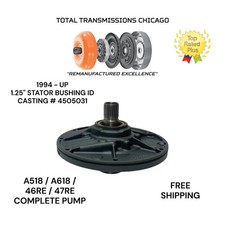
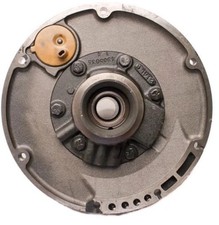
What the 46RE Pump Actually Does
The pump is a gear-type unit bolted to the front of the case and turned by the converter hub, so it only turns at engine speed. At hot idle in a gas V8 that is 600 to 750 RPM, which is the hardest condition the pump ever sees. Everything downstream depends on it: the pressure regulator sets line pressure from pump output, then feeds converter charge, cooler flow and gear-train lube with what is left over.
That pecking order is the key to diagnosis. When pump volume drops, line pressure is protected first, and the converter, cooler and lube circuits get shorted. So the early symptoms of a tired 46RE pump look like converter and heat problems, not like a transmission that will not hold a gear.
The 46RE also has less pressure headroom than people assume. Jim Dial at Sonnax notes that the RH/RE family runs a lower maximum line pressure than the RFE units, near 130 psi in Drive or fourth on a stock unit, and that converter clutch full-apply pressure equals line pressure because the converter clutch apply valve is fed line straight from the manual valve (Sonnax, Maintain Proper TCC Apply Pressure). A pump that cannot hold line under load is a pump that cannot hold the converter clutch.
Why 46RE Pumps Wear
Debris
All of the oil the transmission circulates goes through the pump gears. Band lining, clutch material and converter wear particles score the gear faces and the pocket floor. Once side clearance opens up, oil leaks from the pressure side back to the suction side of the gears. That internal leak is worst when the fluid is hot and thin and the pump is turning slowly, which is exactly why the symptoms show up at hot idle first.
Bushing and hub wear
The pump bushing supports the converter hub. When it wears, the hub runs off center, the front seal starts to leak, and the inner gear can start rubbing the pocket. A front seal leak plus a new whine plus slow engagement is the classic bushing pattern.
Starvation and air
Low fluid, a cracked filter, or a filter that is not seated in its seal lets the pump pull air. Aerated fluid is compressible, so the pump moves less oil per turn and makes noise doing it. Air also wears the gears faster. On a lot of 46RE trucks, the pump failure started with a pan job that was done wrong.
Converter-side wear that looks like the pump
Bob Warnke's Sonnax article on 46-47RH/RE converter flow explains that the stator support on the pump aligns the turbine shaft to the center of the converter cover, the crankshaft pilot sits on the other side of the cover bushing, and if the bushing or crank pilot is worn the turbine shaft sealing rings can cross-leak and upset converter apply and release (Sonnax, 46-47RH/RE Cooler and Converter Flow). That cross-leak reads like low pump output on a gauge. It is one reason you inspect the crank pilot and stator support any time you condemn a pump.
46RE Pump Failure Symptoms
- Delayed engagement into Drive and Reverse. Worst after sitting overnight and worst when hot at idle. The pump has to refill the converter and the apply circuit before anything holds.
- A whine that follows engine RPM. It is present in Park and Neutral and rises with engine speed, not road speed. A planetary or bearing noise follows road speed instead.
- Converter clutch that unlocks, shudders, or sets 740/1740. Sonnax lists 740/1740 codes, converter clutch slip at high torque, delayed engagement, slow converter fill, excessive stall and hydraulic noise as the symptoms tied to converter and cooler flow on 46/47RE units. A weak pump starves exactly those circuits.
- Fluid running hotter than it used to. Less pump volume means less cooler flow. Hotter fluid leaks back through worn gears more easily, which drops volume further. It snowballs.
- Soft or slipping shifts that get worse as it warms up, especially the 3-4 under load.
- What is in the pan. Bright aluminum or fine steel along with the usual friction dust points at the pump gears or pocket.
Every one of those can also come from a restricted cooler, a converter with a release-oil restriction, or a worn valve body. In the Sonnax article above, cooler restriction is listed as "by far the most common issue" behind that symptom list, ahead of converter restriction, valve body wear, and only then pump, stator support, cover bushing or crank pilot wear. That ranking is the reason you test before you pull the transmission.
How to Prove a Weak 46RE Pump
1. Level, fluid and filter
Check the level hot, engine running, in Neutral. The 46RE takes Mopar ATF+4. Chrysler's Ram fluid capacity chart lists the 46RE service fill at 3.79 liters (8 pints) and the overhaul fill at 8.99 to 9.46 liters (19 to 20 pints), with a note that dry fill varies with the cooler, line length and any auxiliary cooler (2004 Ram DR fluid capacities). That is well under the 29 to 33 pints the same sheet lists for the 47RE, so do not fill a 46RE by the diesel number. Set the final level on the dipstick, hot. Pull the pan and look at the filter and the debris before you spend money on gauges.
2. Line pressure with a gauge
Sonnax's gauge diagnostics guide describes the basic pump capability test: read minimum line, then force the unit to maximum line and read it again at fast idle. A healthy pump reaches maximum line for that unit at fast idle. On a 46RE, line rise comes from the throttle valve, so hold the throttle valve lever at full travel for the maximum reading (Sonnax, Transmission Diagnostics Using Pressure Gauges). How the numbers behave tells you more than the numbers themselves:
- Low at idle, recovers with RPM: worn pump or a large internal leak.
- Good cold, falls off hot: pump clearances or a leak that opens as the fluid thins.
- Needle bouncing, often with a whine: air. Sonnax ties this to a cracked filter or a suction-side leak.
- Low in one range only: not the pump. Look at the seals, servo or clutch in that range. Sonnax treats more than about a 10% difference between a clutch circuit and line as a leak in that circuit.
3. Use the governor transducer as a line pressure gauge
This one is specific to the 42-47RE and it saves a lot of time on the road test. Dave Skora's GEARS article on troubleshooting the RE governor system explains that above about 40 mph the computer turns the governor solenoid off and uses the overdrive solenoid for the 3-4 shift, so the "Governor Actual" pressure becomes line pressure, and the governor transducer is really watching line pressure while you drive in fourth (GEARS, Troubleshooting the 42-47RE Transmissions). He gives the transducer signal as 0.60-0.66 V at zero psi, about 3.0 V at 60 psi and 4.5 V at 110 psi, and says a reading above 105 psi at wide-open throttle in third or fourth points to excessive line pressure or a bad transducer.
For pump work, that means you can log Governor Actual in fourth on a long pull with a warm transmission. A reading that sags as the fluid heats, or one that falls away when the converter clutch applies and recovers when it releases, is a strong hint the pump cannot keep up. Confirm it with a gauge in the governor tap before you trust the transducer, since a bad transducer will lie in both directions.
4. Cooler flow
Disconnect the cooler return, which Sonnax identifies as the lower line on the transmission, and run it into a marked container at idle in Neutral. Sonnax's SonnaFlow chart for 42-47RE units describes normal flow as low at low pump revolution with a sharp rise on the 1-2 shift, and a sharp increase and decrease as lockup applies and releases (Sonnax, SonnaFlow Chart 42-47RE). The same chart notes that flow runs lower on units with 5/16" cooler lines than those with 3/8" lines, so compare like with like. A poor-flow case on that chart is repeated planetary and converter clutch lining failure, fixed by replacing the cooler lines and radiator because converter debris had plugged them.
If flow is low, bypass the cooler and retest. Sonnax calls a temporary bypass "the most effective verification technique" and says cooler restriction may become a problem as head pressure approaches 80 psi. Flow that comes back with the cooler bypassed is a cooler problem. Flow that stays low with the cooler bypassed points back at the pump or converter.
5. Pump or converter
Watch cooler flow from Drive at idle through a completed lockup. Sonnax's isolation test: flow that stays low until the converter clutch applies, along with slow apply or shudder, points at a release-oil restriction inside the converter. A pump problem keeps flow low in every condition.
Replacing the Pump
The pump comes out the front, so the transmission comes out of the truck. Once it is on the bench:
- Measure the gears and pocket. Check gear side clearance with a straightedge and feelers and outer gear to pocket clearance against the service manual for the year. A scored pocket floor means a new or remanufactured pump body, not a cleanup.
- Treat gears and bushing as a set. A worn bushing ruins new gears. A remanufactured 46RE pump with new gears and bushing is usually cheaper than chasing parts. If you do press a bushing, use an arbor press, not a hammer and driver.
- Inspect the stator support and turbine shaft rings, and the crank pilot. This is where the cross-leak from the Sonnax article lives.
- Check the converter hub. A grooved or burred hub will eat the new bushing and seal.
- Seal the overdrive support to the case. A support that leaks lube oil wastes the volume the new pump makes.
- Clean or replace the cooler and lines. Whatever ate the pump went through the cooler. On a pump that failed by shedding metal, a new cooler is cheap insurance.
- Seat the converter fully into the pump gear before the transmission meets the engine. A converter that is pulled in by the bell housing bolts breaks pump gears on first start.
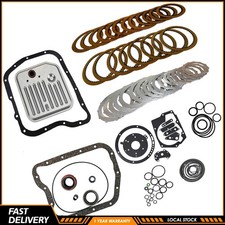
If the pan also shows burned frictions or band material, rebuild the whole unit. Debris that wore the pump is still in the clutch packs and valve body, and a 46RE master kit costs less than a second removal.
Keeping the New Pump Alive
- Keep it full of ATF+4 and check it hot in Neutral. Low fluid is the fastest way to kill a pump.
- Keep cooler flow up. Flow is how the 46RE gets rid of heat, and heat is what thins the fluid and opens up leak-back.
- Watch the line pressure numbers. Adding line pressure with a shift kit raises converter apply pressure too, because full apply equals line on this family. Do not use pressure to cover up a worn pump.
Sonnax Piston Retainer Kit 22754N-01K (46RE / 47RE / 48RE)
Seals the overdrive support to the case so the oil your new pump makes goes to lube and the converter, not into a leak. Worth doing on any 46RE pump job.
View the Sonnax piston retainer kit →Shop the part for this fix
Sonnax pressure and lube parts, filters, pump service parts and rebuild kits for the Dodge RE family, shipped fast from the USA.
Shop Dodge RE transmission parts →Frequently Asked Questions
What are the symptoms of a bad 46RE pump?
Slow engagement into Drive or Reverse that is worst hot at idle, a whine that follows engine RPM even in Park and Neutral, a converter clutch that unlocks or shudders, and fluid that runs hotter than normal. In the pan you may also find bright aluminum or fine steel along with friction dust.
Can I check 46RE line pressure with a scan tool?
Partly. Above about 40 mph in fourth gear the governor solenoid is off and the Governor Actual reading becomes line pressure, so logging it on a warm pull shows whether line sags. Confirm with a gauge in the governor tap, because a bad governor transducer gives false readings.
Is it the pump or the transmission cooler?
Test the cooler first. Sonnax ranks cooler restriction as the most common cause of 46/47RE delayed engagement, converter slip and hydraulic noise. Bypass the cooler and recheck flow; if flow comes back, the cooler or lines are the problem, and if it stays low, look at the pump or converter.
How much ATF+4 does a 46RE take after a pump replacement?
Chrysler lists the 46RE service fill at 8 pints and the overhaul fill at 19 to 20 pints, about 9.5 to 10 quarts, with the exact amount depending on the cooler and lines. Fill close, then set the final level hot in Neutral on the dipstick.
Do I have to pull the transmission to replace a 46RE pump?
Yes. The pump bolts to the front of the case behind the torque converter, so the transmission has to come out. While it is out, inspect the converter hub, crank pilot and stator support, and clean or replace the cooler and lines.
Sources
- Sonnax — Bob Warnke, "46-47RH/RE Cooler and Converter Flow." Backs the 46/47RE symptom list (740/1740, TCC slip at high torque, delayed engagement, slow converter fill, excessive stall, hydraulic noise), the ranking of causes with cooler restriction most common, the 80 psi head pressure threshold, the cooler bypass test, the Drive-to-lockup converter isolation test, and the stator support / cover bushing / crank pilot cross-leak. sonnax.com
- Sonnax — SonnaFlow Chart, 42-47RE Normal and Poor. Backs normal cooler flow behavior (low at low pump speed, sharp rise on the 1-2 shift, sharp change at lockup), the lower line as cooler return, lower flow with 5/16" versus 3/8" lines, and the plugged-cooler planetary and TCC failure case. sonnax.com
- Sonnax — Jim Dial, "Prevent RFE, RH/RE Converter Failure: Maintain Proper TCC Apply Pressure." Backs the stock RH/RE maximum near 130 psi in Drive or fourth, and TCC full-apply pressure equaling line pressure fed from the manual valve. sonnax.com
- Sonnax — "Transmission Diagnostics Using Pressure Gauges." Backs the minimum-then-maximum line pressure pump test at fast idle, the bouncing needle from a cracked filter or suction-side leak, and the roughly 10% circuit-versus-line leak threshold. sonnax.com
- GEARS Magazine (ATRA), October 2006 — Dave Skora, "Troubleshooting the 42-47RE Transmissions." Backs Governor Actual pressure becoming line pressure above about 40 mph in fourth, the transducer voltage values (0.60-0.66 V at 0 psi, 3.0 V at 60 psi, 4.5 V at 110 psi), and the 105 psi WOT threshold. atracom (PDF)
- DaimlerChrysler / Ram Body Builder — 2004 Ram Truck (DR) Fluid Capacities. Backs the 46RE service fill of 3.79 L (8 pints) and overhaul fill of 8.99-9.46 L (19-20 pints), and the note that dry fill varies with cooler and line configuration. rambodybuilder.com (PDF)
Need parts for this job?
46RE pumps, master rebuild kits, coolers and valve bodies — shipped fast from the USA.
Shop 46RE parts →