Most 46RE lockup complaints land on the bench described three different ways. The truck "never locks up and gets bad mileage on the highway." The truck "flashes the check engine light at 50 mph." Or the truck "shudders when it shifts into overdrive." All three come back to the same system: a converter clutch that the PCM commands electrically but that only applies if the hydraulics, the converter and the cooler circuit all cooperate. Swapping the lockup solenoid is the reflex, and it is often wrong.
Below: how 46RE lockup works from the solenoid power feed to the converter clutch, and a diagnosis order that separates electrical from hydraulic faults before you spend money. If your complaint is specifically a vibration at cruise, our 46RE torque converter shudder guide goes deeper on that symptom. Sources are listed at the end.
What the PCM Controls and What It Does Not
The 46RE is the electronically governed version of the old A518. For the first three gears it is still a hydraulic transmission. Dave Skora's two-part ATRA GEARS series on the 42-47RE family puts it plainly: governor pressure strokes the shift valves, the same way it does in a TH350 or a C4,. Governor pressure should be zero at a stop and rise about 1 psi per mph up to about 40 mph.
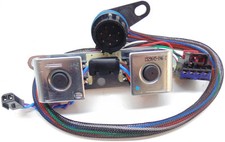
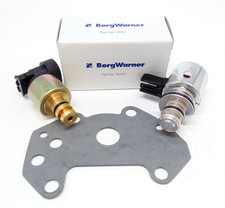
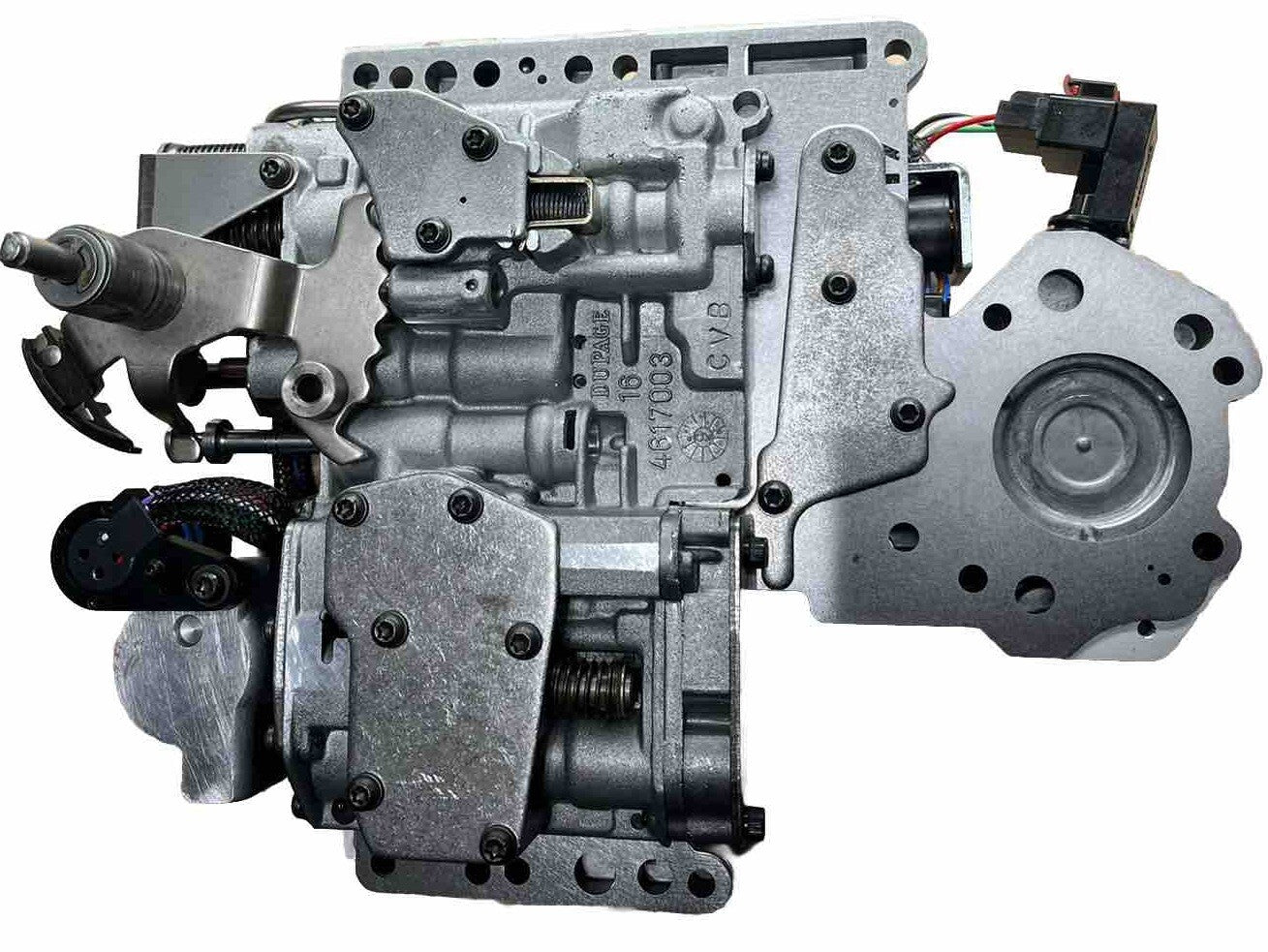
The PCM has direct electrical control over two things on the valve body beyond the governor: the overdrive solenoid and the converter clutch (lockup) solenoid. They live together in one solenoid assembly on the valve body, which is why the code that covers lockup, P1740, is defined as a TCC or overdrive solenoid performance fault. When the PCM wants lockup, it energizes the lockup solenoid. That solenoid does not apply the clutch by itself. It moves the lockup valve, which strokes the switch valve, which redirects oil to the converter.
The power feed most people miss
Battery voltage reaches both solenoids through the transmission control relay. Jon Glatstein, writing for Transmission Digest as an ATSG electronics specialist, documented how that relay gets its coil power on the 46RE and 47RE. The PCM grounds one side of the relay coil through pin 30 of connector 2 ("Transmission Control Relay Control"). The other side of the coil, relay pin 86, is fed from the PCM's generator source circuit at pin 25 of connector 3. That circuit is only energized when the engine is running, because it is the same wire that feeds the alternator field.
Two practical consequences. First, with the key on and engine off you will not see voltage at the solenoids, so do not condemn the relay or harness from a key-on test. Start the engine. Second, if a truck shows a charging system problem, an EVAP leak detection pump fault and transmission solenoid codes at the same time, look at that shared circuit before you chase three separate problems.
The Two Lockup Solenoids Are Not Interchangeable
This is the single most useful fact in this post, and it catches rebuilders constantly. Transmission Digest's January 2005 Tech/Talk documents two different lockup solenoids used in 46RE/47RE applications:
- White connector, low resistance: 0.98 to 1.6 ohms. The PCM drives it with a two-stage PWM signal. The first stage starts at 66 Hz, and the second stage increases to control solenoid output pressure until converter clutch slip is brought to zero rpm.
- Blue connector, high resistance: 13 to 24 ohms. The PCM drives it at a fixed 50 Hz with a standard PWM signal and increases pulse width to bring slip to zero. TD notes this design runs cooler and lasts longer.
The PCM strategy is matched to the solenoid the truck was built with. Put a blue-connector solenoid in a truck that came with the white one and you can get surging and engine speed fluctuation during lockup, a bump at the end of engagement, shudder under load, and codes P0741 (TCC stuck off), P1728 (converter slip) or P1744 (TCC performance). Go the other way and install a white-connector solenoid where a blue one belongs, and the extra current it draws can set P0743, TCC solenoid circuit.
So before you replace anything, unplug the solenoid assembly, note the connector color, and measure the lockup solenoid at room temperature. A reading that matches neither range is a failed coil. A reading that matches the wrong range for that truck tells you someone before you installed the wrong part. Match the replacement to the original.
One caution on bench testing: do not jumper 12 volts straight across a low-resistance lockup solenoid to "hear it click." At roughly 1 ohm, Ohm's law puts that near 12 amps through a coil the PCM never drives at full duty. Use a current-limited tester, or just confirm resistance.
The Hydraulic Chain: Lockup Valve, Switch Valve, Boost Valve
Where the solenoid gets its oil
Sonnax's Jim Dial explains a detail of the 46/47RE that matters for diagnosis. The TCC solenoid feed on these units comes from the 1-2 shift valve, and a passage from the manual valve in manual 2 or manual 1 connects to the spring side of the lockup valve. That connection cancels lockup in the manual low ranges. In other words, the 46RE hydraulics will not let the converter apply in first gear or with the selector in 2 or 1 no matter what the PCM commands. The 48RE changed this: its TCC solenoid feed comes from the manual valve in any Drive position, which is one reason a 46/47RE valve body swapped into a 48RE can come back later with a failed converter clutch or overdrive clutch.
Road test a no-lockup complaint in Drive with overdrive on. Testing in manual 2 tells you nothing.
The switch valve
Ed Lee's Transmission Digest article on Chrysler converter flow walks the oil path. In release, converter charge oil enters through the input (turbine) shaft, fills the space between the lockup piston and the cover, spills around the piston, and exits as lube oil to the cooler. That film of oil between the piston and the cover is what keeps the piston off the cover. When the switch valve strokes to apply, charge oil is routed straight to the cooler, and the oil trapped in front of the piston has to vent back out through the input shaft and past the switch valve spool before the piston can move forward and clamp. Anything that slows that exhaust gives you a slow, soft apply or slip.
The lockup boost valve and line rise
Sonnax's article on 48RE hydraulic features also describes what Chrysler added to the 46RE when it was introduced around 1996: a boost valve next to the pressure regulator. With TCC on in third, or in fourth, TC apply or overdrive apply oil moves the boost valve and exhausts one of the pressure regulator's four reducing points. That lets line pressure rise approximately 10 to 15 psi to add clamping force on the converter clutch and overdrive clutch. On the 48RE the rise is about 22 to 28 psi.
That rise is your best hydraulic test. Put a gauge on the line pressure port, drive, and watch it when lockup applies. A 10 to 15 psi rise means the lockup valve, switch valve and boost valve are all stroking. No rise with the solenoid commanded on points into the valve body. A good rise with continued slip points at the converter, the pump or the cooler circuit.
Also know the ceiling. Sonnax notes the RH/RE units have no valve that limits converter apply pressure in full lockup; line pressure goes straight to the clutch. Stock, that is near 130 psi in TCC or fourth. Performance kits that push it to 150 psi and above can balloon a converter.
How the PCM Decides Lockup Failed
Ed Lee's explanation of 740/1740 logic is the key to reading these codes: the PCM constantly compares engine speed to transmission output speed. If the slip parameters for a gear are met and TCC apply has not been commanded, you get a gear-ratio code. If the same slip is seen after TCC apply has been commanded, you get a TCC slip code, P0740 or P1740.
That makes the output shaft speed sensor part of the lockup system. The ATRA GEARS article notes the output speed sensor is the signal the computer uses to determine vehicle speed on these units. A weak or erratic output speed signal can make the PCM miscalculate slip or refuse to schedule lockup at all, so check it on the scan tool before you condemn anything hydraulic.
What to watch on the scan tool
- Engine RPM vs output shaft speed: in third gear the 46RE is in direct drive, so with the converter locked engine speed and output shaft speed should line up almost exactly. A steady gap of more than a few dozen rpm after lockup is commanded is slip.
- TCC solenoid command / duty cycle: confirm the PCM is actually commanding lockup before you blame the transmission. If it never commands, look at the inputs, not the valve body.
- Brake switch status: a brake switch that reads "applied" with your foot off the pedal will keep lockup released. It is a five-minute check.
- Transmission temperature and overdrive switch status: the PCM holds off lockup and overdrive when the fluid is cold, and changes strategy when it is very hot.
When lockup cycles on and off at cruise
A converter clutch that applies and releases in a steady rhythm at cruise, with the scan tool showing the PCM commanding it, is a different complaint from a slip code. The Motor Age list of causes for TCC and overdrive cycling on RE-series trucks runs to 27 items. On a gas 46RE the ones that apply are: alternator noise, a faulty TPS or its circuit, low coolant, an engine that runs too cool or a bad coolant temperature sensor, a faulty or loose brake switch, dirty or loose battery cables (especially the negative at the engine), an erratic VSS, a faulty transmission temperature sensor, the early three-prong park/neutral switch or the later range sensor, spark plugs and wires, the crank sensor, a restricted fuel filter or dirty air filter, retarded cam timing from a stretched chain, and the TCC solenoid itself. Even a generic scan tool left plugged in is on the list. The alternator test is quick: disconnect its battery feed wire and drive it. If the cycling stops, you have found your noise. A range sensor with fluid inside the connector gets replaced.
ATSG's Wayne Colonna makes the same point about these trucks: the software can be calmed with a re-flash or a filter, but neither fixes the noise source. Find the input before you condemn the converter.
Hydraulic and Mechanical Causes of Lockup Codes
Once the electrical side checks out, Ed Lee's list applies: restricted cooler or line, wrong fluid, worn valve body bores, pump clearance or cross leaks. Only then the converter.
- Cooler circuit. Sonnax calls cooler restriction the most common issue on the 46/47RH/RE family. Converter release oil and cooler flow are the same oil, so a restricted cooler or a stuck drainback valve traps release oil and slows apply. Flow-test before and after any converter work.
- The 2000-01 boost valve cover plate. Transmission Digest's January 2005 Tech/Talk covers 2000-01 Ram Vans, Dakotas, Ram pickups and Durangos with a flashing check engine light and P1740. The reducing-pressure exhaust orifice in the boost valve cover plate is too small and delays the pressure rise needed at lockup. Enlarge it to 0.069 in. or install Chrysler's revised plate, part number 04617012.
- Pump body to stator flatness. Transmission Digest's October 2005 Tech/Talk covers recurring P1740 or P0740 on the 46RE before or after overhaul caused by a pump body and pump stator mating surface that is not flat, which bleeds off line pressure and converter apply pressure. The fix is machining the stator face flat.
- Wrong converter. The same January 2005 bulletin notes two converter clutch designs in these applications: a single-sided clutch bonded to the front cover, and a dual-sided disc between the cover and apply piston. A single-sided converter in a truck that needs the dual-clutch unit can cause surging and shudder on apply.
- Converter installation. Ed Lee gives the converter-to-flexplate spacing for Chrysler rear-drive overdrive units: push the converter back until the hub bottoms in the pump, then the gap to the flexplate pad must be a minimum of 0.125 in. and no more than 0.250 in. A bent flexplate that lets the converter sit too far back can restrict flow at the input shaft and set a 740 code.
A Lockup Diagnosis Order That Saves Parts
- Read codes and freeze frame. P0743 points electrical. P0740/P1740/P1728/P1744 point to slip after a command.
- Check fluid. Correct level hot in Neutral, ATF+4 (MS-9602), not burnt.
- Confirm the command on the scan tool along with brake switch, output speed and temperature inputs.
- Check power with the engine running, then solenoid resistance and connector color against the original spec.
- Gauge test the line rise at lockup: about 10 to 15 psi expected.
- Flow test the cooler and inspect or replace the drainback valve.
- On 2000-01 trucks, check the boost valve cover plate orifice.
- On the bench: valve body bores, pump body/stator flatness and clearance, converter type and installed depth.
For the rest of the valve body checks, see our 46RE valve body testing guide, and for the overdrive half of that solenoid assembly, 46RE won't shift into overdrive.
View the TCC lock-up solenoid → All RE-family parts →
Frequently Asked Questions
When does a 46RE torque converter lock up?
The PCM applies the converter clutch in fourth gear and in third under some conditions, with the selector in Drive. The 46/47RE hydraulics cancel lockup in manual 2 and manual 1 because a manual valve passage feeds the spring side of the lockup valve, and the PCM holds off lockup when the fluid is cold or the brake switch reads applied.
What resistance should a 46RE lockup solenoid have?
It depends on which solenoid the truck was built with. Per Transmission Digest, the white-connector lockup solenoid reads 0.98 to 1.6 ohms and the blue-connector version reads 13 to 24 ohms. They are not interchangeable in all applications, because the PCM drives them with different PWM strategies.
What does P1740 mean on a 46RE?
P1740 is a TCC or overdrive solenoid performance fault. It sets when the PCM sees excessive slip after commanding lockup. Common causes include a restricted cooler, wrong fluid, worn valve body bores, pump leakage, the undersized boost valve cover plate orifice on 2000-01 trucks, and a non-flat pump body to stator surface.
Why is there no power to my 46RE solenoids with the key on?
On the 46RE and 47RE, the transmission control relay coil is fed from the PCM's generator source circuit, which is only energized when the engine is running. Start the engine before testing for solenoid voltage, and suspect that shared circuit if charging, EVAP leak detection pump and transmission codes appear together.
How much should line pressure rise when a 46RE locks up?
Sonnax puts the rise at approximately 10 to 15 psi on the 46/47RE with TCC on in third or in fourth, created by the boost valve exhausting one of the pressure regulator's reducing points. No rise with lockup commanded points into the valve body; a good rise with continued slip points at the converter, pump or cooler circuit.
Sources
- Transmission Digest — Tech/Talk, January 2005 issue ("Chrysler 46RE/47RE" items) and October 2005 issue. Backs P1740 on 2000-01 Ram Vans, Dakotas, Ram pickups and Durangos, the undersized boost valve cover plate orifice, the 0.069 in. fix and Chrysler plate 04617012; the white-connector (0.98-1.6 ohm, two-stage PWM starting at 66 Hz) and blue-connector (13-24 ohm, fixed 50 Hz PWM) lockup solenoids and the codes each mismatch causes (P0741, P1728, P1744, P0743); single-sided vs dual-sided converter clutches; and recurring P1740/P0740 from a non-flat pump body to stator surface. January 2005 issue / October 2005 issue
- Transmission Digest — Ed Lee (Sonnax TASC Force), "740/1740 Codes and Chrysler Converter Flow." Backs the engine-vs-output speed slip logic, gear-ratio vs TCC slip code distinction, converter charge/release oil path through the input shaft and switch valve, the causes list (cooler restriction, wrong fluid, valve body bores, pump clearance), the 0.125-0.250 in. converter-to-flexplate spacing, and turbine hub bushing height. transmissiondigest.com
- Transmission Digest — Jon Glatstein (ATSG), "46RE/47RE Power Circuit for Transmission Control Relay Coil." Backs the relay ground at PCM connector 2 pin 30, coil power from the generator source circuit at PCM connector 3 pin 25 (energized only with the engine running), relay pins 85/86, and the shared EVAP leak detection pump feed. transmissiondigest.com
- Sonnax — Jim Dial, "Dodge 48RE Hydraulic Features Revealed." Backs the boost valve added around 1996, the 10-15 psi line rise with TCC on in third or in fourth (22-28 psi on 48RE), the 46/47RE TCC solenoid feed from the 1-2 shift valve, manual 2/1 cancelling lockup, and 46/47RE valve bodies in 48REs causing TCC failures. sonnax.com
- Sonnax — "Prevent RFE, RH/RE Converter Failure: Maintain Proper TCC Apply Pressure" and "46-47RH/RE Cooler and Converter Flow." Backs full line pressure reaching the converter clutch with no apply limiting, about 130 psi stock in TCC or fourth, 150+ psi with performance kits, and cooler restriction as the most common 46/47RE issue. TCC apply pressure / cooler and converter flow
- ATRA GEARS Magazine — Dave Skora, "Troubleshooting the 42-47RE Transmissions" (October 2006). Backs the 42-47RE being hydraulically shifted through third by governor pressure, governor pressure rising about 1 psi per mph to about 40 mph, comparing governor desired, measured and gauge pressure, and the output shaft speed sensor as the PCM's vehicle speed signal. GEARS October 2006 (PDF)
- FenderBender / Motor Age — "Dodge and Jeep Vehicles with RE Series Transmissions TCC/OD Cycling Problems." Backs the 27-cause list for commanded lockup and overdrive cycling, which causes apply to gas engines, the alternator feed wire test, the generic scan tool cause and the range sensor fluid check. fenderbender.com
- FenderBender / POWERTRAIN PRO — "Dodge Diesel Transmission Dilemmas," Wayne Colonna (ATSG). Backs the point that a re-flash or noise filter compensates for lockup cycling without removing the cause. fenderbender.com
Shop 46RE lockup solenoids, solenoid kits, updated valve bodies and rebuild kits — shipped fast from the USA.
Shop 46RE parts →