On a second-generation Ram with a 47RE, the front pump almost never gets blamed first. The truck shows up because it sits a second too long before it drops into Drive, because the converter will not stay locked on a hot afternoon with a trailer on, because the gauge creeps up on every grade, or because there is a whine under the hood that nobody can pin down. Any of that can be the pump, or the cooler, converter or valve body, which is why good pumps get replaced and bad ones get missed.
This guide is written for the 47RE behind the 5.9L Cummins and the 8.0L V10 in late-1990s through 2002 Ram 2500 and 3500 trucks (a few early 2003s too). It covers what the pump feeds, why it wears, the symptoms that point at it, how to prove it on the truck with a gauge and a bucket, and what to replace once it is on the bench.
What the 47RE Pump Feeds
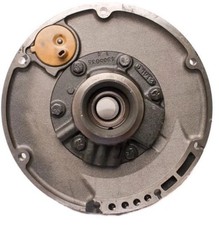
The 47RE pump bolts to the front of the case and is driven by the torque converter hub. It is the only source of oil in the transmission. Its output goes to the pressure regulator, which sets line pressure for the bands, clutches and servos, and then feeds the converter, the cooler and the lube circuit. When pump output falls off, the last circuits in that order get shorted first: converter charge, cooler flow and gear-train lube.
That order matters on the 47RE because of how little extra line pressure it makes when it needs it most. Sonnax's write-up on 48RE hydraulics compares the two units: in third with the converter clutch on and in fourth, the 46/47RE boost valve exhausts one reducing point at the pressure regulator, for a line rise of roughly 10-15 psi, while the 48RE exhausts two for about 22-28 psi (Sonnax, Dodge 48RE Hydraulic Features Revealed). Chrysler built the 48RE that way to clamp the converter clutch and overdrive clutch harder against diesel torque. The 47RE does not have that margin. On a Cummins that has been turned up, a pump that has lost even a little volume shows up first as converter clutch slip and overdrive clutch wear, long before the truck refuses to move.
The pump assembly also carries the stator support. Bob Warnke's Sonnax article on 46-47RH/RE cooler and converter flow explains that the stator support aligns the turbine shaft with the center of the converter cover, and the cover bushing centers the turbine shaft through the turbine hub. If that bushing or the crank pilot is worn, the turbine shaft sealing rings cross-leak between converter apply and release oil (Sonnax, 46-47RH/RE Cooler and Converter Flow). On a gauge, that cross-leak looks a lot like a weak pump.
How a 47RE Pump Wears Out
Debris through the gears
The inner and outer gears run with very small side and tip clearances in the pump pocket. Everything the transmission sheds goes through those gears before it reaches the filter. Band lining, friction material and converter debris scores the gear faces and the pocket floor. Once clearances open up, oil leaks from the pressure side back to the suction side. Cold fluid hides it; hot fluid at idle does not.
Bushing and hub wear
The pump bushing carries the converter hub. Sonnax lists poor converter feed pressure as a cause of "delayed engagement, pump bushing and lube failure" in these units, which is why its lube-regulated pressure regulator valve (22771A-02K) is aimed at converter feed and lube flow during low-RPM, high-load operation (Sonnax 22771A-02K). A worn bushing lets the hub run off center, the front seal starts to weep, and eventually the inner gear rubs the pocket. Whine, a front seal leak and lost output arriving together usually means bushing.
Lost volume downstream
Not all pump trouble starts at the pump. Sonnax notes that many OE overdrive piston retainers (supports) in the 46/47/48RE family do not seal well against the case, which costs gear-train lube and amounts to "consumption of pump volume" (Sonnax 22754N-01K piston retainer kit). A pump that was fine on the dyno can look tired in a truck that is bleeding oil at the support.
Installation damage and air
A converter that was not fully seated into the pump gear before the bellhousing was pulled up to the engine will break the inner gear or load the hub against the pump on first start. If the pump complaint started right after a transmission or converter swap, look there first. And check the suction side: Sonnax's gauge diagnostics guide says a cracked filter or a suction-side air leak makes the gauge needle bounce wildly, usually with a whine, because the pump compresses air and not fluid (Sonnax, Transmission Diagnostics Using Pressure Gauges).
47RE Pump Failure Symptoms
- Slow engagement into Drive and Reverse. Worst after the truck sits overnight, and worst hot at idle. The pump has to refill the converter and the apply circuit before anything holds.
- A whine that follows engine RPM. It is there in Park and Neutral and changes with engine speed, not road speed. That separates it from a planetary or bearing noise.
- Converter clutch slip, shudder, or 740/1740 codes. Sonnax lists 740/1740 codes, TCC slip at high torque, delayed engagement, slow converter fill, excessive stall and hydraulic noise as the symptoms tied to converter and cooler flow on the 46/47RE. Low pump output starves exactly those circuits.
- Slipping or flaring that gets worse as it heats up, particularly the 3-4 shift and into overdrive under load.
- Heat. Less pump volume means less cooler flow, which means hotter fluid, which means more leak-back in the pump. It feeds itself.
- What is in the pan. Friction material, band lining, or bright aluminum and steel from the pump body and gears.
None of these proves a pump on its own. A restricted cooler, a worn pressure regulator bore, a converter with a release-oil restriction, or a governor pressure problem can produce several of them. The tests below sort it out.
How to Prove a Weak 47RE Pump on the Truck
1. Fluid level and filter
Check the level hot, in Neutral, on the dipstick. Low fluid starves the pump and copies every symptom on the list. The 1998 Ram service manual specified Mopar ATF Plus 3 (Type 7176); ATF+4 is the current replacement and the fluid to use. Chrysler's Ram fluid capacity chart lists the 47RE service fill at 3.79 liters (8 pints, about 4 quarts) and the overhaul fill at 13.7 to 15.61 liters (29 to 33 pints), per the 2004 Ram DR fluid capacities sheet. Chrysler's 1998 Ram Truck service manual (Group 21, 46/47RE) torques the filter screws to 4 N·m (35 in-lb) and the pan bolts to 17 N·m (150 in-lb). Look hard at the filter and the pan. Gear material or chunks of aluminum change the whole plan. A cracked filter or a missing filter seal changes it the other way.
2. Line pressure gauge
Tee a gauge rated well above maximum expected pressure into the line pressure port. Sonnax's method for pump capability is to read minimum line pressure, then force the unit to maximum line and read it again at fast idle; a healthy pump reaches maximum line for that transmission at fast idle. On the 47RE, line rise is controlled by the throttle valve, so hold the throttle valve lever at full travel for the max reading.
For the factory numbers, the 1998 Ram service manual (Group 21, pages 21-217 and 21-218) runs the tests with the engine at 1000 rpm and gauge C-3292 on the accumulator port: line pressure in 1 and 2 range should be 54-60 psi with the transmission throttle lever forward, rising gradually to 90-96 psi as the lever is moved rearward, and rear servo pressure should match line pressure within 3 psi. In Reverse, at 1600 rpm on the 300 psi gauge, the same manual calls for 145-175 psi rising to 230-280 psi. Note that the community guides often quote 230-260 psi for Reverse, which is tighter than the factory range. The pattern tells you more than the number:
- Low at idle, recovers with RPM: worn pump or a big internal leak. Output catches up only when the gears spin fast enough to outrun leak-back.
- Good cold, falls off hot: pump clearances or a circuit leak that opens up as the fluid thins.
- Needle bouncing: air. Filter, filter seal, or a crack on the suction side.
- Low in one range only: not the pump. Look at that range's seals, servo or clutch. Sonnax treats a difference of more than about 10% between a clutch circuit and line pressure as a leak in that circuit.
3. Cooler flow
Disconnect the cooler return line, run it into a marked container, and time it at idle in Neutral. GEARS Magazine (ATRA) sets the bar at no less than about a gallon per minute (GEARS, 48RE/68RFE/AS68RC Transmission Overheating). If flow is low, bypass the cooler and retest. Sonnax calls a temporary cooler bypass "the most effective verification technique" and lists the drainback fitting, auxiliary or radiator coolers, and the lines as restriction points, with trouble starting as head pressure approaches 80 psi. Low flow that comes back with the cooler bypassed is a cooler problem. Low flow with the cooler bypassed points back at the pump or the converter.
Chrysler's own version of this test is the oil pump volume check in the 46/47RE section of the 1998 Ram Truck service manual. With the level correct, disconnect the line returning from the cooler at the transmission and idle in Neutral into a container, collecting no more than one quart or you risk internal damage. If flow is intermittent or a quart takes more than 20 seconds, disconnect the line going to the cooler and repeat. Good flow there means the cooler is restricted and gets replaced; poor flow at both points sends you to a line pressure test, which is where a weak pump shows itself. The same section warns that a converter drainback valve (about 2 psi, in the cooler pressure line) installed backwards or restricted will overheat the unit, so confirm it before you blame the pump.
4. Converter or pump?
Sonnax's isolation trick is to watch cooler flow from Drive at idle through completed lockup. Flow that stays low until the converter clutch applies, with a slow apply or shudder, points to restricted release oil inside the converter, not the pump. A pump problem keeps flow low in every condition.
5. Scan tool and temperature
The 47RE has no input speed sensor, so you will not get a slip RPM number. Compare engine RPM to output shaft speed instead. In fourth with the converter locked, engine RPM should be output speed times the 0.69 overdrive ratio, within a few RPM. If it drifts high and comes back as you lift, the clutch is slipping. Log transmission temperature with an infrared gun on the pan or a gauge in the cooler line. GEARS puts the ideal maximum at 200°F and says life roughly halves for every 20°F above it.
Replacing the Pump: What to Do on the Bench
The pump is behind the converter, so the transmission has to come out. Once it is apart:
- Measure before you reuse anything. Check gear side clearance with a straightedge and feelers and the outer gear to pocket clearance against the service manual. A scored pocket floor means replacement, not cleanup.
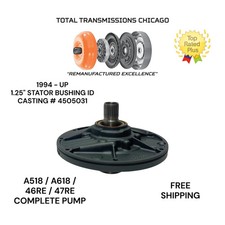
- Gears and bushing go together. A worn bushing ruins new gears. A remanufactured 47RE pump with new gears and a new bushing is usually faster and safer than piecing one together. If you do press in a bushing, Sonnax recommends an arbor press, not a driver and hammer, because shock loads distort bushings.
- Check the stator support and turbine shaft rings. Ring lands and bushing wear here cause the cross-leak that mimics a weak pump.
- Check the converter hub and crank pilot. A grooved or burred hub goes with the pump. A worn crank pilot lets the turbine shaft wander no matter how good the new pump is.
- Fix the downstream leaks. If the overdrive piston retainer does not seal to the case, a new pump is feeding a leak.
- Flush and flow-test the cooler and lines, fit a new filter, and seat the converter fully into the pump gear before the transmission meets the engine.
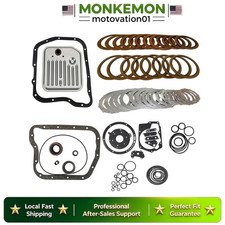
If the pan also shows burned frictions or band material, do the whole unit. Whatever fed the pump debris is still in the case, and a 47RE rebuild is cheaper than doing the job twice.
The same debris went through the cooler. Pat Barrow of Lubegard, writing in Transmission Digest, says contaminated coolers are often the cause of premature failure of replacement transmissions, because the cooler and lines hold sludge, clutch material and metal shavings. Purge the cooler and lines before the new pump sees oil, catch what comes out in a clear container, and replace the cooler if it is full of metal. A pump that failed by shedding gear material is exactly the case where Barrow warns cleaning may not get it all.
Keeping the New Pump Alive
- Keep it full of ATF+4 and check it hot. Low fluid aerates and starves the pump.
- Keep the cooler circuit clean. Flow removes heat, heat thins the fluid, thin fluid increases leak-back.
- Respect the 47RE's limits. If the engine has been turned up, the 47RE's smaller line rise is the weak point. Plan the converter, valve body and pressure upgrades together, not after the next failure.
Sonnax Piston Retainer Kit 22754N-01K (46RE / 47RE / 48RE)
Stops the lube loss between the overdrive support and the case that Sonnax says wastes pump volume. Worth doing any time a 47RE pump is replaced.
View the Sonnax piston retainer kit →Shop Dodge RE transmission parts →
Frequently Asked Questions
What are the first signs of a failing 47RE pump?
Slow engagement into Drive or Reverse, worst hot at idle or after the truck has sat, and a whine that follows engine RPM even in Park and Neutral. As it gets worse you see converter clutch slip or shudder, 740 or 1740 converter codes, and fluid that runs hotter than it used to.
How do you test a 47RE pump without pulling the transmission?
Put a gauge on the line pressure port and read minimum line, then maximum line at fast idle. A good pump reaches maximum line quickly and holds it when the fluid is hot. Then measure cooler return flow; it should be at least about one gallon per minute.
Can a cooler problem look like a bad 47RE pump?
Yes. Sonnax lists cooler restriction as the most common cause of 46/47RE delayed engagement, converter slip and hydraulic noise. Bypass the cooler temporarily and retest before you condemn the pump.
What fluid and how much does a 47RE take after a pump job?
ATF+4. A pan drop takes roughly 4 quarts, and a dry unit with converter and cooler takes about 14.5 to 16.5 quarts total. Set the final level hot in Neutral on the dipstick, not by the total.
Is a 48RE pump the same as a 47RE pump?
Do not assume it is. The 48RE got its own pump and gear set in 2003, so match the pump to the build year and transmission tag. Use a pump listed for the 47RE, and check the converter hub and stator support fit before final assembly.
Sources
- Chrysler Corporation — 1998 Ram Truck 1500-3500 Service Manual (BR), Group 21 46/47RE Transmission. Backs the ATF Plus 3 Type 7176 factory fluid, the 35 in-lb filter screw and 150 in-lb pan bolt torque, the oil pump volume check (one quart maximum, 20-second limit, To/From cooler line isolation, line pressure follow-up), the 2 psi converter drainback valve cautions, and the line pressure tests (54-60 rising to 90-96 psi in 1 and 2 range at 1000 rpm; 145-175 rising to 230-280 psi in Reverse at 1600 rpm, pp. 21-217/218). archive.org
- Sonnax — Bob Warnke, "46-47RH/RE Cooler and Converter Flow." Backs the 46/47RE symptom list (740/1740 codes, TCC slip at high torque, delayed engagement, slow converter fill, excessive stall, hydraulic noise), cooler restriction points, the 80 psi head pressure threshold, the cooler bypass test, the Drive-to-lockup flow test for converter restriction, and the stator support / turbine shaft cross-leak. sonnax.com
- Sonnax — "Dodge 48RE Hydraulic Features Revealed." Backs the 10-15 psi line rise on the 46/47RE versus 22-28 psi on the 48RE in third with TCC applied and in fourth. sonnax.com
- Sonnax — "Transmission Diagnostics Using Pressure Gauges." Backs the minimum-then-maximum line pressure pump test at fast idle, the bouncing needle and whine from a cracked filter or suction-side air leak, and the roughly 10% circuit-versus-line leak threshold. sonnax.com
- Sonnax — Lube Regulated Pressure Regulator Valve 22771A-02K. Backs the statement that poor converter feed pressure causes delayed engagement, pump bushing and lube failure in Chrysler RWD units including the 47RE. sonnax.com
- Sonnax — Piston Retainer Kit 22754N-01K. Backs the poor OE support-to-case seal in 46/47/48RE units, lost gear-train lube, and the resulting consumption of pump volume. sonnax.com
- GEARS Magazine (ATRA) — "48RE, 68RFE, AS68RC Transmission Overheating." Backs the minimum cooler flow of about one gallon per minute, the 200°F ideal maximum, and transmission life halving for every 20°F above it. gearsmagazine.com
- DaimlerChrysler / Ram Body Builder — 2004 Ram Truck (DR) fluid capacities chart. Backs the 47RE service fill of 3.79 L (8 pints) and overhaul fill of 13.7-15.61 L (29-33 pints). rambodybuilder.com (PDF)
- Pat Barrow (Lubegard), "To Flush Or Not To Flush," Transmission Digest (June 1, 2019). Backs contaminated coolers as a cause of replacement-transmission failure, the clear-container inspection, and the limit of cleaning after a catastrophic failure. transmissiondigest.com