The Astro is a hard life for a 4L60E. A loaded eight-passenger van or a work van full of shelving and tools runs near its gross weight every day. The 4.3L V6 lives under the doghouse between the front seats, so everything under the floor runs hot. A lot of these vans also towed a camper or a utility trailer for years. GM sold the Astro and its twin, the GMC Safari, with the 4L60E (RPO M30) from 1993 to 2005. The failures I see on them are the familiar 4L60E failures, just pushed harder and hotter.
This is the list I work from, roughly in the order the vans come in. It covers 2WD and AWD vans, and the Safari is the same transmission. The specs come from GM's own Astro owner manual, GM bulletins hosted by NHTSA, and Sonnax's technical library. Everything is cited at the bottom.
The short version: The Astro's top 4L60E problems are a harsh 1-2 "slam" once the fluid is hot (TCC regulator bore wear, usually with P1870 or P0894), a burnt 3-4 clutch from low line pressure or a 3rd-oil leak, and a broken reaction sun shell that takes out 2nd, 4th and reverse. If the harsh 1-2 and codes showed up right after a unit or converter swap on a 1998-2004 van, read GM bulletin PIP5340A. GM's spec is DEXRON-III (use a current licensed replacement), 5.0 qt drain and refill, checked hot at 180-200°F.
What the Astro Data Says
Start with the federal complaint file. NHTSA's public complaint database is not a failure-rate study. Owners file what they want, and one complaint can list several systems. It still shows where the pain was. I pulled every Chevrolet Astro complaint tagged "Power Train" by model year. The 1997 Astro has 57, by far the most. The 1998 has 27, the 1999 24, the 1996 22 and the 2000 19. From 2001 on, the count drops to single digits, and the 2004 and 2005 vans have none.
The 1997 complaints read like a 4L60E textbook. One owner after another describes a van that shifts normally cold, then slams 1-2 after 20 to 40 minutes on the highway, "like being hit from behind." Several say the check engine light came on with it. Others report lost reverse, slipping between gears, and, in one case, a dealer replacing the transmission because "the reverse shell" broke. Those three complaints line up with the first three failures below.
1. Harsh 1-2 When Hot: The TCC Regulator Bore
This is the classic mid-'90s Astro complaint. Cold, it shifts fine. After a long run the fluid is hot, the van comes off the exit ramp, and the 1-2 bangs. Often the MIL is on with a P1870 (TCC slip) and, on later vans, a P0894 (component slipping).
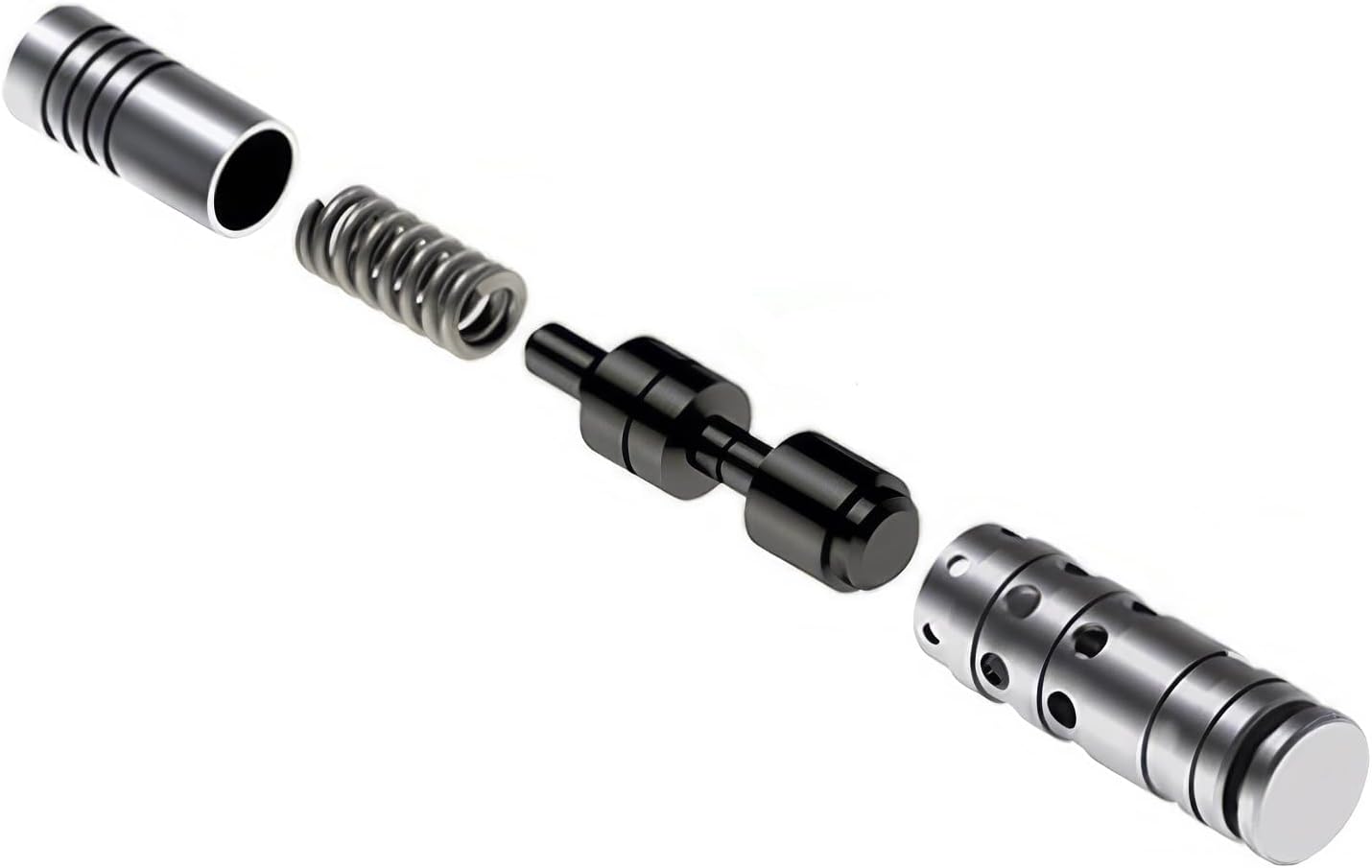
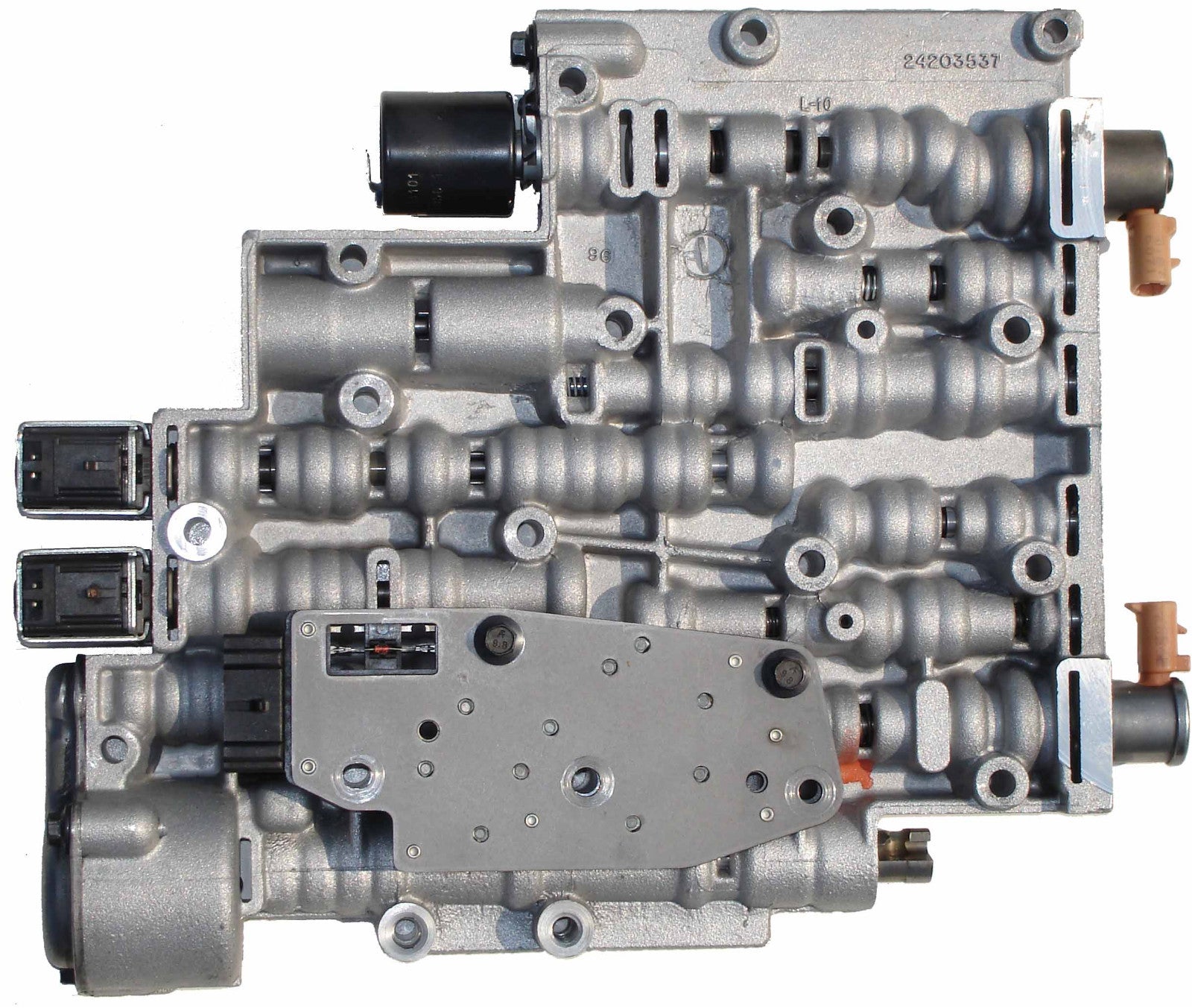
The cause is usually wear in the valve body bore that holds the TCC regulator and isolator valves. Sonnax explains the mechanism in its TCC regulator kit documentation: the OE valve oscillates in its bore and wears it. Then TCC apply pressure exhausts past the worn bore, which drops converter clutch apply, and the same leak lowers line pressure. Sonnax lists codes 894 and 1870, an overheated converter, low TCC apply, a burned 3-4 clutch and harsh 1-2 shifts as the symptoms. When the computer sees converter slip, it raises line pressure to protect the unit, so the next 1-2 shift lands hard.
Heat is why it shows up after the highway run. Hot fluid is thinner and leaks past a worn bore faster. GM said as much in bulletin 01-07-30-023B, which covers the same condition on 1996-2000 Chevrolet and GMC light-duty trucks with the M30 built before January 15, 2000. That bulletin warns the condition can be hard to duplicate below 200°F (93°C) and notes P1870 is a two-trip code, so it may only be stored as a history code. Its fix was a valve body with revised TCC regulator and isolator valves. Check the Astro's VIN against the bulletin's applicability before you quote that job.
How I test it: drive until the transmission fluid temperature PID reads at least 180-200°F. In 4th at a steady cruise with TCC commanded on, watch TCC slip RPM. A healthy converter clutch holds near zero. Slip that creeps up while the PCM is commanding full apply points at apply pressure, not the solenoid. On the bench, vacuum-test the regulator bore. Sonnax's 77754-04K kit covers all years, including the '98-later EC3 units that most Astros from that era carry. It needs reamers to fit the sleeve, and Sonnax says it raises apply pressure about 10%. Our P1870 guide and P0894 guide go through the code logic in detail.
Same codes right after a replacement unit: PIP5340A
If the harsh 1-2 and P0894 or P1870 appeared right after a converter or replacement transmission went in, stop before you tear into the new unit. GM bulletin PIP5340A (February 2016) lists the 1998-2004 Chevrolet Astro and GMC Safari along with S-10, Blazer, Express, Savana and other M30 and M32 trucks. The condition is MIL on, a harsh 1-2 upshift, and P0894 or P1870 setting after the installation. GM's instruction is to duplicate the concern, confirm the code is set in the TCM, and contact technical assistance. It replaced the original PIP5340, so make sure you are reading the A revision.
2. Burnt 3-4 Clutch
The Astro is a heavy van, often loaded, so 4th gear carries a lot of torque at cruise. When line pressure is low, the 3-4 pack slips under load until it is gone. Symptoms are a 3-4 flare that grows into no 4th, often with a soft or flared 2-3. On teardown you find black frictions and a dished or blued backing plate.
Sonnax's Brian Wing, in a 2018 article on 4L60-E 3-4 burnup, calls low line pressure and 3rd-gear oil leaks the root cause of most 3-4 slipping. These are the checks from his list that I do on every Astro:
- 3rd accumulator checkball capsule. A leaking capsule is a leading cause of 3-4 failure, per Sonnax. Test new capsules too, because they can leak out of the box. Do not cup-plug it.
- Input housing checkball. Vacuum test it. Sonnax treats anything under 25 in-Hg as an unacceptable leak.
- Pump. A leaking boost valve, worn boost sleeve bore or worn pressure regulator valve pulls line pressure down. Air or vacuum test the 3-4 and forward passages with the stator in place.
- AFL screens. Replace the screen feeding the pressure control solenoid and the other two on the separator plate. A plugged screen starves EPC.
- Backing plate. The OE plate flexes on apply and loads the frictions unevenly. Use a heavy-duty plate.
Remember the first failure on this list feeds the second one. A worn TCC regulator bore drops line pressure too, and Sonnax lists a burned 3-4 clutch as one of its symptoms. If an Astro comes in with a burnt 3-4 pack and the old valve body goes back in unchanged, expect to see it again. The full procedure is in our 3-4 clutch pack diagnosis guide, and the pressure numbers are in the line pressure guide.
3. No 2nd, 4th or Reverse: The Reaction Sun Shell
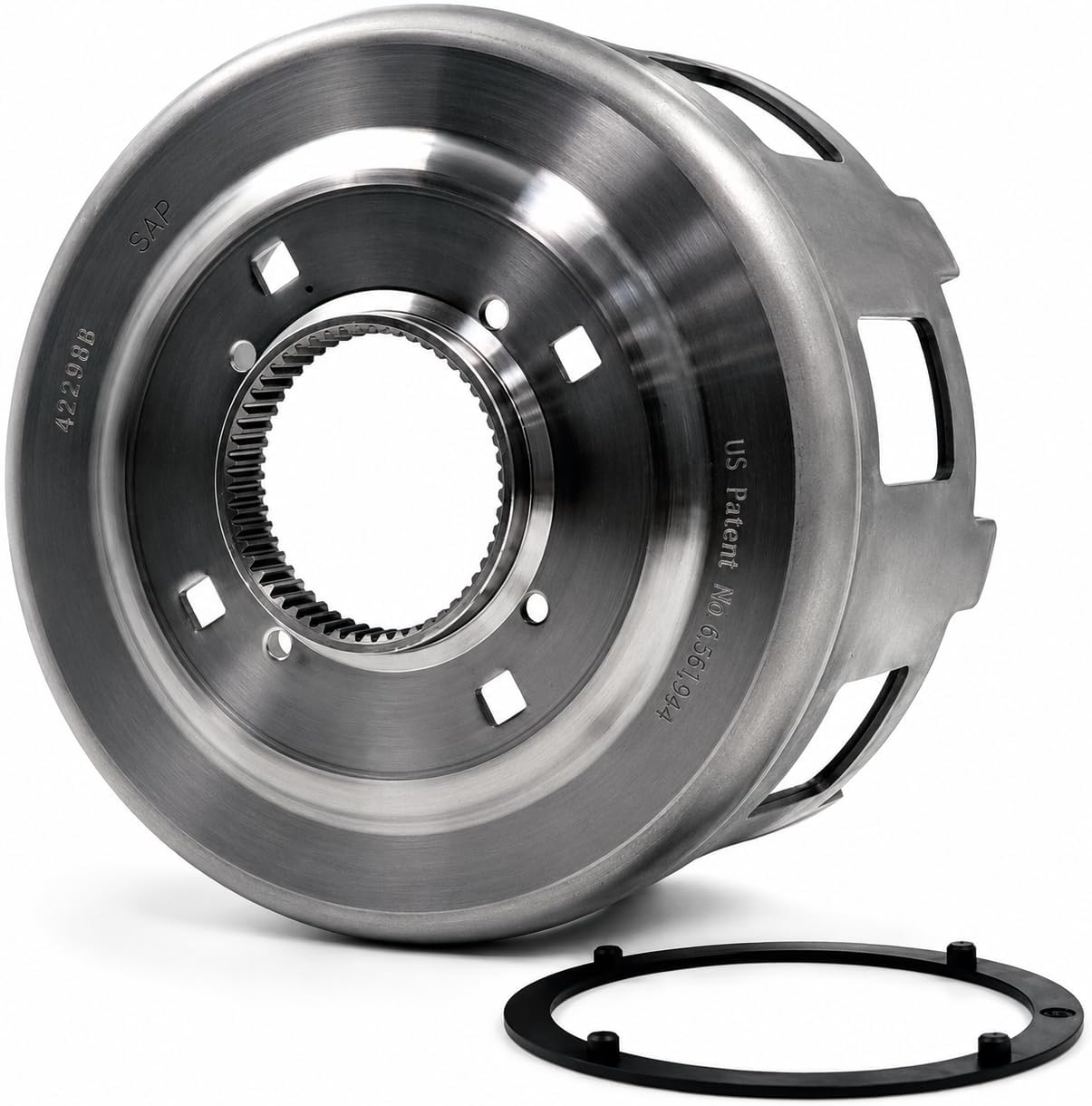
The van moves in 1st and 3rd, but 2nd, 4th and reverse are gone, and there is metal in the pan. The 2-4 band and the reverse input clutch both work through the reaction sun shell. When the shell's splines strip or its hub cracks, all three ranges lose their reaction member at once. First and 3rd do not need the shell, so they still work. That is the "reverse shell" in the 1997 NHTSA complaint above.
Sonnax's Gregg Nader called the reaction shell and the rear planet bearing the 4L60-E's most common durability complaints. He also pointed to a cause few rebuilders check: run-out. In a bench check, Sonnax found most shells ran about 0.010 in. of run-out, and some as much as 0.050 in. A shell that wobbles is loading its splines unevenly on every 2-4 band and reverse apply. In a van that hauls weight and backs a trailer up a driveway, that adds up. Use a heavy-duty shell, replace the rear planet bearing, and check the sun gear and its bushing on the same job. Our sun gear wear guide covers the gear side.
4. Heat, Load and Towing
Heat is the common thread in all three failures. The Astro's owner manual tells you how GM expected the van to be driven. It says DRIVE "should be used for normal towing," but to use THIRD when carrying a heavy load or on steep hills. On vans that have it, there is a tow/haul button on the end of the column shifter. GM says tow/haul reduces shift frequency and keeps shift feel consistent, and it is most effective when van plus trailer is at least 75% of the GVWR and the maximum trailer rating. The mode turns off every time the van is started, so many owners never use it.
For the rebuild, that means three things. Ask at write-up whether the van tows or hauls, because it changes which parts I upgrade. Show the owner where the tow/haul button is. And after any internal failure, flush or replace the cooler and confirm flow before the van leaves. A cooler full of 3-4 clutch material or shell debris will kill a fresh unit. Our cooler flush guide covers the process.
On AWD vans, remember the transfer case. GM's maintenance schedule calls for a transfer case fluid change every 50,000 miles, the same as the normal-duty transmission service. GM describes the system as fully automatic, with no lever or switch. A brief vibration on acceleration in slippery conditions is normal, per the manual. Do not chase that as a transmission fault.
Quick Reference: Astro Symptom to Cause
| Symptom | Most likely cause | First check |
|---|---|---|
| Harsh 1-2 only when hot; P1870 or P0894 | Worn TCC regulator/isolator bore raising line pressure | TCC slip RPM in 4th at 180-200°F; vacuum test the bore |
| Harsh 1-2 and P0894/P1870 right after a unit or converter swap | GM PIP5340A condition (1998-2004 Astro/Safari) | Confirm the code in the TCM; contact GM technical assistance |
| 3-4 flare, then no 4th; 2-3 flare | Burnt 3-4 clutch from low line pressure or a 3rd-oil leak | Line pressure test; 3rd accumulator capsule; input housing checkball (25 in-Hg) |
| No 2nd, 4th or reverse; 1st and 3rd OK | Stripped or cracked reaction sun shell | Pan debris; shell splines and run-out; rear planet bearing |
| Brief vibration accelerating on slick roads, AWD van | Normal AWD engagement, per GM | Transfer case fluid level and service history |
Fluid, Level Check and Service Interval
GM's 2003 Astro owner manual lists 5.0 quarts (4.7 L) for a transmission drain and refill and calls for fluid labeled DEXRON-III. DEXRON-III has since been superseded, so use a currently licensed GM fluid that is backward-compatible with it. A dry unit after a rebuild takes far more than 5 quarts, so fill to the dipstick, not to a number.
The service interval is where most Astros fall behind. GM says to change fluid and filter every 15,000 miles if the van is mainly driven in heavy city traffic in 90°F weather, in hilly or mountainous terrain, with frequent trailer towing, or in taxi, police or delivery work. Otherwise it is every 50,000 miles. Most Astros meet at least one of those conditions, so treat them as 15,000-mile vans.
For the level check, GM wants the fluid at 180-200°F, about 15 miles of driving above 50°F. Below 50°F, drive in THIRD until the engine temperature gauge has held steady for 10 minutes. After towing or hard hot-weather driving, wait at least 30 minutes before checking. The difference between the bottom and top of the hot range is generally less than one pint. GM warns that too much fluid can be pushed out onto hot engine or exhaust parts and start a fire, and too little lets the transmission overheat. In a van with the engine inside the cabin, take that warning seriously.
4L60E TCC Regulator Valve & Isolator Sleeve Kit (1993-2008)
This kit fixes the worn TCC regulator bore behind the Astro's hot harsh 1-2, P1870 and P0894 codes, and repeat 3-4 burnups. It fits every Astro year. For the rest of the job, browse the full 4L60E lineup here.
See the TCC regulator kit →FAQ
What transmission is in a Chevy Astro van?
From 1993 to 2005, the Chevrolet Astro and GMC Safari automatic is the GM 4L60E four-speed (RPO M30), in both 2WD and AWD vans. GM's 2003 Astro owner manual lists 5.0 quarts (4.7 L) for a transmission drain and refill.
Why does my Astro van shift hard from 1st to 2nd when it gets hot?
The most common cause is wear in the valve body bore that holds the TCC regulator and isolator valves. Sonnax says the worn bore leaks converter apply oil and lowers line pressure, which brings P1870 or P0894 codes and harsh 1-2 shifts. Hot fluid leaks past the bore faster, which is why it often shows up only after a long highway drive.
Why did my Astro lose 2nd, 4th and reverse but still drive in 1st and 3rd?
That pattern points to a stripped or cracked reaction sun shell. The 2-4 band and reverse input clutch both react through that shell, while 1st and 3rd do not use it. Expect metal in the pan, and replace the shell with a heavy-duty part along with the rear planet bearing.
How much transmission fluid does an Astro van take?
GM lists 5.0 quarts (4.7 L) for a drain and refill, using fluid labeled DEXRON-III or a current licensed replacement. A dry unit after a rebuild takes much more. Always finish by checking the level hot at 180-200 °F and do not overfill.
How often should Astro van transmission fluid be changed?
GM calls for fluid and filter every 15,000 miles if the van sees heavy city traffic in hot weather, hilly terrain, frequent towing, or delivery-type work. Otherwise the interval is 50,000 miles. Most Astros meet at least one severe condition.
Keep the numbers at the bench. Our free transmission fluid spec chart lists the correct ATF type for the 4L60E and dozens of other units, so you never top off with the wrong fluid.
Sources
- General Motors — 2003 Chevrolet Astro Owner Manual. Backs: the Vortec 4300 V6; 5.0 qt (4.7 L) transmission drain and refill; DEXRON-III; the 15,000/50,000-mile fluid and filter intervals; the 180-200°F hot check procedure, the 30-minute wait, the less-than-one-pint range and the overfill fire warning; DRIVE for normal towing and THIRD for heavy loads; the tow/haul mode and its 75% guidance; AWD operation; and the 50,000-mile transfer case fluid change. GM: 2003 Chevrolet Astro owner manual (PDF)
- General Motors Bulletin PIP5340A (February 2016), MIL Illumination, Harsh 1-2 Shift and P0894 or P1870 Setting After Torque Converter or Transmission Replacement, hosted by NHTSA. Backs: coverage of the 1998-2004 Chevrolet Astro and GMC Safari with the 4L60E (M30) or 4L65E (M32); the condition; the instruction to contact technical assistance; and that it superseded PIP5340. NHTSA: GM PIP5340A (PDF)
- NHTSA — Complaints database, Chevrolet Astro by model year (public API, pulled October 2026). Backs: Power Train complaint counts by year (57 for 1997, none for 2004-2005) and the 1997 owner reports of harsh hot 1-2 shifts, lost reverse and a broken reverse shell. NHTSA: 1997 Chevrolet Astro complaints
- Sonnax — TCC Regulator & Isolator Valve Kit 77754-03K / 77754-04K. Backs: TCC regulator bore wear from valve oscillation; apply pressure exhausting and lowering line pressure; the 894/1870 codes, overheated converter, burned 3-4 and harsh 1-2 symptoms; 04K all-years/EC3 fitment; and the roughly 10% higher apply pressure. sonnax.com/parts/2457
- Sonnax — All Over the Map: Attacking 4L60/E Burnt 3-4 Clutches with Confidence (Brian Wing, June 2018). Backs: low line pressure and 3rd-gear oil leaks as the root cause of most 3-4 slipping; the 3rd accumulator capsule, input housing checkball (25 in-Hg), pump, AFL screen and backing plate checks; and the cup plug warning. sonnax.com/tech_resources/659
- Sonnax — Do Not Let Run-Out Make Problems for Your 4L60-E (Gregg Nader, May 2006). Backs: the reaction shell and rear planet bearing as the unit's most common durability complaints, and the 0.010 in. typical and up to 0.050 in. shell run-out figures. sonnax.com/tech_resources/107