A Silverado 1500 that will not move is a different job from one that slips. The engine runs, the lever goes into Drive, and the truck sits there, or it backs up fine and refuses to go forward, or the revs climb with nothing happening at the wheels. Sort out which one you have before pricing a rebuild: the answer is often outside the transmission, and when it is inside, the range that still works names the broken part.
The short version: Confirm it is a 4L60E (RPO M30 on the glovebox label). On a 4x4, check that the transfer case is not sitting in N (Neutral); GM's owner manual says a 4WD Low shift attempted at a stop can leave it there. Check DEXRON-VI level hot. Then test every range: no Drive but manual 2 works is the forward sprag; no Reverse, 2nd, or 4th is the reaction sun shell (GM bulletin 00-07-30-022); nothing in any range with no cooler flow after a rebuild is often a stator support that does not match the pump, per Sonnax.

Confirm the Truck Has a 4L60E
GM put more than one automatic behind the half-ton. The 2012 Silverado owner manual lists fluid capacities for both the 4L60-E and the 6L80-E, so the year alone does not tell you which one is under the truck. Open the glovebox and read the Service Parts Identification label. M30 is the 4L60-E. M32 (4L65-E) and M70 (4L70-E) share the same geartrain layout and the same diagnosis below. If you find a six-speed code instead, stop here; the 6L80 has its own failure list.
Rule Out the Truck Before the Transmission
Transfer case in Neutral (4x4 trucks)
A 4x4 Silverado's transfer case has its own N (Neutral) position, used for flat towing. With the transfer case in N, the transmission can be in gear and working perfectly and the truck will not move, and GM warns it can roll even with the transmission in Park.
The owner manual explains how a truck ends up there by accident. On the manual-shift transfer case, GM notes that shifting into Four-Wheel Drive Low at a complete stop may not finish, and the transfer case will end up in N (Neutral). GM calls that normal and gives the fix: with the engine on, shift the transmission momentarily into D and back to N to line up the gear teeth, then complete the transfer case shift. On the electronic (knob) transfer case, the mode indicator flashes while the shift is in progress, and GM tells owners to wait for it to stop flashing before putting the transmission in gear.
Quick check: set the parking brake, put the transmission in N, and confirm the transfer case lever or knob is in 2H. If the truck has been sitting with the transfer case light flashing or a SERVICE 4 WHEEL DRIVE message, sort the transfer case out first.
Shift cable and range selector
If the lever moves through PRNDL but feels loose, or the gear indicator and what the truck does disagree, look at the transmission end of the shift cable on the driver side of the case. A cracked or missing cable-end bushing lets the cable fall off the range selector lever. The column lever then moves while the transmission stays in whatever range it was left in. Move the lever on the case by hand through its detents with the engine off: if it clicks crisply through every position, the internal detent and manual valve linkage are fine and the cable is your problem.
Check the Fluid the Way GM Wrote It
A 4L60E needs fluid at the pump inlet to make pressure. A truck that is several quarts low, or that has a filter neck seal leaking air into the pickup, will often move after it warms up or after sitting a few minutes and then quit on a turn or a grade. Check it hot. On GMT900 trucks GM has you read TRANS TEMP on the Driver Information Center and take the hot reading at 71-93°C (160-200°F) after cycling the lever through every range. The fluid is DEXRON-VI, and a pan-and-filter service takes about 4.7 L (5.0 qt) per the owner manual.
If the stick is dry, find the leak before you call it a dead transmission. If the level is right and the fluid is black with clutch material and metal in the pan, the unit has failed internally and the questions below tell you what broke.
Sort It by Range
The 4L60E apply chart is the best diagnostic tool you own. In Drive, first gear depends on the forward clutch driving through the forward sprag, with the low roller clutch holding the reaction carrier. Manual 2 adds the overrun clutch, which bypasses the forward sprag. Manual 1 adds the low/reverse clutch, which holds the reaction carrier without the roller clutch. Reverse uses the reverse input clutch and the low/reverse clutch, and does not use the forward clutch at all. Test each range on the lift or with the brakes held, and the pattern points at the part.
| What the Silverado does | Likely cause | Why |
|---|---|---|
| No Drive, but manual 2 and manual 1 pull | Forward sprag | The overrun clutch carries the load the sprag should be carrying |
| No Drive, no manual 2, but manual 1 pulls | Low roller clutch | The low/reverse clutch holds the reaction carrier instead of the roller |
| No forward in any range, Reverse works | Forward clutch (piston, seals, input housing feed) | Every forward range needs the forward clutch; Reverse does not |
| No Reverse, no 2nd, no 4th; 1st and 3rd fine | Reaction sun shell | Reverse, 2nd, and 4th all depend on the shell to drive or hold the reaction sun gear |
| Nothing in any range, engine revs freely | Fluid, pump, converter charge, input shaft or converter splines | Go to the pressure and cooler flow tests below |
The sun shell bulletin
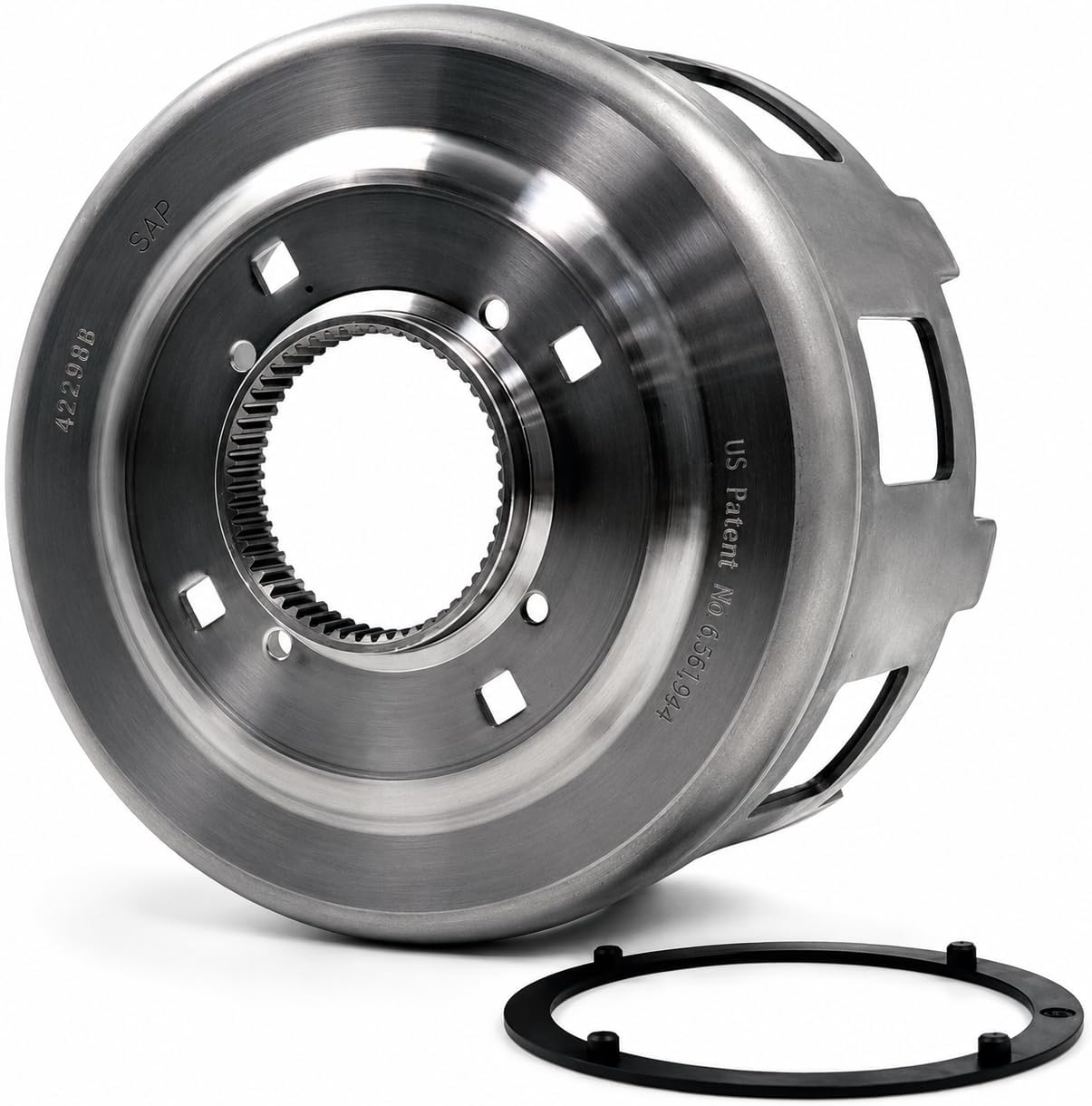
The "no Reverse, no 2nd, no 4th" pattern is common enough that GM wrote it up. Bulletin 00-07-30-022 covers the 4L60-E (RPO M30) in 1996-99 Chevrolet and GMC C/K trucks along with Camaro, Corvette, Firebird, Bravada, and others. The condition is no Reverse, no second gear, or no fourth gear with the other gears normal. The cause is the reaction sun gear not holding inside the reaction sun shell, and the correction is a revised shell, GM part 8683439, with a larger radius from the splines to the shell. Later trucks still break shells under load. Sonnax lists three ways the reaction shell fails on the 4L60, 4L60-E, 4L65-E and 4L70-E: stripped splines, a broken hub and planetary bearing failure, and its heavy-duty SmartShell kit (77749-02K) was built to address all three [2]. That is why hardened aftermarket shells exist.
Forward sprag and forward clutch
A Silverado that backs up but will not go forward in D is a common tow-in. Use the manual range test to split the forward sprag from the forward clutch. A sprag that freewheels in both directions loses Drive but leaves manual 2 working. A forward clutch that will not apply, from a cut piston seal, a cracked input housing, or a leaking feed, kills every forward range while Reverse stays normal. When you replace a sprag, check its direction before the unit goes back together. Installed backward, it locks and freewheels the wrong way, and the truck comes back with the same complaint.
No Movement in Any Range: Pressure and Cooler Flow
When nothing engages, two measurements split the possibilities before the transmission comes out:
- Line pressure. Tee a gauge into the line pressure port. Zero or near-zero pressure with a correct fluid level points at the pump side: a broken rotor or vanes, a stuck pump slide, or a suction leak at the filter seal.
- Cooler flow. Disconnect the cooler feed line ahead of the cooler and run it into a container for a few seconds at idle in Park. No flow with normal line pressure means oil is not getting into and out of the converter.
Normal pressure and normal flow with no engagement points mechanical: stripped input shaft splines, a stripped converter hub or turbine spline, or a broken internal part. The engine will rev freely in gear with no load on it.
The no-move after a rebuild
Sonnax documents a case that applies directly to 2005-2006 GM trucks. A 2006 Chevrolet Suburban C1500 with the 5.3L and 4L60-E came in for slipping in reverse and was rebuilt with a rebuilt converter. Afterward it had no engagement in any range, including Reverse, and no cooler flow, yet line pressure read normal. Teardown found no oil had entered the converter. The rebuilder had installed an early non-ISS stator support on a transition pump cover, so the support's charge oil port did not line up with the cover's charge passage.
GM moved the converter charge and TCC release feed hole to make room for the input speed sensor, and on some models that change rolled in over more than a year, from February 2005 to early 2006. Sonnax's compatibility guide gives three checks: the input shaft type and sealing ring location, the pump style (draw a line through the center of the pump bolt holes; the converter feed hole sits slightly right of that line on early pumps and slightly left on later pumps), and the stator style (early stators have the converter feed and lube holes in line; on later stators the feed hole sits to the right of the lube hole). Sonnax warns that a mismatched stator can cause no movement, converter charge problems, input shaft failure, and even converter damage. On a GMT800 Silverado from this window, match the stator support to the pump before anything else.
Valve body and checkballs
Worn valve body bores can bleed off clutch feed oil until a range will not apply. Sonnax recommends vacuum testing check valve orifices and treats readings of 23-25 in. Hg as ideal; a bore that will not hold vacuum is a leak you can find on the bench instead of after the install. On reassembly, confirm every checkball is in the spacer plate before you torque the valve body. A missing ball is a common cause of a no-move or no-reverse on a fresh rebuild.
The Fix, and Keeping It From Happening Again
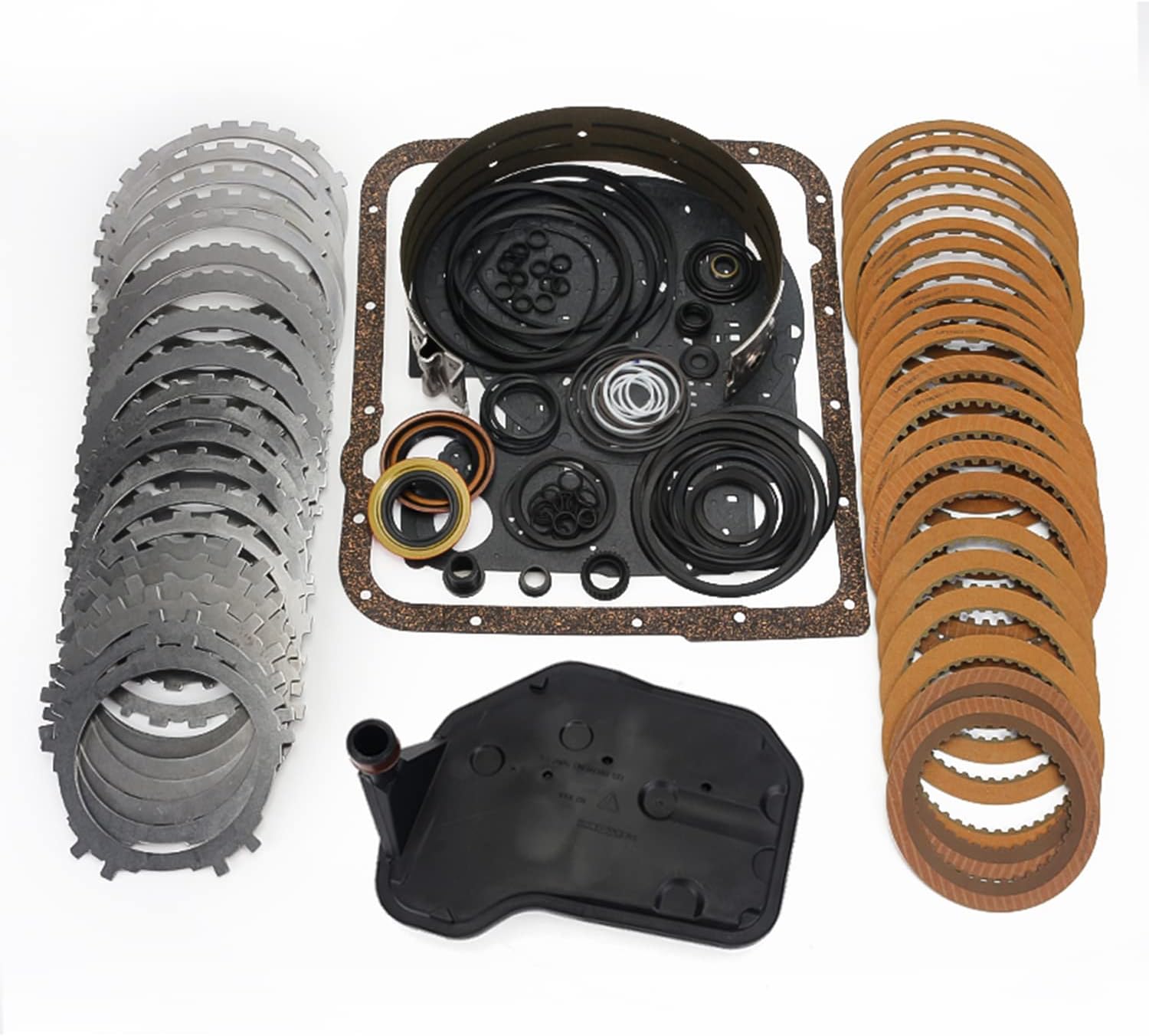
Outside causes (transfer case, cable, fluid, battery) are a same-day fix. Inside causes mean the transmission comes out, and on a truck with 150,000 miles and black fluid the right answer is a rebuild that addresses what broke:
- Broken sun shell: replace it with a hardened shell, and inspect the reaction sun gear, the input carrier, and the thrust washers that rode against the broken pieces.
- Forward sprag: replace the sprag and check the forward clutch for heat; a sprag often lets go after something else slipped.
- Pump or no converter charge: inspect the rotor, vanes, and slide, and match the stator support to the pump cover using the Sonnax checks.
- Any internal failure: flush the cooler and lines so debris from the old parts does not end up in the new ones, refill with DEXRON-VI, and check the level hot.
For prevention on a working half-ton: complete transfer case shifts the way the manual describes, use Tow/Haul with a trailer, keep the fluid in the hot band, and do not hold the truck on a hill with the throttle.
Sonnax SmartShell Heavy Duty Reaction Shell Kit 77749-02K
The heavy-duty shell for the no Reverse, no 2nd, no 4th failure covered in GM bulletin 00-07-30-022. Need something else for the job? See the full 4L60E lineup here.
See the SmartShell kit →FAQ
Why won't my Silverado move in Drive but it will go in Reverse?
Reverse does not use the forward clutch or forward sprag, so a truck that backs up but will not go forward has a forward-side failure. If it pulls in manual 2 but not D, the forward sprag is freewheeling. If no forward range works at all, the forward clutch is not applying, usually from a cut piston seal, a cracked input housing, or a leaking feed.
My 4x4 Silverado won't move in any gear but the transmission seems fine. What should I check?
Check the transfer case first. GM's owner manual notes that a shift into Four-Wheel Drive Low attempted at a stop can leave the transfer case in N (Neutral), and in Neutral the truck will not drive even with the transmission in gear. Shift the transmission momentarily into D and back to N to realign the gears, then complete the transfer case shift.
What causes a 4L60E to lose Reverse, 2nd and 4th at the same time?
That pattern is the reaction sun shell. GM bulletin 00-07-30-022 covers 1996-99 C/K trucks with the 4L60-E, where the reaction sun gear does not hold inside the shell, and calls for revised shell 8683439. Reverse, 2nd, and 4th all depend on the shell, so 1st and 3rd keep working.
Why won't my 4L60E move after a rebuild?
Check line pressure and cooler flow. Sonnax documents a 2006 Suburban that had no engagement in any range and no cooler flow after a rebuild because an early non-ISS stator support was installed on a transition pump cover, so the converter never charged. GM changed this design between February 2005 and early 2006, so match the stator support to the pump.
Keep the numbers at the bench. Our free transmission fluid spec chart lists the correct ATF type for the 4L60E and dozens of other units, so you never top off with the wrong fluid.
Sources
- General Motors — 2012 Chevrolet Silverado Owner Manual. Backs: 4L60-E and 6L80-E both listed for the truck line; transfer case N (Neutral) use and roll-away warning; a 4WD Low shift at a stop leaving the transfer case in N and the momentary-D realignment procedure; the electronic transfer case flashing indicator; the DEXRON-VI hot check at 71-93°C (160-200°F); and the 4.7 L (5.0 qt) pan and filter capacity. GM Owner Center: 2012 Silverado owner manual (PDF)
- Sonnax — "Solve Multiple 4L60-E Problems in All Performance Applications with the Sonnax SmartShell," June 5, 2013. Backs: the three reaction (sun) shell failure modes (spline stripping, hub breakage, planetary bearing failure) and the 77749-02K heavy-duty reaction shell kit for 4L60, 4L60-E, 4L65-E and 4L70-E. GM Service Bulletin 00-07-30-022 (1996-99 4L60-E RPO M30, no Reverse/2nd/4th, revised shell 8683439) is cited by number in the text; it is OEM print documentation with no OEM-hosted public copy. sonnax.com/tech_resources/537
- Sonnax — 4L60-E No Move After Rebuild. Backs: the 2006 Suburban C1500 5.3L case with no engagement in any range and no cooler flow at normal line pressure, the early non-ISS stator support on a transition pump cover, the relocated charge/TCC release feed hole, and the February 2005 to early 2006 transition. sonnax.com/tech_resources/50
- Sonnax — 4L60-E Series Input Shaft, Stator & Pump Cover Compatibility: Three Easy Checks. Backs: the shaft, pump, and stator identification checks and the warning that a mismatched stator can cause no movement, converter charge problems, input shaft failure, and converter damage. sonnax.com/tech_resources/1419
- Sonnax — Hydraulics Fundamentals Part VIII: Check Valves. Backs: vacuum testing check valve orifices with 23-25 in. Hg as the ideal reading, and verifying every checkball during reassembly. sonnax.com/tech_resources/881