A Suburban comes in with a slip complaint, and the first thing I want to know is not the mileage. It is what the truck weighs on a normal day and what it pulls. A 1500 Suburban is the long-wheelbase, three-row version of the same truck as a Tahoe, and it usually carries more people, more cargo, and a bigger trailer on the same 4L60E. That extra load and the heat that comes with it decide which part of the transmission gives up first. It also matters which Suburban you have, because a lot of the "4L60E Suburban" trucks people ask about do not have a 4L60E.
The short version: Confirm it is a 1500 with the 4L60E. The 2500 Suburbans in the GM capacity tables run the 4L80E. Check the fluid hot (180-200°F) with the fluid the manual names: DEXRON-III H-spec on the 2005 truck, DEXRON-VI on the 2008. Then look at heat. GM's protection mode kicks in around 265°F, and a loaded Suburban gets there. Heat leads to the three slips that most often end a Suburban 4L60E: a 3-4 clutch flare in 3rd and 4th, converter clutch slip at highway cruise from a worn TCC regulator/isolator bore (P0894/P1870), and low line rise from a worn pressure regulator or boost valve. If the slip started right after a new input housing went in, GM bulletin PIP5072 applies.

First, Make Sure It Is Actually a 4L60E
GM put several transmissions under the Suburban name, and parts for one will not fit another. The 2008 Suburban owner manual's capacity table lists all of them on one page:
| Transmission (2008 Suburban manual) | Fluid capacity | Typical Suburban |
|---|---|---|
| 4L60-E / 4L70-E | 5.0 qt (4.7 L) | 1500, 4-speed |
| 4L80-E | 7.7 qt (7.3 L) | 2500, heavy-duty 4-speed |
| 6L90 (6-speed) | 6.3 qt (6.0 L) | 2500, 6-speed |
The 2005 manual's towing table shows the same split. The 1500 trucks are listed with the 4.8L and 5.3L V8s. The 2500 trucks are listed with the 6.0L and 8.1L V8s, with GCWRs up to 19,000 lb on the 8.1L. Those heavy-duty trucks use the 4L80E. Read the RPO codes on the glovebox label before you order anything: M30 is the 4L60E, M32 is the 4L65E, M70 is the 4L70E, and MT1 is the 4L80E. If your Suburban turns out to have the 4L80E, our 4L60E vs 4L80E breakdown explains why everything below about the 4L60E's weak points does not carry over.
Why the Suburban Is Hard on a 4L60E
The 4L60E is the same unit GM put behind the 5.3L in a half-ton pickup. In a Suburban it moves a longer, heavier body, and the factory ratings let it pull a lot. Per the 2005 Suburban owner manual, a K-1500 (4WD) with the 5.3L is rated for 7,200 lb with 3.42 gears and 8,200 lb with 4.10 gears, at a 13,000-14,000 lb GCWR. A family hauling a travel trailer with the third row full can be close to that rating. The transmission doesn't care that the truck is legal. It cares about the heat it has to get rid of.
GM spells the heat limits out in the same manual. The normal operating range is 180-200°F. At about 265°F the message center shows TRANSMISSION HOT and the transmission goes into a protection mode with different shift patterns. It goes back to normal once the fluid drops below 260°F. At about 275°F the DIC shows TRANS HOT IDLE ENGINE, and GM tells you to pull over, put it in Park, and idle until the temperature drops below 260°F. Owners often call the protection-mode shift pattern a slip. Write down whether the complaint only happens after a long grade with a trailer, because that one detail changes the whole diagnosis.
GM also tells you how to drive it loaded. Tow/Haul is designed to be most effective when the truck and trailer together weigh at least 75 percent of GCWR, and its job is to cut the number of shifts and firm them up under load. Every shift that hunts back and forth under a heavy load slips the clutches a little and heats the fluid. A Suburban that tows a lot with Tow/Haul off has been doing that for years.
Step 1: The Fluid Check, Done the Suburban Way
Do this before anything else. The 2005 Suburban manual's procedure:
- Bring the fluid to 180-200°F: drive about 15 miles when it is above 50°F outside, or below 50°F drive in THIRD until the temperature gauge has been steady for 10 minutes.
- If you have just been towing, running at high speed, or sitting in hot traffic, let it cool first. Overheated fluid reads high.
- Park on level ground with the engine running and the parking brake set. With your foot on the brake, move the lever through every range, pausing about three seconds in each, then return it to Park and idle three minutes or more.
- The dipstick is at the rear of the engine compartment on the passenger side. Wipe it, push it fully home, wait three seconds, and read the lower level on both sides.
GM says a low unit generally needs less than one pint to reach the HOT band. If yours takes a quart or more, look for the leak before you look for a bad clutch. On a Suburban, check the long cooler line run along the frame first. The 2005 manual is blunt about the fluid: ATF labeled anything other than DEXRON-III approved for the H-Specification "may damage your vehicle." The 2008 manual calls for DEXRON-VI. Also look at the fluid itself. Burnt, brown fluid with black debris means friction material has already come off a clutch pack, and no amount of fresh fluid will put it back.
Step 2: Read the Slip on a Scan Tool
Most 4L60E trucks have no turbine (input) speed sensor. The computer works out slip from engine RPM and output shaft speed, and you can do the same math. The 4L60E ratios are 3.06, 1.63, 1.00, and 0.70. Log engine RPM, vehicle speed or output speed, commanded gear, TCC slip speed, TCC duty cycle or command, and transmission fluid temperature. Then sort the slip:
| What the data shows | Likely element |
|---|---|
| RPM flares on the 2-3 shift, and engine speed runs ahead of the gear in 3rd and 4th with TCC off | 3-4 clutch |
| Gear ratio is right, but TCC slip speed stays well above normal with lockup commanded, worse when hot | Converter clutch circuit (TCC regulator/isolator bore, TCC apply) |
| Slips in every range under throttle, soft everywhere, worse hot | Low line pressure: pump, pressure regulator, boost valve, EPC |
| Soft or delayed takeoff in Drive only, especially right after a repair | Forward clutch circuit; check PIP5072 if the input housing was replaced |
What normal TCC slip looks like is important here. Sonnax notes that on 1998-and-later 4L60E units with EC3 controls, the converter clutch rarely runs at full lockup, and 20-40 RPM of TCC slip is normal operation under most conditions. Don't call 30 RPM a failure. A slip speed that climbs into the hundreds with lockup commanded, along with rising fluid temperature, is a failure.
Highway Slip: The Converter Clutch Circuit
On a Suburban that tows, this is the slip people are most likely to misdiagnose. The tach creeps up a couple hundred RPM at steady 65 mph with no gear change, the temperature climbs, and eventually it sets P0894 or P1870. The transmission is holding the gear. The converter clutch is not holding.
Sonnax explains the mechanism. The TCC regulator and isolator valves cycle constantly in the aluminum valve body and wear the bore, and the worn bore lets converter apply pressure leak to exhaust. The symptoms Sonnax lists for that wear include codes 894 and 1870, an overheated converter, low TCC apply pressure, TCC cycling and slip, low line pressure, harsh 1-2 shifts, and burned 3-4 clutches. That last one matters. A leak in this circuit lowers line pressure too, so a worn TCC bore can take the 3-4 pack out with it.
The fix is in the valve body. For regulator-section wear, Sonnax's route is to ream the bore and install the 77754-04K TCC regulator and isolator valve kit. For wear through the isolator section, which Sonnax says can happen on high-mileage units, you oversize the whole bore and add the 77754-ISO sleeve. Vacuum test the bore to find out which one you need. A new converter by itself will not cure a leaking valve body. The truck will slip and overheat again, and you will have paid for the converter twice.
Slip in 3rd and 4th: The 3-4 Clutch
A loaded Suburban spends hours in 4th with the 3-4 clutch applied, so this pack sees more total load than anything else in the case. Sonnax names low line pressure and 3rd-gear oil leaks as the root cause of most 3-4 slipping. Rebuilding the pack without finding the leak just burns the new pack. The checks:
- Input housing checkball: vacuum test it. Sonnax treats anything below 25 in-Hg as an impermissible leak.
- 3rd accumulator checkball: the 2-4 servo is also the 3rd accumulator. Test the checkball capsule, and test new ones too, because Sonnax notes they can leak right out of the box. Do not cup-plug it.
- Backing plate flex: the OE 3-4 backing plate flexes under apply. On a truck that tows, the heavy-duty plate (Sonnax 74140-01K) belongs in every rebuild.
- Engine sensors: Sonnax points out that TP, MAP, and MAF faults all affect line pressure control. Clear engine codes before you condemn the transmission.
The Tahoe and the Suburban share this failure, so our 4L60E Tahoe slipping guide also covers the #7 checkball tests and the forward abuse valve check in more depth.
Slip Everywhere, Worse Hot: Line Rise
When every range feels soft under throttle, the pump circuit is suspect. A Suburban's pump runs hot for long stretches, and its pressure regulator bore wears. Sonnax lists the symptoms of a worn regulator bore as erratic line pressure, low line rise, 3-4 clutch failure, excess pump noise, and reverse chatter. The pressure test Sonnax gives is a good one to use: under boost conditions, look for 50-100 psi less than specified in Reverse. That reading means a worn regulator valve. The repair is to ream the pump bore and fit an oversized valve (Sonnax 77917-07). Sonnax recommends the carbide tool kit because 4L60E pump castings are hard on reamers. It also says to check the boost valves for leakage and to move up one boost ratio when you oversize the regulator. Before you pull the pump, test with a gauge. Our 4L60E line pressure guide covers the hookup.
Slip Right After a Repair: GM PIP5072
If the Suburban slipped or would not pull in any forward gear right after an input housing was replaced, look up GM Preliminary Information PIP5072 (October 2012). It names the 1999-2006 Suburban and Yukon XL with the 4L60E, 4L65E, or 4L70E, where service input housing 17803687 may have an incorrectly drilled input shaft. GM's bench check uses regulated air with the housing fully assembled. Air applied to the forward clutch feed hole must not come out of the 3-4 feed hole, and air applied to the 3-4 feed hole must not come out of the forward feed hole. If air crosses between them, GM says to replace the housing with 19125752. GM also notes that a small leak between the shaft and the housing is not a defect, because that press fit is not designed to be airtight.
The Fix, and How to Keep It Fixed
If the fluid was low, the clutches are not burnt, and the slip stops once the level is right, fix the leak and you are done. If the fluid is burnt, the repair has to fix whatever burned it. Upgrade the 3-4 pack and backing plate. Vacuum test the TCC regulator/isolator bore, the pump regulator, and the boost valves, and repair them. Air check any replacement input housing per PIP5072. Flush the cooler and the long Suburban cooler lines so debris from the old pack does not go into the new one. Then fill with the fluid the manual names and check it hot.
After that, it comes down to driving and maintenance. Use Tow/Haul with a real load. Pull over and idle in Park when TRANS HOT IDLE ENGINE comes up. Follow GM's severe-service schedule, which calls for a fluid and filter change if the truck is mainly driven in heavy city traffic at 90°F or above, in hilly or mountainous terrain, or with frequent trailer towing. That describes most Suburbans. Our 4L60E towing upgrades post covers the cooler and hard-part upgrades worth doing while it is apart.
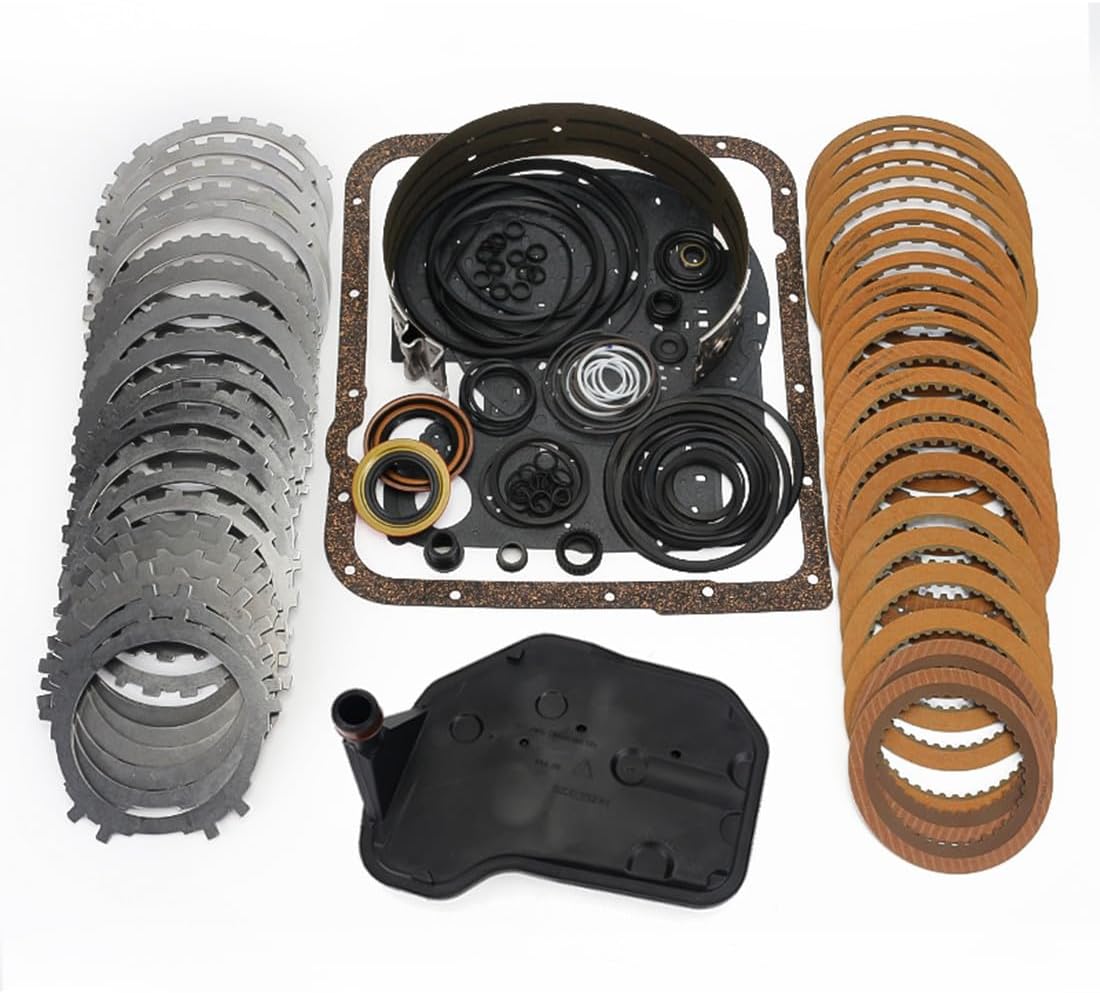
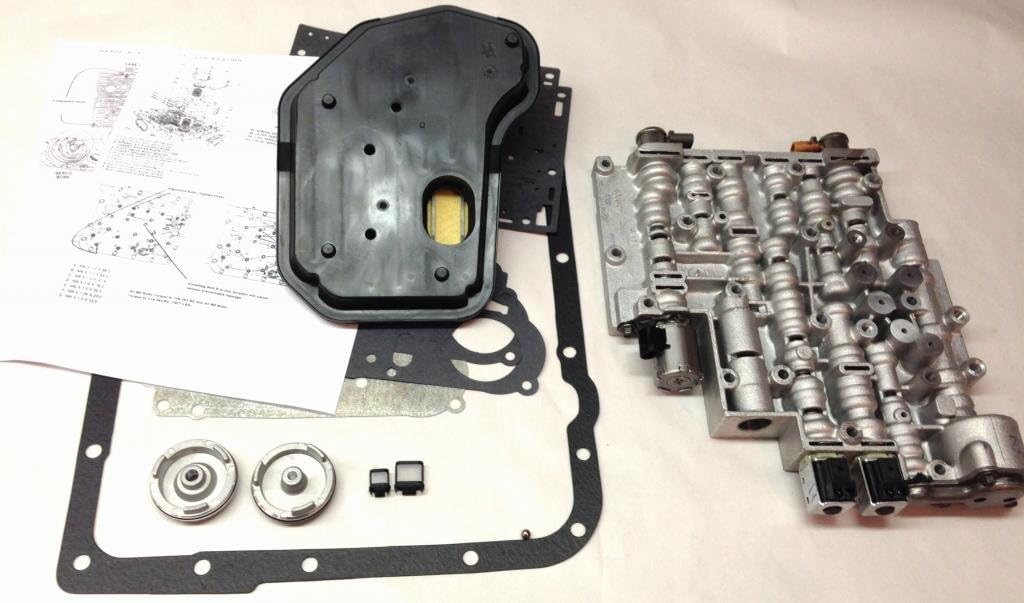
4L60E Master Rebuild Kit for Suburban
A master overhaul kit listed for the 4L60E Suburban: seals, gaskets, frictions, and steels for the full rebuild once you have found what burned the old pack. The full 4L60E lineup is here.
See the Suburban rebuild kit →FAQ
Does my Suburban have a 4L60E or a 4L80E?
Check the RPO codes on the glovebox label: M30 is the 4L60E and MT1 is the 4L80E. The 1500 Suburbans with the 4.8L and 5.3L V8 use the 4L60E family, while the 2500 heavy-duty Suburbans use the 4L80E, which the 2008 Suburban manual lists at 7.7 quarts versus 5.0 quarts for the 4L60-E.
Why does my Suburban transmission slip only when towing?
Towing raises the load on the 3-4 clutch and the converter clutch and drives fluid temperature up. Per the Suburban owner manual, the transmission enters a protection mode with changed shift patterns at about 265 degrees F, and hot fluid lets small leaks bleed off apply pressure. Use Tow/Haul when the truck and trailer are at least 75 percent of GCWR.
Why does my Suburban RPM creep up at highway speed?
If the gear ratio is correct but TCC slip speed climbs well above normal with lockup commanded, the converter clutch is slipping. Sonnax ties this to wear in the TCC regulator and isolator valve bore, which leaks apply pressure and sets codes P0894 and P1870. Normal TCC slip on 1998-later units is about 20 to 40 RPM.
What transmission fluid does a 4L60E Suburban take?
The 2005 Suburban owner manual calls for DEXRON-III approved for the H-Specification, and the 2008 manual calls for DEXRON-VI. Check it hot at 180 to 200 degrees F; a low unit generally needs less than one pint to reach the HOT band.
My Suburban slipped right after a new input housing. Why?
GM bulletin PIP5072 covers 1999-2006 Suburbans where service input housing 17803687 may have an incorrectly drilled input shaft that crosses the forward and 3-4 feed circuits. Air check the assembled housing, and if air crosses between the feed holes, GM says to replace it with part 19125752.
Keep the numbers at the bench. Our free transmission fluid spec chart lists the correct ATF for the 4L60E, 4L80E, and dozens of other units, so you never top off with the wrong fluid.
Sources
- General Motors — 2005 Chevrolet Suburban Owner Manual. Backs: DEXRON-III H-spec requirement and damage warning, the 180-200°F hot check and warm-up procedure, the less-than-a-pint note, the 265°F TRANSMISSION HOT protection mode, 260°F reset and 275°F TRANS HOT IDLE ENGINE warning, the Tow/Haul 75 percent of GCWR guidance, the 1500/2500 trailer and GCWR ratings, and the severe-service fluid and filter conditions. GM: 2005 Suburban owner manual (PDF)
- General Motors — 2008 Chevrolet Suburban Owner Manual. Backs: the capacity table listing 4L60-E/4L70-E at 5.0 qt (4.7 L), 4L80-E at 7.7 qt (7.3 L) and 6L90 at 6.3 qt (6.0 L), and the DEXRON-VI requirement. GM: 2008 Suburban owner manual (PDF)
- General Motors Preliminary Information PIP5072, Slip in Forward Ranges Immediately After Replacing the Input Housing (via NHTSA). Backs: 1999-2006 Suburban coverage with RPO M30/M32/M70, service housing 17803687, the forward/3-4 feed hole air check, replacement part 19125752, and the shaft-to-housing air leak note. static.nhtsa.gov/odi/tsbs/2012/MC-10112523-9999.pdf
- Sonnax — Understanding 4L60-E Series Isolator Bore Wear and How to Address It. Backs: EC3 controls on 1998-later units, 20-40 RPM normal TCC slip, the TCC regulator/isolator bore wear mechanism, codes 894 and 1870 and related symptoms, and the 77754-04K and 77754-ISO repairs. sonnax.com/tech_resources/1440
- Sonnax — All Over the Map: Attacking 4L60/E Burnt 3-4 Clutches with Confidence. Backs: low line pressure and 3rd-gear oil leaks as the root cause of most 3-4 slipping, the 25 in-Hg input housing checkball threshold, 3rd accumulator checkball testing, backing plate flex and 74140-01K, and TP/MAP/MAF effects on line pressure. sonnax.com/tech_resources/659
- Sonnax — Oversized Pressure Regulator Valve 77917-07 technical page. Backs: regulator bore wear symptoms, the 50-100 psi low-in-Reverse dyno indicator, the carbide tool kit recommendation, and the boost valve check and one-ratio-up guidance. sonnax.com/parts/2493