The TrailBlazer is the 4L60E working as a family hauler. It is heavy, often towing, and usually serviced only when something goes wrong. From 2002 GM put the same four-speed behind both engines in the GMT360 TrailBlazer, TrailBlazer EXT and GMC Envoy. Most of the units I see from these trucks have well over 100,000 miles on fluid that was never changed.
This is my TrailBlazer list, roughly in the order the trucks come in. It applies to the Envoy too. Every number is sourced at the bottom.
The short version: A TrailBlazer that loses 2nd, 4th and reverse after a pop or bang has a failed reaction sun shell. That failure clusters hard in the 2002 model year in NHTSA's complaint data. After that, the big ones are a burnt 3-4 clutch (low line pressure or a 3rd-oil leak), TCC slip codes from worn valve body bores, and heat from poor cooler flow on trucks that tow. On a 2002 4WD with no drive either way, check transfer case recall 01V283000 before you pull the transmission. Fluid is DEXRON-III through 2005 and DEXRON-VI from 2006. A pan drop takes 5.0 qt, checked hot at 180-200°F.

What Ships in a TrailBlazer and Why It Matters
GM's 2005 TrailBlazer owner manual lists two engines, both backed by an automatic: the Vortec 4200 inline six (VIN code S) and the Vortec 5300 V8 (VIN code M). That transmission is the 4L60E. The capacity table gives one transmission figure for both engines, 5.0 quarts (4.7 L) for a drain and refill. No overhaul figure is listed, so fill a rebuilt unit to the dipstick, not to a number. The 2007 manual adds a third engine, the 6.0L V8 (VIN code H) in the TrailBlazer SS. Read the RPO sticker before ordering parts for an SS.
The fluid spec changed partway through the run. The 2005 manual calls for DEXRON-III "Approved for the H-Specification" and warns that anything else may cause damage that isn't covered by warranty. The 2007 manual specifies DEXRON-VI. DEXRON-VI is the fluid to use in all of them today, and it is what goes in after any rebuild.
Towing is the other thing to know. The same 2005 manual rates a 2WD EXT with the V8 and 3.42 axle for a 5,900 lb trailer and an 11,000 lb gross combination weight. A 4L60E running at that weight is running hot, and heat is behind almost everything below.
1. No 2nd, No 4th, No Reverse: The Reaction Sun Shell
This is the signature TrailBlazer failure. The driver backs out of a parking spot, hears a loud pop, and the truck won't move in reverse. It still pulls away in 1st, then either flares to neutral on the 1-2 shift or skips to 3rd. Fourth is gone too.
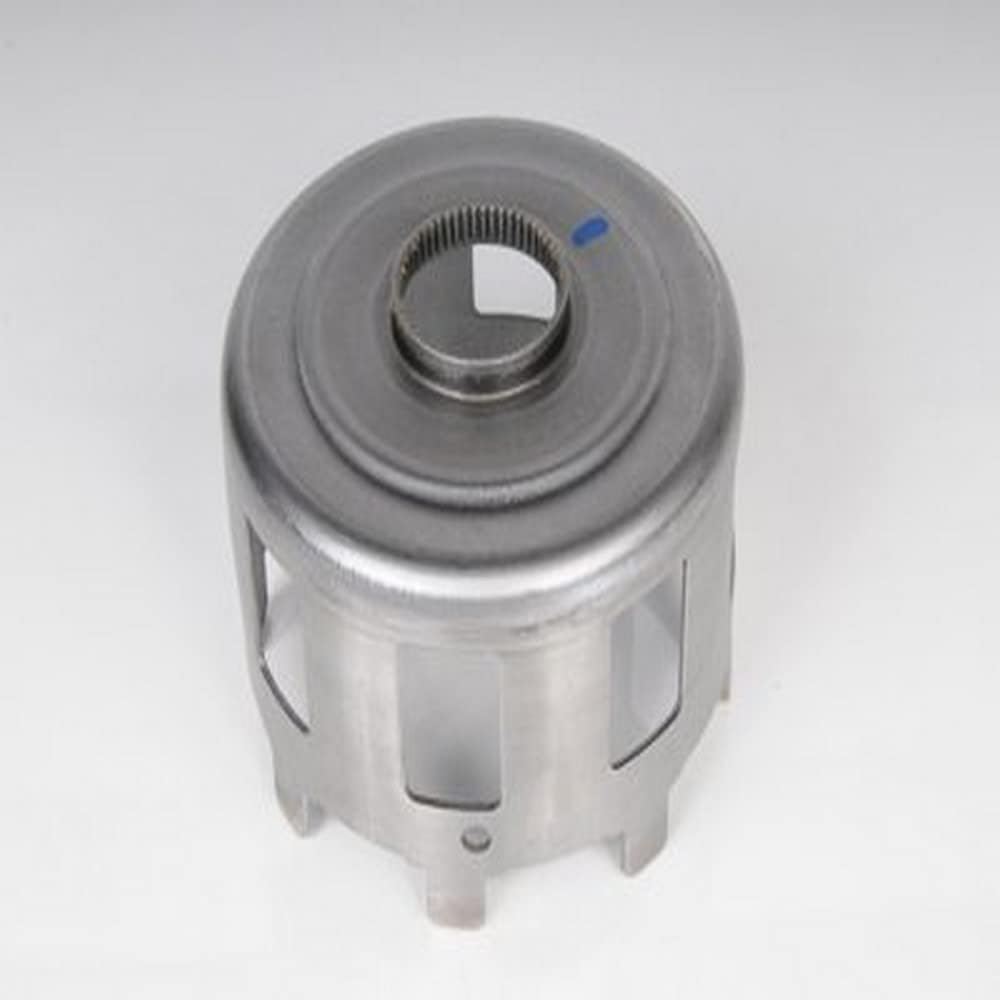
The pattern points to one part. The reaction sun shell connects the reverse input housing, which the 2-4 band holds, to the rear sun gear. When the 2-4 band applies for 2nd and 4th, or the reverse input clutch drives for reverse, the load goes through that shell. If its splines strip or the hub cracks, all three ranges go at once. First (forward clutch and low roller) and 3rd (forward and 3-4 clutch) never load the shell, so they keep working. That is exactly what owners report to NHTSA: "loss of 2nd gear, 4th gear and reverse."
The data shows how concentrated it is. As of October 2026, NHTSA's complaint database holds 338 powertrain complaints for the 2002 TrailBlazer. By my keyword count, 43 of them name the sun shell or sun gear. The 2003 model year has 8 such complaints out of 153, 2004 has 2, and 2005 has none. A 2002 that has never had the shell replaced is the truck I worry about most. One owner reports the failure at 38,000 miles, then a second transmission failure at 82,000 after the rebuild. Put a stronger part in this spot.
How to confirm it: drain the pan first. A shell failure leaves steel slivers and chunks of spline in the pan and on the magnet. On the road test, if 1st and 3rd are solid and 2nd, 4th and reverse are dead, you can stop there. Don't wait for a code; there often isn't one.
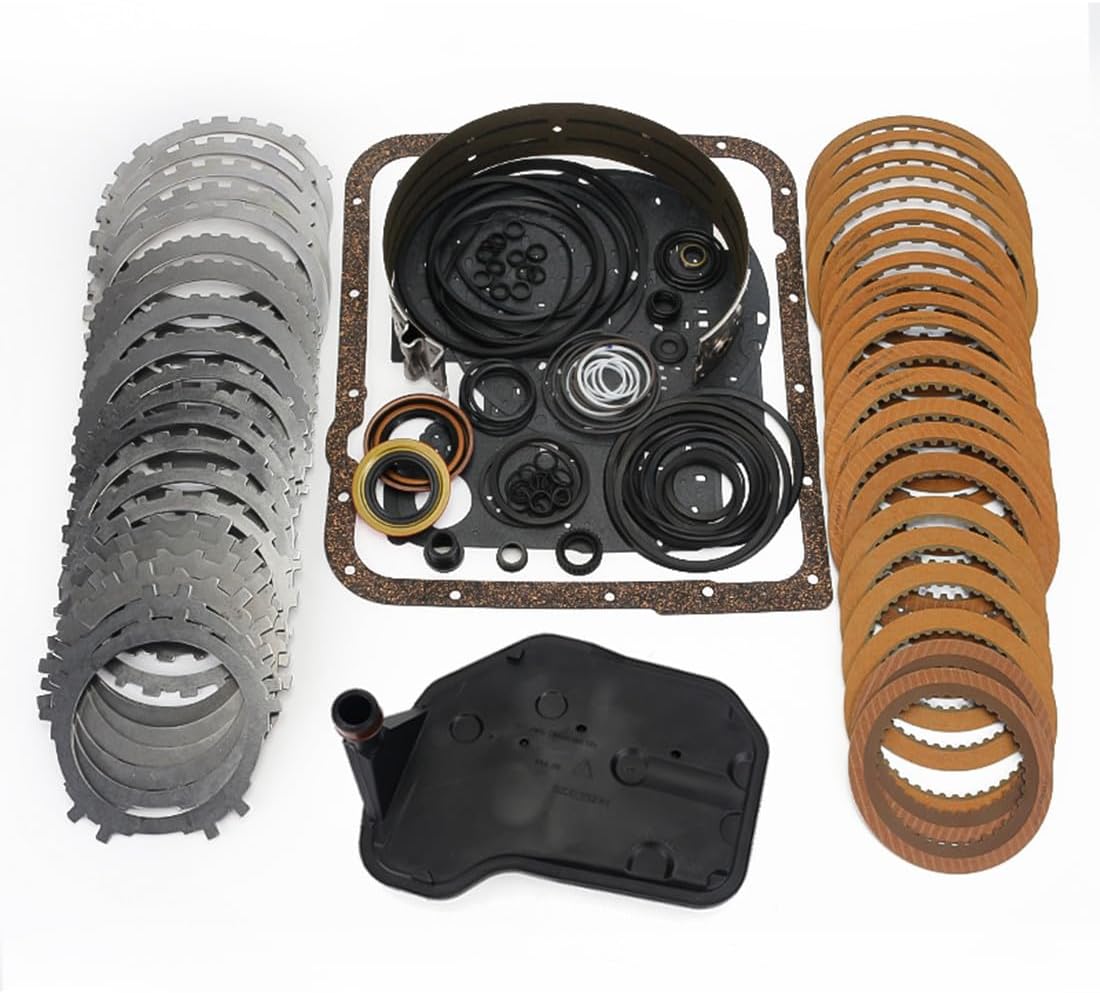
The fix: replace the shell with a hardened or heavy-duty part, never a used original-type one. While it is apart, replace the rear sun gear if its splines are marked, check the sun gear bushing and the rear planet, and replace the thrust bearings. Shell debris goes everywhere, so back-flush the cooler and lines before the new unit goes in. Our sun gear guide covers inspection of the gear side.
2. Burnt 3-4 Clutch
A TrailBlazer that flares on the 3-4 shift, then slips in 4th under load, has a 3-4 pack on the way out. A V8 EXT pulling a trailer up a grade finds it fast. Teardown shows black frictions and a backing plate that is dished or blued.
The pack is the casualty, not the cause. Sonnax's 2018 article on 4L60-E 3-4 burnup puts most of it down to low or unstable line pressure and 3rd-gear oil leaks. Any burnt pack means checking all three circuits (3-4 clutch oil, AFL and line pressure) for leaks. These are the checks I run before I trust a new pack:
- Input housing checkball. Vacuum test it. Sonnax treats anything under 25 in-Hg as an impermissible leak. Reseat it if it fails.
- 3rd accumulator checkball capsule. Test it even when new, because Sonnax notes some leak right out of the box. Don't plug it with a cup plug. Sonnax says that blocks the vent and causes soft 2-3 shifts and 3-2 flares.
- AFL screens. AFL oil passes through a screen on its way to the pressure control solenoid. When that screen plugs, line pressure drops. Replace it and the other two AFL screens on the separator plate.
- Backing plate and springs. Sonnax calls OE 3-4 backing plate flex a leading cause of burnup. Use a thicker heavy-duty plate, and never leave out the load release springs.
Gauge line pressure across the full pressure control range before you tear it down. Our line pressure guide has the procedure, and the 3-4 clutch pack guide covers clearance and friction count.
3. TCC Slip Codes and Valve Body Bore Wear
High-mileage TrailBlazers often come in with the check engine light on and a transmission component slipping code. Depending on the calibration year, that is P1870 or P0894. The driver may notice a harsh 1-2 shift, or nothing at all. The code means the PCM has commanded the converter clutch on and seen more slip than it allows.
The cause is usually inside the valve body, not the converter. Sonnax notes that bore wear is common in critical areas such as the AFL and TCC regulator bores. It lists the TCC regulator, isolator and AFL valves among the bores to vacuum test. Its isolator sleeve kit is listed specifically against codes 894 and 1870, TCC cycling and slip. Sonnax also warns against blocking the TCC regulator valve open. That exposes more line pressure and 3-4 oil to exhaust and makes the 3-4 problem above worse. The correct repair is to recondition the bore, replace the valve and install the isolator sleeve.
On the scan tool, get the fluid fully hot, then watch TCC slip speed in 4th with the clutch commanded on. Near zero is locked. A reading that climbs and wanders is slip. The P0894 guide and P1870 guide walk through the code logic.
4. Heat and Cooler Flow
Heat sits behind failures 1 through 3. A TrailBlazer that tows, sits in summer traffic or climbs grades is running the fluid hot, and the cooler is what keeps it alive. GM bulletin 02-07-30-052J, which covers 2011 and earlier GM cars and light trucks with automatic transmissions, says insufficient flow through the ATF cooling system will cause premature transmission failure. GM's J-45096 TransFlow tool checks flow against a temperature-based minimum and needs supply oil at 65°F or warmer to run.
The same bulletin gives the 4L60-E line direction: feed leaves the transmission at the bottom connector, and return enters at the top. Get that right when you replace lines. After any sun shell failure or 3-4 burnup, back-flush the cooler and confirm a strong, steady stream from the return line with the engine running before you call it done. Debris left in the cooler goes straight back into the new unit. Our cooler flush guide has the full process.
5. Not the Transmission: 2002 4WD Transfer Case Recall
One 2002 failure looks like a dead transmission but isn't. NHTSA recall 01V283000 covers 2002 4WD TrailBlazer and Envoy trucks built with a cracked range shift collar in the transfer case. GM estimated 895 vehicles. NHTSA's summary says the collar can fracture completely, causing loss of both forward and reverse and the inability to hold Park. Dealers replaced the transfer case and updated the control module calibration.
If a 2002 4WD has full fluid, clean fluid and no drive either way, check recall completion and the transfer case before you pull the transmission. GM's owner manual makes a related point: with the transfer case in NEUTRAL, a 4WD TrailBlazer can roll even with the shifter in Park. A truck that "won't hold Park" may just have the transfer case in neutral. For a true no-movement in every gear, our no-movement guide covers the pump, drum and converter checks.
Quick Reference: TrailBlazer Symptom to Cause
| Symptom | Most likely cause | First check |
|---|---|---|
| Pop or bang, then no reverse, 2nd or 4th; 1st and 3rd OK | Stripped or cracked reaction sun shell (most common on 2002) | Pan debris; road test 1st and 3rd |
| 3-4 flare, slips in 4th under load | Burnt 3-4 clutch from low line pressure or a 3rd-oil leak | Line pressure test; input housing checkball (25 in-Hg); AFL screens |
| P1870 or P0894, harsh 1-2 | Worn TCC regulator/isolator or AFL bores | Hot TCC slip speed in 4th; valve body bore vacuum test |
| Repeat failure after a rebuild | Debris left in cooler, or low cooler flow | Back-flush cooler; flow test; line direction (feed bottom, return top) |
| 2002 4WD: no forward, no reverse, won't hold Park | Cracked transfer case range shift collar, recall 01V283000 | Recall status; transfer case before transmission |
Fluid, Level Check and Service Interval
GM's 2005 manual calls for fluid and filter every 50,000 miles if the truck is mainly driven in heavy city traffic where it regularly reaches 90°F or higher, in hilly or mountainous terrain, with frequent trailer towing, or in taxi, police or delivery service. Otherwise the interval is 100,000 miles. Any TrailBlazer that tows belongs on the 50,000-mile schedule. GM lists filter kit 24200796.
Check the level hot, at 180-200°F. That's about 15 miles of driving when it's above 50°F outside. Below that, GM says to drive in THIRD until the temperature gauge has held steady for 10 minutes. Wait 30 minutes after towing or hard driving in heat. Park level, engine idling, brake set, and pause about three seconds in each range before returning to PARK and idling three minutes. The dipstick is on the passenger side under a locking handle. Check both sides and read the lower level. GM says it generally takes less than one pint to go from low to the HOT range. It warns that overfilling can push fluid onto hot exhaust parts and start a fire, and that running low can overheat the transmission.
4L60E Reaction Sun Shell 2001-2014, OEM 24229604
The shell behind the TrailBlazer's lost 2nd, 4th and reverse, in the GM service version. For the rest of the job, browse the full 4L60E lineup here.
See the reaction sun shell →FAQ
What transmission is in a Chevy TrailBlazer?
The 2002-2009 TrailBlazer and GMC Envoy with the Vortec 4200 inline six or the 5300 V8 use the GM 4L60E four-speed automatic. GM's owner manual lists a 5.0-quart drain and refill for both engines. The 2006-2009 TrailBlazer SS with the 6.0L V8 is a heavier-duty build, so check the RPO sticker first.
Why did my TrailBlazer lose reverse, 2nd and 4th gear?
That combination is the classic sign of a failed reaction sun shell. The 2-4 band and the reverse input clutch both work through that shell, so when its splines strip, 2nd, 4th and reverse go together while 1st and 3rd still work. In NHTSA's complaint data it shows up far more on the 2002 model year than on later TrailBlazers.
How much transmission fluid does a TrailBlazer take?
A pan drop and filter change takes about 5.0 quarts (4.7 L), per GM's TrailBlazer owner manuals. GM doesn't list an overhaul capacity, so fill a rebuilt unit to the dipstick. Always finish with a hot check at 180-200 degrees F, reading the lower level on both sides of the dipstick.
How often should TrailBlazer transmission fluid be changed?
GM's 2005 manual says every 50,000 miles if the truck is mainly driven in hot city traffic, in hilly or mountainous terrain, with frequent trailer towing, or in delivery-type service. Otherwise the interval is 100,000 miles. Any TrailBlazer that tows belongs on the 50,000-mile schedule.
Keep the numbers at the bench. Our free transmission fluid spec chart lists the correct ATF type for the 4L60E and dozens of other units, so you never top off with the wrong fluid.
Sources
- General Motors — 2005 Chevrolet TrailBlazer Owner Manual. Backs: the Vortec 4200 L6 (VIN S) and 5300 V8 (VIN M) with automatic transmission; the 5.0 qt drain and refill; the EXT V8 5,900 lb trailer and 11,000 lb GCWR rating; the 50,000/100,000-mile fluid and filter intervals and their conditions; the 180-200°F hot check procedure, passenger-side locking dipstick, less-than-one-pint range and overfill warning; DEXRON-III H-Specification; filter kit 24200796; and the transfer case NEUTRAL caution. GM: 2005 Chevrolet TrailBlazer owner manual (PDF)
- General Motors — 2007 Chevrolet TrailBlazer Owner Manual. Backs: the 6.0L V8 (VIN H) TrailBlazer SS; the 5.0 qt drain and refill; and DEXRON-VI as the specified transmission fluid. GM: 2007 Chevrolet TrailBlazer owner manual (PDF)
- NHTSA — Complaints database, 2002 Chevrolet TrailBlazer (same query run for 2003-2007). Backs: the 338 powertrain complaints for 2002; the owner reports of loss of 2nd, 4th and reverse; and the sun shell/sun gear complaint counts by model year (43, 8, 2, 0), counted by keyword in October 2026. NHTSA complaints data: 2002 TrailBlazer
- NHTSA — Recall 01V283000, 2002 TrailBlazer and Envoy 4WD transfer case. Backs: the cracked range shift collar; 895 potentially affected units; loss of forward and reverse and inability to hold Park; and the transfer case replacement and calibration update remedy. NHTSA recall 01V283000
- General Motors Bulletin 02-07-30-052J (May 2015), Automatic Transmission Oil Cooler Flow Test Essential Tool J-45096 TransFlow, hosted by NHTSA. Backs: coverage of 2011 and earlier GM cars and light trucks; insufficient cooler flow causing premature transmission failure; the 65°F supply oil minimum; and 4L60-E cooler line direction (feed bottom, return top). NHTSA: GM 02-07-30-052J (PDF)
- Sonnax — All Over the Map: Attacking 4L60/E Burnt 3-4 Clutches with Confidence (Brian Wing, June 2018). Backs: low line pressure and 3rd-gear oil leaks behind 3-4 burnup; the 25 in-Hg checkball limit; the 3rd accumulator capsule and cup plug warning; the AFL screens; backing plate flex and load release springs; AFL and TCC regulator bore wear; the isolator sleeve kit for codes 894 and 1870; and the warning against blocking the TCC regulator valve. sonnax.com/tech_resources/659