A 4L65E that makes noise is not automatically a 4L65E that is dying. One of the most common complaints on this transmission — a single clunk on the 2-3 upshift — is a documented, non-destructive characteristic that GM itself names this exact unit for. Other noises, like a steady pump whine or a rattle that gets worse under load, point at real wear that only gets more expensive the longer it's ignored. The job is telling which is which before anything comes apart.
The short version: A single, repeatable clunk only on the 2-3 upshift or 3-2 downshift matches a condition GM has documented by name for the 4L65E, and the factory position is that it's normal. A whine present in Park that climbs with engine RPM points at the pump. A clunk or rattle that tracks with load, happens on more than one shift, or comes with extra play points at the reaction carrier shaft and its bushing. Confirm which pattern you have before you order any part.
Know Which Transmission You Have First
The 4L65E is not a separate case design from the 4L60E — it's a heavier-duty version built on the same architecture, upgraded to handle the Gen III V8's higher torque in trucks, Camaros, and the Corvette. The giveaways inside the case are a 300mm input shaft (versus the 4L60E's 298mm), a five-pinion planetary carrier instead of four, and a hardened sun shell, with the RPO code M32 on the build sheet. That shared architecture matters for noise diagnosis specifically: several of GM's own bulletins on this case family, including the one covering the 2-3 clunk below, name the 4L60-E, 4L65-E and 4L70-E together as a single affected group, because the pump, valve body and output shaft design behind the noise are shared across all three.
Three Sources of Noise, and How to Tell Them Apart First
Every automatic transmission makes noise from one of three places: the torque converter, the pump, or the planetary geartrain. ATRA's technical magazine, Gears, lays out a field test for isolating which one you have before you touch anything. With the vehicle stationary, listen in Park and Neutral first. A noise that is present there, with the engine running, and that rises in pitch as you raise engine RPM, is the pump — it spins constantly any time the engine runs, even before the vehicle moves, and most transmissions run higher line pressure in Reverse, which is why pump noise is often loudest there.
Torque converter noise, per the same method, usually shows up differently: quiet in Neutral, then present once you're in gear and accelerating gently, growing louder as you add throttle. Geartrain noise is the hardest to isolate because different planetary members do the work in each gear; the tell is that it changes character, or disappears entirely, in a 1:1 gear, since nothing in the planetary set is working against anything else at that ratio. A noise that sounds identical in every gear and doesn't care about load is almost never the geartrain.
Worn or collapsed engine and transmission mounts are worth ruling out too — they're there specifically to isolate normal internal transmission noise from the cabin, and a bad mount can turn an ordinary sound into a comeback that has nothing to do with the transmission's internal condition.
The 2-3 / 3-2 Clunk GM Names the 4L65E For
A single, repeatable clunk on the 2-3 upshift, or on the 3-2 downshift, is one of the most common calls on this case family — and one of the least often a real problem. During that shift, the 2-4 band releases at essentially the same moment the 3-4 clutch applies, and the timing of that handoff produces a brief torque reversal at the output shaft. GM's corporate bulletin on this exact complaint, numbered 01-07-30-042, has gone through multiple revisions since the mid-2000s and names the 4L60-E and 4L65-E directly in its earlier form; by revision G (Sept. 22, 2011), per trade coverage in Vehicle Service Pros, it covered passenger cars and light-duty trucks through the 2012 model year equipped with the 4L60-E, 4L65-E, or 4L70-E. The bulletin's own language, quoted in that coverage, states that the timing of this shift "can cause a momentary torque reversal of the output shaft that results in a clunk noise," that the same reversal can occur on the 3-2 downshift, that it can be more pronounced on 4WD vehicles because of added transfer case tolerance, and that "this is a normal condition. No repairs should be attempted."
The practical test: does the clunk happen on that one shift, every time, and nowhere else? If yes, you're very likely dealing with the documented condition above, and chasing it with a valve body or band replacement is how comebacks happen on a transmission that was never broken. A clunk that shows up on multiple shifts, that's accompanied by a delayed engagement or a flare, or that's getting worse over time, is not this condition and should be diagnosed as a real fault.
Pump Whine: What It Sounds Like and Why
A whine that's present in Park, in every gear, and that climbs in pitch with engine RPM is pointing at the pump. The front pump sits directly behind the torque converter and spins whenever the engine runs, which is exactly why pump wear shows up as noise before the vehicle even moves. Per Sonnax's technical documentation on this pump family, the usual root cause isn't a seized or mechanically broken pump but wear in the aluminum bore around the pressure regulator valve, which lets line pressure leak past the valve instead of staying in the circuit the PCM is trying to control. That wear pattern tends to travel with other symptoms a one-off noise won't produce: soft or inconsistent shifts, reverse chatter, and an occasional 3-4 clutch complaint. If you want the full breakdown of bore wear versus a true mechanical pump failure, including how to confirm it with a line pressure gauge, see our separate 4L65E pump failure symptoms guide.
Two other pump faults make the same whine and are worth ruling out before you condemn the regulator bore. The first is the slide. The 4L65E uses the same variable-displacement vane pump as the 4L60E, and Sonnax's 4L60/E rebuild article warns that "a binding slide can often be the cause of otherwise unexplained low line pressure." Its bench check is to assemble the clean, dry pump halves with only the slide inside and shake it, then replace a worn slide pivot pin. The same article notes that boost valves "are notorious for leaking," especially at high line pressure. The second is broken vane rings. TransGo's 700 PK pump kit sheet, written for the 700R4/4L60E pump family, describes the original rings as brittle and says a broken ring usually takes the converter and transmission with it. Bright steel pieces in the pan along with a new whine means stop driving it. If the pump comes apart with no obvious wear, vacuum test it the way Sonnax does: a sealed circuit holds 25 in-Hg, 24 in-Hg is acceptable with the body bolted to the cover, and around 23.5 in-Hg means the faces need resurfacing.
Clunk or Rattle That Tracks With Load: Look at the Reaction Carrier Shaft
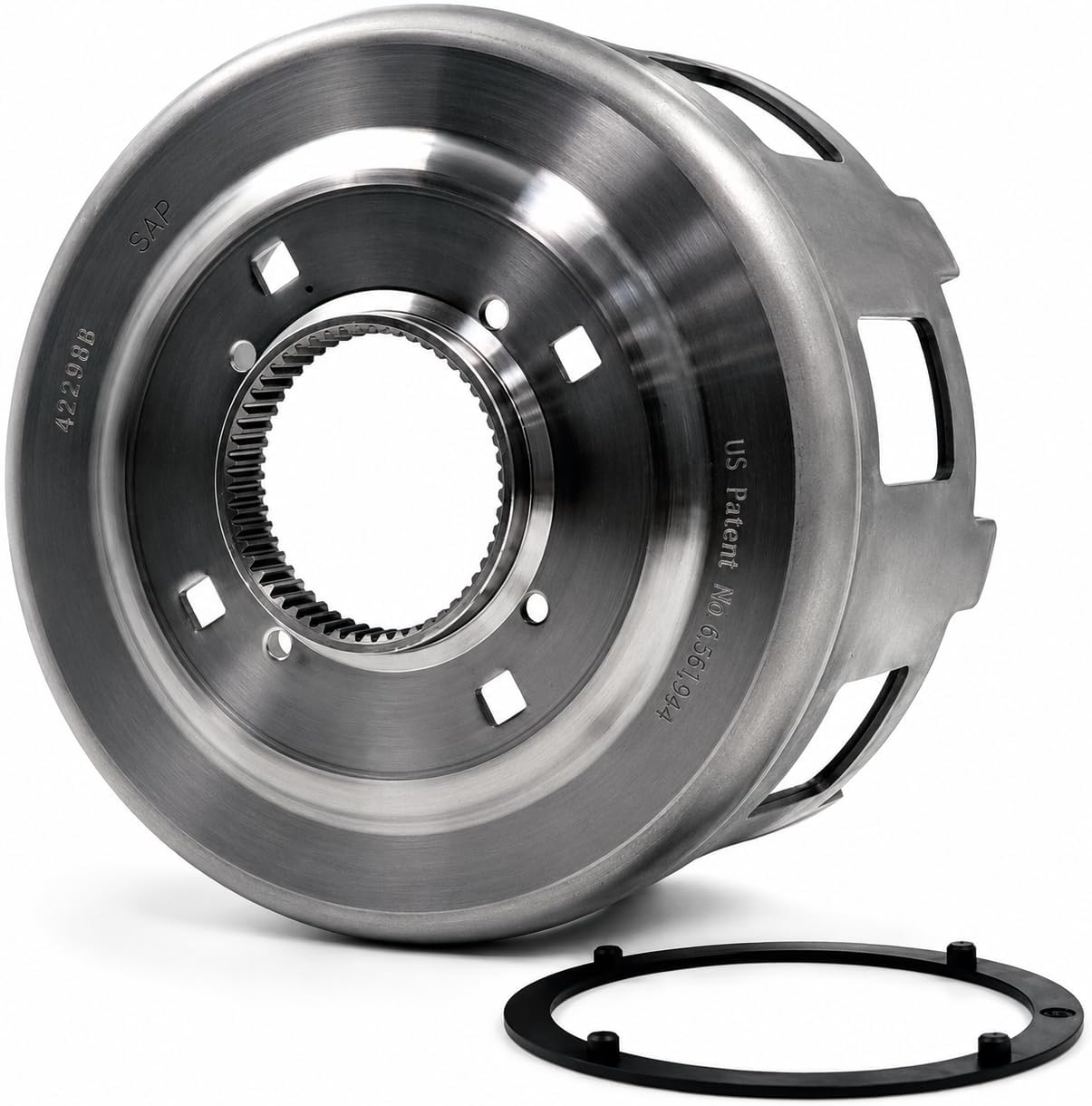
A clunk or rattle that changes with load, shows up across multiple shifts rather than one specific shift, or is joined by extra play points toward wear inside the geartrain rather than the documented output-shaft torque reversal above. Sonnax Tech Tip 677 identifies bushing failure and reaction carrier shaft damage as a known wear pattern across the 4L60, 4L60E, 4L65E and 4L70E family by name. Its fix is an oversized reaction sun gear bushing, one and a half times the width of the factory part, built from steel-backed bronze and precision machined to hold minimal clearance against the mating shaft, specifically to stop the shaft from moving more than it should inside a worn bore.
That extra shaft movement inside a worn bushing bore is what turns into noise and clunk under load: the shaft has room to shift position slightly every time torque is applied or released, and that movement is what you hear. It's a wear-driven, mileage-related condition, different in both cause and severity from the documented 2-3 clunk above, and it doesn't go away on its own.
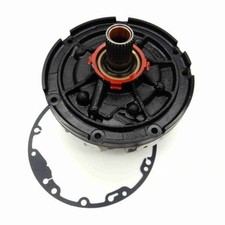
CTP 4L65E High Performance Remanufactured Pump Assembly (2001-2003, 300mm)
If the noise points at the pump rather than a repairable bushing or regulator-bore wear, this is the specific remanufactured assembly for the 300mm 2001-2003 4L65E case.
Shop the 4L65E remanufactured pump assembly →Need a different year or a full internal kit instead? Browse the full 4L65E parts collection.
When It's Not Wear: The Bang That Means Stop Driving
A single loud bang or grinding noise, followed immediately by a total loss of drive in every gear, is not on the same spectrum as the whine and clunk conditions above. That combination, especially paired with noticeable play when you wiggle the driveshaft or axle by hand, points to a broken output shaft or a failed U-joint rather than routine internal wear. This is a tow-it condition: continuing to drive on a shaft that has already partially failed risks turning a parts-and-labor repair into a full driveline replacement.
Diagnostic Order
- Confirm fluid level and condition at operating temperature first. Low fluid or the wrong fluid will produce noise and symptoms that mimic worn hardware, and it's free to check.
- Listen in Park and Neutral with the engine running. Noise present here that climbs with RPM is the pump.
- If the complaint is a single clunk on the 2-3 upshift or 3-2 downshift only, compare it against GM bulletin 01-07-30-042's documented normal condition before recommending any repair.
- If the noise is a whine that tracks engine RPM rather than road speed, suspect the pump's pressure regulator bore and confirm with a line pressure gauge reading against factory spec.
- If noise or clunk tracks with load, happens on multiple shifts, or is joined by extra driveline play, inspect the reaction sun gear bushing and shaft for wear per Sonnax Tech Tip 677.
- A bang or grinding sound with total loss of drive and detectable driveshaft play means stop driving and inspect the output shaft and U-joints before anything else.
Most 4L65E noise complaints resolve in the first three steps above, for free, because they match a condition GM has already written down for this exact transmission. The ones that don't match — noise that tracks load, happens on more than one shift, or shows up with real driveline play — are the ones worth opening the unit for.
Keep the numbers at the bench. Our free transmission fluid spec chart lists the correct ATF for the 4L65E and dozens of other units.
FAQ
Is the clunk on a 4L65E 2-3 upshift something to worry about?
Usually not. GM's own bulletin 01-07-30-042 (revision G, Sept. 22, 2011) names the 4L60-E, 4L65-E and 4L70-E directly and states that releasing the 2-4 band while applying the 3-4 clutch causes a momentary torque reversal of the output shaft, producing a clunk on the 2-3 upshift or 3-2 downshift. GM's position is that this is a normal condition and no repair should be attempted, and it can be more noticeable on 4WD trucks because of extra tolerance in the transfer case. A single, repeatable clunk only on that one shift matches this condition. A clunk on multiple shifts, or one joined by a flare or delay, is a different and real problem.
What does a failing 4L65E pump sound like?
A pump-related whine is present in Park and Neutral with the engine running and climbs in pitch as engine RPM rises, usually loudest in Reverse where line pressure runs highest. Per Sonnax's technical documentation on this pump family, the usual cause isn't a seized or broken pump but wear in the aluminum bore around the pressure regulator valve, which lets line pressure leak past the valve instead of holding spec. That same wear often brings soft or inconsistent shifts, reverse chatter, or a 3-4 clutch complaint along with the noise, which separates it from a one-time cosmetic sound.
Can worn bushings cause clunk or rattle in a 4L65E?
Yes. Sonnax Tech Tip 677 identifies bushing failure and reaction carrier shaft damage as a documented wear pattern across the 4L60, 4L60E, 4L65E and 4L70E case family, and sells an oversized wide reaction sun gear bushing built specifically to stop it. A worn bushing lets the reaction shaft move more than it should inside its bore, and that extra movement is what you hear as a clunk or rattle that tracks with load rather than one specific shift.
How do I tell torque converter noise from pump noise on a 4L65E?
Per the diagnostic method published in ATRA's Gears Magazine, pump noise shows up with the vehicle stationary in Park or Neutral and climbs in pitch as you raise engine RPM, because the pump spins constantly whenever the engine runs. Torque converter noise is usually quiet in Neutral and only appears once you're in gear and accelerating, growing louder with throttle. If the sound is there at idle in Park before the vehicle ever moves, start at the pump, not the converter.
What noise means I should stop driving a 4L65E?
A single loud bang or grinding noise followed immediately by a total loss of drive in every gear, especially paired with noticeable play when you wiggle the driveshaft by hand, points to a broken output shaft or failed U-joint rather than routine wear. That combination is a tow-it condition. It is different in kind from the gradual whine and clunk conditions covered above, which are typically still drivable while you get them diagnosed.
Sources
- Vehicle Service Pros — "A problem that isn't a problem," covering GM Corporate Bulletin 01-07-30-042G (Sept. 22, 2011). Backs the bulletin number and revision letter, the model coverage (passenger cars and light-duty trucks through the 2012 model year with 4L60-E, 4L65-E, or 4L70-E), the quoted torque-reversal cause during the 2-4 band release / 3-4 clutch apply handoff, the 4WD severity note, and GM's quoted "normal condition. No repairs should be attempted" conclusion. vehicleservicepros.com – A problem that isn't a problem
- Sonnax — Oversized Pressure Regulator Valve 77917-07, product page. Backs the pressure regulator bore wear mechanism in GM 4L60-E/4L65-E/4L70-E pump covers and the symptoms it causes: erratic or low line pressure, soft or inconsistent shifts, reverse chatter, and 3-4 clutch failure. sonnax.com/parts/2493-oversized-pressure-regulator-valve
- Sonnax — Tech Tip 677, "How to Install Sonnax 4L60-Series Wide Reaction Sun Gear Bushing." Backs the documented wear pattern (bushing failure and reaction carrier shaft damage) across the 4L60, 4L60E, 4L65E and 4L70E family by name, and the replacement bushing's specifications (one-and-a-half times OE width, steel-backed bronze, precision-machined for minimal shaft clearance). sonnax.com
- Gears Magazine (ATRA) — "The Sound of Silence: Diagnosing Transmission Noises," January/February 2025. Backs the three-source noise model (torque converter, pump, geartrain) and the field test for isolating each: pump noise present in Park/Neutral and rising with RPM, louder in Reverse on higher line pressure; converter noise appearing under load in gear; geartrain noise changing or disappearing in a 1:1 ratio gear; and worn mounts producing false noise complaints. gearsmagazine.com
- Sonnax — "All Over the Map: Attacking 4L60/E Burnt 3-4 Clutches with Confidence," tech resource. Backs the binding pump slide as a cause of unexplained low line pressure, the dry slide shake test, the slide pivot pin check, and boost valve leakage at high line pressure. sonnax.com
- Sonnax — "4L60/E Pump Cover & Stator Tube: Finding Hidden Leaks with Individual Vacuum Testing," tech resource. Backs the 25 in-Hg sealed reading, the 24 in-Hg acceptable reading with the pump body installed, and resurfacing at around 23.5 in-Hg. sonnax.com
- TransGo — 700 PK NoYoYo Standard Pump Kit instruction sheet (IS-700-PK), 700R4 / 2004R / 4L60E. Backs the brittle OE pump ring failure mode and the converter and transmission damage a broken ring causes. TransGo instructions (PDF)