A slipping 4L80E in a gas Silverado 2500 almost never shows up empty. It shows up behind a camper, a dump trailer or a plow, and the driver says the same thing every time: the engine flares on the shift, or the rpm climbs on a grade and the truck does not pick up speed. With input and output speed sensors and a scan-tool-readable pressure control solenoid, you can name the slipping element on the road test instead of guessing on the bench.
First, make sure it is a 4L80E. GM's 2005 4L80E diagnostic document lists the unit with the 4.8L, 6.0L (LQ4) and 8.1L (L18) engines in the Silverado and Sierra. A Duramax 2500HD of the same years has an Allison, which the 2006 Silverado owner manual covers in its own sections. None of what follows applies to the Allison.
The short version: Check the fluid hot the way GM says to, then figure out which gear slips. Slip in every range points to fluid level, the pump or line pressure. Slip in 2nd only points to the intermediate sprag or clutch. Flares in 1st through 3rd on a plow or tow truck point to the overdrive roller clutch. Slip that only shows up in 4th with the converter locked is P0894 territory. Put a gauge on it before you buy anything: the GM-era Army troubleshooting guide for this unit calls for at least 35 psi at idle in Drive, rising to a maximum of 171 psi, and 67 to 324 psi in Reverse.
Step 1: Check the Fluid the Way GM Wrote It
Half the slipping 2500s I see were checked cold, on a slope, with the engine off. The 2006 Silverado owner manual is specific:
- Fluid has to be at normal operating temperature, which GM gives as 180 to 200 F. Above 50 F outside, that takes about 15 miles of driving. Below 50 F, GM says to drive in Third until the engine temperature gauge moves and then stays steady for 10 minutes.
- If the truck was just towing, run at high speed for a while, or sat in hot traffic above 90 F, wait at least 30 minutes before checking. A cooked reading is as useless as a cold one.
- Park level, engine running, parking brake on. With your foot on the brake, run the lever through every range, pausing about three seconds in each, then back to Park. Let it idle three minutes or more.
- Pull the stick, wipe it, push it all the way in, wait three seconds, pull it again. Read both sides and use the lower mark. Hot, it must be in the HOT or cross-hatched area.
- Check it at least twice. If the readings will not repeat, GM says to check the transmission breather hose for a clog before anything else.
If it is low, GM notes it usually takes less than a pint to get back into the HOT area. Do not overfill. Too much fluid aerates and slips just like too little. The fill is DEXRON-VI per the 2006 manual's recommended fluids table. Dark, burnt-smelling fluid means something has already been slipping, and topping it off will not bring the friction material back.
One more number from the same manual that most 2500 owners never read: GM puts any truck with a GVWR over 8,600 lb on the severe-service fluid and filter schedule, along with trucks that tow often, run hills or sit in hot city traffic. Most 2500HD trucks are over that GVWR from the factory. If the fluid has never been changed on a 2500, that is part of the diagnosis.
Step 2: Name the Gear That Slips
The 4L80E holds each gear with a different combination of clutches and one-way clutches, so the gear the slip lives in points to the part. The Army Ordnance school's 4L80E troubleshooting guide, written from the GM-built HMMWV application, lists the hardware: five clutch packs (forward, intermediate, direct, fourth and overrun), two bands, and three one-way clutches (low roller, intermediate sprag and overdrive roller). Its mechanical diagnosis table is where I start.
| Where it slips | What to suspect first |
|---|---|
| Every range, Drive and Reverse | Low fluid, low line pressure (pump), or an external leak. The Army guide's first two checks for slip in Drive and Reverse are fluid level and line pressure. |
| Reverse only | Reverse servo seal, per the same table. Direct clutch circuit if 3rd and 4th also feel soft. |
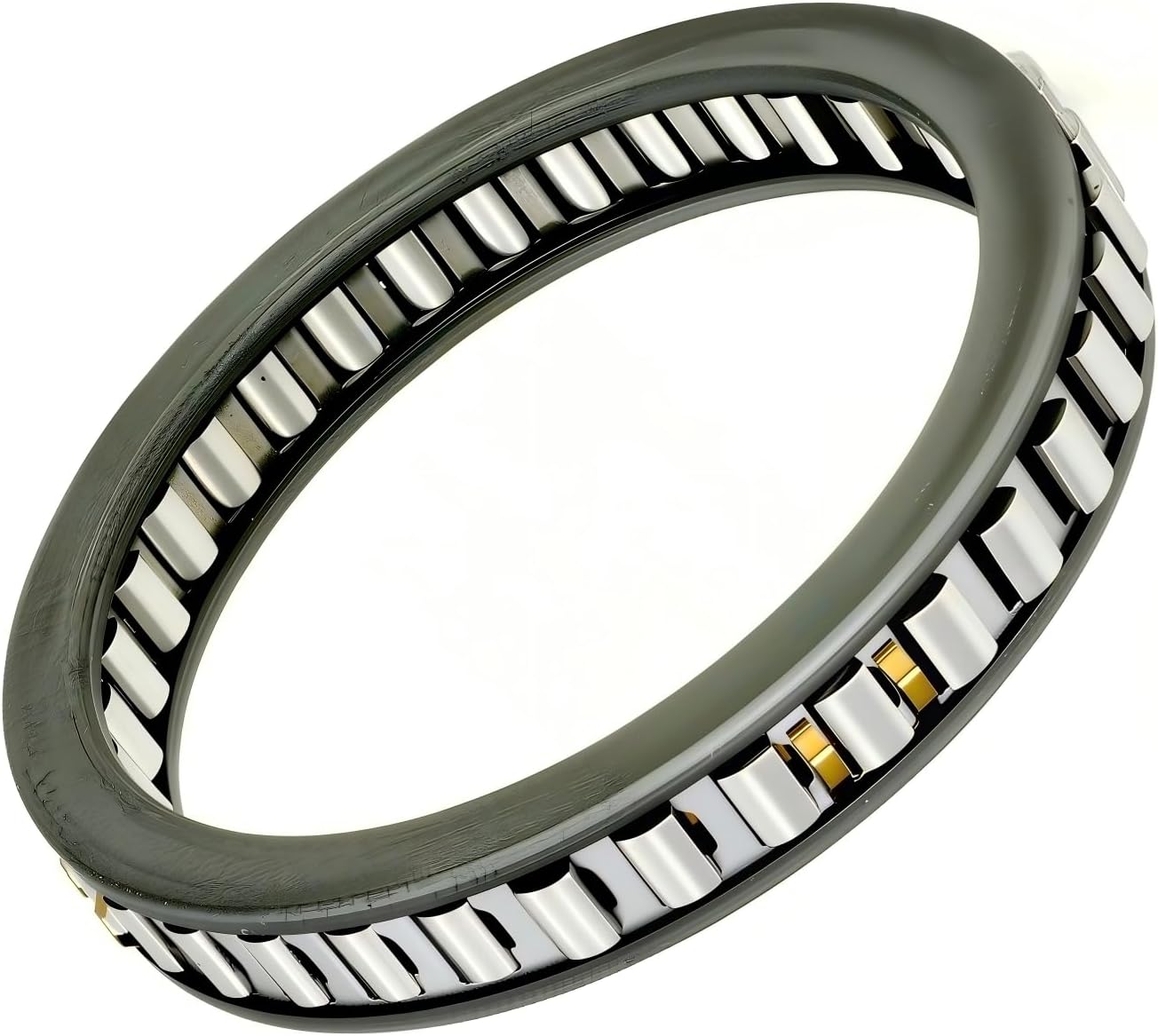
| 2nd only, or no drive in 2nd | Intermediate sprag. The guide lists a worn or damaged intermediate sprag as the cause of no torque in 2nd. |
| Flare in 1st through 3rd, worst under load in D | Overdrive roller clutch, the classic plow and tow truck failure. |
| 3rd and 4th, plus weak Reverse | Direct clutch circuit. Our general 4L80E slipping guide covers the checkball sleeve and drum bore leaks that cause it. |
| 4th only, with TCC locked | Converter clutch or fourth clutch. That is the P0894 test below. |
Know the shift solenoid states so you can confirm the computer is asking for the gear you think it is. The Army guide's scan tool checks have both solenoids off in 2nd, B on and A off in 3rd, and both on in 4th. If the commanded gear and the solenoid states match but the ratio does not, the problem is hydraulic or mechanical, not electrical.
Step 3: Prove It on the Scan Tool
Watch these on a loaded road test, ideally with the trailer that caused the complaint hooked up.
- Trans gear ratio. GM's 4L85E spec sheet gives the ratios as 2.482, 1.482, 1.000 and 0.750, with 2.077 in Reverse. A healthy unit holds the ratio PID right on those numbers. If 2nd reads 1.48 at light throttle and drifts toward 2.0 when you lean on it, the 2nd gear holding elements are giving up.
- TCC slip speed. The Army guide defines it as engine speed minus input speed. Zero means the converter is locked. GM's 2005 diagnostic document sets P0741 when slip is 125 rpm or more with the TCC commanded on in 2nd or 3rd.
- P0894 in 4th. The same GM document sets P0894 at 100 to 550 rpm of slip with the TCC locked in 4th, and its wording is that the slip is in the converter clutch and/or the fourth clutch. It only runs with fluid between 20 and 130 C and engine torque in its window, which is why it so often sets only while towing.
- Desired and actual PCS current. The pressure control solenoid works backward from what people expect. Per the Army guide, 0.00 amps commands high line pressure and about 1.1 amps commands low line pressure. If the desired and actual numbers do not track each other, look at the solenoid and its wiring before the hard parts.
A trick that saves a lot of time on 4th gear slip: if the slip shows up as TCC slip speed with the converter commanded on, and the ratio PID still reads 0.75, it is the converter. If the ratio PID moves off 0.75, the fourth clutch is slipping. The 4L80E P1870 guide goes deeper on the converter side, including the cracked 2000-and-up converter clutch.
Step 4: Put a Gauge On It
Do not condemn clutches until line pressure is proven. The Army guide's line pressure test is simple and fits the truck:
- Set the fluid level first. Use a gauge rated for 325 to 350 psi on the line pressure test port.
- In Park, Neutral and the Drive ranges, pressure should be at least 35 psi at idle and rise to a maximum of 171 psi as throttle opens.
- In Reverse, at least 67 psi at idle, rising to a maximum of 324 psi.
How to read the result, per the same guide: low in every range points to the pump (worn or damaged gears, a blown-out cup plug, cross leakage or a worn bushing). High pressure points to the pressure control solenoid, the reverse/boost or pressure regulator valves, a bad ground or a bad solenoid connection.
To check the PCS itself, the guide has you override the solenoid current from the scan tool in Park at idle, give the gauge 3 to 5 seconds to settle at each step, and compare. A few of its reference points:
| PCS current | Line pressure |
|---|---|
| 0.0-0.02 A | 157-177 psi |
| 0.40 A | 121-147 psi |
| 0.60 A | 88-113 psi |
| 0.80 A | 43-73 psi |
| 0.98-1.1 A | 35-55 psi |
Pressure should fall as current rises. If it stays high no matter what you command, the guide points at the TCM, wiring or the solenoid. If it is low across the whole table, it is the pump or a hydraulic leak. These are the figures in the Army's 4L80E guide. A pickup calibration can differ a little, so treat them as a reference and check your truck's service information if a reading is borderline. The 4L80E low line pressure guide covers the pump side in detail.
Step 5: Slips Only in 2nd? Look at the Intermediate Sprag
A 2500 that pulls fine in 1st, flares or freewheels in 2nd, and then grabs 3rd is a sprag truck until proven otherwise. The Army guide lists the intermediate sprag first for no drive in 2nd and for no 2nd gear. Under a heavy truck and a trailer, the sprag elements can roll over in the race instead of locking. Once a sprag rolls over, it is junk, and the race usually is too.
Sonnax built a heavy-duty outer race for this unit, part 34663HD-02, which it describes as an upgrade where race damage and sprag rollover are common in high-torque vehicles. Sonnax says the race is case-hardened alloy steel with a softer core, with an inner diameter a few ten-thousandths smaller than OE to improve sprag engagement and resist rollover, and that it drops into a 4L80-E or 4L85-E direct drum. On a 2500 that tows heavy, I fit a higher element count sprag and the stronger race rather than reuse the OE race.
Step 6: Flares in 1st Through 3rd on a Plow or Tow Truck
Sonnax's Jim Dial explains in "Outsmarting 4L80-E Overdrive Roller Clutch Failure" that in the OD range, 1st through 3rd are held through the overdrive roller clutch alone. The overrun clutch only comes on in the manual ranges. A 2500 pushing snow or pulling a heavy trailer in OD puts all of that load on one roller clutch. When it starts to go, the truck flares in the lower gears. When it is gone, it will not move forward. Sonnax notes the damage usually reaches the overdrive planetary and the overrun drum, so price those parts before you quote it. The full write-up, including Sonnax's 34200-40K overrun clutch valve kit fix, is in our Silverado 2500 4L80E common problems guide.
A quick road-test check: if the flare in 1st through 3rd goes away in manual 3 or 2, where the overrun clutch backs up the roller clutch, you have your answer.
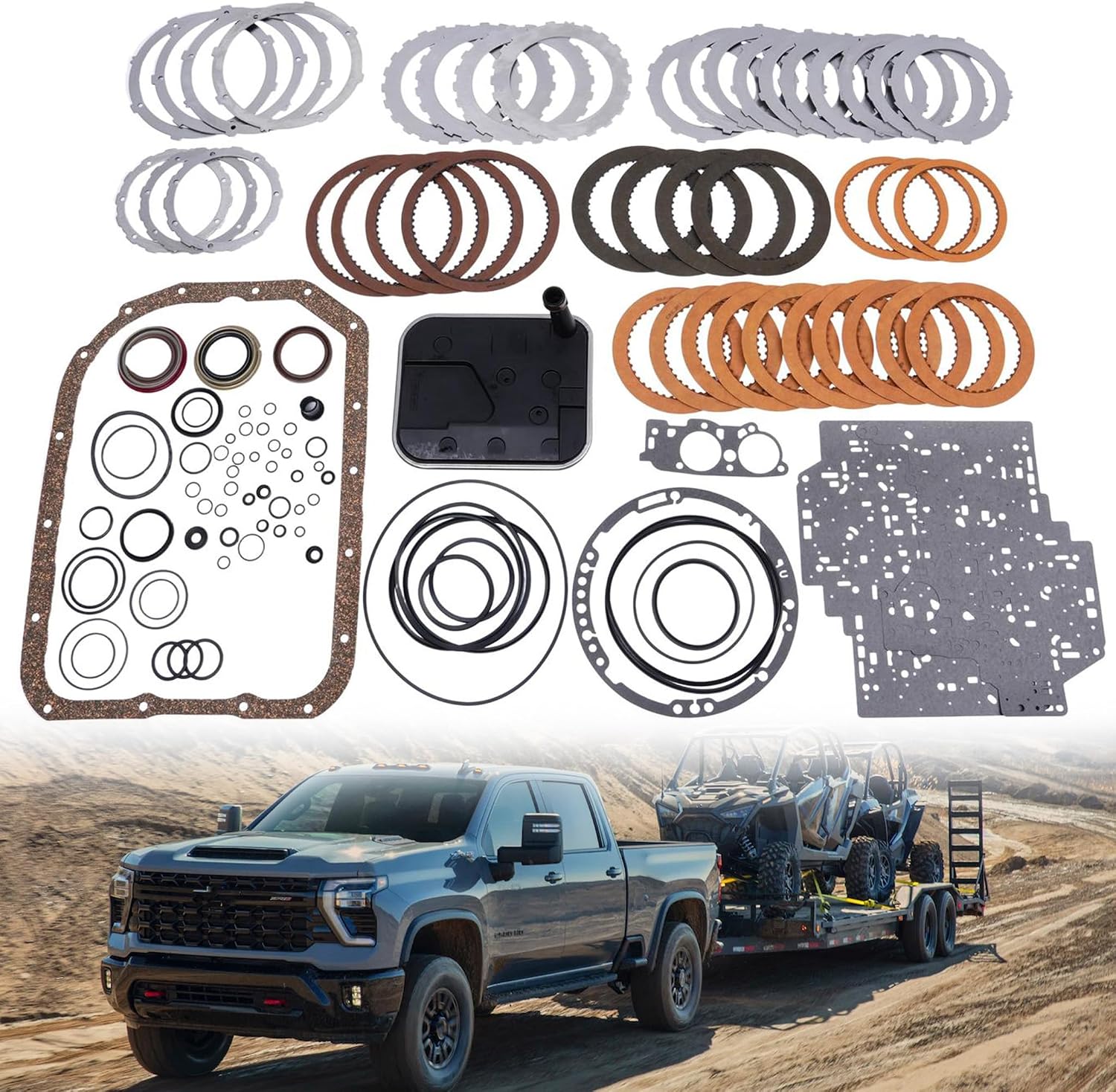
4L80E Friction Clutch Kit, 1996-Up
A full set of frictions for a 4L80E that has already burned a clutch pack. Fix the pressure or sprag problem first, then put fresh frictions in it.
Shop the 4L80E friction kit →Need a different part? Browse the full 4L80E parts collection.
When the Answer Is a Rebuild
If the pan has friction material, steel or roller pieces in it, or the fluid is burnt and pressure tests good, the clutches are done. The Army guide's own advice for a filter full of clutch material is to replace the transmission. On a 2500, do the whole job: frictions and steels, a fresh intermediate sprag, the overdrive roller clutch and its planetary checked, and every valve body bore vacuum tested so the new clutches get the pressure they need.
Numbers for the reassembly and refill, from GM's 4L85E spec sheet (the heavy-duty version of the same unit): 7.7 qt to refill after a pan drop, 13.2 qt dry, DEXRON-VI, oil pan bolts at 18 ft-lb, drain plug at 25 ft-lb, and cooler line connector nuts at 28 ft-lb. GM's filter is 24212452 and the pan gasket is 08677743. Flush the cooler and lines before the new unit goes in. Debris left in a cooler goes straight back into new clutches.
Then fix the cause: use Tow/Haul when towing (the 2006 manual says it cuts shift cycling and helps cooling), plow in a manual range or install the overrun clutch fix, and change fluid on the severe-service schedule.
Keep the numbers at the bench. Our free transmission fluid spec chart lists the correct ATF for the 4L80E and dozens of other units, so nobody tops off a work truck with the wrong fluid.
FAQ
Why is my Silverado 2500 4L80E slipping only when towing?
Load exposes weak holding elements. In OD the overdrive roller clutch holds 1st through 3rd alone, and GM's P0894 test for 4th gear slip only runs within an engine torque window, so a marginal converter clutch, fourth clutch or roller clutch often slips only with a trailer behind it. Check the fluid hot, then road test with the trailer and watch the gear ratio and TCC slip speed.
How do I check 4L80E fluid level correctly?
GM's 2006 Silverado manual says to check it at 180 to 200 F, on level ground, with the engine idling in Park after moving through every range. Read the lower mark on both sides of the stick, check it at least twice, and add only enough DEXRON-VI to reach the HOT area, which is usually less than a pint.
What should 4L80E line pressure be?
The Army's 4L80E troubleshooting guide calls for at least 35 psi at idle in Park, Neutral and Drive, rising to a maximum of 171 psi with throttle, and 67 to 324 psi in Reverse. Low in every range points to the pump. High points to the pressure control solenoid, the boost or regulator valves, or a bad ground.
What causes a 4L80E to slip only in 2nd gear?
The intermediate sprag is the first suspect. The Army guide lists a worn or damaged intermediate sprag as the cause of no torque in 2nd, and Sonnax notes sprag rollover and race damage are common in high-torque use. Replace the sprag and inspect the outer race, or upgrade to Sonnax's heavy-duty race.
Sources
- General Motors — 2005 4L80E Transmission Diagnostic Parameters (OBD). Backs: 4L80E use with the 4.8L, 6.0L and 8.1L in the Silverado and Sierra; P0741 set at 125 rpm or more of TCC slip in 2nd or 3rd; P0894 set at 100-550 rpm of slip with the TCC locked in 4th, described as converter clutch and/or fourth clutch slip, with a 20-130 C fluid temperature window. GM 2005 4L80E diagnostic parameters (PDF)
- General Motors — 2006 Chevrolet Silverado Owner Manual, "Automatic Transmission Fluid (Except Allison Transmission)" and the maintenance schedule. Backs: the 180-200 F check temperature, warm-up and 30-minute wait conditions, the step-by-step dipstick procedure, the breather hose check for inconsistent readings, the less-than-a-pint top-off, DEXRON-VI, Tow/Haul operation, and severe service for GVWR over 8,600 lb. GM: 2006 Chevrolet Silverado owner manual (PDF)
- General Motors / Chevrolet Performance — Supermatic Transmission (4L85E 19300175) Specifications. Backs: gear ratios 2.482/1.482/1.000/0.750 and 2.077 reverse, 7.7 qt pan refill and 13.2 qt dry capacity, DEXRON-VI, pan, drain plug and cooler nut torques, and filter and gasket part numbers. Chevrolet Performance 4L85E spec sheet (PDF)
- U.S. Army Ordnance Mechanical Maintenance School — 4L80E Transmission Troubleshooting Guide (Warrant Officer Training Supplement 7, Jan 2008). Backs: the clutch, band and one-way clutch list; the mechanical diagnosis table (slip in Drive/Reverse, reverse servo, intermediate sprag and no 2nd); shift solenoid states; TCC slip speed and PCS current PID definitions; the line pressure test and specs; and the PCS current-versus-pressure table. Army 4L80E troubleshooting guide (PDF, archive.org)
- Sonnax — Heavy Duty Intermediate Clutch Outer Sprag Race 34663HD-02. Backs: sprag rollover and race damage in high-torque 4L80-E use, the case-hardened alloy steel construction, the slightly smaller inner diameter, and direct fit in 4L80-E and 4L85-E direct drums. sonnax.com/parts/5779
- Sonnax — Jim Dial, "Outsmarting 4L80-E Overdrive Roller Clutch Failure." Backs: the overdrive roller clutch holding 1st-3rd alone in OD, the overrun clutch applying only in manual ranges, and the collateral planetary and drum damage. sonnax.com/tech_resources/625