Every Super Duty owner who's priced a 4R100 fluid service has run into the same fork in the road: a "service" that drops the pan and changes the filter, or a "flush" where a machine hooks to the cooler lines. Shops price them differently and sell them differently, and on a transmission this old — built into 7.3L Power Stroke trucks, Econolines and motorhome chassis from 1998 through 2004 — most of those units have never had either done on a documented schedule.
Here's what each method actually reaches inside a 4R100, what Ford has and hasn't published about flush machines, and why the honest answer on which to use depends more on the fluid already in the pan than on the marketing behind either service.


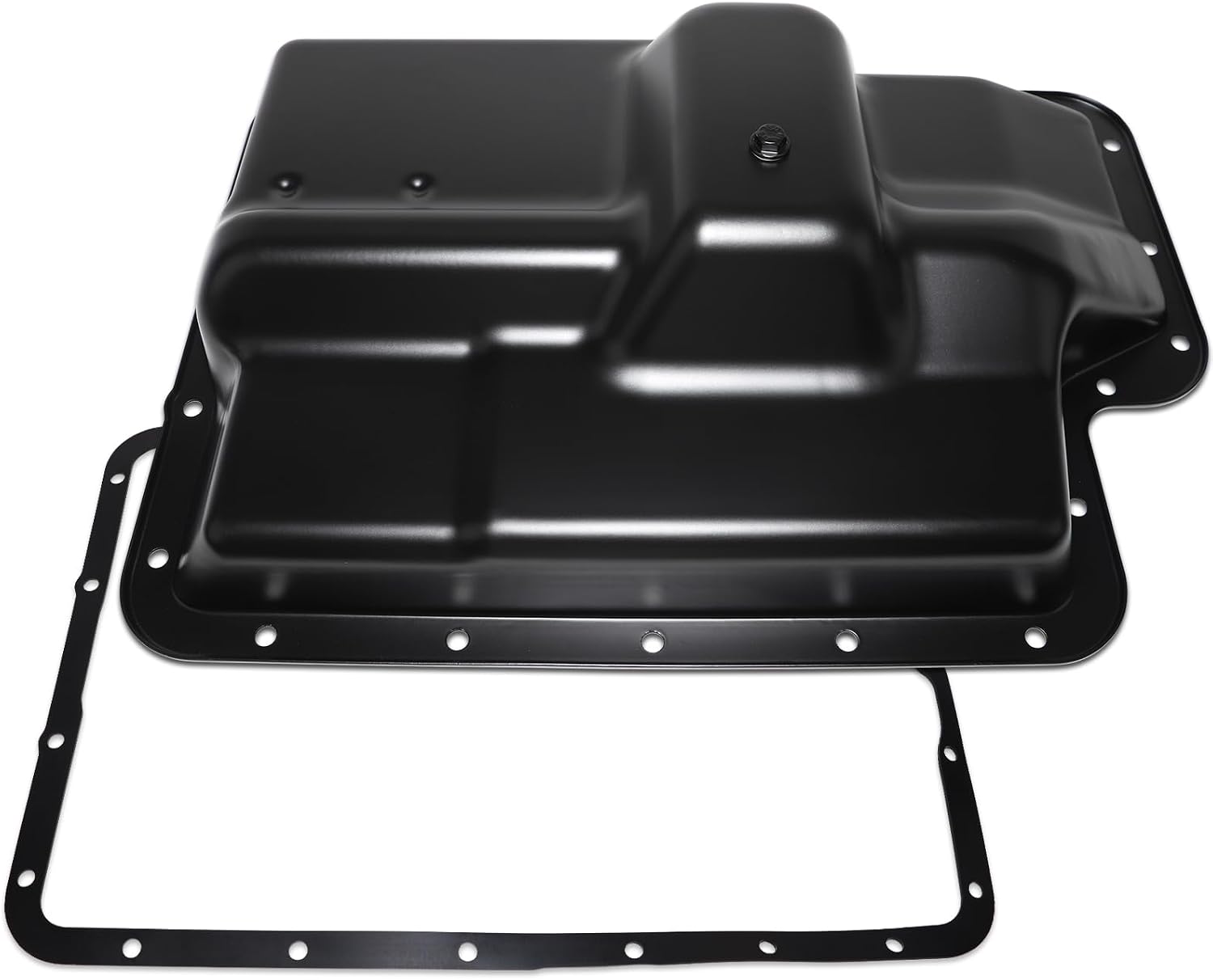
What Each Method Physically Does
A drain-and-fill is a pan drop: pull the pan, let gravity empty whatever fluid will come out, swap the filter and gasket, bolt it back up, and refill through the dipstick tube to a hot-check level. It only touches fluid sitting below the pan rail. The torque converter — which has no drain plug on this unit — and the valve body's internal feed passages keep whatever fluid was already in them.
A flush, more accurately a fluid exchange, disconnects a cooler line and routes it through an external machine. The transmission's own pump, running at idle, pushes old fluid out through that line while the machine pushes new fluid in through the other, in principle cycling fluid through the converter and the circuits a pan drop can't reach. Shops selling the service will tell you it replaces a much larger share of total fluid in one visit than a pan drop does, and mechanically that's true.
Why This Particular Transmission Makes the Gap Matter
The 4R100 went into trucks that tow and haul for a living. A Super Duty pulling a gooseneck or a motorhome chassis loading up a 7.3L puts far more heat through the torque converter and cooler than the same transmission would ever see in light duty, and heat is what breaks ATF down chemically well before mileage does. That makes fluid condition on this specific application less forgiving than on a commuter truck, and it's also why these trucks commonly run deep aftermarket pans and upgraded coolers on top of the factory setup — both of which change how much fluid a pan-only service actually recovers.
A pan-and-filter service only drains what sits in the sump, and the stock pan is shallow enough that a single pan drop recovers less than half of the transmission's total fluid. The rest — the fluid sitting in the converter, the cooler, the cooler lines and the valve body — stays in the system, diluted but not replaced. That's not a flaw in the method; it's just what a gravity drain can and can't reach. Gears Magazine puts the fluid left behind in the converter, clutches and valve body at roughly two-thirds of total capacity on a typical drain and fill (Gears, "Transmission Maintenance"). On a truck with a deep aftermarket pan, a single drop recovers more, but it still never touches the converter.
What Ford Has Actually Published, and What It Hasn't
It's worth being precise here, because General Motors and Ford are not in the same place on this question. GM has a standing corporate bulletin stating flatly that external fluid exchange or flush machines are not recommended for its automatic transmissions, and that fluid should only be replaced by draining and refilling (GM bulletin 04-06-01-029K, October 2024). Ford's Customer Service Division (FCSD) has not published an equivalent blanket statement for the 4R100 or any other Ford automatic that we could find. What FCSD has published, and published firmly, is the fluid spec itself.
On July 1, 2007, Ford discontinued production and licensing of MERCON ATF and made MERCON V the required service fill for every application that previously called for MERCON — the 4R100 included. Ron Romano, FCSD's Service Lubricants Technical Expert, put it this way when the change took effect: "All transmissions which recommended using MERCON ATF can now be serviced with MERCON V. MERCON V is a tighter specification which delivers better anti-oxidation, anti-wear and anti-shudder properties." FCSD also explicitly does not recommend any fluid that only claims to be "MERCON-equivalent" rather than carrying the actual MERCON V license.
That's a real, documented Ford position — but it's a position about which fluid goes in, not about which machine should put it there. Absent a Ford bulletin ruling flush machines in or out, the call on a 4R100 comes down to the condition of the fluid you're servicing, which is where the industry's general guidance on flush machines actually applies.
The Real Risk Isn't the Machine, It's What's Already in There
ATRA's Gears Magazine has addressed this question directly for high-mileage, neglected transmissions in general, and the reasoning applies squarely to a 4R100 that's been towing on its original fluid for 150,000-plus miles. Fresh ATF is a stronger detergent than old, broken-down fluid, and running a full-volume exchange through a transmission that's accumulated varnish and clutch debris can dislodge that material and send it circulating — straight toward the valve body and solenoids, the parts with the tightest tolerances and the least room for debris. The magazine's recommended starting point for a transmission with unknown service history is the more conservative one: drop the pan, inspect what's on the magnet and in the fluid, replace the filter, and refill to level without disturbing the converter. That recovers less fluid per visit, but it's also the version of the service you can inspect before you commit to it.
A documented case load in Transmission Digest shows what that neglect actually looks like inside a 4R100. Rebuilder Joe Cangelosi was called in on a Ford truck that had already torn the snap ring holding its overdrive-clutch-piston return spring; when the shop pulled the unit, the fluid was badly burnt and, in his words, "there was a lot of clutch material in the pan." The eventual root cause of that truck's complaint — no 4th gear and code P0734 — turned out to be a worn manual-valve bore in the valve body, not a fluid problem at all. But the burnt, debris-loaded fluid they found on teardown is exactly the picture ATRA is warning about: a transmission in that state is one you inspect on a pan drop, not one you run a full exchange through on faith.
The Practical Call for a 4R100
- Unknown or neglected service history, or any debris on the pan magnet: default to a drain-and-fill. Pull the pan, look at what's in it, replace the filter and gasket, and refill with MERCON V. If the fluid looks reasonably clean afterward, a second drain-and-fill a short interval later gets you most of the way to a full turnover without ever introducing a machine.
- Known-good fluid history, no shudder, no metal in the pan: a cooler-line exchange carries lower practical risk and will replace more fluid in one visit. It's a reasonable call on a truck that's been serviced on schedule.
- Either way, pair it with a filter and gasket. A flush machine doesn't touch the filter; ATRA's Gears Magazine notes that with an exchange the pan never comes off, so the filter is left unserviced (Gears, "Transmission Maintenance"). A shop running fluid through the cooler lines without also dropping the pan for a new filter is selling you half a service.
- After a rebuild or replacement, flush the cooler, not the transmission. Contaminated coolers are a common cause of premature failure in replacement units, and after a catastrophic failure the cooler may need replacing outright (Transmission Digest, "To Flush or Not to Flush"). GM's bulletin draws the same line: cooler flushing after a failure, not as routine service.
- Use MERCON V, not a bottle labeled "MERCON-compatible." FCSD's own guidance singles that substitution out as something it doesn't recommend.
The Short Version
- Drain-and-fill empties the pan only — typically less than half of total system fluid on a 4R100 with the stock pan, more with a deep aftermarket pan, but never the converter.
- A flush/exchange machine cycles fluid through the cooler lines using the transmission's own pump and reaches more of the system in one pass — but Ford hasn't published a blanket bulletin for or against it the way GM has for its own units.
- The real variable is fluid condition, not the machine. ATRA's guidance and a documented 4R100 case load both point the same way: inspect a neglected, debris-prone transmission with a pan drop before you consider a full exchange.
- One fluid either way: MERCON V, the required Ford service fill since July 1, 2007.
FAQ
Does Ford recommend flushing a 4R100's transmission fluid?
Ford hasn't published the kind of blanket no-machines bulletin General Motors has for its own units. What Ford's Customer Service Division has published is the fluid spec itself: MERCON V replaced MERCON as the required service fill on July 1, 2007, and FCSD does not recommend using any fluid that only claims to be MERCON-equivalent. Ford's documented position is narrower than GM's; the choice between a pan drop and a cooler-line exchange on a 4R100 is left more to the shop's judgment and the unit's condition.
How much fluid does a drain-and-fill actually replace on a 4R100?
Less than half, as a rule. A pan drop only empties what sits below the pan rail and in the filter; the torque converter, which has no drain plug, and the valve body's internal passages hold a large share of the system's total fluid and never see a drop of new fluid from a single gravity drain.
Is a flush machine risky on an older 4R100?
It depends on the fluid's condition going in, not the machine. ATRA's Gears Magazine has pointed out that fresh ATF's own detergency can dislodge varnish and clutch debris that built up in an old, neglected transmission, and that material can then lodge in valve body passages and solenoids that a pan-only service never disturbs. A 4R100 that's run hot under towing for 150,000-plus miles on its original fluid is exactly the kind of candidate where a pan-and-filter service, inspected first, is the safer starting move.
What ATF does a 4R100 use?
MERCON V. Ford's Customer Service Division made MERCON V the required replacement for MERCON-spec fluid across every application that previously called for MERCON, effective July 1, 2007, with production and licensing of the old MERCON spec discontinued from that date. Motorcraft sells it under part numbers XT-5-QMC (quart) and XT-5-5Q3M (5-quart).
What actually causes a 4R100 to lose a gear, and does that connect to fluid service?
Not always, but it can. A documented Transmission Digest case load on a 4R100 found the fluid badly burnt with a lot of clutch material sitting in the pan after the unit tore an overdrive-clutch snap ring; the eventual complaint (no 4th gear, code P0734) traced to a worn manual-valve bore, not the fluid itself. The burnt, debris-loaded fluid in that case is a good picture of what a neglected 4R100's ATF can look like, and it's the kind of unit where you inspect before you flush.
4R100 filters, pan gaskets, and Mercon V fluid for a proper drain-and-fill — shipped fast from the USA.
Shop 4R100 parts →Sources
- Ford Customer Service Division (FCSD) / Motorcraft — MERCON V Automatic Transmission and Power Steering Fluid, product and part-number listing. Current Motorcraft MERCON V part numbers (XT-5-QMC quart, XT-5-5Q3M 5-quart, XT-5-DMC drum), the fluid's recommended use in place of MERCON, and FCSD's statement that it does not recommend products claiming to be "MERCON-equivalent." fcsdchemicalsandlubricants.com
- Underhood Service — "Ford Announces More Stringent Specification Replacement for MERCON Automatic Transmission Fluid" (June 19, 2007). Reports Ford Customer Service Division's announcement that MERCON V replaced MERCON effective July 1, 2007, including the direct quote from Ron Romano, FCSD Service Lubricants Technical Expert, on why the spec changed. underhoodservice.com
- Gears Magazine (ATRA) — "Is It Safe to Change Transmission Fluid in High-Mileage Vehicles?" Explains the mechanism by which a full fluid exchange can dislodge varnish and clutch debris in a neglected transmission, sending it into valve body passages and solenoids, and recommends a pan-drop-and-inspect approach over a full exchange when service history is unknown. gearsmagazine.com
- Transmission Digest — "The 4R100 with a Mysterious No 3-4 Shift" by Joe Cangelosi (March 1, 2013). Documented 4R100 case load describing badly burnt fluid and clutch material found in the pan on teardown, and the eventual diagnosis of a worn manual-valve bore as the root cause of a no-4th-gear, P0734 complaint. transmissiondigest.com
- General Motors Service Bulletin 04-06-01-029K (October 2024) — "Unscheduled Supplemental Services (Including Flushing Services and Additives)." GM's statement that external transmission fluid exchange or flush machines are not recommended and that fluid should be replaced by draining and refilling; cooler flushing recognized only after catastrophic failure. Cited for the GM-vs-Ford comparison. NHTSA-hosted bulletin (PDF)
- Gears Magazine (ATRA) — "Transmission Maintenance: What Does it Mean to You?" Drain and fill leaves the converter, clutch and valve body fluid (roughly two-thirds of capacity) in place; machine exchange replaces nearly all fluid but leaves the pan filter unserviced. gearsmagazine.com
- Transmission Digest — "To Flush or Not to Flush" by Pat Barrow (Lubegard), June 1, 2019. Contaminated transmission coolers as a cause of premature replacement-unit failure, cooler cleaning methods, and when to replace the cooler instead. transmissiondigest.com