A 2011-2014 Chrysler 200 that "slips" can mean four different things to the person driving it: a flare on the 1-2, a shudder that feels like the car is losing grip, a car that will not pull because it is sitting in third, or an engine that revs on the highway with nothing to show for it. Only two of those are clutches. The 62TE gives you a way to sort them before you drop the pan, because it has three speed sensors instead of two, and that lets you see which half of the transmission is losing the ratio.
This is the order I work a 200 that comes in slipping. The numbered references point to the Sources list at the bottom.
First, make sure it is a 62TE
Only the first-generation (JS) 200, 2011 through 2014, can have a 62TE. The redesigned 2015 and later 200 went to a nine-speed, and nothing in this article applies to it. Within the JS cars, the V6 got the six-speed, and so did some 2.4L cars. Chrysler bulletin 21-013-12 spells it out: 2012-2013 200 and Avenger with the 3.6L (sales code ERB), or the 2.4L (sales code ED3 or EOG), equipped with the 62TE, sales code DG2 [2]. Other 2.4L cars have a four-speed.
The 2014 Chrysler 200 owner's manual gives you the tells without a build sheet [1]:
- Dipstick or cap. The four-speed has a dipstick. On the six-speed, the filler tube is capped and no dipstick is provided [1].
- Shifter. The four-speed has a "3" range. The six-speed has AutoStick below Drive [1].
- Cold behavior. At -16 F (-27 C) or colder, the four-speed may be held in second briefly and the six-speed in third, until the fluid warms [1].
If it has a dipstick, check the level and work it as a 40TE/41TE. The rest of this is the six-speed.
Rule out the three "slips" that are not slips
Before you open anything, talk to the driver and road test it. Three normal behaviors on the six-speed get written up as slipping:
- Limp home in third. When the TCM sees a condition that could damage the transmission, it holds third gear regardless of which forward gear is selected, while Park, Reverse and Neutral keep working. The MIL may come on [1]. To the driver it feels like the car has no power. The manual's reset is to stop, shift to Park, turn the key off, wait about 10 seconds and restart [1]. If the car comes back to normal and later drops into third again, a code is setting. Read it.
- Hot shift schedule. If transmission temperature goes past normal limits, the powertrain controller changes the shift points to protect the unit [1]. Late, soft-feeling shifts after a long climb in summer can be the strategy doing its job.
- Self-learn. The manual says the electronics are self-calibrating and the first few shifts on a new unit may be abrupt, with precise shifts developing within a few hundred miles [1]. The same goes after a battery disconnect or an adaptive reset.
Also check the software. On 2012-2013 200s with the 62TE built before October 9, 2012, bulletin 21-013-12 reprograms the PCM to improve how upshifts are controlled through torque management, and its diagnosis line is simply that if the customer reports shift quality issues, perform the repair [2]. Hold battery voltage between 13.2 and 13.5 volts with a charger during the flash, restart it if it is interrupted, and clear the codes it sets in other modules afterward [2]. A flared, mushy upshift on an unflashed car is worth the 0.2-hour flash before you go further.
Fluid level on a transmission with no dipstick
This is still the cheapest slip fix on a 200, and it is common for one reason. The manual tells the owner that the level is preset at the factory, that routine checks are not required, and that the dealer checks it with a special service dipstick [1]. Nobody checks it, so a weeping cooler line or pan gasket runs the unit down until the pump starts sucking air. The manual is blunt that operating with an improper fluid level can cause severe transmission damage [1].
Low fluid on the 62TE slips under load and in turns first, then flares on the clutch-to-clutch shifts once it is hot. Set the level with the fluid hot, which the manual defines as about 180 F (82 C), reached after at least 15 miles of driving [1]. Read fluid temperature on the scan tool rather than guessing.
One wrinkle on cars that have had a replacement transmission: FCA's GPOP tech tip 9004206, which lists 2011-2014 JS cars, says the dipstick tool may read wrong after filling to the service specification because an incorrect valve body pan may be installed, and directs replacing it with pan 68145886 [6]. If a reman unit reads way off after a correct fill, check the pan before you add or drain fluid.
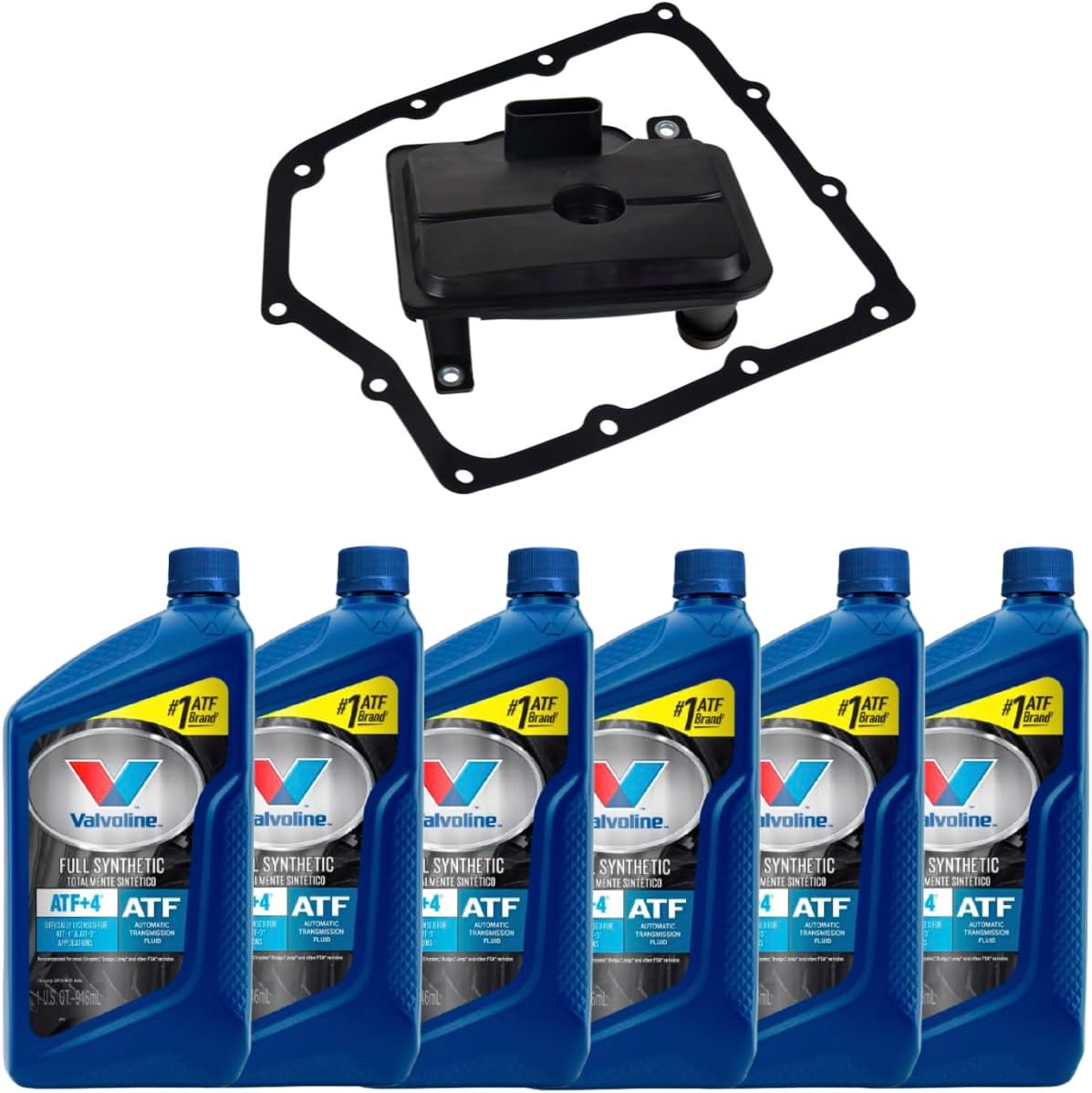
Fluid is ATF+4 only. The manual warns that other fluids can deteriorate shift quality and cause torque converter shudder, says not to add any additives except leak dye, to avoid sealers, and not to use chemical flushes [1]. If the unit has been "treated," drain it before you diagnose. Our 62TE fluid type and capacity guide covers the fill and filter job.
Use three speed sensors to find which half is slipping
The 62TE is a 41TE four-speed with an underdrive compounder added to the transfer drive. The compounder holds a low clutch, a direct clutch, an overrunning clutch (sprag) and a planetary set, and it runs in two modes, reduction or direct [3]. ATRA's 62TE update shows where each speed sensor sits [3]:
| Sensor | What it reads | What it tells you |
|---|---|---|
| Input speed sensor (ISS) | Turbine speed, off the input clutch hub, top of case | What the converter is feeding the box |
| Transfer shaft speed sensor (TSS) | Front annulus/rear carrier, the old 41TE output | Output of the four-speed main box |
| Output speed sensor (OSS) | Compounder output carrier, rear of case | Output of the compounder |
That layout gives you two ratios to graph on a road test. ISS divided by TSS is the main box ratio. TSS divided by OSS is the compounder ratio, which should sit at one fixed value in reduction and at 1:1 in direct. ATRA describes the TCM doing the same math: input speed divided by output speed gives gear ratio, and the time it takes that ratio to change after a shift is commanded is how the TCM learns clutch volume [4].
So graph all three during a hard pull through the gears. If the ISS/TSS ratio drifts while TSS/OSS stays flat, the slip is in the main box clutches (UD, OD, 2/4, L/R). If ISS/TSS holds and TSS/OSS wanders off its fixed value, the compounder is slipping. If engine rpm rises against ISS with the converter clutch commanded on, it is the converter, not the gearbox. That one graph saves you from overhauling the wrong half.
Compounder slip: the low clutch drum
When the compounder is the half that moves, the usual cause is the low clutch drum. ATRA calls ring land wear on the underdrive compounder low clutch drum the most common failure on the unit, shows a badly worn drum at about .005 in. of ring clearance, and gives the original drum a 100 percent failure rate [3]. Oil leaking past those rings starves the low and direct clutches, and ATRA lists the result as P0792, P0735, no line rise and a slipping 1-2 [3]. A worn snap ring groove is a common problem in the same area [3].
The 1-2 is where you feel it because that shift is the compounder going from reduction to direct. A 200 that flares hard into second with one of those codes in history is a compounder job. Rings in the old drum will not fix it; ATRA points to the aftermarket drum with a steel insert [3].
Main box slip: clutch volumes and switch valves
If the main box ratio is the one drifting, pull the clutch volume indexes. ATRA's preliminary 62TE ranges are [4]:
| Clutch | Preliminary CVI range |
|---|---|
| Underdrive (UD) | 26-74 |
| 2/4 | 16-54 |
| Overdrive (OD) | 42-143 |
| Low/Reverse (L/R) | 16-63 |
| Low clutch (LC), compounder | 16-25 |
| Direct clutch (DC), compounder | 26-34 |
A volume above its range means the clutch is taking too long to fill, which is worn frictions, a leaking seal or a feed leak. Note which gears share the high clutch. A high L/R with a slip in first, second and reverse points at the valve body before the clutch itself. Sonnax documents bore wear at the 62TE's low/reverse switch valve and, on this unit only, the low clutch switch valve. The valves side-load and wear their bores, oil exhausts past them through the manual valve, apply pressure drops, and you get a burnt low/reverse clutch with delayed or no Reverse and delayed or no first and second [5].
Prove it with a vacuum test: 18 in. Hg passes, lower means wear. The 62TE port is long, so cover both ends (Sonnax suggests a rubber mat over the back of the casting) and shuttle the valve into each position by hand. If the first port leaks, the second almost always does too. Sonnax's kits are 92835-43K, or 92835-47K for extreme wear [5]. A used valve body off a high-mileage car likely has the same worn bores, so a new or properly sleeved body is the lasting fix.
Two more double-check items from ATRA: the 2-3, 3-2 and 4-2 shifts are double-swap shifts with a 40-70 millisecond handoff, and a compounder that shifts early gives a shudder or harsh shift while a late one gives a double bump [3]. Drivers call both slipping. And the cooler bypass valve is a high-risk part that ATRA says to replace on any repair [3].
Converter slip: P0740 and P2764
A 200 that jerks or feels like it slips at steady cruise, with engine rpm moving against turbine speed, may be the converter clutch. ATRA reported P2764, TCC stuck on, as the most common 62TE code on its hotline, fixed with TCC solenoid 5169313AA [3]. FCA's GPOP tip 9004206 adds the next step: if a 62TE is jerking or slipping with P0740 or P2764, check TCC solenoid operation, and if the solenoid is OK, the codes indicate a torque converter failure and the converter gets replaced [6]. Test the solenoid first. Do not keep throwing solenoids at a converter that is done.
See our 62TE torque converter shudder guide for the TCC slip graph.
Slipping after a replacement transmission
A lot of 200s are on their second 62TE. Besides the pan issue above, GPOP 9004206 says the engine-to-transmission dowel pins are critical to the life of several components and must be verified in the rear of the block before a replacement goes in; Mopar ships loose pins with reman 62TEs [6]. A unit hung without them is not centered on the crank, and pump and converter damage follow. If a fresh unit slips within a few thousand miles, check for pins, check the pan part number, and check that the solenoid block seal is right side up. ATRA calls that seal the most common builder error: installed upside down it blocks the 2/4 clutch circuit, and the unit loses third in limp mode, plus fourth and sixth [3].
The fix, matched to what you proved
- Low or wrong fluid, volumes normal: fix the leak, drain and refill with ATF+4, set the level hot with the service dipstick, then reset adaptives and road test.
- Soft upshifts on an unflashed 2012-2013 car: the 21-013-12 flash [2].
- Switch valve bore wear: sleeve kit or a new valve body, and inspect the low/reverse clutch.
- TCC codes: solenoid test, then converter [6].
- Compounder ratio slipping, P0792/P0735, or high volumes with burnt fluid: overhaul.
On the overhaul, use ATRA's numbers. Direct clutch clearance is .037-.056 in. and low clutch clearance is .018-.029 in., both checked with 30 psi of air through the compounder feed hole [3]. Replace the low clutch drum with the steel-insert design, look over the direct clutch piston for delamination (lightly damaged pistons can still pass an air check), and confirm the underdrive one-way clutch outer race turns counterclockwise when assembled [3]. New cooler bypass valve, solenoid block seal slot up, then a full adaptive relearn.
Keeping it from coming back
- Check the level hot with a service dipstick at every service. The capped tube is why these run low.
- ATF+4 only, no additives, sealers or flushes [1].
- If the owner tows regularly for more than 45 minutes at a time, use the fluid and filter interval for police, taxi, fleet or frequent trailer towing, and use AutoStick to hold a lower gear when it keeps shifting under load [1].
- If the transmission temperature light comes on, pull over, shift to Neutral and idle until it goes out [1]. Tell the owner that before it happens, not after.
Shop the part for this fix
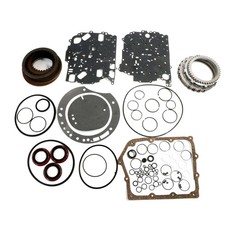
Opening up a slipping 200? The 62TE master level 2 rebuild kit at CoreTransmissionParts includes the pistons and filter for compounder and burnt-pack overhauls.
See the 62TE master rebuild kit →Need something else? Browse all rebuild kits at CoreTransmissionParts.
Need parts for this job?
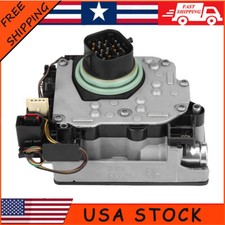
Master rebuild kits, valve bodies, TCC solenoids and ATF+4 service kits for the 2011-2014 Chrysler 200's 62TE, with checkout right here on Gearbox Insider.
Shop 62TE parts →FAQ
Why is my Chrysler 200 transmission slipping?
On a 2011-2014 Chrysler 200 with the 62TE six-speed, start with fluid level, because the fill tube is capped and a slow leak goes unnoticed. The most common hard-part cause is ring land wear on the compounder low clutch drum, which slips the 1-2 shift and sets P0792 or P0735. A converter clutch problem with P0740 or P2764 can also feel like a slip.
Does my Chrysler 200 have the 62TE?
Only the 2011-2014 car can. V6 cars and some 2.4L cars built with sales code DG2 have the 62TE six-speed; other 2.4L cars have a four-speed with a dipstick and a 3 range on the shifter. The six-speed has a capped fill tube and AutoStick below Drive. The redesigned 2015 and later 200 uses a nine-speed instead.
What transmission fluid does a Chrysler 200 62TE take?
ATF+4 only. The owner's manual warns that other fluids can hurt shift quality and cause converter shudder, and it says not to use additives (leak dye excepted), sealers or chemical flushes. The level is checked hot, about 180 F (82 C), with a service dipstick, since the six-speed has none of its own.
Why is my Chrysler 200 stuck in third gear?
Third gear is the six-speed's limp home mode. The TCM holds third in every forward range when it sees a fault that could damage the transmission, while Park, Reverse and Neutral still work. A key-off reset may bring the gears back, but if it returns to third, it is setting a code that needs to be read.
Can a software update fix Chrysler 200 slipping?
Only for soft or rough upshifts caused by calibration. Bulletin 21-013-12 reprograms the PCM on 2012-2013 200s with the 62TE built before October 9, 2012 to improve upshift torque management. It will not fix low fluid, a worn compounder drum or burnt clutches.
Related guides
Sources
- Chrysler Group LLC, 2014 Chrysler 200 Sedan Owner's Manual (archived copy). Backs the four-speed dipstick versus the capped six-speed fill tube and special service dipstick, the 3 range versus AutoStick, the cold-weather second and third gear holds, limp home in third and the reset steps, the hot-fluid shift schedule, self-calibrating shifts, ATF+4 only with no additives, sealers or flushes, the 180 F (82 C) hot fluid definition, the improper-level warning, the 45-minute towing service rule and the transmission temperature light procedure. archive.org
- Chrysler Group LLC, Service Bulletin 21-013-12, "Transmission Shift Improvements," November 10, 2012, 2012-2013 JS Avenger/200. Backs the 3.6L (ERB) and 2.4L (ED3/EOG) with 62TE (DG2) coverage, the October 9, 2012 build cutoff, the upshift torque management PCM flash, the 13.2-13.5 V charger requirement and the 0.2-hour labor time. static.nhtsa.gov (PDF)
- Mike Souza, ATRA Senior Research Technician, "62TE Update" technical webinar, 2014. Backs the compounder layout, the ISS, TSS and OSS locations, 40-70 ms double-swap timing, low clutch drum ring land wear (.005 in., 100 percent failure rate) with P0792, P0735, no line rise and 1-2 slip, the steel-insert drum, the cooler bypass valve, P2764 and TCC solenoid 5169313AA, the clutch clearances, piston delamination, one-way clutch rotation and the solenoid block seal builder error. atracom (PDF)
- ATRA, Chrysler "CVI (Clutch Volume Indexes)" technical bulletin, 2012. Backs the input/output speed ratio method, how the TCM calculates clutch volume, and the preliminary 62TE clutch volume ranges. atracom (PDF)
- Sonnax, "Diagnosing 62TE, 68RFE Low/Reverse Switch Valve Issues." Backs the low/reverse and low clutch switch valve bore wear, its symptoms, the 18 in. Hg vacuum test procedure and kits 92835-43K and 92835-47K. sonnax.com
- FCA US LLC, GPOP tech tip 9004206, Remanufactured Transmission Assembly, June 22, 2022 (MY11-14 JS and others). Backs the P0740/P2764 solenoid-then-converter diagnosis, the dowel pin check and valve body pan 68145886. static.nhtsa.gov (PDF)