The first question on any Chrysler 200 that comes in with a transmission complaint is not "what's wrong with it." It is "which transmission is in it." The 200 name covers two different cars. The 2011-2014 car is the JS platform, a reworked Sebring, and on those the 62TE six-speed (sales code DG2) sits behind the 3.6L Pentastar (ERB) and behind some 2.4L four-cylinders (ED3 or EOG), per FCA bulletin 21-013-12 [1]. The 2015-2017 car is the UF platform, and its bulletins list the nine-speed 948TE instead [2]. Other four-cylinder JS cars got a four-speed.
That split matters more than it sounds. Much of the "Chrysler 200 transmission problems" talk online is about the 2015-up nine-speed, which shares nothing internally with the 62TE. If you price a 62TE kit for a 2016 car, or chase a nine-speed TCM flash on a 2013, you have wasted a day. This guide is for the 2011-2014 sedan and convertible with the 62TE. The bracketed numbers point to the Sources list at the bottom.
How the 62TE is built, and why it fails where it does
The 62TE is a 41TE four-speed with an underdrive compounder added to the transfer side. ATRA's 62TE update describes the compounder as a low clutch, a direct clutch, an overrunning clutch (sprag) and a planetary set, running in either reduction or direct [3]. Stack those two modes on the four-speed main box and you get six forward ratios, plus a "4th prime" ratio the unit uses on a 6-4 kickdown so it never has to swap two clutches at once on that shift [3].
The 2-3, 3-2 and 4-2 shifts are not that lucky. They are true double-swap shifts, where two elements release while two apply, and ATRA puts the handoff window at 40 to 70 milliseconds [3]. When the compounder is early relative to the main box you feel a shudder or a harsh shift. When it is late you feel a "double bump." Worn clutches, leaky sealing rings, stale adaptives and old software all show up first as bad timing on these shifts. That is why a 200 with a "bad shift" can be anything from a ten-minute flash to a full overhaul.
ATRA also lists what changed electrically from the 41TE: a solenoid and pressure switch assembly with a 23-way connector, a variable force solenoid for converter clutch (EMCC) control, a line pressure VFS and a line pressure sensor, and a transaxle range sensor [3]. There are three speed sensors. The input speed sensor reads turbine speed, the transfer shaft speed sensor watches the main box output, and the output speed sensor watches the compounder [3]. On a scan tool, comparing those three tells you which half of the transmission is slipping before you pull a bolt.
1. Harsh or bumpy upshifts on a 2012-2013 200
Start with software. FCA bulletin 21-013-12, dated November 10, 2012, covers 2012-2013 JS 200 and Avenger cars with the 3.6L, or the 2.4L with the 62TE, built before October 9, 2012 [1]. The repair is a PCM erase and reprogram that the bulletin says "improves how the shifts are controlled during upshifts (torque management)." FCA's diagnosis line is one sentence: if the customer reports shift quality issues, perform the repair [1].
The bulletin's shop details are worth following exactly. Hang a charger that keeps the battery above 13.2 volts but under 13.5 volts during the flash. If the flash is interrupted, restart it. Afterward, clear any codes that set in other modules, and fill out the authorized modification label (part 04275086AD) and stick it near the VECI label [1]. That label is how the next tech knows it was done.
On a 2011 car, or one built after the cutoff, the bulletin does not apply. Go to fluid level and condition, then the adaptives. A unit that has had a valve body, solenoid pack or overhaul and was never relearned will shift like it is broken.
2. Stalling or stumbling at a stop: P2764 and P0740
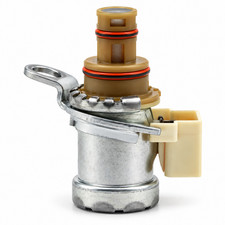
A 200 that shudders or nearly stalls coasting to a light usually has a converter clutch that is not releasing. ATRA reported that the most common 62TE code on its technical hotline was P2764, TCC stuck on, and the fix was a TCC solenoid, part 5169313AA [3]. On the scan tool, graph engine rpm against input (turbine) speed. With the converter clutch commanded off, the two should split with normal converter slip. If they stay locked together when the PCM says the clutch is off, the solenoid is suspect.
P0740, the TCC circuit fault, needs more care, because it can point to the converter itself. FCA's GPOP tech tip 9004206, updated June 22, 2022 and listing MY11-14 JS cars, says that if a 62TE is jerking or slipping with P0740 or P2764, check TCC solenoid operation first. If the solenoid is OK, the codes are indicative of a torque converter failure, and the converter gets replaced [4]. Test the cheap part before you condemn the expensive one, but do not keep throwing solenoids at a car whose converter is the problem.
3. 1-2 slip, P0792 and P0735: the compounder low clutch drum
This is the hard-parts failure on the 62TE, and the 200 gets its share. ATRA calls low clutch sealing ring groove wear the most common failure and gives the original low clutch drum a 100 percent failure rate [3]. As the ring lands wear, oil for the low and direct clutches leaks past the rings. ATRA ties that to P0792, P0735, a 1-2 slip, and no line rise when the PCM asks for more pressure [3]. A worn snap ring groove in the direct clutch housing is the other compounder problem on ATRA's list [3].
The repair is not a new set of rings in the old drum. ATRA points to the aftermarket drum with a steel insert [3], which puts the sealing ring grooves in steel instead of aluminum. Treat the drum as a required part on any 62TE you have apart, not an option you add if it "looks bad."
On reassembly, ATRA's checks are made with 30 psi of air through the compounder feed hole: direct clutch clearance 0.037 to 0.056 in., low clutch clearance 0.018 to 0.029 in. [3]. ATRA also warns about direct clutch piston delamination, where the bonded seal lets go of the piston. A lightly damaged piston can still pass an air check, so look at the bond line by eye [3].
4. Delayed or no Reverse, slow 1st and 2nd: switch valve wear
When a 200 is slow into Reverse or has a burnt low/reverse clutch, look at the valve body before you blame the clutch. Sonnax's 2025 tech article on the 62TE and 68RFE explains that the low/reverse switch valve bore wears from side-loading because the valve's diameter is too close to its total length. On the 62TE the low clutch switch valve bore wears the same way [5]. The leak exhausts through the manual valve, and Sonnax lists the symptoms as a burnt low/reverse clutch, delayed or no Reverse, and low apply pressure that causes delayed or no 1st and 2nd [5].
Vacuum testing is the way to prove it, but the 62TE is the awkward one. Its long port has to be covered at both ends and the valve shuttled by hand into each worm track, and Sonnax suggests a rubber mat over the back of the valve body to make it workable. A reading of 18 in. Hg passes. Below that, the bore is worn. If port 1 leaks, port 2 almost certainly does too, so Sonnax recommends replacing both OE valves [5]. The repair kits are 92835-43K (drop-in) and 92835-47K (oversized for extreme wear) [5].
This is also the reason a used valve body is a gamble on a high-mileage 200. If the bore that failed in the old unit is just as worn in the replacement, the complaint comes back in a few months. A new or properly reconditioned valve body, or a sleeve kit in the original, is the fix that lasts.
5. Solenoid pack faults and the builder error that kills 3rd
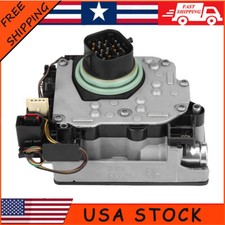
Solenoid and pressure switch codes on a 200 lead to the solenoid pack on the side of the valve body and its 23-way connector [3]. Check the connector and harness before ordering a pack. If a pack does go in, watch one detail: ATRA calls the seal between the solenoid block and the valve body the "most common builder error." It has a slot that has to face up. Installed upside down, it blocks the 2/4 clutch circuit, and the car loses 3rd in limp mode plus 4th and 6th [3]. A 200 that comes back after a solenoid pack job with no 4th or 6th almost always has this seal flipped.
6. After a replacement transmission: dowel pins, pan and bypass valve
Many 2011-2014 200s are on their second transmission. GPOP tip 9004206 lists three things that go wrong after a swap [4]:
- Dowel pins. FCA calls the engine-to-transmission dowel pins critical to the longevity of several components and says to verify they are in the rear face of the block before the replacement goes in. Mopar ships loose pins with remanufactured 62TEs [4]. Without them the unit is not centered on the crankshaft, and pump bushing and flexplate damage follow.
- Wrong valve body pan. If the fluid level reads wrong on the dipstick tool after filling to the service spec, FCA says an incorrect valve body pan may be installed and directs replacement with pan 68145886 [4]. Check the pan before adding or pulling fluid.
- TCC codes on the new unit. The same solenoid-first, then converter logic from section 2 applies [4].
ATRA adds one more: the cooler bypass valve is a high-risk part, and it recommends a new valve on every repair [3]. A sticking bypass valve cuts cooler flow, and a fresh unit with poor cooling will not last.
Fluid: ATF+4, checked hot, no flush
The 62TE takes ATF+4 and nothing else. FCA's 62TE owner literature warns that other fluids can hurt shift quality and cause converter shudder, cautions against chemical flushes, and does not allow additives other than leak-detection dye [6]. On the six-speed, the fill tube is capped and there is no owner dipstick. The level is checked with a service dipstick, with the fluid hot [6]. Many 200 owners never had the fluid changed because they could not find a dipstick. On a high-mileage car with old fluid, a pan drop gives you a look at the debris before you decide how far to go. Our 62TE fluid type and capacity guide covers the fill and check steps.
The fix, by what you found
- 2012-2013 car, harsh upshifts, no codes: PCM flash per 21-013-12 if built before October 9, 2012 [1].
- 2015-2017 car: it has the 948TE nine-speed, not a 62TE. Start with the UF TCM bulletins [2].
- Stumble at a stop, P2764: TCC solenoid, 5169313AA [3].
- P0740 with jerking or slipping: test the TCC solenoid. If it is good, replace the converter [4].
- P0792 or P0735 with a 1-2 slip: compounder overhaul with the steel-insert low clutch drum [3].
- Delayed Reverse or slow 1st/2nd, burnt low/reverse clutch: vacuum test the switch valve bores, then sleeve kit or valve body [5].
- No 4th or 6th after a solenoid pack job: flip the solenoid block seal so the slot faces up [3].
- Dipstick reads wrong after a swap: pan 68145886 [4].
Is a 2011-2014 200 worth fixing?
Often yes, if you know which problem you have. A flash, a TCC solenoid or a solenoid pack seal is cheap work against the price of any replacement car. A compounder failure with friction material in the pan is a full overhaul, and on a 200 with a tired engine the math gets close. Pull the pan before you quote a big job. Clean fluid and a clean pan point to a controls or converter problem. A pan full of friction material means the pump and valve body have been eating that debris, and a converter or solenoid alone will not hold.
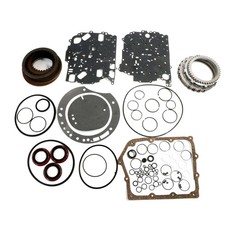
Shop the part for this fix: 62TE master rebuild kit with pistons
When the teardown shows worn compounder ring lands or a delaminated direct clutch piston, this CoreTransmissionParts kit has the frictions, steels, pistons and filter for a 2011-2014 Chrysler 200 62TE overhaul in one box.
View the 62TE master rebuild kit at CoreTransmissionPartsLooking for something else? Browse rebuild kits at CoreTransmissionParts.
Need parts for this job?
Our 62TE parts page has master rebuild kits, TCC solenoids, valve bodies, solenoid packs and ATF+4 service kits that fit the 2011-2014 Chrysler 200, all on our own checkout. The 62TE takes ATF+4 only. See the transmission fluid spec chart.
FAQ
Does my Chrysler 200 have a 62TE transmission?
Only the 2011-2014 JS-platform 200 can have the 62TE. FCA bulletin 21-013-12 lists it (sales code DG2) behind the 3.6L Pentastar (ERB) and behind some 2.4L four-cylinders (ED3 or EOG); other four-cylinder cars got a four-speed. The 2015-2017 UF 200 uses the 948TE nine-speed, which is a completely different transmission.
Why does my 2012 or 2013 Chrysler 200 shift hard?
Check whether the car was built before October 9, 2012 and still has the original PCM software. FCA bulletin 21-013-12 reprograms the PCM to improve torque management during upshifts on those cars. If the software is current, check the fluid level hot, then look at adaptives, the solenoid pack and the compounder.
What causes P2764 or P0740 on a Chrysler 200?
Both codes involve the torque converter clutch. ATRA lists P2764 (TCC stuck on) as the most common 62TE hotline code, fixed with TCC solenoid 5169313AA. FCA's GPOP tip 9004206 says to check the TCC solenoid first on P0740 or P2764, and if the solenoid is OK, the converter has failed.
Why is my Chrysler 200 slow to go into Reverse?
On the 62TE, a common cause is wear in the low/reverse switch valve bore in the valve body. Sonnax explains the leak exhausts through the manual valve and causes delayed or no Reverse, a burnt low/reverse clutch, and delayed 1st and 2nd. A vacuum test below 18 in. Hg confirms the wear, and a sleeve kit or replacement valve body fixes it.
What transmission fluid does a 2011-2014 Chrysler 200 6-speed use?
ATF+4 only. FCA's 62TE owner literature warns against other fluids, chemical flushes and additives. The six-speed has a capped fill tube with no owner dipstick, so the level is checked hot with a service dipstick.
Related guides
Sources
- Chrysler Group LLC, Service Bulletin 21-013-12, "Transmission Shift Improvements," November 10, 2012, 2012-2013 JS Avenger/200. Backs the 3.6L (ERB) and 2.4L (ED3/EOG) with 62TE (DG2) coverage, the October 9, 2012 build cutoff, the upshift torque management PCM flash, the 13.2-13.5 V charger requirement and label 04275086AD. static.nhtsa.gov (PDF)
- Chrysler Group LLC, Service Bulletin 21-029-14, "Flash: MIL Illumination For P1 DCF, P1 ODO, P1 DBB," September 19, 2014, 2015 (UF) Chrysler 200 and (KL) Cherokee. Backs the 2015 UF 200 using the 948TE nine-speed with its own TCM calibrations. static.nhtsa.gov (PDF)
- Mike Souza, ATRA, "62TE Update" technical webinar. Backs the compounder layout, 4th prime ratio, 40-70 ms double-swap timing, electrical changes from the 41TE, the three speed sensors, low clutch drum ring groove wear and P0792/P0735, the steel-insert drum, clutch clearances, direct clutch piston delamination, P2764 with TCC solenoid 5169313AA, the solenoid block seal orientation and the cooler bypass valve. atracom (PDF)
- FCA US LLC, GPOP tech tip 9004206, Remanufactured Transmission Assembly, June 22, 2022 (MY11-14 JS, MY15-22 VF, MY11-20 JC, MY11-20 RT). Backs the dowel pin check, the P0740/P2764 TCC solenoid-then-converter diagnosis and valve body pan 68145886. static.nhtsa.gov (PDF)
- Chris Leach, Sonnax, "Diagnosing 62TE, 68RFE Low/Reverse Switch Valve Issues," July 14, 2025. Backs the switch valve bore wear mechanism, the delayed Reverse and delayed 1st/2nd symptoms, the 18 in. Hg vacuum test, and kits 92835-43K and 92835-47K. sonnax.com
- FCA US LLC, 2019 Dodge Journey Owner's Manual (62TE six-speed). Backs ATF+4 only, the no-flush and no-additive cautions, and the capped six-speed fill tube checked with a service dipstick. vehicleinfo.mopar.com (PDF)