Grand Caravan slip complaints come in sounding alike: the engine flares between shifts climbing an on-ramp with the family and the luggage aboard, it bogs pulling away and then lands hard in second, or it suddenly feels like it only has one gear. Every Grand Caravan built on the 2008-2020 RT platform with the six-speed uses the 62TE. Slip on this unit almost always comes from a short list: low fluid nobody could check, heat, a converter that is shedding its own lining, the compounder, or worn switch valves in the valve body. Software makes the list longer, because some of what owners call slipping is just shift calibration.
This is the order I work a Grand Caravan slip, from the cheapest test to the teardown. The numbered references point to the Sources list at the bottom.
First, separate slip from shift feel and limp mode
Before you condemn anything, rule out the three conditions that get written up as "slipping" but are not a clutch losing grip:
- Limp Home Mode. When the TCM sees a condition that could damage the transmission, the 62TE stays in third gear no matter which forward gear is selected, while Park, Reverse and Neutral still work, and the MIL may come on [1]. An owner who has been driving it that way says it "slips" because takeoffs are soft and the engine revs high on the highway. The 2019 owner's manual even gives a reset: stop, shift to Park, ignition off, wait about 10 seconds, restart [1]. If a key cycle brings all the gears back, you have a stored code to chase, not burnt clutches.
- Cold-weather third. At about -16 F (-27 C) or below, the manual says operation may briefly be limited to third gear until the fluid warms up, and converter clutch engagement is inhibited until the fluid is warm [1].
- Software. On 2011-2013 Grand Caravans and Town and Countrys with the 3.6L (sales code ERB) and the six-speed (DG2) built before September 26, 2012, Chrysler bulletin 21-012-12 Rev. B reflashes the PCM for a harsh 1-3 upshift in ECO mode and a harsh 2-3 upshift in normal mode [2]. The same flash changes the shift schedule for the 1-2, 3-4, 4-5 and 5-6 upshifts and the 6-4P, 6-5 and 5-4 downshifts, and improves fifth-gear converter lockup and unlock [2]. A van that never got it can feel busy and inconsistent enough to be called slipping. The bulletin says to record and repair any stored DTCs first and to hold battery voltage above 13.2 volts during the flash [2].
A true slip shows on the scan tool. The 62TE has three speed sensors: the input speed sensor reads turbine speed off the input clutch hub, the transfer speed sensor reads the front annulus and rear carrier assembly, and the output speed sensor, unique to this unit, reads the underdrive compounder output carrier [4]. Graph input and output speed together on a loaded upshift. If input climbs and output does not follow, a clutch is not holding. If input tracks engine rpm with the converter clutch commanded on, the converter clutch is the one slipping.
Step one: fluid level, done the factory way
The Grand Caravan has no transmission dipstick. Per the 2019 owner's manual, the level is preset at the factory, routine checks are not required, the fill tube is capped, and a dealer checks it with a special service dipstick [1]. The same page warns that running with an improper level can cause severe transmission damage and tells owners to get the level checked right away if they see a leak [1]. In practice that means a van can go 100,000 miles with a weeping cooler line and nobody ever looks.
Chrysler knows low fluid causes this exact complaint. Bulletin 21-046-15 covered 2015 Grand Caravans and Town and Countrys with the 62TE built June 19-21, 2015, for harsh shifting under heavy acceleration in hot or cold weather. The cause was an under-filled transmission, and the repair was simply to check the level and top it up with ATF+4, part 05013457AA [3]. If a brand-new van can do it from the factory, a high-mileage one with a seep certainly can.
Low fluid on a 62TE shows up under load and in corners first. The pump starts pulling air before the sump is low enough to lose drive, so you get flares on the clutch-to-clutch shifts and a soft feel at heavy throttle. Check it on level ground, hot, using the scan tool to read actual fluid temperature and the service dipstick to read the level, never cold. Use ATF+4 meeting FCA MS-9602 and nothing else [1]. The manual also says not to add any fluid additives (leak dye is the only exception), to avoid sealers, and not to use chemical flushes, which it says are not covered by warranty [1]. Capacities and the full procedure are in our 62TE fluid type and capacity guide.
Smell and look at what comes out. Dark, burnt fluid with lining in the pan means the slip already did its damage, and topping it up only buys time.
Step two: heat, loads and the tow hitch
Minivans live hard lives. Seven people, a cargo box and a trailer on a hot day is a heavy load for a front-drive six-speed. The manual's rule: if you regularly tow for more than 45 minutes of continuous operation, change the fluid and filter on the "police, taxi, fleet, or frequent trailer towing" schedule [1]. Under load in hills it tells drivers to use Electronic Range Select to pick the highest gear that holds speed without frequent downshifts, and to avoid continuous high-rpm driving to prevent excess heat [1]. It also says to change the fluid and filter any time the fluid is contaminated, for example with water [1].
A van that started slipping after a summer road trip with a trailer usually has cooked fluid and glazed frictions. That is a rebuild, not a fluid service.
Step three: the torque converter that eats itself
This one catches shops that skip straight to the clutch packs. FCA STAR case S2121000005 (April 2021) documents 62TE torque converters whose internal piston can crack over time. The cracked piston scrapes friction material off the front cover, and the complaint is transmission slipping or erratic shifting with one or more of P0740 (TCC out of range), P0868 (line pressure low) and P0944 (loss of hydraulic pump prime) [4]. The case lists suspect Mopar reman transmissions and converters by part number, and notes that reman units and converters built after August 2017 should not have the problem [4]. So a Grand Caravan that already had a "new" transmission is not off the hook. Check the repair history for those part numbers.
The STAR case lays out the decision tree, and it is worth following exactly [4]:
- P0740 only, clean fluid, no lining in the pan or filter: replace the converter, fluid and filter.
- P0740 and/or P0868 (possibly with ratio codes), no P0944, debris present but clutches not badly worn and fluid not cooked: replace the converter, the cooler, the fluid, flush or replace the lines, replace the valve body and the filter.
- P0868 and/or P0740 with P0944, or cooked fluid, or significant friction material in the pan, filter and magnet: this is the overhaul path.
The cooler matters here. Converter lining that made it into the cooler will come right back into a fresh unit. More on converter-side symptoms in our 62TE torque converter shudder guide.
Step four: pin the slip to a gear
The 62TE is a 41TE four-speed main box with an underdrive compounder behind it. The compounder has a low clutch, a direct clutch, a one-way clutch and a planetary set, and it runs in either direct or reduction mode. Four main-box ratios times two compounder modes gives six forward gears, plus a "4th prime" ratio used only on a 6-4 kickdown so the unit does not have to swap two elements at once [5]. That layout tells you where to look:
- 1-2 flare or slip, with P0792 or P0735. The 1-2 is the compounder changing modes. ATRA's 62TE update names ring land wear on the compounder low clutch drum as the most common failure, shows a badly worn drum at about .005 in. of ring clearance, rates the original drum's failure rate at 100 percent, and lists P0792, P0735, no line rise and a slipping 1-2 as the symptoms [5]. ATRA also points to a worn snap ring groove in the direct clutch housing [5]. The aftermarket drum with a steel insert is the fix [5].
- Slip or delay in reverse, first and second, while third and up feel fine. Think valve body. Sonnax documents bore wear at the 62TE's low/reverse switch valve and low clutch switch valve. Each acts as a one-way valve for its clutch; when the bore wears, oil leaks past and exhausts through the manual valve, apply pressure drops, and you get burnt clutches, delayed reverse, first and second, or no reverse [6]. Sonnax blames side-loading, because the valve's diameter is too close to its length [6].
- Slip in every gear. Look at what every gear shares: fluid level, pump, line pressure and the cooler circuit. ATRA calls the cooler bypass valve a high-risk area and says to replace it with a new valve on any repair [5]. P0868 and P0944 here point back to the converter case above.
For the full elements-in-use chart, see 62TE slipping causes and fix.
Step five: prove it before you pull it
Pull every stored and history code in the TCM, not just what turned on the MIL. Then test the switch valves on the bench if the slip pattern points there. Sonnax's vacuum test is simple: on the 62TE you cover the long port front and back and shuttle the valve by hand into each track you test. 18 in-Hg or better is acceptable; anything less means a worn bore [6]. If the first port leaks badly, the second almost certainly does too, so treat both valves [6]. The drop-in repair is Sonnax 92835-43K, with the oversized 92835-47K for extreme wear [6].
If the pan is clean, the fluid is red, the switch valves hold vacuum and there are no ratio codes, go back to software and the level before you spend the customer's money on a teardown.
The repair, by what you found
| Finding | Repair |
|---|---|
| Low fluid, fluid still clean, no codes | Find and fix the leak, set the level hot with ATF+4 [1][3] |
| Harsh or busy shifts, 2011-2013 3.6L built before 9/26/2012 | PCM flash per 21-012-12 Rev. B [2] |
| P0740 / P0868, lining in pan, clutches OK | Converter, cooler, lines, valve body, filter, fluid per STAR S2121000005 [4] |
| P0792 / P0735, 1-2 slip | Compounder teardown, steel-insert low clutch drum, check direct clutch housing groove [5] |
| Delayed or slipping R, 1st, 2nd | Switch valve sleeve kits, then evaluate the low/reverse clutch [6] |
| Cooked fluid, P0944, heavy debris | Full overhaul, new converter, new cooler, new cooler bypass valve [4][5] |
On a compounder rebuild, ATRA's clearances are 0.037-0.056 in. for the direct clutch and .018-.029 in. for the low clutch, both checked with 30 psi of air through the compounder feed hole [5]. The underdrive one-way clutch outer race should rotate counterclockwise when it is assembled correctly [5]. One builder error ATRA calls out by name: a solenoid block seal installed upside down blocks the 2/4 clutch circuit and costs you third in limp mode, fourth or sixth. The slot faces up [5]. If a freshly rebuilt Grand Caravan comes back "slipping in fourth and sixth," look there first.
After any repair, clear codes, run the Quick Learn with the scan tool, and drive it fully hot through every shift so the TCM adapts to the new parts. On 2011-2013 3.6L vans, confirm the 21-012-12 calibration is in it while you have the scan tool connected [2].
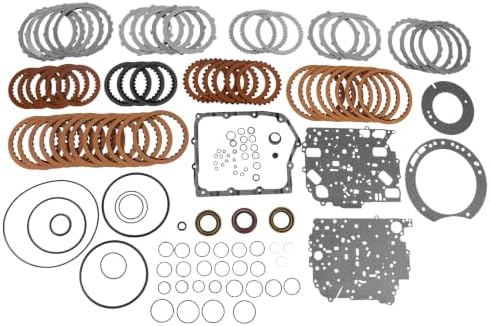
Shop the part for this fix: 62TE master rebuild kit with pistons
When the teardown confirms burnt frictions, a delaminated piston or a worn compounder, this CoreTransmissionParts kit puts the frictions, steels, pistons and filter for a Grand Caravan 62TE overhaul in one box.
View the 62TE master rebuild kit at CoreTransmissionPartsLooking for something else? Browse rebuild kits at CoreTransmissionParts.
Need parts for this job?
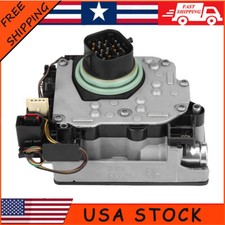
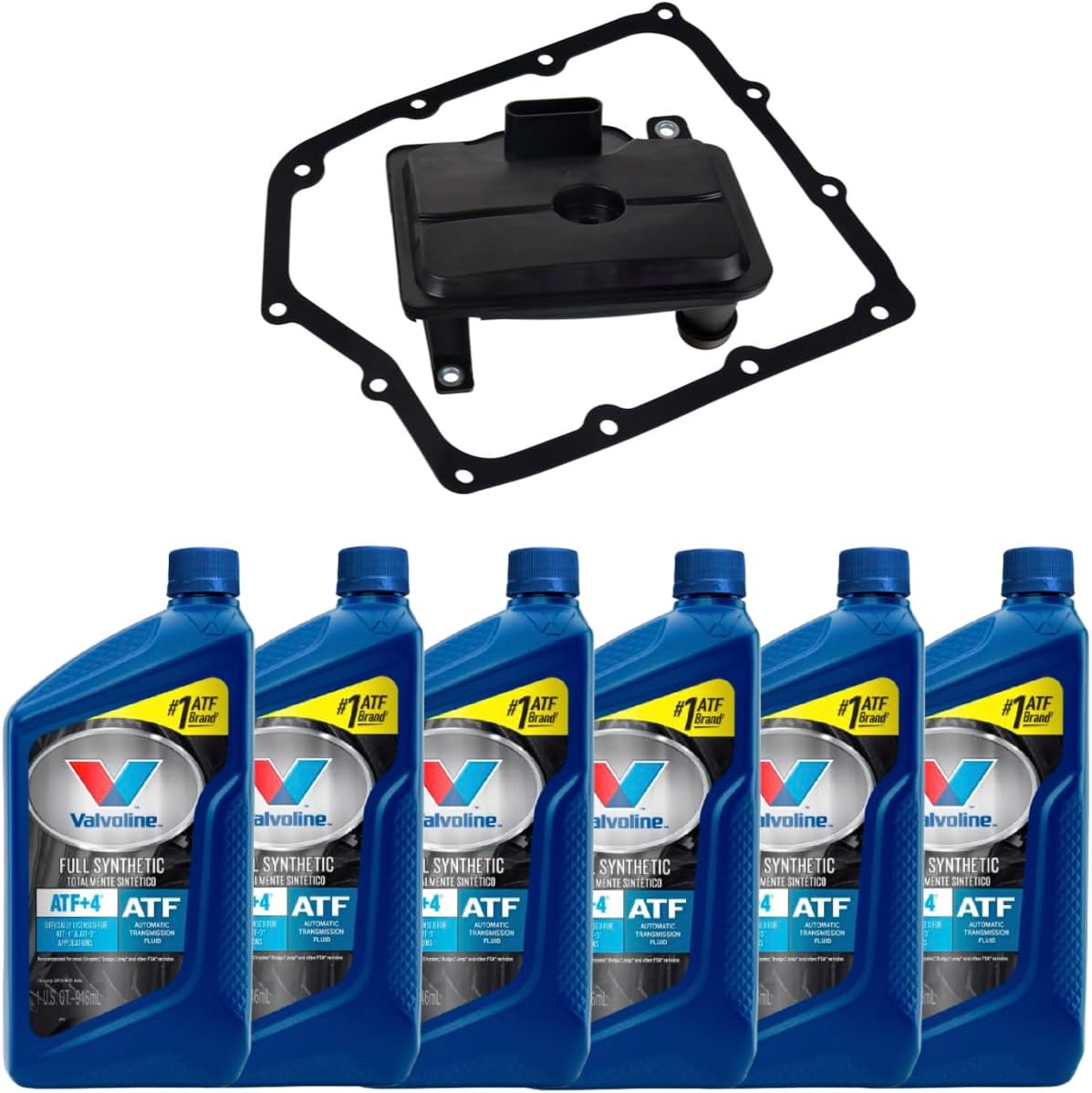
Our 62TE parts page has master rebuild kits, valve bodies, solenoid packs and ATF+4 service kits that fit the Grand Caravan, all on our own checkout. Not sure which fluid goes where? See the transmission fluid spec chart.
FAQ
Why is my Dodge Grand Caravan transmission slipping?
On a Grand Caravan with the 62TE six-speed, the most common cause is low fluid, because the fill tube is capped and there is no dipstick, so the level never gets checked. After that come a torque converter with a cracked internal piston (P0740, P0868, P0944), wear in the compounder low clutch drum (P0792, P0735 and a slipping 1-2 shift), worn low/reverse switch valve bores in the valve body, and frictions burnt by heat or towing.
How do you check transmission fluid on a Grand Caravan with no dipstick?
The six-speed Grand Caravan has a capped fill tube, and the level is read with a special service dipstick with the fluid at operating temperature, confirmed on a scan tool. Use only ATF+4 meeting MS-9602, with no additives, sealers or chemical flushes. Chrysler bulletin 21-046-15 shows how a low level alone can cause harsh shifts under heavy acceleration.
Why is my Grand Caravan stuck in third gear?
Third gear is the 62TE's Limp Home Mode, used when the TCM detects a condition that could damage the transmission. Park, Reverse and Neutral still work and the check engine light may be on. The owner's manual reset is to stop, shift to Park, turn the ignition off for about 10 seconds and restart, but a fault that keeps coming back needs its stored codes diagnosed.
Can a software update fix Grand Caravan shifting problems?
Sometimes. Bulletin 21-012-12 Rev. B reflashes 2011-2013 3.6L Grand Caravans built before September 26, 2012 for harsh 1-3 and 2-3 upshifts and changes several shift schedules and fifth-gear lockup. A flash fixes calibration complaints, not burnt clutches or a damaged converter, so read the codes and check the fluid before you rely on it.
Related guides
Sources
- FCA US LLC, 2019 Dodge Grand Caravan Owner's Manual. Backs third-gear Limp Home Mode and its reset, the cold-weather third-gear hold and converter clutch inhibit, the capped fill tube with no dipstick and the special service dipstick, the improper-level warning, ATF+4 to MS-9602, the no-additives, no-sealers and no-flush rules, the 45-minute towing service rule, Electronic Range Select use under load and the contaminated-fluid change rule. vehicleinfo.mopar.com (PDF)
- Chrysler Group LLC, Service Bulletin 21-012-12 Rev. B, "Flash: Transmission Shift Quality Improvements," November 29, 2012 (also RRT 12-069), 2011-2013 RT Caravan/Town and Country with 3.6L (ERB) and 6-speed (DG2) built before September 26, 2012. Backs the harsh 1-3 ECO and 2-3 normal-mode upshift symptoms, the shift schedule and fifth-gear lockup changes, repairing stored DTCs first and the 13.2 V battery requirement. static.nhtsa.gov (PDF)
- FCA US LLC, Service Bulletin 21-046-15, "Low Transmission Fluid Level," July 16, 2015 (also RRT 15-075), 2015 Grand Caravan/Town and Country with the 62TE built June 19-21, 2015. Backs harsh shifting under heavy acceleration from an under-filled unit and the check-and-fill repair with ATF+4 05013457AA. static.nhtsa.gov (PDF)
- FCA US LLC, STAR Case S2121000005, "62TE 6-Speed Transmission Cracked Torque Converter (TC) Piston Repair Index," April 1, 2021. Backs the cracked converter piston mechanism, the slip and erratic shift complaint with P0740, P0868 and P0944, the suspect reman parts and August 2017 cutoff, and the three-path repair table. static.nhtsa.gov (PDF)
- Mike Souza, ATRA Senior Research Technician, "62TE Update" technical webinar, 2014. Backs the three speed sensors, the compounder layout, modes and 4th prime, low clutch drum ring land wear (.005 in., 100 percent failure rate) with P0792, P0735, no line rise and 1-2 slip, the direct clutch housing snap ring groove, the cooler bypass valve, the direct and low clutch clearances, one-way clutch rotation and the 2/4 circuit seal builder error. atracom (PDF)
- Chris Leach, Sonnax, "Diagnosing 62TE and 68RFE Low/Reverse Switch Valve Issues." Backs the low/reverse and low clutch switch valve bore wear and its cause, the burnt clutch and delayed or no reverse, first and second symptoms, the 18 in-Hg vacuum test and kits 92835-43K and 92835-47K. sonnax.com