A Journey that "slips" usually comes in with one of three stories: the engine flares between shifts when it is pulling a hill, it bogs and then grabs pulling away from a light, or it suddenly feels like it has no gears above third. On a V6 Journey that transmission is the 62TE six-speed, the same unit that goes in the Grand Caravan, and slip complaints on it follow a short, predictable list. What makes the Journey different is not the hardware. It is how the vehicle hides the two things that cause most slips: low fluid and heat.
This is the order I work a Journey slip complaint. The numbered references point to the Sources list at the bottom.
Confirm it is a 62TE, and confirm it is really slipping
Dodge sold the Journey from 2009 through 2020. V6 versions got the 62TE. Most 2.4L four-cylinder Journeys got a four-speed, but FCA bulletin 18-066-15 shows some 2012-2013 2.4L Journeys built with the six-speed (sales code DG2) [2]. The quick tell is under the hood: the owner's manual shows a transmission dipstick on the four-speed only. On the six-speed the fill tube is capped and there is no dipstick at all [1]. Everything below is for the six-speed.
Next, rule out the conditions that feel like slip but are not:
- Limp home in third. When the TCM sees a fault that could damage the transmission, the six-speed holds third in every forward range [1]. The tell is that it never shifts at all.
- Cold-weather third. Below about -16 F (-27 C), the manual says the six-speed may be held in third gear until the fluid warms up [1].
- Hot-fluid shift schedule. When fluid temperature goes above normal, the powertrain controller changes the shift schedule and widens the range where the converter clutch is applied, specifically to protect the transmission [1]. The driver feels different shift points and calls it slipping.
- Software clunks. On a 2012-2013 Journey, FCA's 18-066-15 flash covers shift clunk and bump complaints and cruise control jerking [2]. Check the calibration before you diagnose shift feel.
A real clutch slip shows up on the scan tool as input speed climbing while output speed does not follow. The 62TE has three speed sensors. The input speed sensor reads turbine speed off the input clutch hub. The transfer speed sensor reads the front annulus and rear carrier assembly. The output speed sensor, unique to the 62TE, reads the underdrive compounder output carrier [3]. Dividing input speed by output speed gives you the actual gear ratio, which is exactly how the TCM figures out what gear it is in [4]. If the ratio drifts away from the commanded gear under load, you have slip.
Step one: the fluid level nobody checked
Most slipping Journeys I see are low on fluid, and the owner had no way to know. The 2019 manual says the six-speed's level is preset at the factory, routine checks are not required, the filler tube is capped, and a dealer checks it with a special service dipstick [1]. It also warns that running at the wrong level can cause severe damage, and tells the owner to get it checked right away if there is a leak [1].
Low fluid on a 62TE shows up first under load and in turns. The pump starts pulling air before the unit is empty enough to lose drive, so you get flares on the clutch-to-clutch shifts and a soft, slipping feel under heavy throttle. Set the level the right way: hot, about 180 F (82 C), which the manual calls normal operating temperature after at least 15 miles of driving [1]. Many Journeys can show actual transmission temperature right in the instrument cluster display [1], which is handy if your scan tool is busy. A cold reading on this unit tells you nothing.
Use ATF+4 and nothing else. The manual is direct about it: use only ATF+4, do not add any additives (leak-detection dye is the only exception), avoid sealers, and do not use chemical flushes, because flush damage is not covered by the new vehicle warranty [1]. For capacities and the service steps, see our 62TE fluid type and capacity guide.
Then find where the fluid went. Fluid out the vent with a converter clutch code is a different problem, covered in our Journey common problems guide.
Step two: heat and towing
The Journey looks like a crossover, so owners hitch a camper or a utility trailer to it without a second thought. The 2019 manual rates the 3.6L to tow, but it ties towing directly to transmission care. Anyone who regularly tows for more than 45 minutes of continuous driving should change the fluid and filter on the "police, taxi, fleet, or frequent trailer towing" schedule [1]. When the transmission keeps hunting between gears under load, in hills or into a head wind, the manual says to use AutoStick to select a lower gear to cut excessive shifting and heat buildup [1].
If the transmission temperature warning light has come on, the manual says to pull over and idle in neutral, and warns that continuous driving with that light on will eventually cause severe transmission damage or failure [1]. A Journey that slips after a summer of towing has cooked fluid and glazed frictions, and a fluid change will not bring those back.
Step three: pin the slip to a gear
The 62TE is a 41TE four-speed main centerline with an underdrive compounder bolted behind it. The compounder has a low clutch, a direct clutch, an overrunning clutch and a planetary set, and it runs in one of two modes, direct or reduction [3]. Combine the main box's four ratios with the compounder's two and you get six forward gears, plus a seventh "4th prime" ratio the TCM uses only on a 6-4 kickdown so it does not have to swap two elements at once [3].
That layout tells you a lot about where a slip is coming from:
- Slip or flare on the 1-2 shift. The 1-2 is the compounder changing from reduction to direct. ATRA's 62TE update names ring land wear on the compounder low clutch drum as the most common failure, with the sealing ring lands worn to about .005 in. of clearance on a badly worn drum, and lists P0792, P0735, no line rise and a slipping 1-2 as the symptoms [3]. ATRA put the failure rate of the original drum at 100 percent [3].
- Double bump or shudder on the 2-3, 3-2 or 4-2. These are "double swap" shifts, where two elements release and two others apply at the same time. The clutch-to-clutch handoff is supposed to happen within 40 to 70 milliseconds [3]. If the compounder shifts too early relative to the main box, you get a shudder or a harsh shift. If it shifts too late, the driver feels a double bump [3].
- Slip in first, second and reverse, but third and up are fine. The low/reverse clutch is the common element. Sonnax documents wear in the 62TE's low/reverse switch valve bore and its low clutch switch valve bore. These valves act as one-way valves for their clutches, and when the bore wears, oil leaks past and exhausts through the manual valve. The result is low apply pressure, a burnt low/reverse clutch and delayed or no reverse, first and second [5].
- Slips in every gear. Look at what every gear shares: fluid level, pump, line pressure and the cooler circuit. ATRA calls the cooler bypass valve a high-risk area and recommends a new one on any repair [3].
For the full gear-by-element chart, see our 62TE slipping causes and fix guide.
Step four: read the codes and the clutch volumes
Pull every stored code in the TCM before you touch anything. A Journey with a compounder ring land leak usually has P0792 (compounder speed ratio error) or P0735 (fifth gear ratio error) in history [3], even if the MIL is off.
Then go to the clutch volume indexes. The TCM watches how long the gear ratio takes to change after it commands a shift, and from that time it calculates how much fluid it took to apply the clutch [4]. As frictions wear, clearance grows and the volume number climbs. ATRA's preliminary 62TE clutch volume ranges are [4]:
| Clutch | Preliminary CVI range |
|---|---|
| Underdrive (UD) | 26-74 |
| 2/4 | 16-54 |
| Overdrive (OD) | 42-143 |
| Low/Reverse (L/R) | 16-63 |
| Low clutch (LC), compounder | 16-25 |
| Direct clutch (DC), compounder | 26-34 |
The compounder windows are tight; the direct clutch range is only eight counts wide. A 1-2 slip with a DC volume above 34 points right at the compounder. A high volume plus a ratio code plus the matching symptom is a teardown.
If the volumes are in range and the slip is only in first, second and reverse, suspect the valve body switch valves before the clutches. Sonnax's vacuum test is the way to prove it: shuttle the valve by hand into each worm track being tested, and anything below 18 in-Hg is worn and should be repaired [5]. On the 62TE, if the first port shows heavy leakage, the second is very likely worn too, so treat both valves [5]. Sonnax's drop-in fix is the 92835-43K low/reverse switch checkball sleeve kit, with 92835-47K for bores that are badly worn [5].
The repair
A proven compounder slip means pulling the compounder. Bill Brayton's GEARS write-up walks the unit [6].:
- The drum. The original rotating sealing rings wore into the aluminum low clutch drum. The factory changed to tabbed, non-rotating rings, but those still had too much side clearance in the grooves [6]. The better fix is an aftermarket drum with a steel sleeve and steel ring grooves [6], which is the same steel-insert drum ATRA mentions [3].
- Direct clutch. Twelve one-sided frictions, with clearance of .037 to .056 in. set by changing the pressure plate [6]. ATRA gives the same range, checked with 30 psi of air through the compounder feed hole [3]. The dealer pressure plate kit is 68004116AA [6].
- Low clutch. Clearance is set with selective snap rings: .019 to .030 in. per GEARS [6], or .018 to .029 in. per ATRA [3]. Aim for the middle and you satisfy both.
- Bearing preload. Torque the compounder nut to 200 ft-lb for the temporary install (do not stake it yet), then check turning torque with a dial inch-pound wrench once the bearing is spinning. The spec is 8.0 to 18.0 in-lb; shim larger if it is over and smaller if it is under [6].
- The sprag. The one-way clutch should rotate counterclockwise and lock clockwise [6]. It is one of the stronger parts of the compounder [6], so check its orientation before you blame it.
If the main centerline frictions are burnt too, and on a Journey that ran low or towed hot they often are, it is a full overhaul, not a compounder job. One builder error to avoid on the way back together: ATRA warns that a seal installed upside down in the 2/4 circuit blocks it and causes loss of 3rd in limp mode, 4th or 6th. Install it with the slot facing up [3]. A "slips in 4th and 6th" comeback after an overhaul is often this.
When it is back together, do the software side. On a 2012-2013 Journey, make sure the PCM has the 18-066-15 calibration; the bulletin also says to record and fix any other stored codes first, and to keep battery voltage above 13.2 volts during the flash [2]. Then run Quick Learn and drive the unit hot through every shift so the clutch volumes relearn on the new parts.
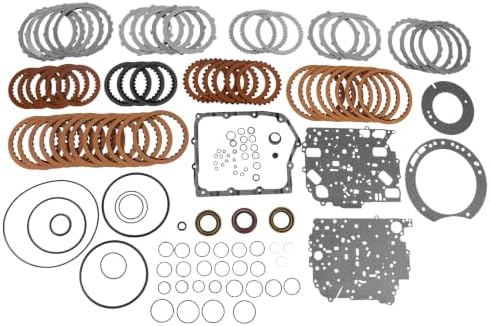
Shop the part for this fix: 62TE master rebuild kit with pistons
When the teardown confirms burnt frictions or worn compounder lands, this CoreTransmissionParts kit puts the frictions, steels, pistons and filter for a Journey 62TE overhaul in one box.
View the 62TE master rebuild kit at CoreTransmissionPartsLooking for something else? Browse rebuild kits at CoreTransmissionParts.
Need parts for this job?
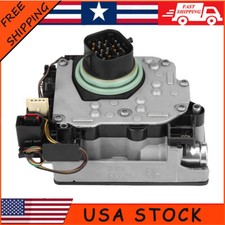
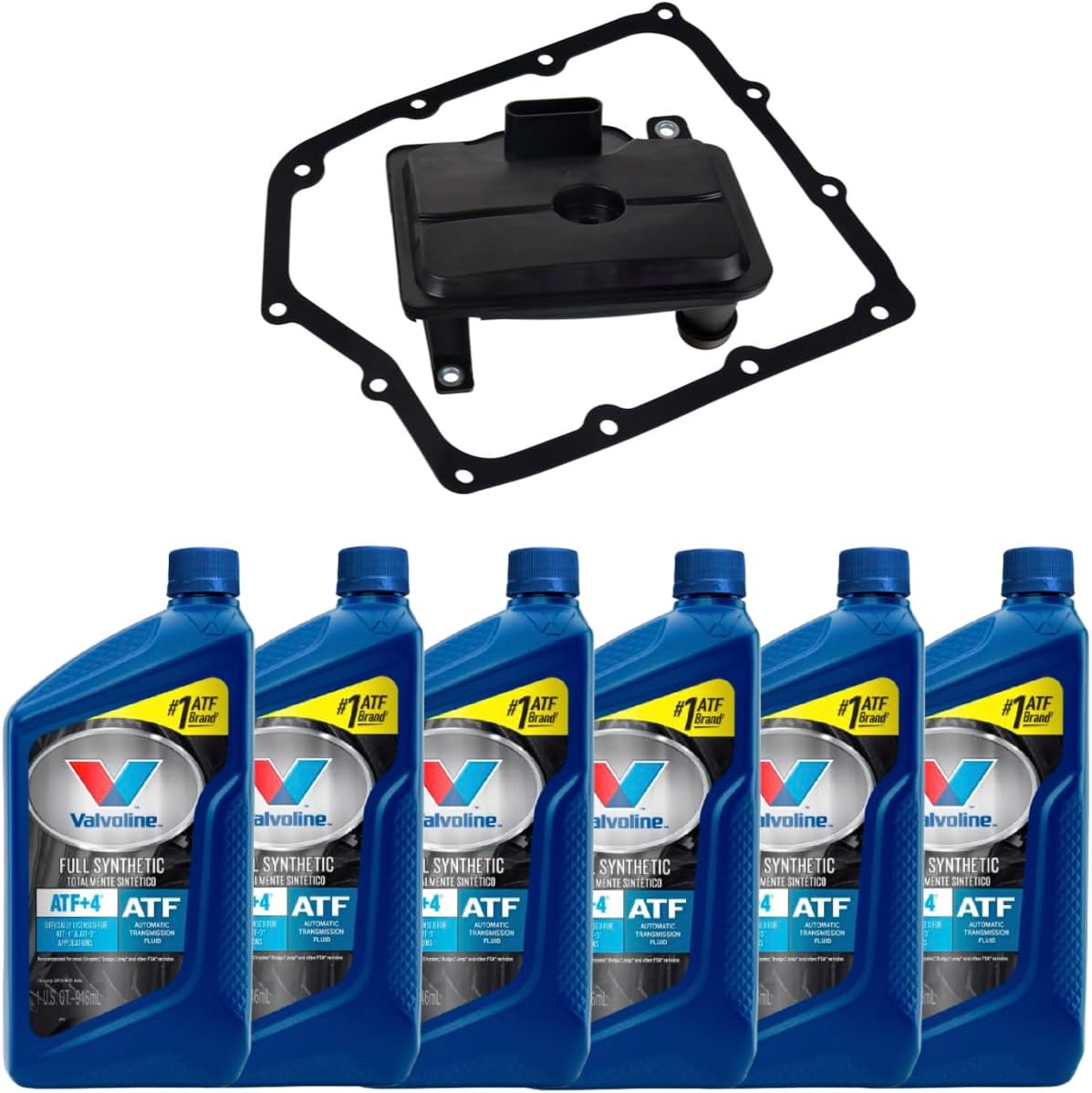
Our 62TE parts page has master rebuild kits, valve bodies, solenoid packs and ATF+4 service kits that fit the Journey, all on our own checkout. Not sure which fluid goes where? See the transmission fluid spec chart.
FAQ
Why is my Dodge Journey transmission slipping?
On a V6 Journey with the 62TE six-speed, the most common cause is low fluid, because the fill tube is capped and there is no dipstick, so nobody checks it. After fluid, the usual hard-part cause is ring land wear on the compounder low clutch drum, which shows up as a slipping 1-2 shift with codes P0792 or P0735. Burnt frictions from towing or overheating and worn low/reverse switch valve bores in the valve body round out the list.
How do you check the transmission fluid on a Dodge Journey with no dipstick?
The six-speed Journey has a capped fill tube, and the level is checked with a special service dipstick tool with the fluid hot, about 180 F (82 C). Many Journeys can display transmission temperature in the instrument cluster, which helps you know when the fluid is hot enough. Use ATF+4 only, with no additives or flushes.
Can a fluid change fix a slipping Journey transmission?
Only if the slip was caused by low or wrong fluid and the clutches are not damaged yet. If the fluid is burnt or the clutch volume indexes are high, the frictions are already worn or glazed and new fluid will not bring them back. Never add a slip-fix additive; the owner's manual says not to use any additives in the transmission.
Why does my Journey feel stuck in third gear?
Third gear is the six-speed Journey's limp home mode, used when the TCM detects a fault that could damage the transmission. The owner's manual also says the six-speed may be held in third in extreme cold, below about -16 F (-27 C), until the fluid warms up. If it happens on a warm transmission, read the stored codes.
Related guides
Sources
- FCA US LLC, 2019 Dodge Journey Owner's Manual. Backs the four-speed-only dipstick, the capped six-speed fill tube and special service dipstick, ATF+4 only with no additives, sealers or flushes, the 180 F (82 C) hot fluid temperature, the cluster transmission temperature display, the overheat shift schedule change, the cold-weather third gear hold, limp home in third, the 45-minute towing service rule, AutoStick use under load and the transmission temperature warning light. vehicleinfo.mopar.com (PDF)
- FCA US LLC, Service Bulletin 18-066-15, "Flash: Diagnostic And System Improvements," September 25, 2015, 2012-2013 Dodge Journey (JC). Backs the 2.4L six-speed (DG2) coverage, the shift clunk and cruise jerk flash, repairing other codes first and the 13.2 V battery requirement. static.nhtsa.gov (PDF)
- Mike Souza, ATRA Senior Research Technician, "62TE Update" technical webinar, 2014. Backs the three speed sensors, the compounder layout and two modes, 4th prime, the 40-70 ms double swap timing and the shudder versus double bump explanation, low clutch drum ring land wear (.005 in., 100 percent failure rate) with P0792, P0735, no line rise and 1-2 slip, the cooler bypass valve, the clutch clearances and the 2/4 circuit seal builder error. atracom (PDF)
- ATRA, Chrysler "CVI (Clutch Volume Indexes)" technical bulletin, 2012. Backs how the TCM calculates gear ratio and clutch volume, and the preliminary 62TE clutch volume ranges. atracom (PDF)
- Chris Leach, Sonnax, "Diagnosing 62TE and 68RFE Low/Reverse Switch Valve Issues." Backs the low/reverse and low clutch switch valve bore wear, its symptoms, the 18 in-Hg vacuum test and kits 92835-43K and 92835-47K. sonnax.com
- Bill Brayton, "A Compound Solution," GEARS magazine (ATRA), October/November 2020. Backs the low clutch drum sealing ring history and steel sleeve fix, the 12-friction direct clutch and .037-.056 in. clearance, pressure plate kit 68004116AA, the .019-.030 in. low clutch clearance, the 200 ft-lb nut and 8.0-18.0 in-lb turning torque, and the sprag rotation check. gearsmagazine.com