P0748 on a 6L90 reads the same on the scan tool as it does on any other GM automatic — Pressure Control Solenoid "A" Electrical — but the repair path is nothing like the one you would take on a 4L60E or a 4L80E. On those units the pressure control solenoid is a part you can unbolt, ohm out, and swap for about the price of a filter kit. On the 6L90 the line pressure solenoid lives inside a sealed module with seven others and a computer, and there is no way to replace it by itself.
That single design change is why so many 6L90 P0748 jobs go sideways. The code points at a solenoid, the solenoid is not serviceable, and the shop either throws a TEHCM at a wiring problem or spends two days chasing a wiring problem that was really a failed module. This is the order that sorts it out.
The short version: P0748 is a current feedback code, not a pressure code. GM's module commands a specific amperage to the line pressure solenoid and measures what actually comes back. When the measured current drifts far enough from the commanded current for long enough, the module gives up, shuts the solenoid off, and the transmission defaults to maximum line pressure. Check fluid, the case pass-through connector, and the harness before you condemn the TEHCM — and check the pump pressure regulator bore before you assume a new TEHCM will fix the shift quality.
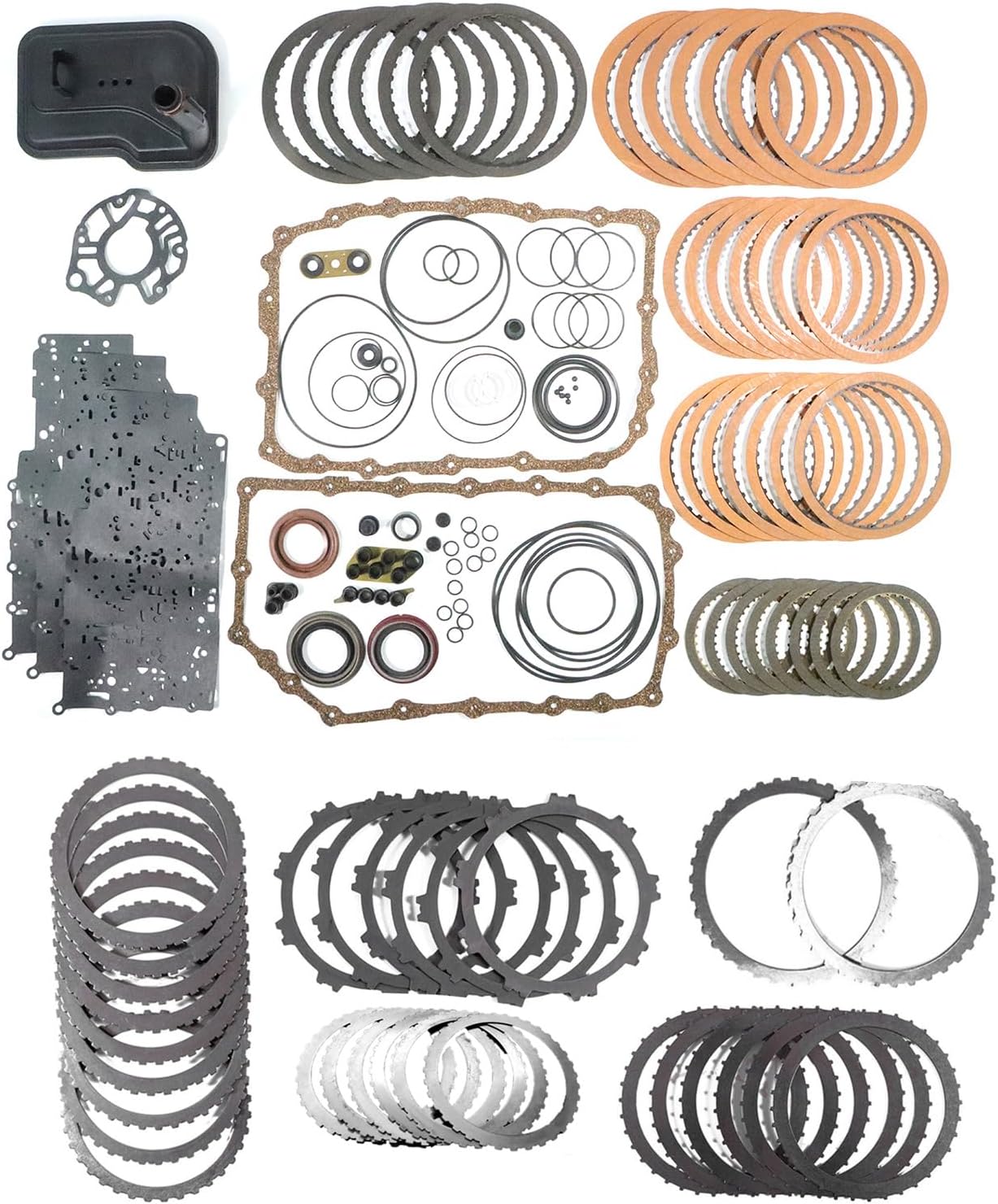
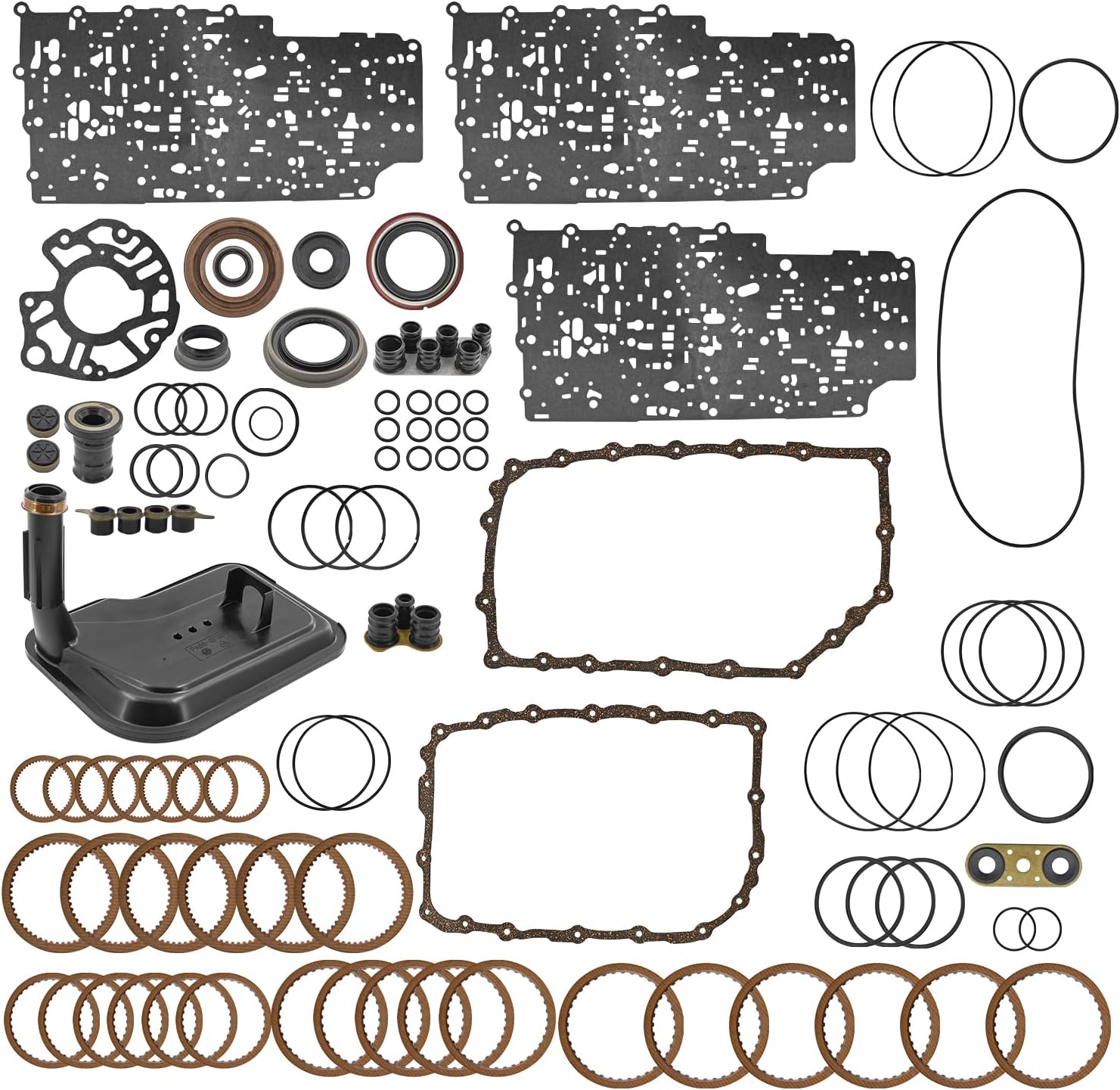
What GM's P0748 Strategy Actually Watches
The pressure control solenoid is a variable-force solenoid, not an on/off valve. Per GM's published P0748 diagnostic, the module regulates transmission line pressure by applying a varying amperage to the solenoid coil, and that current sweeps across a range of 0.1 to 1.1 amps. [1] Low current means the solenoid is commanding high line pressure; high current means low line pressure. It is an inverse relationship, and it catches people out the first time they watch it on a scan tool.
Because the solenoid is current-controlled, the module can monitor it without a pressure sensor. It simply compares the current it commanded against the current it measures returning through the circuit. GM's stated conditions for setting P0748 are specific: system voltage between 10 and 16.5 volts, engine running above 475 RPM for at least 7 seconds, and then a difference between commanded and measured return amperage greater than 0.16 amps held for 200 milliseconds. [1]
Two things fall out of that. First, 200 milliseconds is fast, which is why a chafed wire that only touches the case on a hard launch can set this code once and never repeat on a lift. Second, the voltage window matters — a weak battery, bad grounds, or a charging system that sags under load can push the module outside 10 to 16.5 volts and produce faults that have nothing to do with the transmission. Load-test the electrical system before you drop a pan.
One honest caveat on those numbers: they come from GM's own P0748 service procedure for its pressure-control-solenoid automatics, and the current-feedback strategy is shared across the family. The 6L90's difference is not the strategy — it is where the solenoid physically lives, which is the next section.
What Happens the Moment the Code Sets
This is the part that matters for the customer's transmission, and it is the part most write-ups skip. When P0748 sets, the module disables the pressure control solenoid entirely. With no current flowing, the solenoid stops bleeding off pressure regulator signal oil, and the transmission defaults to maximum line pressure. The module also freezes the shift adapts. [1]
Maximum line pressure sounds harmless — nothing is going to slip. In practice it is brutal. Every clutch applies at full pressure with no adaptive softening, so the shifts hit like a hammer. On a 6L90, which is the heavy-duty member of the family sitting behind big-block gas and Duramax engines in 2500 and 3500 trucks, those hits are going somewhere. Hard 1-2 and 2-3 shifts at full line pressure with a loaded trailer behind you put real shock load into the planetaries, the drums, and the rest of the driveline. The transmission will move the truck. That does not mean you should tow with it.
Frozen adapts also matter for the repair. Whatever adaptive values are stored when the code sets were learned by a transmission running on maximum pressure, so a relearn after the fix is not optional.
Why You Cannot Ohm-Test the Solenoid on a 6L90
Here is the wall you hit. GM's P0748 procedure gives a pressure control solenoid resistance specification of 3 to 7 ohms. [1] On a 4L80E you drop the pan, unplug the solenoid, and measure it. On a 6L90 you cannot.
The 6L90 uses a TEHCM — a transmission electro-hydraulic control module that houses the transmission control module itself. Per Sonnax, the eight solenoids are connected to the TCM through a lead frame, and the solenoids, the lead frame and the module are all over-molded into the plastic housing. They are not accessible or serviceable separately. [2] There is no solenoid connector to unplug and no terminal pair to put a meter across. Component failures and circuit faults inside the TEHCM are common on these units, and Sonnax is blunt that the only remedy is a replacement unit. [2]
So the diagnostic question changes. You are not asking "is the solenoid good." You are asking "is everything outside the TEHCM good," and if the answer is yes, the module is the fault by elimination. Do that elimination properly, because a TEHCM is not a parts-cannon item — and when you do order one, match it. OE numbers across the 2011 to 2020 6L80/6L90 range include 24256939, 24257213, 24259639, 24259835, 24261870, 24264141, 24265053, 24265259, 24267576, 24270598, 24275873, 24276637 and 24294925. [2] Any replacement carries a VIN that has to be overwritten with the vehicle's own during reprogramming. [2]
Diagnosing 6L90 P0748 in Order
1. Fluid level, condition and type
First, always, and it is free. The 6L90 takes DEXRON VI. GM's current transmission capacity table lists the 6L90 (RPO MYD) at 5.7 quarts / 6.0 liters for a service fill. [5] There is no dipstick on most of these — you set the level at the check plug with the fluid at operating temperature. Fluid that is dark, smells burnt, or is full of clutch material tells you the code is a symptom of something bigger. The wrong fluid, or a shop that topped it off with universal ATF, changes solenoid response and belongs on your list.
2. Battery, grounds and charging system
The diagnostic only runs inside a 10 to 16.5 volt window. [1] Load-test the battery, check the chassis and engine grounds for corrosion, and watch system voltage on the scan tool while the fault is present. A sagging charging system will produce intermittent transmission electrical codes all day long.
3. The case pass-through connector
Every wire to the TEHCM crosses the case through a single sealed pass-through connector. This is the highest-yield mechanical check on the whole job. Unplug it and inspect both halves under good light for pushed-back terminals, spread terminal tension, green corrosion, and any sign of fluid wicking up the harness. Fluid in the connector is a common find and it will absolutely produce circuit faults. Clean and re-tension rather than assuming.
4. The external harness
Wiggle-test the harness from the connector back to the module while watching the solenoid current data live. Follow it along the transmission and look for chafe points against the case, the crossmember, and the exhaust. A wire that only shorts under load is exactly the fault that a 200-millisecond detection window is good at catching and you are bad at reproducing on a lift.
5. Watch commanded versus actual solenoid current
This is the test that actually decides the job. On the scan tool, graph the commanded pressure control solenoid current against the actual or measured current, and drive the truck. Healthy, the two traces track each other almost on top of one another across the 0.1 to 1.1 amp range as load changes. [1] A gap that opens and closes with harness movement or road bumps is wiring. A gap that appears at a repeatable current or temperature and does not respond to wiggle-testing is internal to the TEHCM. Watch transmission fluid temperature at the same time — a fault that only shows up hot is a classic failing-module signature.
6. Verify actual line pressure before you buy anything
If the truck also shifts harshly, do not assume the module explains it. Put a gauge on the line pressure tap and compare against spec at idle and at stall. A transmission stuck at maximum pressure because the solenoid is disabled reads high for a reason you already understand. A transmission with erratic pressure that does not follow the commanded current is telling you the problem is hydraulic, and that leads to the pump.
The Hydraulic Cause Everyone Misses
The 6L90 pressure regulator valve bore wears, and it wears for a mechanical reason: the PR valve oscillates continuously in service, and that constant motion opens up the aluminum bore. [3] Sonnax describes the two failure directions clearly, and they produce opposite complaints:
- Wear at the balance spool end allows critical fluid loss, resulting in high line pressure, harsh shifts, and overheating from reduced cooler and converter flow. [3]
- Wear at the outboard spool robs converter feed pressure and lowers line pressure, resulting in soft shifts and burnt clutches. [3]
A worn PR bore does not set P0748 by itself — the solenoid's electrical circuit is still fine. But it will absolutely be the reason a truck still shifts wrong after a correct TEHCM replacement, and that is a comeback you do not want. If the unit is apart, check the bore.
On the bench, the fastest way to find that wear is vacuum testing. Sonnax publishes a vacuum test guide for the 6L45/6L50/6L80/6L90 family showing the critical wear areas and exactly where to test on the casting; a low reading at a test port means the bore has opened up. [4] Calibrate your tester first — perfect vacuum is 29.92 in-Hg and your shop's achievable reading changes with altitude. [6] A test plate that seals every critical passage at once, like the 104740-VTP for this family, turns a tedious port-by-port job into a few minutes. [6]
The correction is a drop-in pressure regulator valve kit. The current Sonnax kit, 104520-15K, fits 6L45, 6L50, 6L80 and 6L90 units, uses a hardcoat anodized aluminum valve with lengthened spools that ride in the non-worn portion of the bore, and includes a new outer spring that adds a modest 5 psi across the pressure curve. [3] It replaces the older 104520-14K and, unlike the previous generation, requires no pump drilling — though the pump does still have to come out to install it. [3]
The Fix
Work the list above and the repair falls into one of four buckets:
| What you found | The fix |
|---|---|
| Low or contaminated DEXRON VI | Pan, filter, correct fluid to the 5.7 qt service fill, set the level hot at the check plug, clear and retest |
| Corroded or fluid-contaminated pass-through connector | Clean, re-tension terminals, replace the connector seal, and repair the leak that let fluid in |
| Chafed or shorted external harness | Repair or replace the affected section, then re-route and secure it away from the chafe point |
| Everything external good, current gap repeatable | Replace the TEHCM with a matched OE or remanufactured unit, write the VIN, reprogram, relearn |
In every one of those cases you are dropping the pan, so change the filter while it is down. And in every one of those cases you finish with a transmission adaptive reset and relearn drive cycle, because the adapts were frozen at the moment the code set.
6L90 Transmission Filter (GM 24236931)
You have to drop the pan to reach the TEHCM on this job either way. Do not put the old filter back in, especially if the fluid told you anything. Direct-fit replacement for the 6L90, matched to GM part number 24236931.
Get the 6L90 filter →Need something else for the job? Browse the full 6L90 parts collection.
Keeping It From Coming Back
P0748 on a 6L90 is usually the end of a slow story, not a sudden event. The things that shorten these modules are heat, contaminated fluid, and moisture in the connector, and all three are controllable.
- Service the fluid on a real interval. DEXRON VI only, and drop the pan rather than just draining, so you get the filter and can see what is sitting in the bottom of the pan. [5]
- Manage heat if the truck tows. Reduced cooler and converter flow from a worn PR bore causes overheating, and heat is what cooks electronics sitting in the fluid. [3]
- Fix external leaks promptly. Fluid that finds its way into the pass-through connector produces exactly the kind of intermittent circuit fault that sets this code.
- Do not skip the relearn. A transmission running on stale adapts shifts badly, and bad shifts are what put load into the hard parts.
- Check the pump bore during any teardown. Five minutes with a vacuum tester saves a comeback. [4]
Filters, pan gaskets, pressure regulator valve kits, valve body kits, DEXRON VI and the bench tools for the 6L90 — shipped fast from the USA.
Shop 6L90 parts →FAQ
Can I replace just the pressure control solenoid on a 6L90?
No. On the 6L80 and 6L90 all eight solenoids are connected to the transmission control module through a lead frame and the whole stack is over-molded into the plastic TEHCM housing, so the solenoids are not accessible or serviceable separately. A confirmed internal solenoid fault means a replacement or remanufactured TEHCM, then a VIN write and relearn. That is why it pays to rule out fluid, connectors and wiring first.
Is it safe to drive a 6L90 with P0748 set?
Not for long. When the module cannot control the pressure control solenoid it shuts the solenoid off, which defaults the transmission to maximum line pressure and freezes the shift adapts. Maximum line pressure will not slip the clutches, but every shift lands hard, and on a loaded 2500 or 3500 those hits go straight into the drums, planetaries and driveline. Drive it home unloaded, then fix it.
What transmission fluid does a 6L90 take, and how much?
DEXRON VI, and nothing else. GM's own capacity table lists the 6L90 (RPO MYD) at 5.7 quarts, or 6.0 liters, for a service fill after a pan drop and filter change. A full dry fill after a rebuild or converter swap is considerably more, so fill it, run it up to operating temperature, and set the level at the check plug rather than trusting a single number.
Will a new TEHCM fix a harsh-shifting 6L90 that also has P0748?
Sometimes, but check the pump first. The pressure regulator valve bore in the 6L90 pump wears from constant valve oscillation, and Sonnax notes that wear at the balance spool end causes high line pressure, harsh shifts and overheating from reduced cooler and converter flow. A new TEHCM does not touch that bore. If the harshness was there before the code, plan on the pump.
Does a P0748 repair need a relearn afterward?
Yes. The module freezes its shift adapts the moment the code sets, so those stored values reflect a transmission that was running on maximum line pressure. After you replace the TEHCM or repair the circuit, perform the transmission adaptive reset and drive the relearn cycle. Skipping it leaves you chasing shift quality that the hardware already fixed.
Sources
- GM Service Information — DTC P0748, Pressure Control Solenoid Circuit Electrical. Backs the circuit description, the 0.1–1.1 amp control range, the conditions for setting the DTC (10–16.5 V system voltage, engine above 475 RPM for 7 seconds, commanded-vs-measured return amperage difference greater than 0.16 A for 200 ms), the action taken when the DTC sets (solenoid disabled, transmission defaults to maximum line pressure, shift adapts frozen), and the 3–7 ohm solenoid resistance specification. GM Service Information — DTC P0748
- Sonnax — Remanufactured TEHCM GM6L-TEHCM-C6 (GM 6L80/6L90). Backs the TEHCM architecture: the module houses the TCM, the eight solenoids connect via a lead frame, and all are over-molded in the plastic housing and not accessible or serviceable separately. Also backs the OE part number list and the VIN-overwrite requirement on a replacement unit. sonnax.com/parts/5648-remanufactured-tehcm
- Sonnax — Pressure Regulator Valve Kit 104520-15K (GM 6L45, 6L50, 6L80, 6L90). Backs the pressure regulator bore wear mechanism (continuous valve oscillation), the split symptoms of balance-spool wear versus outboard-spool wear, and the kit details: hardcoat anodized valve, lengthened spools, 5 psi spring increase, no pump drilling required, pump removal required, replaces 104520-14K. sonnax.com/parts/5938-pressure-regulator-valve-kit
- Sonnax — GM 6L45, 6L50, 6L80, 6L90 Vacuum Test Guide. Backs the use of vacuum testing to locate bore wear on this valve body family, and the critical wear areas and test locations on the casting. sonnax.com/tech_resources/439
- GM TechLink — Transmission Capacities & Fluids (2025). Backs the 6L90 fluid specification and service-fill capacity: RPO MYD, 5.7 quarts / 6.0 liters, DEXRON VI. gm-techlink.com — Transmission Capacities & Fluids (PDF)
- Sonnax — Vacuum Test Plate Kit 104740-VTP (GM 6L45/50/80/90). Backs the 29.92 in-Hg perfect-vacuum reference, the need to calibrate the tester for your altitude, and the plate that seals all critical valve body passages at once. sonnax.com/parts/4645-vacuum-test-plate-kit