P0894 comes out of most scan tools as Transmission Component Slipping, which reads like the transmission is announcing it is worn out. On a 6L90 that description is close to useless, and chasing it as a generic slip complaint is how these jobs turn into three-week guessing games.
GM's own definition of the code is much narrower, and once you read it the diagnosis gets short. P0894 on the 6L family is a report from one specific monitor, about one specific event that happens at cold start, using exactly two clutches. That is the whole code.
Related reading: the 6L80 version of P0894, our 6L90 valve body problems and testing writeup, and 6L80 vs 6L90 if you are still sorting out which unit is in front of you.
What GM is actually monitoring: neutral locked turbine
Here is the part almost nobody reads. Per GM's service information for the 6L family, when the engine controller requests the neutral locked turbine (NLT) feature, the TCM commands the 3-5-R clutch and the 2-6 clutch to apply at the same time. Applying both locks the turbine shaft. A locked turbine gives the engine something to push against at idle, which loads it and shortens warm-up time. It is an emissions feature, not a driving feature.
P0894 is the check on whether that lock actually held. If the turbine shaft is supposed to be stationary and the TCM still sees it turning, one of those two clutches is passing.
That single fact reorganizes the whole diagnosis. The code cannot be about the 1-2-3-4 clutch, the 4-5-6 clutch or the low sprag, because none of them are applied during NLT. You are looking at two clutches, and one of them is far more likely than the other.
The exact set criteria
Conditions for running the DTC:
- Ignition voltage greater than 9 V and less than 18 V.
- Engine speed greater than 200 RPM and less than 7,500 RPM for 5 seconds.
- NLT is attained, meaning the feature was actually requested and commanded.
The DTC then sets when the TCM detects 3 accumulative events with turbine speed greater than 50 RPM for 3 seconds.
Read that carefully. It is not one bad event. It is three, accumulated, each with the turbine spinning more than 50 RPM for a full three seconds while it should be held still. That is a real mechanical failure, not electrical noise. It also means the code is deliberately slow to set, so by the time it is stored the clutch has been passing for a while.
P0894 is a Type B DTC. The TCM disables the neutral locked turbine function and requests the ECM light the MIL on the second consecutive occurrence. Nothing else changes: no limp mode, no maximum line pressure, no gear inhibit. That is unusual for a transmission code and it is the reason so many of these arrive with a confused owner.
Why the customer says it drives fine
This is the most common confusion with 6L90 P0894, and it is not the customer being unobservant.
NLT runs at idle, cold, with the vehicle stationary. It is asking a clutch to hold a locked turbine against engine torque at the coldest, lowest-pressure moment in the entire drive cycle. A 3-5-R pack that is down a little capacity will slip right there. Twenty minutes later, hot, with line pressure up and full apply pressure behind it, that same pack can hold well enough that the truck shifts normally and the driver notices nothing.
So the honest answer when a P0894 truck drives clean is not that the code is bogus. It is that you have caught a marginal clutch early, at the one moment in the cycle designed to expose it. Say that plainly to the customer, because the next stage is a slip they will absolutely feel, in 3rd, 5th and Reverse.
GM's diagnostic aids for the code add two useful cross-checks: shift solenoid valve performance codes stored alongside P0894 may indicate incorrect fluid level, and incorrect gear ratio codes alongside it may indicate clutch damage. Those two companion patterns point in very different directions and cost nothing to read, so pull the whole code set before deciding anything.
The 6L90 is not just a bigger 6L80
Before you start pulling parts off the shelf, know what you are in. Sonnax puts it this way: while the 6L90 is structurally similar to the 6L80, about 25 percent of its internal components were upgraded to increase torque capacity, including a case lengthened by 1 3/8 inches to house stronger input and output gearsets, and a different output shaft.
Many parts do interchange. The valve body does not, and this one bites people. A 6L80 valve body will bolt to a 6L90 case and the reverse is also true, but the center support holes in the upper casting sit at a different offset between the models. Install the wrong one and the case ports do not line up with the upper casting: you get Forward, and no Reverse. If a 6L90 shows up with a P0894 and a recent valve body replacement in its history, check that before you touch a clutch.
The machined-down boss on the upper casting identifies it: A = MYA/6L45, B = MYB/6L50, C = MYC/6L80, D = MYD/6L90. Sonnax cautions that not every valve body has a boss machined down, so treat it as a helpful clue rather than proof and confirm with the casting number.
The failure that owns this code: the cracked 3-5-R housing weld
The 1-2-3-4 and 3-5-R clutches share a housing on these units, and that housing is welded. The weld cracks.
GM documented it. Service bulletin 09-07-30-004F covers 6L80 and 6L90 equipped vehicles, RPOs MYC and MYD, for a list of complaints that will sound familiar: slip when Reverse is selected or no Reverse, delayed engagement into Reverse, harsh 2-3 shifts, harsh 4-5 shifts or slips in 5th, slips on acceleration when passing, and DTCs P0776, P2715 or P2723 stored in the TCM. The stated cause on 2006-2008 vehicles is a cracked 1-2-3-4 / 3-5-R clutch housing.
The test is cheap and you can run it with the housing still assembled:
- Apply soap compound to the weld area of the housing.
- Hold your thumb over the air bleed passage.
- Spray compressed air into the 3-5-R clutch feed hole.
- Inspect the weld area for bubbles. Bubbles mean a new housing.
GM lists the replacement housings by RPO: 24238694 for MYC (6L80) and 24238695 for MYD (6L90). Note the two part numbers. This is another place the units are not interchangeable, and ordering by "6L80/6L90" instead of by RPO is how the wrong housing ends up on the bench.
ATRA has covered the same failure from the bench side, noting that the cracked drum weld is one of the more common issues on early applications and that GM updated the drum, identifiable by a dot matrix QR label printed on it. ATRA also notes the shop habit of welding the crack-prone area preemptively, which is worth knowing mainly so you recognize it when a unit comes in carrying somebody else's repair.
The other half of that bulletin: pump cover seal rings
The same bulletin lists a second cause on 2006-2009 vehicles: leaking 1-2-3-4 and 3-5-R clutch fluid seal rings on the transmission fluid pump cover assembly. Transmissions built in 2006, 2007, 2008 and early 2009 used a one-piece seal ring. Starting December 2008, GM went to a two-piece design. The one-piece rings leak, and GM calls it typically a low-mileage issue.
Two things to get right. If the rings are one-piece, replace them. If they are the two-piece design, leave them alone unless they are worn or damaged, and never install one-piece rings on a two-piece pump cover. That cover is identified by notches in the seal ring grooves that accept the tabs on the two-piece rings. GM also warns that the three clutch fluid seal rings have a required installation orientation, and getting it wrong buys you a repeat harsh 2-3 shift and a second teardown.
Diagnosing it in GM's order
1. Fluid level, before anything else
GM's circuit and system verification starts here for a reason. NLT is a cold-idle event, and a low level is at its worst cold. Check it properly at the specified fluid temperature, not by eye on a cold pan. If shift solenoid performance codes are stored with the P0894, GM's own diagnostic aid points at fluid level first.
2. Road test and record ratios
Even though P0894 itself is a cold-idle monitor, the road test is what tells you which clutch is weak. Put the scan tool on input and output speed and drive it through all six gears, writing down the ratio in each. The 3-5-R is applied in 3rd, 5th and Reverse. The 2-6 is applied in 2nd and 6th. Slip that follows the first pattern is your 3-5-R and confirms the NLT failure. Slip that follows the second is the 2-6, which is the rarer of the two.
3. Line pressure test
GM sends you here next and splits the result: low pressure in all ranges goes down one path, low pressure in a specific range with normal pressure elsewhere goes down another. Sonnax gives you a number to recognize on the way. A TEHCM line pressure solenoid stuck in exhaust mode typically parks line pressure at about 60 to 68 psi with no RPM line rise whatsoever, and unplugging the solenoid reads the same. If that is what your gauge shows, stop looking at clutches.
4. Clutch test
Only after pressure checks out does GM have you run the clutch test, with out-of-spec results routing to the excessive slippage and clutch chatter procedure. Chock the wheels before this one.
5. Vacuum test the valve body
If pressure is normal and the clutch test comes back marginal, the valve body is next. Sonnax publishes a vacuum test guide covering the 6L45, 6L50, 6L80 and 6L90 that maps critical wear areas to symptoms: pressure regulator valve and boost assembly wear shows up as erratic, high or low line pressure with clutch slippage, soft or harsh shifts and burnt clutches; the TCC regulator apply valve produces P0741 and P0742 with high TCC slip and failsafe mode; and the clutch select valves and the 1-2-3-4 clutch regulator and boost valve produce slips, flares, delayed engagement and slip codes. Sonnax separately calls out that the 3-5-R clutch regulator valve is known to stick, which gives no Reverse and shift complaints with normal line pressure.
Things that look like this and are not
- Stator support gasket leak. Per ATRA, the stator support feeds apply oil to all three clutch circuits plus compensator feed. A leaking gasket takes out whichever clutch sits downstream of the leak, and the gasket etches from hot and cold cycling on high-mileage units.
- Low sprag. The 6L uses the low sprag to hold the output carrier at launch, with the low/reverse clutch assisting until roughly 2 MPH. A failed sprag feels like the truck drops into neutral off the line and gets blamed on the 1-2-3-4 clutch. It has nothing to do with P0894, but it walks in wearing a similar complaint.
- Cooler bypass valve. Per ATRA, when it fails the 4-5-6 clutch is usually what burns from overheating. Again not an NLT clutch, but it will be in the same pan and it will muddy the picture.
- Checkball wear and migration. On early units the checkballs wear and travel through the valve body, causing slipping and clutch damage. Sonnax notes the number 5 checkball out of place is a no-Reverse condition, with line pressure reading normal.
- Wrong separator plate. Sonnax documents that a Type 2 separator plate on a Type 1 valve body gives no Forward, and Type 1 plate 24245720 on a Type 2 valve body gives no 3rd and no Reverse. Line pressure is normal in both cases, which is exactly why they get chased so long.
The fix, and what to put back in it
If the housing bubbles, it is replaced, not repaired, using the correct RPO part number. The 3-5-R clutch pack goes in new alongside it, and the pump cover seal rings get inspected and updated to the two-piece design if the unit still carries the originals.
While the unit is apart, ATRA's list of known updates is worth working through. The 1-2-3-4 apply piston and its housing both crack and both were updated by GM, so bring an early unit up to the later design rather than reusing what came out. Sonnax makes a parallel point about the 4-5-6 clutch, where the OE weaknesses are not enough clutch plates, insufficient piston-to-plate apply surface area, and flexing and bowing of the backing plate, and offers apply piston kits that address all three. If this 6L90 lives behind a trailer or a tuned engine, that is the moment to fix it, not the next time it comes back.
Fluid is DEXRON VI. GM's current transmission capacities and fluids chart lists DEXRON VI, DEXRON HP and DEXRON ULV, with an explicit note that DEXRON III is not a service fill. Use a licensed DEXRON VI rather than a bottle that merely claims to be suitable for it, and replace or properly flush the cooler. A converter that fed debris into the pump will feed it right back through a fresh rebuild.
Need the parts for this one
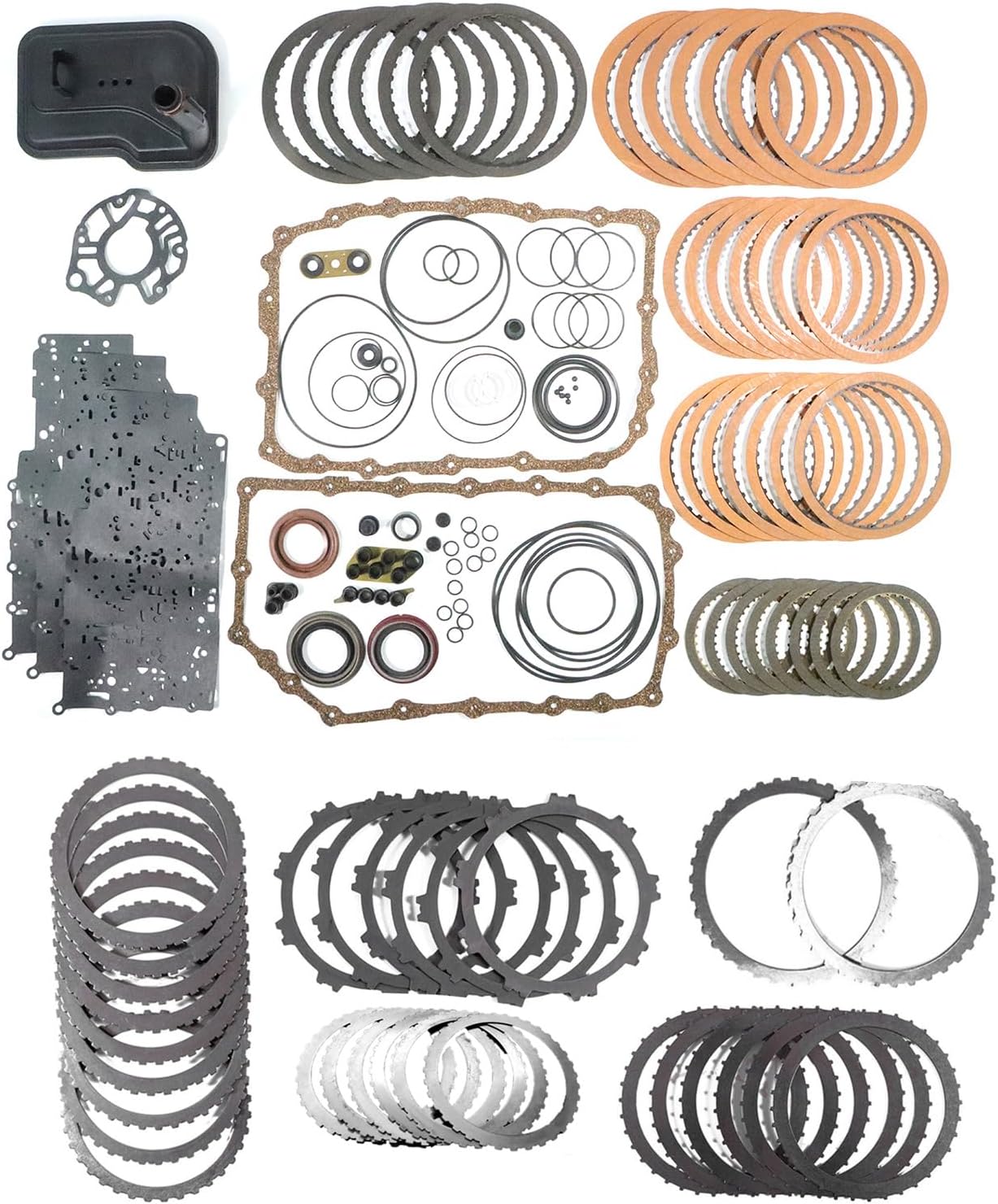
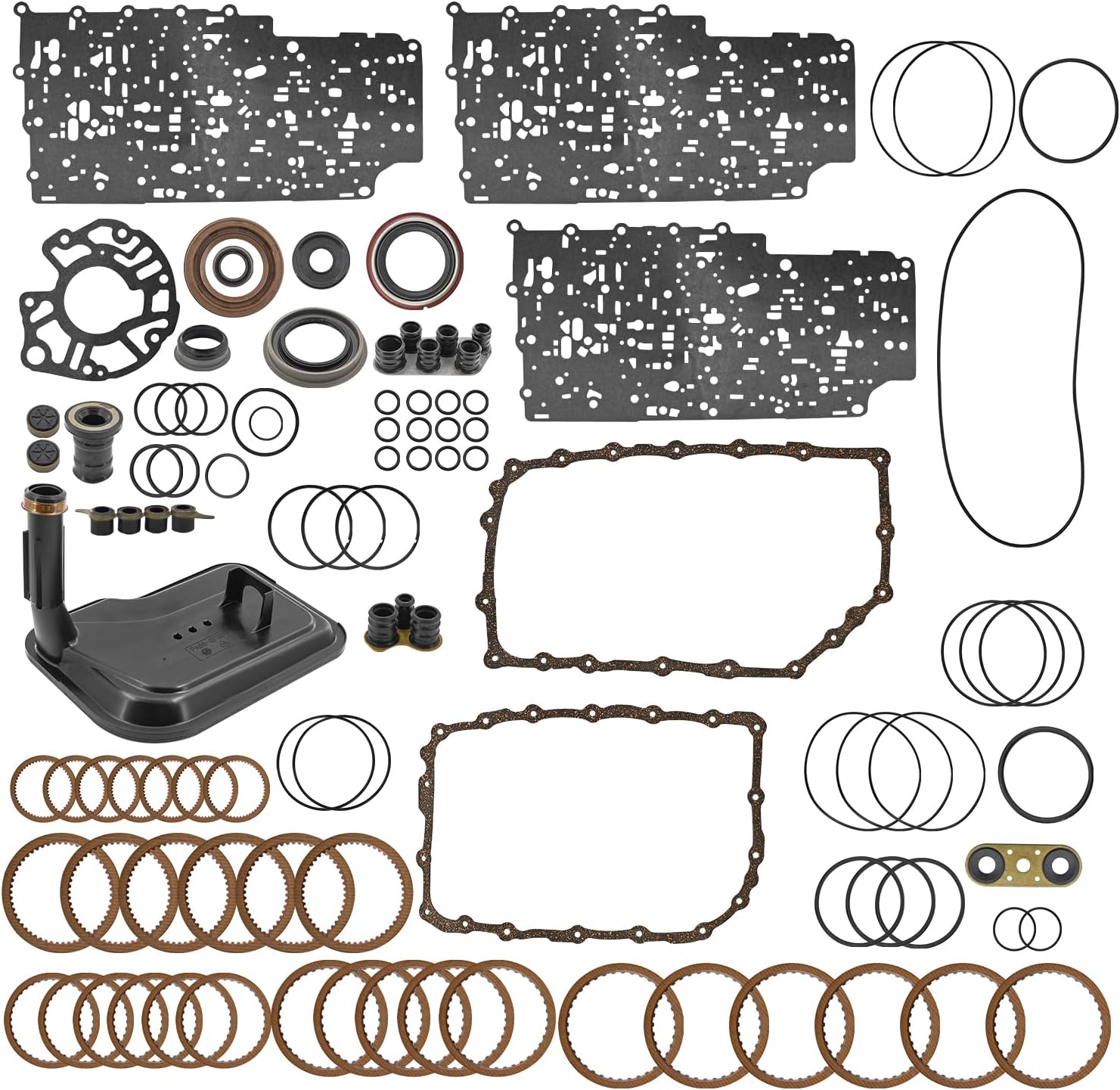
A 6L90 P0894 that fails the clutch test comes apart for the 3-5-R pack, and the pump cover seal rings get inspected on the way in. Frictions and steels for the 6L90 are a different set than the 6L80, so order by unit. The 1-2-3-4 and 3-5-Reverse clutch seal and O-ring kit and the full 6L90 catalog are both at CoreTransmissionParts.
6L90 Friction & Steel Clutch Plate Set →FAQ
Why does my 6L90 set P0894 when it does not feel like it is slipping?
Because on this transmission P0894 is not a road-test slip monitor. GM's service information ties the code to the neutral locked turbine feature, which only runs at cold start: the TCM applies the 3-5-R clutch and the 2-6 clutch together to lock the turbine shaft and load the engine so it warms up faster. The code sets when the TCM sees turbine speed above 50 RPM for 3 seconds across three accumulative events, meaning the turbine kept turning when it should have been held. A clutch weak enough to slip against a locked turbine at cold idle can still hold well enough to drive normally once it is hot and line pressure is up, so a truck that feels fine and still sets P0894 is behaving exactly as expected.
Which clutch is usually bad when a 6L90 sets P0894?
The 3-5-R. The neutral locked turbine function applies only two clutches, the 3-5-R and the 2-6, so the fault has to be in one of those two apply paths. In practice it is almost always the 3-5-R, because that is the clutch whose shared housing weld GM issued a bulletin about. Confirm it by driving the truck and watching gear ratios: the 3-5-R is applied in 3rd, 5th and Reverse, so slip in all three points at that clutch, while slip in 2nd and 6th points at the 2-6 instead.
Does the cracked clutch housing bulletin apply to the 6L90 or only the 6L80?
Both. GM bulletin 09-07-30-004F covers vehicles equipped with the 6L80 or 6L90, RPOs MYC and MYD, and lists a separate replacement housing part number for each: 24238694 for MYC and 24238695 for MYD. The inspection is the same on either unit. Soap the weld area, cover the air bleed passage with your thumb, blow compressed air into the 3-5-R clutch feed hole, and look for bubbles. Bubbles mean the housing is cracked and has to be replaced.
Can I put a 6L80 valve body on a 6L90?
It will bolt on, and it will not work. Sonnax documents that the center support holes in the upper valve body casting sit at a different offset between the two models, so a 6L80 valve body on a 6L90 case leaves the case ports misaligned and you get Forward but no Reverse. The swap fails the same way in the other direction. The machined-down boss on the upper casting identifies the unit, A for 6L45, B for 6L50, C for 6L80 and D for 6L90, but not every casting has a boss machined, so verify the part number as well.
Is P0894 on a 6L90 always a rebuild?
Not always, and GM's own diagnostic order says so. The procedure sends you to check fluid level, then run a line pressure test, and only then a clutch test. A low fluid level or a line pressure solenoid stuck in exhaust will starve a healthy clutch pack. Sonnax notes that a stuck line pressure solenoid parks pressure at about 60 to 68 psi with no rise at all when you raise engine speed, which is a five-minute check worth running before anyone quotes a transmission.