A 6R140 that bangs into gears is one of the most expensive complaints to guess at. I have seen shops put a transmission, a valve body and two control modules into a Super Duty for a harsh 1-2, and the fix turned out to be a sensor on the engine. I have also seen trucks where the harsh shift really was the transmission: a solenoid that drifted out of its band, or a worn latch valve bore letting clutch apply pressure run away from the module.
The good news is that the TorqShift 6 tells you a lot if you read it in the right order. This is the order I use on a harsh-shifting 6R140, from the cheap checks to the bench work, and what each finding means.

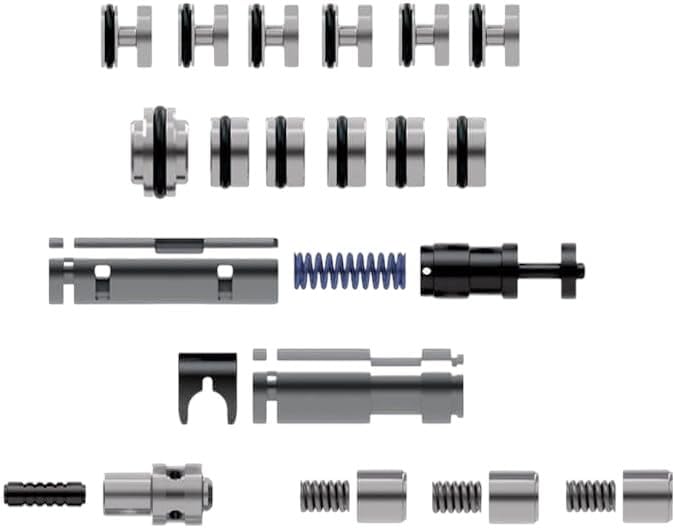
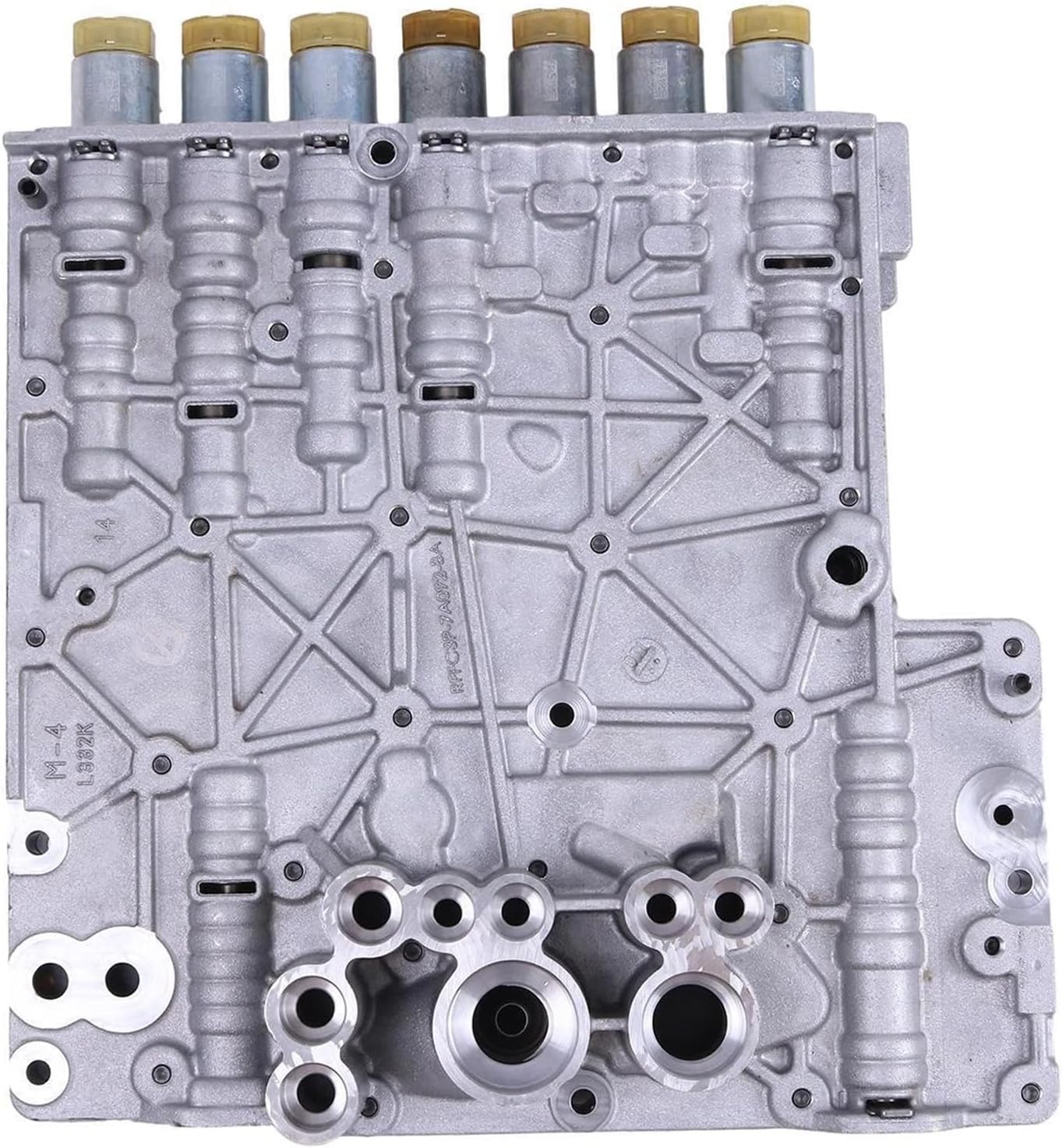
How the 6R140 controls shift feel
Every shift on this unit is a clutch-to-clutch handoff. One clutch releases while another applies, and the module times both with variable bleed solenoids feeding regulator and latch valves in the valve body. There is no band and no one-way clutch covering for a sloppy handoff in most gears, so if the apply side comes on too fast, too early or at too much pressure, you feel it as a bang. If it comes on too late, you get a flare, and on the 6R140 a flare followed by a hard catch is often reported by the driver as "harsh."
Sonnax's Jim Dial lays out the 2-3 as the textbook example: the 3-5-R clutch has to apply while the 2-6 clutch releases, and if the timing between them gets inconsistent, the shift either flares or binds. The solenoids that run those two clutches are the "B" solenoid (normally high) for 3-5-R and the "C" solenoid (normally low) for 2-6.
The module is also watching. Dial's timing article describes how the PCM expects to see turbine speed drop within a split second of commanding a shift, and it uses that to adapt. That is why a harsh shift is not always a hardware failure: it can be the module doing exactly what its inputs tell it to do, or adapting against a solenoid that no longer flows what it thinks it flows.
So harsh shifts on this unit fall into three buckets:
- The module is commanding a harsh shift because an input is lying to it (load, torque, temperature, speed).
- The solenoid is not delivering what the module commands because it has drifted out of its flow band or the ID codes are wrong.
- The valve body cannot hold the pressure the solenoid is asking for because of bore wear or debris.
Step 1: Scan it and road test with a plan
Pull codes from every module, not just the TCM. Then road test with commanded gear, actual gear or ratio, turbine speed, output speed, transmission fluid temperature, line pressure desired, and engine load on screen. Note which shift is harsh, whether it happens at light or heavy throttle, hot or cold, and whether it also happens in manual mode.
That last detail matters. The case that made me stop condemning parts early was written up by Michael Wiggins of Certified Transmission in Transmission Digest: a 2015 F-350 6.7L with a 4 to 5 second delay on the 1-2 upshift at light throttle, followed by a hit hard enough to break the rear tires loose. At three-quarter to full throttle, it shifted normally. Manual mode did the same thing. No codes.
That truck got a replacement transmission, a valve body, a new TCM and a known-good PCM, and none of it helped. The cause was the exhaust back pressure (EBP) sensor. It was reading 474.2 kPa (68.8 psi) during light acceleration, when Wiggins notes it should stay under about 30 psi at light load. The PCM read that as a heavy-load condition, delayed the shift and raised commanded line pressure. After a new OE sensor, the maximum under heavy acceleration was 206.3 kPa (29.9 psi), and the 1-2 was on time and smooth.
The lesson: if a harsh shift is load-sensitive in the wrong direction (worse at light throttle, fine at heavy throttle), look at every input that feeds the module's load and torque calculation before you open the pan. On a diesel that includes EBP, boost, and anything from a tuner. Wiggins' truck was tuned and deleted, which is worth asking about on every intake.
Check the power and ground to the TCM
The same truck had a corroded 12 V feed at the TCM connector. It was not the root cause there, but a TCM with a marginal supply can drive solenoids inconsistently. Inspect the connector and load-test the feed and ground while you have it on the lift.
Step 2: Fluid level and condition
A 6R140 low on fluid usually flares before it bangs, but aeration makes clutch apply inconsistent, and the module adapts against that. The unit takes Mercon LV only. Check the level at operating temperature on the scan tool, not cold, and see our 6R140 fluid type and capacity guide for the temperature window and refill quantities. While the pan is down, look at what is in it. Fine clutch material with no metal points one way; aluminum or steel points toward the valve body and hard parts.
Step 3: Solenoid banding and ID codes
This is the most common transmission-side cause I see on a harsh 6R140, especially after someone else has already been in it. Per Sonnax's 6R140 solenoid strategy article, the solenoids are sorted into bands 1 through 5 by their flow characteristics. Normally high solenoids have a black plastic snout; normally low solenoids have a brown one. The valve body carries a tag with a 13-digit solenoid body strategy number and an 8-digit solenoid body ID, and the module needs those numbers to know how each solenoid flows.
The article is direct about the risk: installing solenoids with whatever band number happens to be in the shop can cause a flare or harsh shift that takes the TCM a long time to learn out, if it ever does. After a valve body replacement, the new strategy file has to be loaded with a Ford scan tool or J2534 pass-through, adaptive tables cleared, keep-alive memory reset, and Ford's drive cycle performed.
Solenoids also drift in service. Dial describes solenoids that start life in band 3 and wander to band 5 or 1.5 over time. When that happens the module's model of the circuit is wrong, and in his words a slow or overly aggressive output can cause a 1-2 slide or an extremely harsh 1-2 upshift. Sonnax notes that with correctly calibrated solenoids, adaptation can settle in 3 to 5 shift cycles. If adaptives never settle, the solenoid or the valve it feeds is the problem, not the adapt tables.
How to catch a lazy solenoid
In the 2-3 case Dial wrote up, the tech watched solenoid amperage and pressure during the shift. The electronics were fine, but the "C" solenoid showed about 1.0 amp with low solenoid pressure at shift initiation. The command was there; the solenoid was not delivering. His recommended fix was to replace the "C" and "B" solenoids together so the valve body only comes out once, then reset adapts and drive about 20 stop-and-go cycles to relearn.
6R140 Shift Solenoid Kit, 2011 and Up
A full set of shift solenoids for the Super Duty 6R140. The right move when a solenoid has drifted out of its band and adaptives will not settle. Load the correct ID codes after install.
View the solenoid kit →Also browse the full 6R140 parts collection.
Step 4: Valve body wear and debris
If the inputs are honest, the fluid is right, and the solenoids are correctly banded and coded, the harsh shift is in the valve body. Two patterns show up over and over.
Forward clutch latch valve bore wear
Sonnax's listing for its oversized forward clutch latch valve kit (126740-06K) describes wear in that bore letting critical pressure escape, which makes feedback pressure unstable. The symptom list on that part includes harsh shifts, delayed engagement, shift quality that is not load sensitive, gear ratio and solenoid codes, burnt forward clutch and overheated fluid. "Not load sensitive" is the tell: the shift feels the same whether you are feathering the throttle or leaning on it, because the latch valve is no longer controlling the apply rate. The repair is reaming the bore with the matching tool kit (F-126740-TL6) and installing the oversized valve, or replacing the valve body.
Dial also notes the 6R140 latch valve design has two solenoid connections, one controlling apply rate and another that slows the valve during the 5-6. Wear there shows up as harsh or bound-up upper-gear shifts.
Debris and the 1-2-3-4 control valve
GEARS Magazine's "Revisiting the 6R140" reports that debris from normal wear drops into the valve control channels and sticks the 1-2-3-4 control valve. The symptoms listed are neutral coming to a stop and a harsh 5-4 and 6-4 forced downshift, often with gear ratio or performance codes. GEARS points out that in most of these cases there is no internal damage to the rest of the transmission, which is why it pays to diagnose before rebuilding. The fix is a valve body replacement or a targeted valve and bore repair.
A harsh coast-down or forced downshift from 5th or 6th to 4th, with no other complaint, belongs in this section. So does a harsh shift that comes and goes from one drive to the next.
Step 5: Clutch clearances after a rebuild
If the harsh shift started right after an overhaul, check the build. Dial specifically warns that improper clutch pack clearances can mimic a shift complaint, and a pack set too tight can bind during the handoff. Keep clearances to OE specification and do not stack extra frictions for "towing." A harsh shift that the module cannot adapt away on a fresh unit, with correct solenoid codes loaded, is often a clearance problem.
Quick reference: symptom to likely cause
| What you feel | Look at first |
|---|---|
| Delayed, harsh 1-2 at light throttle, normal at heavy throttle, no codes | Engine-side load inputs (EBP sensor, boost, tuning); TCM power and ground |
| Harsh 1-2 or 2-3 after solenoid or valve body work | Solenoid band numbers, strategy and ID codes loaded, adaptives cleared |
| 2-3 flare then bind, adaptives never settle | "C" (2-6) and "B" (3-5-R) solenoid output; amperage vs. pressure |
| Harsh shifts that feel the same at any throttle | Forward clutch latch valve bore wear |
| Harsh 5-4 or 6-4 forced downshift, neutral at stops | Debris-stuck 1-2-3-4 control valve |
| Harsh shifts on a freshly rebuilt unit | Clutch pack clearances |
Keeping it from coming back
- Never mix solenoid bands from the shelf. Match the band or load new ID codes.
- After any solenoid or valve body work, clear adaptives, reset KAM, and drive a real relearn before you judge shift quality.
- Mercon LV only, checked hot on the scan tool, with a new filter and seal every service.
- Service it before it is dirty. Debris is what sticks the 1-2-3-4 control valve; regular fluid and filter changes on towing trucks are cheaper than a valve body.
- Ask about tuning and deletes at write-up. Engine-side data feeds the transmission's load and pressure decisions.
FAQ
What causes harsh shifting in a 6R140?
The common causes are a bad engine-side input that makes the module think the truck is under heavy load, shift solenoids that have drifted out of their flow band or were installed without the correct ID codes, forward clutch latch valve bore wear, and debris sticking the 1-2-3-4 control valve. On a freshly rebuilt unit, incorrect clutch clearances can also cause it.
Can a bad sensor cause a harsh 1-2 shift on a 6.7 Power Stroke?
Yes. Transmission Digest documented a 2015 F-350 with a delayed, harsh 1-2 at light throttle that was caused by a failed exhaust back pressure sensor reading 68.8 psi when it should have been under 30 psi. The PCM treated it as heavy load, delayed the shift and raised line pressure. A new OE sensor fixed it.
Will resetting adaptives fix a harsh-shifting 6R140?
Only if the hardware is healthy. With correctly calibrated solenoids and the right ID codes loaded, Sonnax notes the unit can adapt in 3 to 5 shift cycles. If adaptives never settle after a reset and a full relearn drive, a solenoid or the valve it feeds is the problem.
Why does my 6R140 bang into 4th when slowing down?
A harsh 5-4 or 6-4 forced downshift is a known symptom of debris sticking the 1-2-3-4 control valve in the valve body, often along with neutral at stops. GEARS Magazine notes there is often no other internal damage, so a valve body repair or replacement usually fixes it.
Fixing a harsh-shifting 6R140?
Solenoid kits, Sonnax Zip kits, valve bodies, overhaul kits, filter kits and Mercon LV service kits, shipped from the USA.
Shop 6R140 parts →Sources
- Transmission Digest — “Diagnosing a Delayed, Harsh 1–2 Shift in the Ford 6R140 Transmission,” Michael Wiggins, Certified Transmission. Backs the 2015 F-350 6.7L case: 4-5 second delayed, harsh 1-2 at light throttle only, no codes, transmission, valve body, TCM and PCM replaced without effect, the EBP sensor reading 474.2 kPa (68.8 psi) against a sub-30 psi light-load norm, 206.3 kPa (29.9 psi) max after replacement, and the corroded TCM 12 V feed. transmissiondigest.com
- Sonnax — “Troubleshooting Ford 6R80 & 6R140 2-3 Shift Quality Issues,” Jim Dial. Backs the 3-5-R apply / 2-6 release handoff, the normally high "B" and normally low "C" solenoid assignments, the "C" solenoid at 1.0 amp with low pressure, replacing "C" and "B" together with a 20 stop-and-go relearn, and incorrect clutch clearances mimicking shift complaints. sonnax.com
- Sonnax — “Troubleshooting Ford 6R80 & 6R140 Timing-Related Shift Issues,” Jim Dial. Backs the PCM watching for a turbine speed drop after command, solenoids drifting from band 3 to band 5 or 1.5, slow or aggressive solenoid output causing a 1-2 slide or extremely harsh 1-2, adaptation in 3-5 cycles with correct calibration, and the 6R140 latch valve with two solenoid connections slowing the 5-6. sonnax.com
- Sonnax — “6R140 Transmission Solenoid Strategy Code: Don’t Break Up the Band,” Jason Larochelle. Backs bands 1 through 5, black snouts on normally high and brown on normally low solenoids, the 13-digit strategy number and 8-digit ID on the valve body tag, mismatched bands causing flares or harsh shifts, and the scan tool / J2534 programming, adaptive clear and KAM reset procedure. sonnax.com
- Sonnax — Oversized Forward Clutch Latch Valve Kit 126740-06K (6R140). Backs the forward clutch latch valve bore wear mechanism, the symptom list (harsh shifts, delayed engagement, shift quality not load sensitive, ratio and solenoid codes, burnt forward clutch, overheated fluid) and the F-126740-TL6 tool kit. sonnax.com
- GEARS Magazine (ATRA) — “Problems and Fixes: Revisiting the 6R140 Transmission.” Backs debris sticking the 1-2-3-4 control valve, the neutral-at-stop and harsh 5-4 / 6-4 forced downshift symptoms, the frequent absence of other internal damage, and the valve body replacement or valve/bore repair options. gearsmagazine.com
Shop 6R140 solenoid kits, valve body kits, valve bodies and overhaul kits — shipped fast from the USA.
Shop 6R140 parts →Shop the 6R140 solenoid kit →