A delayed engagement is one of those complaints customers describe in a dozen ways: "it sits there when I put it in gear," "it thinks about it before it goes into reverse," "it bangs into drive after a pause." On a Ford 6R80 all of those mean the same thing. You moved the selector, and the clutches that make that range took too long to fill and hold. The question is which clutches, why the oil is not getting there, and whether the fix is cheap or expensive.
This guide works the problem the way I do on the rack: separate delayed Drive from delayed Reverse, use the scan tool to put an actual number on the delay, check the fluid the right way, then go after pressure. Most 6R80 delays get narrowed down before the unit comes out of the truck. The ones that do need a teardown tell you exactly which drum to look at.
The short version: Forward engagement on a 6R80 is the A clutch plus the D (low/reverse) clutch. Reverse is the B clutch plus the D clutch. Delay in both ranges points to what they share: fluid level, filter, pump, line pressure and solenoid feed pressure, or the D clutch. Delay in Reverse only points at the B clutch circuit and the bushings that feed it. Delay in Drive only points at the A clutch circuit. Check the level warm with MERCON LV only, then verify pressure before you buy parts.

How the 6R80 Makes Drive and Reverse
The 6R80 is Ford's version of the ZF 6HP26 family. GEARS Magazine's David Chalker lays out the apply components: three driving clutches, A, B and E, and two brake clutches, C and D, behind a four-element converter with a multi-disc lockup clutch [2]. Two elements have to apply for any range to hold, and that makes this unit easy to diagnose if you think in terms of shared parts.
- First gear / Drive engagement: A clutch + D clutch. On 2011 and later units Ford added a one-way clutch in the rear planetary. Chalker notes that on earlier units the D clutch applies throughout first gear, while on 2011-later units it only applies until about 3 mph and then releases, leaving the one-way clutch to hold [2].
- Reverse: B clutch + D clutch. The D pack is the low/reverse clutch, which is why the aftermarket sells it under that name.
The D clutch is controlled by shift solenoid D, which Chalker describes as normally high: the PCM sends about 50 mA to apply the D clutch and about 850 mA to release it [2]. That matters on the bench. A solenoid that is sticky or drifting at the low-current end affects both garage shifts, because D is in both of them.
So before you touch anything, answer one question: does it delay into Drive, into Reverse, or both?
Step One: Put a Number on the Delay
"Feels slow" is not a diagnosis. Put a scan tool on it, graph turbine shaft speed against engine RPM, and do garage shifts with your foot hard on the brake. In Park or Neutral the turbine spins close to engine speed. When the clutches for Drive or Reverse apply, the turbine is tied to a stationary output and its speed falls toward zero. The time from the range change to the turbine reaching zero is your engagement time.
Ford does not publish a public engagement-time limit for the 6R80, but GM's bulletin 16-NA-364 for its 8-speed trucks shows how an OEM draws the line. GM measures the time from gear selected to input shaft speed reaching 0 RPM with the brake held, and calls it a delayed engagement when that time exceeds 3 seconds. GM also sets the test conditions: after sitting at least 8 hours but less than 24, at 50°F or above [6]. Use the same discipline on a 6R80. Record the time cold after an overnight sit, then again hot after a road test. How the delay changes with temperature is half the diagnosis:
- Delay only after sitting overnight, fine the rest of the day: the circuits drain down while the truck sits and take time to refill. Think pump, converter drainback, filter and seal leakage.
- Delay gets worse as the unit gets hot: thin oil leaks past worn valve bores and sealing rings faster than the pump can make it up at idle. Think valve body wear and pressure loss.
- Same delay hot or cold, one range only: think about that range's clutch: worn frictions, excess clearance, or a leaking piston seal.
Pull codes while you are in there. A delay with a pile of ratio or solenoid performance codes is a different job from a clean-code delay.
Step Two: Fluid Level and Type, Checked Warm
A low 6R80 delays engagement because the pump pulls air at idle when the fluid moves away from the filter pickup, and aerated oil will not build pressure. Check the level before you do anything else, and check it warm, for a reason specific to this unit.
Sonnax points out that the Ford 6R60 and 6R80 have a thermal element in the converter circuit before the fluid leaves the case. Below roughly 125°F it redirects converter oil to the bushings. Sonnax warns that during service you have to let converter oil temperature rise enough to open that element, or the ATF will be low once the unit is operating [3]. Put another way: a 6R80 filled cold after a pan drop can read full and still be low once it warms up. A delayed engagement that shows up right after a fluid service is usually just that.
The fill cap and short dipstick are on the side of the case. Level the truck, bring the fluid to operating temperature on the scan tool, shift slowly through every range to fill the clutch packs, then read it in Park at idle. The full procedure is in our 6R80 fluid type and capacity guide.
Fluid type is not optional. Ford lists Motorcraft MERCON LV and states that transmissions requiring MERCON LV should only use MERCON LV [1]. The wrong friction package changes how fast and how smoothly the clutches take hold on every garage shift.
While the pan is down, look at the filter and the magnets. A restricted filter starves the pump, and the pump is at its weakest at idle, exactly where garage shifts happen. Fine friction material in the pan points you at the clutches. Aluminum or bronze glitter points you at the pump and the bushings.
Step Three: Pressure, and Where It Leaks Away
If the level and fluid are right and the delay is still there, treat it as a pressure problem until proven otherwise. There are three places on a 6R80 where the oil that should be filling a clutch leaks away first.
The pressure regulator valve
The main pressure regulator sets line pressure for everything. Sonnax documents wear at two places in the 6R60/6R80 regulator bore. Wear at the spring end lets line pressure exhaust, giving low line pressure and dumping lube and converter oil, which leads to a burned converter clutch and bushing failure. Wear at the sleeve end does the opposite and can cause high line pressure and broken parts. The complaints Sonnax lists for this bore include slips in Forward and Reverse, delayed Reverse and no Reverse. Its 95740-01K oversized valve kit applies to 2009–2014 6R80s without the 053 separator plate [5].
The solenoid pressure regulator valve
This is the one I would bet on for a hot-idle delay. The solenoid pressure regulator valve sets the feed pressure for every linear solenoid in the valve body. Sonnax states that low feed pressure at idle can create delayed engagement or wrong gear starts, that excess valve-to-bore clearance causes shift and pressure problems, and that the symptoms change with operating temperature. Its listed complaints include delayed Forward, delayed Reverse, wrong gear starts, solenoid performance codes and TCC slip. The 95740-17K kit covers both 2009–2014 and 2015-later 6R80s [4].
That fits the D clutch logic above. If feed pressure to the solenoids sags at hot idle, the apply signals for the D clutch and the A or B clutch sag with it, and both garage shifts go soft and slow.
Bushings and sealing surfaces
Rotating clutches get their apply oil through bushings and sealing rings. When those wear, oil that should fill the piston leaks into lube instead. Sonnax calls out the bushings at the E clutch interface (the input/output bushing) and the pump stator bushing as parts that fail notoriously on this family, and says they are often behind TCC and shift concerns and ratio errors [3]. On a unit that delays into Reverse only, and especially one that also flares on shifts where the B clutch is involved, worn bushings feeding the B clutch go near the top of the list.
Verify it with a gauge, not a guess
Sonnax's 6R60/6R80 diagnostic article uses the converter release (WK) circuit as a window into the pump and main regulator. Per Sonnax, WK pressure should be steady and instant upon start, typically 70–75 psi at idle in Drive when cool and 65–68 psi at operating temperature. Selecting Reverse causes a sharp dip to about 50 psi before it recovers to 65–75 psi. Use a 100 psi gauge or transducer, not a 500 psi gauge, and note that the WK port uses a special ZF 10 x 1.00 mm thread [3]. A reading that climbs slowly after startup, sags at hot idle, or dips on the Reverse shift and does not come back tells you oil is being lost upstream of the clutch you are waiting on.
After a valve body job: match the spacer plate
If the delay, or a complete loss of engagement, showed up right after valve body work, check the spacer plate before anything else. Transmission Digest documented a 2010 F-150 that came back from an overhaul with 40 psi in Park and Neutral and zero in Drive and Reverse. A spacer plate built for a six-damper valve body had been installed on a valve body with only two solenoid dampers, and pressure was exhausting through the open orifices. The original plate fixed it. The article lists 6L2P-7Z490-FB for the 2006-2008 six-orifice plate and 6L2P-7Z490-FD for the 2008-2010 two-orifice plate [7]. On 2011 and later one-way clutch units, GEARS notes the plate is stamped AL3P-7Z490-BA and the D2 regulator valve is gone, so plates do not cross over between the two families [8]. A unit with no movement at all is covered in our 6R80 F-150 won't move guide.
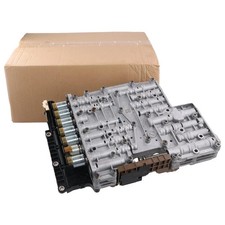
6R80 Valve Body Zip Kit 2009-2017 (Sonnax ZF6-6R60-ZIP)
When the pressure check points at a worn valve body, this kit restores the valves and springs that bleed off line and solenoid feed pressure at idle. Fits 2009-2017 6R80 units. From our sister store, Core Transmission Parts.
Shop the part for this fix →Browse all valve bodies and valve body kits at CoreTransmissionParts.com
Step Four: The Clutch Itself
When pressure checks good and the delay is still there in one range, the clutch is taking too long to stroke. Two things cause that: excess clearance from worn frictions, and a piston seal that leaks so the pack never fully fills. Either way the unit is coming apart.
- Delay in both ranges, pressure good: inspect the D (low/reverse) pack and its piston first, because it is common to both. When you restack it, set the clearance. Raybestos' D clutch installation guide gives 0.039–0.062 in for the 6R80 D pack with the factory wave plate installed and supplies selective steels to hit it. Too loose and it engages late. Too tight and it drags and burns.
- Delay in Reverse only: the B clutch, its piston seals, and the bushings and rings that feed it.
- Delay in Drive only: the A clutch and its feed. On a 2011-later unit, remember that the D clutch lets go at about 3 mph, so a weak A clutch can feel like a slip right after a slow engagement.
If you are into the unit, do the bushings whether they look bad or not, and do the valve body bores at the same time. Replacing frictions in a 6R80 that still has a worn regulator bore and worn bushings just brings the same truck back in a year. Our 6R80 valve body wear guide covers the bores in more detail.
Adaptives and Solenoid Strategy
The 6R80 learns clutch fill times. After a valve body swap, a solenoid body replacement or a reflash, a mild delay can simply be a PCM that has not relearned yet, or one loaded with the wrong solenoid strategy. If you replaced the valve body or solenoid body, program the solenoid strategy and body ID codes from the new part into the PCM before you judge the repair, then do a proper relearn drive. A unit that engages late with a new solenoid body and old calibration data has a programming problem, not a hard-parts problem.
My Order of Operations
- Document the complaint. Cold after sitting or hot at idle; Drive, Reverse or both. Pull codes.
- Time it on the scan tool with turbine speed, brake held, cold and hot.
- Fluid level warm, MERCON LV only. If it was just serviced, suspect it was filled cold.
- Pan and filter. Read the debris.
- Pressure check with a 100 psi gauge at WK, idle in Drive and Reverse, cold and hot.
- Valve body if pressure sags hot: regulator and solenoid pressure regulator bores first.
- Teardown if pressure is good: the clutch for the range that delays, plus the bushings.
What I skip: additives that promise to "restore engagement." If a seal has hardened, a conditioner might buy a few weeks. It will not fix a worn bore or a worn bushing, and it hides the symptom until the clutch burns.
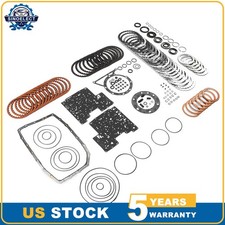
6R80 filter kits, MERCON LV, valve bodies, pumps and master rebuild kits for units that are slow to go into gear. Shipped fast from the USA.
Shop 6R80 parts →FAQ
Why is my 6R80 slow to go into Drive or Reverse?
The clutches for that range are taking too long to fill and hold. Drive uses the A clutch and the D clutch, and Reverse uses the B clutch and the D clutch, so a delay in both ranges points at shared causes: low or wrong fluid, a restricted filter, a worn pump, low line or solenoid feed pressure, or the D clutch. A delay in only one range points at that range's own clutch and feed circuit.
Can low fluid cause delayed engagement on a 6R80?
Yes, and it is the first thing to check. Sonnax notes the 6R80 has a thermal element that sends converter oil to the bushings below about 125 degrees F, so a unit filled cold after a service can read full and still be low once it is warm. Check the level at operating temperature using MERCON LV only.
Why does my 6R80 only delay into reverse?
Reverse is the only garage shift that uses the B clutch, so a Reverse-only delay usually means oil is leaking out of the B clutch feed or the B piston. Worn input/output bushings are a common cause on this family, along with pressure regulator bore wear, which Sonnax lists with delayed Reverse and no Reverse complaints.
Will a valve body fix a 6R80 delayed engagement?
It can when the delay comes from worn bores. Sonnax says low solenoid feed pressure at idle from a worn solenoid pressure regulator valve can create delayed engagement or wrong gear starts, and the symptom usually gets worse hot. If a pressure check is good and the delay is in one range, the problem is more likely the clutch itself, and a valve body alone will not fix it.
How long should a 6R80 take to engage?
Ford does not publish a public engagement-time limit for the 6R80. As an OEM yardstick, GM's bulletin 16-NA-364 for its 8-speed trucks calls it a delayed engagement when input speed takes more than 3 seconds to reach zero after the shift with the brake held. A healthy 6R80 engages well inside that, so time it on a scan tool using turbine speed, cold and hot.
Sources
- Ford Motor Company / Motorcraft — Automatic Transmission Fluid Chart (FCSD Chemicals and Lubricants, Version 21, published 9/2026). Backs the 6R80's MERCON LV specification across its full production run and the statement that the fluids on the chart "are unique fluids and MUST be used in applications recommending that particular fluid." fcsdchemicalsandlubricants.com — ATF chart (PDF)
- GEARS Magazine (ATRA) — "Updates to the Ford 6R80," David Chalker. Backs the A, B, E driving clutch and C, D brake clutch layout, the 2011-later one-way clutch, the D clutch releasing at about 3 mph on 2011-later units, and the normally high D clutch solenoid at about 50 mA apply and 850 mA release. gearsmagazine.com
- Sonnax — "Six Ways from Sunday: Diagnosing ZF6 & Ford 6R60/80 TC-Related Drivability Concerns." Backs the WK pressure values (70–75 psi cool, 65–68 psi hot, dip to about 50 psi on Reverse), the 100 psi gauge and 10 x 1.00 mm port thread, the thermal element below about 125°F that leaves ATF low if filled cold, and the E clutch interface and pump stator bushing failures. sonnax.com
- Sonnax — Oversized Solenoid Pressure Regulator Valve Kit 95740-17K. Backs low solenoid feed pressure at idle causing delayed engagement and wrong gear starts, temperature-dependent symptoms, delayed Forward and delayed Reverse complaints, and 2009–2014 and 2015-later 6R80 coverage. sonnax.com
- Sonnax — Oversized Pressure Regulator Valve Kit 95740-01K. Backs the two regulator bore wear locations (spring end = low line pressure, burned converter clutch, bushing failure), the delayed Reverse, no Reverse and forward/reverse slip complaints, and 2009–2014 6R80 (without 053 plate) coverage. sonnax.com
- General Motors via NHTSA — Service Bulletin 16-NA-364, "Delayed Engagement After Sitting With Engine Off." Cited only as an OEM yardstick (it covers GM 8L45/8L90, not the 6R80): engagement time measured from gear selected to input speed reaching 0 RPM with the brake held, delayed if over 3 seconds, tested after an 8 to 24 hour sit at 50°F or above. static.nhtsa.gov (PDF)
- Transmission Digest — Wayne Colonna, "Ford 6R80 No Movement After Overhaul," April 2026. Backs the 2010 F-150 case with 40 psi in Park/Neutral and zero in Drive/Reverse, the mismatched six-orifice spacer plate on a two-damper valve body, and part numbers 6L2P-7Z490-FB and 6L2P-7Z490-FD. transmissiondigest.com
- GEARS Magazine (ATRA) — David Chalker, "Updates to the Ford 6R80 Part 2." Backs the deleted D2 passage and D2 regulator valve on one-way clutch units and spacer plate AL3P-7Z490-BA. gearsmagazine.com